If you are in a hurry
- It is important that your child reliably gets the MR vaccine twice: once at age 1 and once more before starting elementary school
- After the vaccination, or with a fever that could be measles, call 119 even at night if your child has trouble breathing, their consciousness seems wrong, or a seizure does not stop
- Women who want to become pregnant, and family members of pregnant women (if they have not clearly had rubella), should have an antibody test and consider vaccination if their antibody level is low
Hello. I am Shunichi Gamo, MD, PhD, a board-certified pulmonologist and the director of Sendai Airport North Clinic.
Recently I often hear people say, “I heard measles and rubella are going around, and I’m worried about what to do about my child’s vaccines.” Families with young children in particular often come to us saying,
“I thought one shot was enough, but I was told a second one is needed.”
We get quite a few questions like this. In fact, these two doses are very important.
To give you the conclusion first: it is important that your child reliably gets the MR vaccine twice, once at age 1 and once more before starting elementary school[1]. This is because both measles and rubella are diseases that a vaccine can properly prevent.
In this article, as the director of our clinic, I explain when the routine MR vaccination is given, why measles and rubella are dangerous, how well the vaccine works and its side effects, who cannot be vaccinated, and what to do if you have been in contact with someone with measles.
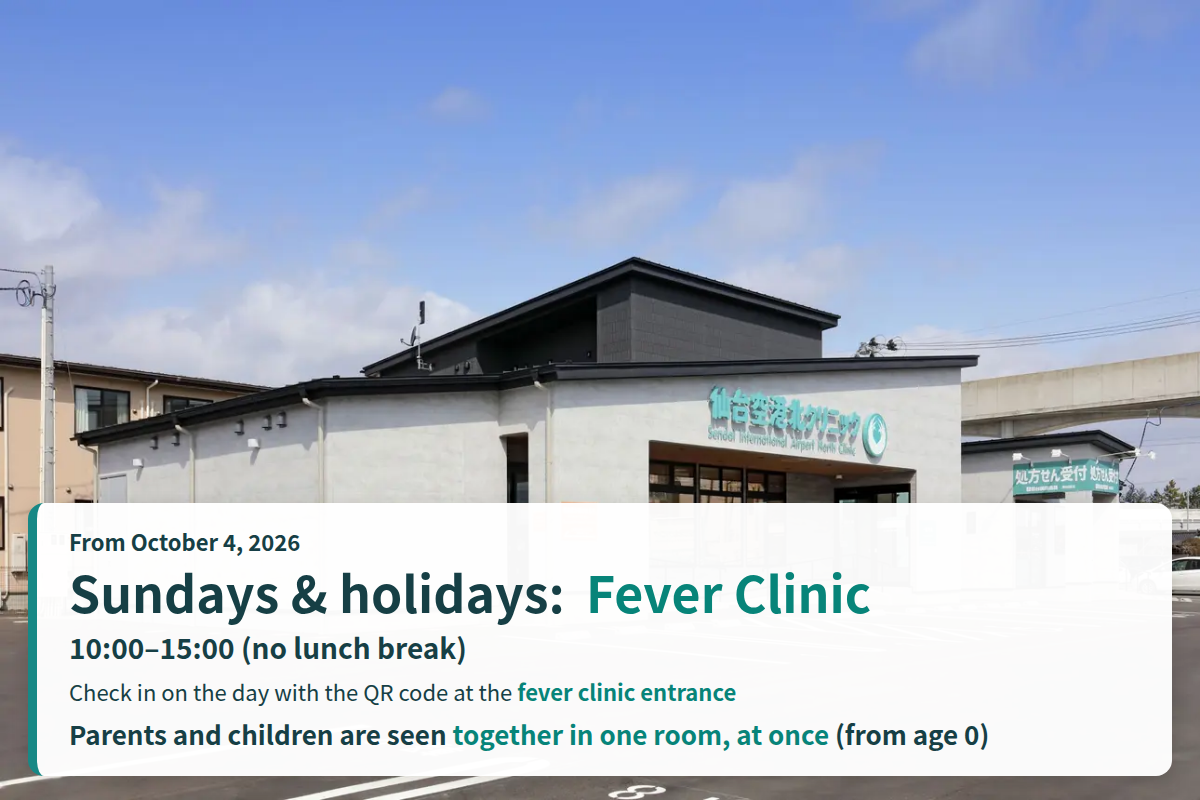
First, a note about our fever clinic on Sundays and national holidays. PCR testing for influenza and COVID (a test that copies the virus’s genetic material in order to detect it) gives results the same day.
From October 4, 2026, we also run the fever clinic on Sundays and national holidays
10:00 to 15:00 (no lunch break). You check in on the day. We give you the PCR result the same day. On Sundays and holidays we see fever patients only, and we do not offer general outpatient care or IV drips. Please check the clinic calendar for clinic dates and closed days. Notice: fever clinic on Sundays and national holidays
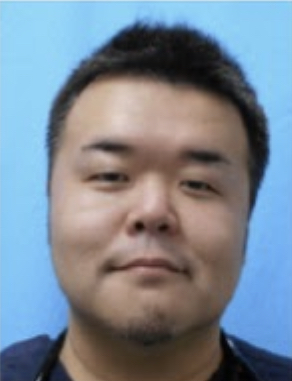
Shunichi Gamo, MD, PhD
Director, Sendai International Airport North Clinic
Born and raised locally, he attended Yuriage Elementary School and Yuriage Junior High School in Natori City. After graduating from Tohoku University School of Medicine, he worked at Sendai Open Hospital and Kesennuma City Hospital, and then at Tohoku University Hospital. In April 2021, in the middle of the COVID-19 pandemic, he opened Sendai International Airport North Clinic. Holding to a fever clinic that never turns patients away, he cared for well over 20,000 patients with fever in the two years before COVID-19 was moved to Class 5 under Japan’s infectious disease law.
Society memberships and board certifications
Certified Member and Board Certified Fellow, Japanese Society of Internal Medicine
Board Certified Pulmonologist, Japanese Respiratory Society
Board Certified Allergist, Japanese Society of Allergology
Board Certified Specialist, Japanese Society of Anti-Aging Medicine
PhD in Medicine (Tohoku University)
What is the MR vaccine? One vaccine that prevents both measles and rubella
The MR vaccine is a combined vaccine that prevents two viral infections, measles and rubella, with a single vaccine. The measles-rubella combined vaccine can prevent measles and rubella, which are extremely contagious and cause serious complications such as pneumonia, and it is given twice in total: at age 1 and before starting elementary school[1].
Both measles and rubella are diseases that vaccines can prevent. Moreover, one dose is not the end; getting two doses is what matters. Measles spreads easily through the air, and rubella affects the unborn baby if a pregnant woman catches it. For both, it is important to be prepared with the vaccine.
 Dr. Gamo
Some parents feel sorry for a child getting two shots, but the second dose is the important finishing step that makes immunity certain.
When is the routine vaccination given? First dose at age 1, second before elementary school
Routine MR vaccination is given twice in total: Stage 1, given during the year your child is 1 year old, and Stage 2, given during the year before starting elementary school[2].
| Dose | Timing | Who is eligible |
|---|---|---|
| Stage 1 | The year your child is 1 year old | Children aged 12 months up to (but not including) 24 months[2] |
| Stage 2 | The year before starting elementary school | Children aged 5 or older and under 7, from 1 year before the day they reach school-starting age until the day before[2] |
An easy way to think of Stage 1 is from the day before the 1st birthday to the day before the 2nd birthday[1]. We recommend getting it early in this period. Stage 2 is during the last year of kindergarten or nursery school, and both are given as routine (publicly funded) vaccinations under the Preventive Vaccinations Act[2]. If your child has not had them yet, please talk to your regular clinic or hospital.
Dr. GamoOnce your child turns 1, planning the MR vaccine early gives peace of mind.
Why is measles dangerous? How contagious it is and its complications
Measles spreads from person to person through the air, through droplets and through contact, and it is an extremely contagious disease: almost 100% of people without immunity who are infected become ill[1]. The Ministry of Health, Labour and Welfare also states that “its infectiousness is said to be very strong”[1].
The complications are not mild either. According to the Ministry of Health, Labour and Welfare, measles often leads to pneumonia or middle ear infection, and encephalitis is said to develop in 1 in 1,000 patients[1]. The death rate is also 1 in 1,000, even in developed countries[1]. In addition, although the frequency is said to be about 1 in 100,000, a disease of the central nervous system called subacute sclerosing panencephalitis (SSPE) can develop several years to more than ten years after infection. Catching measles before the age of 2 raises the risk of SSPE[1].
The detailed information page of the Japan Institute for Health Security (JIHS) states that pneumonia occurs as a complication in 6% of cases and encephalitis in 0.5 to 1 in 1,000 cases[3]. Because this is a disease that a vaccine can prevent, prevention is important.
Dr. GamoMeasles spreads very easily. That is exactly why preparing with the vaccine matters.
What are rubella and congenital rubella syndrome (CRS)?
Rubella spreads through droplets and contact, and its typical features are fever, a fine red rash all over the body, and swollen lymph nodes (mainly in the neck, the back of the head, and behind the ears). It develops after an incubation period of 2 to 3 weeks after infection[4].
With rubella, infection during pregnancy needs special care. If a woman who is up to about 20 weeks pregnant and does not have enough immunity to rubella is infected with the rubella virus, her baby may be born with problems of the eyes, heart, ears and other organs. This is congenital rubella syndrome (CRS). The rate is said to be 85% if infection occurs by 12 weeks of pregnancy and 50% at 13 to 16 weeks, for example[4].
Dr. GamoWhat needs the most care with rubella is infection during pregnancy, because it can affect the baby in the womb.
Since 2008, every case of rubella must be reported, and nationwide outbreaks, mainly among adult men, occurred in 2012 to 2013 and 2018 to 2019[5]. About 15% of infections are said to be inapparent, with no symptoms[5].
What happened to the rubella program for adult men? It ended in March 2025
After the outbreaks of 2012 to 2013 and 2018 to 2019, men born between April 2, 1962 and April 1, 1979 were added to the people eligible for routine rubella vaccination[6]. This is because men of this generation were never given a public vaccination in the past, so they could catch rubella themselves and spread it to their families and people around them[6].
This “additional rubella measure” ended on March 31, 2025[6]. At present, there is no program sending new coupons to people in the eligible generation.
However, among people who had an antibody test by March 31, 2025 and tested negative, those who are considered to have been unable to get the routine vaccination within the eligible period because of reasons such as uneven vaccine supply may qualify for a special measure. Please ask your local government whether this applies to you[6].
Dr. GamoIf you are not sure whether you qualify, asking your local government is the quickest way.
How well does the MR vaccine work? Why two doses matter
The effectiveness of the vaccine against measles has been reported as 95% with one dose and 96% with two doses (Cochrane review, moderate certainty)[7]. Both are high numbers, but the point of the second dose is that it covers people who did not become immune after the first[4].
| Number of doses | Effectiveness in preventing measles |
|---|---|
| 1 | 95%[7] |
| 2 | 96%[7] |
It is said that about 95% of people gain immunity to the measles and rubella viruses from the MR vaccine[1]. The JIHS detailed page reports that the rate of gaining immunity to measles is 93 to 95% or more with one dose and 97 to 99% or more with two doses[3]. Also, a second dose gives immunity to most of the people who did not become immune after one dose[4].
Dr. GamoMany people who did not gain immunity from the 1st dose gain it from the 2nd. Getting both of the 2 doses is what matters.
Furthermore, it is known that when the body is prepared with immunity from two doses, it can stop the virus early and prevent illness (prevention of illness). Even if a person does get ill, the symptoms are milder and the risk of serious complications such as pneumonia and encephalitis is lower (prevention of severe illness)[1]. In a US study from 2001 to 2022, 69% of 4,056 confirmed measles cases were unvaccinated; the more doses people had, the fewer typical symptoms and severe cases there were, and vaccinated people who still got ill (breakthrough cases) tended to have mild illness[8].
What are the side effects, and who cannot be vaccinated? What about pregnancy?
The main symptoms after MR vaccination include fever, rash, runny nose, cough, and redness and swelling at the injection site[1]. The JIHS detailed page states that after the first dose, fever is seen in about 20 to 30% and rash in about 10%, all mild and mostly going away on their own[3].
As serious side effects, anaphylaxis, acute disseminated encephalomyelitis (ADEM), encephalitis/encephalopathy, seizures and thrombocytopenic purpura have been reported very rarely (less than 0.1%), but these include cases where a causal link with the vaccine is not clear[1]. For 30 minutes after the injection, watch for fainting due to a vasovagal reflex and for anaphylaxis[3]. Also, side effects do not become stronger when someone who has had measles or rubella in the past is vaccinated[1].
Dr. GamoFor 30 minutes after the shot, please keep an eye on how your child is doing.
People to whom any of the following applies cannot be vaccinated[1].
- People who have had anaphylaxis to an ingredient of the MR vaccine
- People with a disease that affects immune function, or who are receiving treatment that suppresses immunity
- People who are clearly pregnant
- People who have a fever
- People who have a serious acute illness
People who have a fever or a serious acute illness are vaccinated after they recover[1]. Women of childbearing age need to use contraception for about 1 month before vaccination and avoid pregnancy for about 2 months after vaccination[1]. Pregnant women cannot receive the MR vaccine, because it is a live vaccine[1].
After the vaccination, or with a fever that could be measles, call 119 (Japan’s emergency number), even at night or on a holiday, if any of the following symptoms appear.
- Trouble breathing, a feeling that the throat or face is swelling, or hives all over the body with limpness (when anaphylaxis is suspected)
- Consciousness seems wrong, or no answer when you call them
- A seizure does not stop
- Lips look purplish, or breathing with heaving shoulders
If you are unsure, you can also use the children’s emergency advice line (#8000) or Miyagi Prefecture’s emergency advice line for adults (#7119). However, if there are clearly dangerous signs, call 119 without calling an advice line first. For how to judge a fever after vaccination, please also see Fever after a vaccine: wait it out or see a doctor? Child and adult.
What should I do after contact with someone with measles? Vaccination within 72 hours
If you have been in contact with a measles patient, talk to your family doctor as soon as possible. The JIHS detailed page states that getting a measles-containing vaccine urgently (within 72 hours) after contact with a measles patient may prevent the illness[3].
The Japan Pediatric Society also states that for people who have never had measles and are unvaccinated, have had only one dose, or whose vaccination history is unknown, vaccination within 72 hours of contact with a patient can be expected to prevent the illness or make the symptoms milder[9]. For babies aged 6 months or older, vaccination may be considered as an emergency measure[9]. If more than 72 hours but no more than 6 days have passed since contact, gamma globulin can be used to make the symptoms milder, but the fact that it is a blood product must be taken into account[9].
Because measles spreads through the air, handwashing and masks cannot prevent it well enough. That is why prevention with the vaccine is most important[3]. If you may have been in contact, first call before your visit and say, “I may have been in contact with someone with measles.” This is to prevent infection in the waiting room.
Dr. GamoA quick phone call ahead is an important step to avoid passing it on to others in the waiting room.
Frequently asked questions
- I want my 1-year-old to get the MR vaccine. When should we go?
-
Stage 1 is one dose between 12 months and 24 months of age (the year your child is 1 year old)[2]. We recommend getting it as early as possible after the 1st birthday. Stage 2 is one dose at age 5 or older and under 7, during the year before starting elementary school[2].
- My child already had one dose. Is a second one needed too?
-
Yes, two doses are needed. Some people do not become immune after one dose of the MR vaccine, and a second dose gives immunity to most of the people who did not become immune after the first[4]. The JIHS detailed page also reports that the rate of gaining immunity to measles is 93 to 95% or more with one dose and 97 to 99% or more with two doses[3].
- I am an adult. Can I get measles or rubella vaccines?
-
For measles in adults: among people who have never had measles and had no chance to get two doses (people born on or before April 1, 2000), healthcare workers, school staff, people travelling to countries with outbreaks and others should talk to their family doctor about a second dose[1]. For rubella: women who want to become pregnant, and family members of pregnant women without antibodies, who have clearly never had rubella should have an antibody test and consider vaccination if their antibody level is low[1]. The former additional rubella measure (for men of the eligible generation) ended on March 31, 2025, so ask your local government whether anything applies to you[6].
- I am pregnant. Can I get the MR vaccine?
-
People who are clearly pregnant cannot be vaccinated[1]. Women of childbearing age need to use contraception for about 1 month before vaccination and avoid pregnancy for about 2 months afterwards[1]. To prevent infection during pregnancy, it is also important that the family around you take steps not to catch rubella[4].
- What should I do if I may have been in contact with someone with measles?
-
Contact a medical facility as soon as possible. Within 72 hours of contact with a patient, vaccination can be expected to prevent the illness or make the symptoms milder[9]. First call and say, “I may have been in contact with someone with measles,” and then ask how you should come in. If there is trouble breathing, consciousness seems wrong, or a seizure does not stop, call 119 even at night or on a holiday.
Summary: two doses of the MR vaccine, at age 1 and before elementary school
- It is important that your child reliably gets the MR vaccine twice: once at age 1 and once more before starting elementary school
- After the vaccination, or with a fever that could be measles, call 119 even at night if your child has trouble breathing, their consciousness seems wrong, or a seizure does not stop
- Women who want to become pregnant, and family members of pregnant women (if they have not clearly had rubella), should have an antibody test and consider vaccination if their antibody level is low
- Measles spreads through the air, is extremely contagious, and can cause serious complications such as pneumonia, encephalitis and SSPE[1]
- After contact with someone with measles, consider vaccination within 72 hours[3][9]
Both measles and rubella are diseases that vaccines can prevent. Make sure your child completes both doses, and protect your child and your family. If anything is unclear, please feel free to ask us. Leave the medical care to us.
That’s all.
Disclaimer
This article is intended to provide general medical information and does not replace an examination, diagnosis, or treatment by a doctor. The content is based on medical knowledge at the time of publication, but the right course of action differs for each person. If you are worried about symptoms, please consult a medical facility.
References
- Ministry of Health, Labour and Welfare. MR vaccine. Ministry of Health, Labour and Welfare website (in Japanese). Accessed October 2026. https://www.mhlw.go.jp/stf/seisakunitsuite/bunya/kenkou_iryou/kenkou/kekkaku-kansenshou/yobou-sesshu/vaccine/mr/index.html
- Ministry of Health, Labour and Welfare. Guidelines for implementing routine vaccinations (full revised text, revised October 1, 2026). Ministry of Health, Labour and Welfare website (in Japanese). Accessed October 2026. https://www.mhlw.go.jp/content/001744583.pdf
- Japan Institute for Health Security. Measles (detailed version). Infectious Disease Information Site (JIHS) (in Japanese). Revised August 23, 2024. Accessed October 2026. https://id-info.jihs.go.jp/infectious-diseases/measles/detail/index.html
- Ministry of Health, Labour and Welfare. Rubella. Ministry of Health, Labour and Welfare website (in Japanese). Accessed October 2026. https://www.mhlw.go.jp/seisakunitsuite/bunya/kenkou_iryou/kenkou/kekkaku-kansenshou/rubella/
- Japan Institute for Health Security. Rubella. Infectious Disease Information Site (JIHS) (in Japanese). Updated April 28, 2025. Accessed October 2026. https://id-info.jihs.go.jp/infectious-diseases/rubella/index.html
- Ministry of Health, Labour and Welfare. About the additional rubella measure. Ministry of Health, Labour and Welfare website (in Japanese). Accessed October 2026. https://www.mhlw.go.jp/stf/seisakunitsuite/bunya/kenkou_iryou/kenkou/kekkaku-kansenshou/rubella/index_00001.html
- Di Pietrantonj C, Rivetti A, Marchione P, Debalini MG, Demicheli V. Vaccines for measles, mumps, rubella, and varicella in children. Cochrane Database Syst Rev. 2021 Nov;11(11):CD004407. doi:10.1002/14651858.CD004407.pub5 PMID: 34806766
- Leung J, Munir NA, Mathis AD, Filardo TD, Rota PA, Sugerman DE, et al. The effects of vaccination status and age on clinical characteristics and severity of measles cases in the United States in the postelimination era, 2001-2022. Clin Infect Dis. 2025 Mar;80(3):663-72. doi:10.1093/cid/ciae470 PMID: 39271123
- Japan Pediatric Society. Measles. For the general public > Vaccination and infectious diseases. jpeds.or.jp (in Japanese). Accessed October 2026. https://www.jpeds.or.jp/general/prevention/yobo-kansensho/kansensho02-04.html
▶ Overview of this topic: Fever clinic on Sundays and national holidays (from October 4, 2026, 10:00 to 15:00)
More articles to read about vaccinations and fever
For the fever clinic on Sundays and national holidays, see Notice: fever clinic on Sundays and national holidays; for how to judge a fever after vaccination, see Fever after a vaccine: wait it out or see a doctor? Child and adult.