If you are in a hurry
- Most lumps in a child’s neck are a reaction to an infection such as a cold. If a lump lasts a long time, is large, increases in number, or comes with whole-body symptoms, have it checked once
- If your child is having a seizure, does not respond when you call, seems to struggle to breathe, or has collapsed with chest pain, call 119 (Japan’s emergency number) without hesitation
- If the fever continues and your child has red eyes, red lips, a rash, or swollen hands and feet, think of Kawasaki disease and see a doctor early
Hello. I am Shunichi Gamo, MD, PhD, a board-certified pulmonologist and the director of Sendai Airport North Clinic.
Finding a lump in your child’s neck can give you a real fright. Many parents notice it during a bath or while changing clothes, and worry that it might be something serious.
“There seems to be a lump on the side of the neck. It is small, but it is there.”
We often hear families say this. Swollen lymph nodes in the neck are a very common reason for bringing a child to a doctor.
To give you the conclusion first: most swollen lymph nodes in a child’s neck are a reaction to a cold, a throat infection, or a similar infection (reactive lymph node swelling). On the other hand, if a lump lasts a long time, is large, keeps increasing in number, or comes with whole-body symptoms, it is important to see a doctor to check for an underlying illness.
In this article, I explain why lymph nodes in the neck swell, when to see a doctor, how to tell them apart from bacterial lymph node infection and Kawasaki disease, and the signs that mean you should call 119.
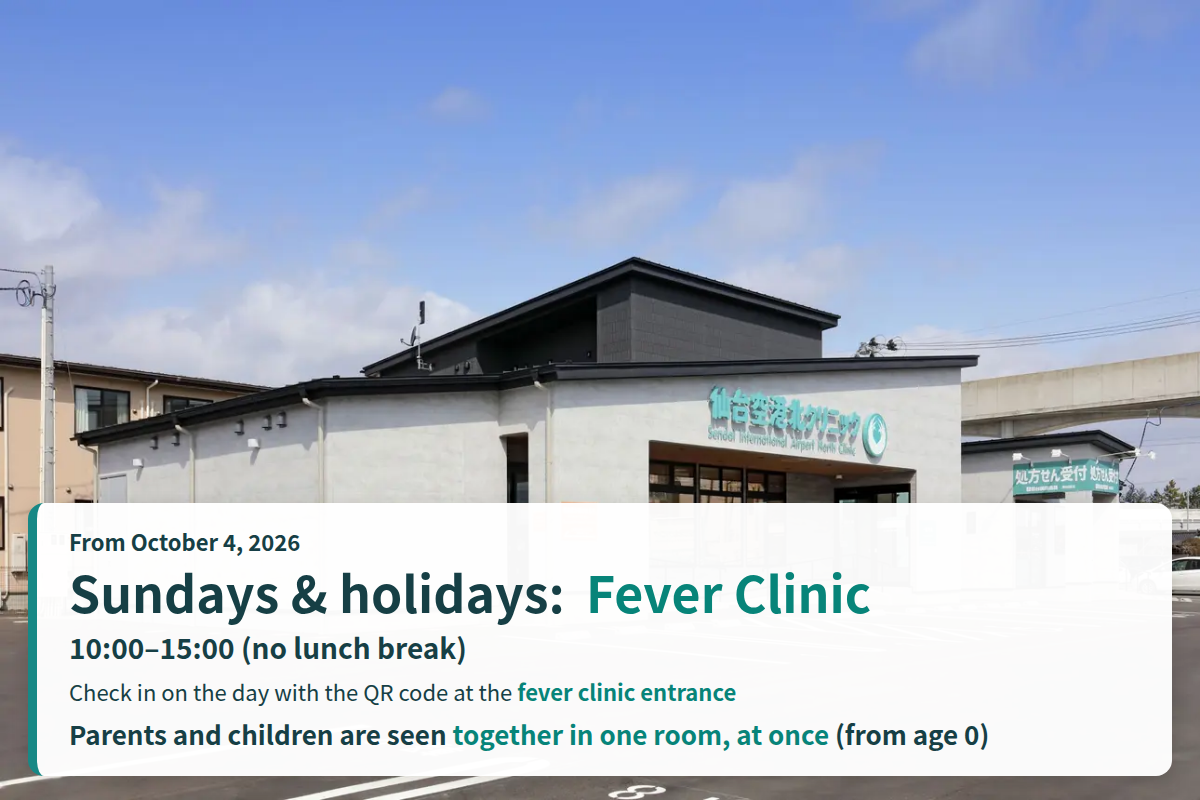
First, a note about our fever clinic on Sundays and national holidays. PCR testing for influenza and COVID (a test that copies the virus’s genetic material in order to detect it) gives results the same day.
From October 4, 2026, we also run the fever clinic on Sundays and national holidays
10:00 to 15:00 (no lunch break). You check in on the day. We give you the PCR result the same day. On Sundays and holidays we see fever patients only, and we do not offer general outpatient care or IV drips. Please check the clinic calendar for clinic dates and closed days. Notice: fever clinic on Sundays and national holidays
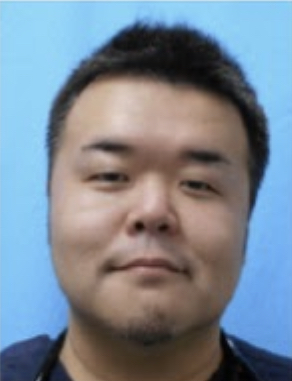
Shunichi Gamo, MD, PhD
Director, Sendai International Airport North Clinic
Born and raised locally, he attended Yuriage Elementary School and Yuriage Junior High School in Natori City. After graduating from Tohoku University School of Medicine, he worked at Sendai Open Hospital and Kesennuma City Hospital, and then at Tohoku University Hospital. In April 2021, in the middle of the COVID-19 pandemic, he opened Sendai International Airport North Clinic. Holding to a fever clinic that never turns patients away, he cared for well over 20,000 patients with fever in the two years before COVID-19 was moved to Class 5 under Japan’s infectious disease law.
Society memberships and board certifications
Certified Member and Board Certified Fellow, Japanese Society of Internal Medicine
Board Certified Pulmonologist, Japanese Respiratory Society
Board Certified Allergist, Japanese Society of Allergology
Board Certified Specialist, Japanese Society of Anti-Aging Medicine
PhD in Medicine (Tohoku University)
In short: Most neck lumps in children are a reaction to infection. When do you need to see a doctor?
Most lumps in a child’s neck are a lymph node reaction to a cold or a throat infection (reactive lymph node swelling).
 Dr. Gamo
Finding a lump in the neck is worrying. Most are a reaction to an infection such as a cold.
However, please check the following three points at home.
- Has it lasted a long time?
It has not become smaller after several weeks, or it is gradually getting bigger - Size and change
A large lump, a lump that has grown suddenly, or a lump with redness or strong pain - Whole-body symptoms
Fever without a clear cause, night sweats, weight loss
The third point, whole-body symptoms, is a sign we especially do not want to miss. You will find more detail on when to see a doctor in the section “When should you see a doctor?” below.
Infections that make the lymph nodes in the neck swell include the following.
- Strep infection (group A streptococcal infection)
Fever and a sore throat, with lymph node inflammation[1] - Infectious mononucleosis
Caused by the Epstein-Barr (EB) virus; fever lasts from several days to several weeks, with swollen lymph nodes and throat inflammation[1] - Cat scratch disease
After a scratch, the lymph nodes in the neck or armpit swell and become painful[1] - Rubella
The lymph nodes in the neck and behind the ears swell[1] - Other colds
Colds caused by adenovirus or enterovirus, and mumps, can also cause neck pain[2]
For more on how to recognize infectious mononucleosis, please also see the related article.
Why do the lymph nodes in the neck swell? What is reactive lymph node swelling?
Lymph nodes are small bases of the immune system that fight bacteria and viruses, and when there is an infection they become more active and get bigger.
Children’s lymph nodes are naturally active, and the lymph nodes in the neck may swell every time a child catches a cold. In medical papers, this kind of reactive swelling is generally described as benign (not cancer or a similar disease)[3].
However, those figures come from “children who were seen at a hospital”, not from all the children in your neighborhood. In a study of 527 children examined for swollen neck lymph nodes at a hospital in Turkey from 2015 to 2019, a malignant tumor was found in 39 children, and 34 of them had lymphoma[3]. This is a figure for a group of children who came to hospital, not the rate among children in general.
Also, a 2023 review (a paper that brings together earlier studies) of children who had an ultrasound scan or a needle biopsy (a test in which a small sample is taken with a thin needle) for swollen neck lymph nodes found that 47.9% were reactive, 9.2% were malignant, and 12.6% were granulomatous (a type of inflammation)[4]. This is also a figure for a referred group that had tests, not the rate among children in general.
In other words, most cases are a reaction that is not a big worry, but a few include illnesses that need a diagnosis[3][4].
Dr. GamoDon’t assume a small lump is fine; if it worries you, let us see it once. Taking photos makes it easy to see whether it goes away in a few days.
When should you see a doctor? Can size or duration alone decide?
There is no single rule such as “see a doctor if it is over a certain number of centimeters” or “if it lasts more than a certain number of weeks”. Guidance differs between studies, so if a lump worries you, have it checked once whatever its size.
In the Turkish study of 527 children, the features linked to a malignant tumor were lasting more than 4 weeks, a lymph node larger than 3 cm, a location above the collarbone (the bone at the front of the base of the neck), whole-body symptoms, and an enlarged liver or spleen[3]. These are features seen in a group of children who came to hospital.
In another study, 100 children with neck lymph nodes larger than 1.5 cm that had lasted 4 weeks or more were followed, and in 80 of them the nodes became smaller or disappeared within 10 weeks[5]. Long-lasting lymph node swelling can continue for around 10 weeks[5]. The remaining 20 children had detailed tests, and some were found to have tuberculosis, Hodgkin lymphoma, or acute lymphoblastic leukemia[5].
| Study | Participants | Reported features and results |
|---|---|---|
| Şen 2021 [3] | 527 children examined for swollen neck lymph nodes at a hospital | More than 4 weeks, larger than 3 cm, above the collarbone, whole-body symptoms, enlarged liver and spleen |
| Önal 2021 [5] | 100 children with swelling larger than 1.5 cm lasting 4 weeks or more | 80 improved within 10 weeks; 20 went on to detailed tests |
These figures come from groups who came to hospital, so they do not mean “it is fine to wait and see for so many weeks”. When a lump lasts a long time, it is important to have a doctor check whether another illness is hiding during that time.
Painless lymph node swelling together with fever without a clear cause, night sweats, and weight loss is one of the symptom patterns that raise suspicion of lymphoma[6]. In contrast, the lymph node swelling of Kawasaki disease is often said to come with red skin and strong tenderness (pain when pressed)[7]. Please do not decide “it doesn’t hurt, so it is fine” or “it hurts, so it is fine”; tell the doctor about any change that worries you.
Dr. GamoPainful or not, please tell the doctor about any change that concerns you, just as it is.
What to tell the doctor at the visit
- When you noticed the lump, how many there are, and where
- Changes in size (whether it is getting bigger or staying the same)
- Whether there is pain, red skin, or fever
- Whether there is fever without a clear cause, night sweats, or weight loss
- Sore throat, earache, cough, runny nose
- Infections going around nearby, contact with animals
- Medicines your child is taking, and the time a fever reducer was last given
Can bacterial lymph node infection be cured with antibiotics? When to see a doctor
When bacteria get into a lymph node in the neck and cause inflammation or pus (bacterial or suppurative lymphadenitis), it is treated with antibiotics as needed[8].
How neck swelling is managed depends on the situation. A consensus of the Italian pediatric societies and others separates cases for watchful waiting, cases for antibiotic treatment, and cases for early detailed tests, and states that the doctor decides which to choose[8].
When a bacterial infection is suspected, it is important to take the antibiotic exactly as prescribed and finish the whole course. Please do not use leftover medicine from before on your own judgment.
Dr. GamoEven as the swelling goes down, please finish all of the antibiotics you were given.
If there is no improvement with antibiotics, or the fever continues, the doctor needs to reconsider, including other illnesses such as Kawasaki disease[7]. In that case, please do not hesitate to come back. For testing when strep throat is suspected, please also see the related article.
Note that a deep neck infection, where infection spreads deep into the neck, is an emergency that can be life-threatening if treatment is delayed[7]. If your child has trouble opening the mouth, cannot swallow saliva, has trouble breathing, or cannot bend the neck, call 119 without hesitation. For collections of pus at the back of the throat, please also see the related article.

What are the signs that it might be Kawasaki disease?
When a high fever continues and several of the following appear together (red eyes, red lips or tongue, a rash, swollen hands and feet, swollen lymph nodes in the neck), we think of Kawasaki disease.
Kawasaki disease is an illness that causes inflammation of blood vessels throughout the body, and it is most common in babies and young children aged 4 or under[9]. The following six are its main symptoms[9].
- Fever
- Redness of the bulbar conjunctiva (the white of the eye) in both eyes
- Red lips, strawberry tongue, redness inside the mouth
- Rash (including redness at the site of a BCG vaccination)
- Changes in the hands and feet (firm swelling in the acute phase, red palms and soles, peeling of the fingertips in the recovery phase)
- Non-suppurative (without pus) swelling of the lymph nodes in the neck in the acute phase
Kawasaki disease is diagnosed when five or more of the six are present[9]. Even with four, it is diagnosed as Kawasaki disease if other illnesses have been ruled out and there are changes in the blood vessels of the heart (the coronary arteries)[9].
Swollen lymph nodes in the neck are seen in about 65% of younger children and about 90% of children aged 3 and over, and they are often the first symptom[9]. Typically the swelling is on one side, fairly firm, painful to the touch, and often with red skin[7].
The biggest problem in Kawasaki disease is that aneurysms (bulges in a blood vessel) can form in the coronary arteries, which supply the heart. Some kind of aneurysm has been reported in about 3% of children with Kawasaki disease[10]. Bringing the fever down as early as possible during the high-fever phase and calming the inflammation of the blood vessels is very important to prevent coronary aneurysms[10].
In the Japan Medical Association’s explanation, the earlier diagnostic guidelines used the phrase “fever lasting 5 days or more”[2]. The current guidelines (6th revised edition) diagnose by how the symptoms appear together, not by the number of days of fever[9].
Dr. GamoPlease do not judge by the number of days of fever alone; look at changes in the eyes, lips, hands and feet as well.
For fever and swollen neck lymph nodes that do not improve with antibiotics, it is recommended to think of Kawasaki disease and consult a pediatrician[7]. For the signs that help you not miss Kawasaki disease, please also see the related article.
What are the signs of a worrying illness such as lymphoma?
Lymphoma is suspected when painless swelling comes together with fever without a clear cause, night sweats, and weight loss[6].
Lymphoma in children is broadly divided into Hodgkin lymphoma and non-Hodgkin lymphoma, and non-Hodgkin lymphoma is said to be more common in children[6].
In the Turkish study of 527 children, 34 of the 39 children found to have a malignant tumor had lymphoma[3]. It is not common, but it is an illness we do not want to miss when a lump lasts a long time.
Lymphoma in children can be cured in many cases. Choosing the standard treatment that matches the type of lymphoma is said to be important[6]. That is exactly why you should talk to a doctor early about any change that worries you.
Dr. GamoHearing the name of a frightening illness is unsettling. Lymphoma in children can be cured in many cases.
When should you seek care urgently? 119, #8000, and night-time emergency care
If even one of the following applies, call 119 without hesitation. The same applies at night and on holidays.
- Your child is having a seizure
- Your child does not respond when you call, or is not fully conscious
- Your child seems to struggle to breathe, is breathing with the shoulders, or has purplish lips
- Your child has collapsed with chest pain
- Trouble opening the mouth, cannot swallow saliva, trouble breathing, cannot bend the neck (when a deep neck infection is suspected)
If you are unsure what to do at night or on a holiday, use the children’s emergency advice line (#8000) or the emergency department in your area.
Dr. Gamo#8000 is the line to call when you are unsure where to go. Keeping the number handy gives peace of mind.
In the following cases, do not wait until morning; see a doctor the same day.
- A high fever continues, or the fever comes back
- The lump in the neck has suddenly grown
- Your child cannot drink, or is passing much less urine than usual
- Your child is limp and listless, or unusually irritable
- Red eyes, red lips, or a rash has appeared
If your child’s condition changes during the night, go back to the 119 and emergency department guidance above at that point and decide again.
Frequently asked questions
- How big does a lump in my child’s neck have to be before we see a doctor?
-
There is no single rule such as “see a doctor at this size”. Studies list worrying features such as lasting more than 4 weeks, being larger than 3 cm, being above the collarbone, and having whole-body symptoms, but those studies looked at children who came to hospital[3]. If a lump worries you, have it checked once whatever its size.
- A lump in my child’s neck has lasted about 2 weeks. Can we wait and see?
-
If it has lasted 2 weeks, have it checked once. There are reports of reactive swelling lasting several weeks, or as long as about 10 weeks[5], but it is important to check during that time that no illness is hiding behind it. If it has suddenly grown, or there is fever, night sweats, or weight loss, see a doctor early.
- Will it go away if we get antibiotics?
-
When bacterial lymph node infection is suspected, it is treated with antibiotics. Give them exactly as prescribed and finish the whole course[7][8]. If they do not work well or the fever continues, your child needs to be seen again, with other illnesses such as Kawasaki disease in mind[7].
- Is Kawasaki disease a disease of the lymph nodes?
-
No. Kawasaki disease causes inflammation of blood vessels throughout the body, and swollen lymph nodes in the neck are one of its six main symptoms[9]. Aneurysms can form in the coronary arteries of the heart, so early diagnosis and treatment are important[10].
- My child had a seizure at night. What should I do?
-
If your child is having a seizure, does not respond when you call, or seems to struggle to breathe, call 119 without hesitation. If you are unsure, use the children’s emergency advice line (#8000), and at night or on holidays go to an emergency department.
- The fever continues, and my child also has red eyes and red lips. Should I be worried?
-
These are signs that suggest Kawasaki disease. If, in addition to fever, several of the following appear together (red eyes, red lips or tongue, a rash, swollen hands and feet, swollen lymph nodes in the neck), see a doctor early[9].
Summary: See a doctor if a neck lump lasts long, is large, or increases in number
- Most lumps in a child’s neck are a reaction to an infection such as a cold. If a lump lasts a long time, is large, increases in number, or comes with whole-body symptoms, have it checked once
- If your child is having a seizure, does not respond when you call, seems to struggle to breathe, or has collapsed with chest pain, call 119 without hesitation
- If the fever continues and your child has red eyes, red lips, a rash, or swollen hands and feet, think of Kawasaki disease and see a doctor early
- There is no single rule for size or duration, so see a doctor about any lump that worries you, whatever its size
- At the visit, tell the doctor when you noticed it, how its size has changed, and about pain, fever or night sweats, and weight loss
Most lumps in a child’s neck are a reaction to infection. That is exactly why, when a lump lasts a long time, gets bigger, or comes with whole-body symptoms, we ask you to talk to us early. Leave the medical care to us.
That’s all.
Disclaimer
This article is intended to provide general medical information and does not replace an examination, diagnosis, or treatment by a doctor. The content is based on medical knowledge at the time of publication, but the right course of action differs for each person. If you are worried about symptoms, please consult a medical facility.
References
- Japan Pediatric Society, Committee on Immunization and Infectious Disease Control. Explanation of infectious diseases to be prevented in schools, kindergartens, certified centers for early childhood education and care, and nursery schools (revised April 2025). Japan Pediatric Society website (in Japanese). Accessed October 2026. https://www.jpeds.or.jp/uploads/files/20250430_yobo_kansensho.pdf
- Japan Medical Association. Dr. Polar Bear’s Children’s Clinic: When there are cold-like symptoms >> Problems with the neck (pain, etc.). Japan Medical Association website (in Japanese). Accessed October 2026. https://www.med.or.jp/clinic/sick2010_kubi.html
- Şen HS, Ocak S, Yılmazbaş P. Children with cervical lymphadenopathy: reactive or not? Turk J Pediatr. 2021;63(3):363-371. doi:10.24953/turkjped.2021.03.003 PMID: 34254481
- Thompson JA, Bertoni D, Decuzzi J, Isaiah A, Pereira KD. Ultrasound versus fine needle aspiration for the initial evaluation of pediatric cervical lymphadenopathy-A systematic review. Int J Pediatr Otorhinolaryngol. 2023 Mar;166:111485. doi:10.1016/j.ijporl.2023.111485 PMID: 36812785
- Önal ZE, Soydan L, Karadaş B, Gürbüz T, Nuhoğlu Ç, Simsek MM. Management of chronic cervical lymphadenopathy in children. Minerva Pediatr (Torino). 2021 Apr;73(2):167-172. doi:10.23736/S2724-5276.16.04297-3 PMID: 26899669
- National Cancer Center Japan, Cancer Information Service. Lymphoma (children). Cancer Information Service (in Japanese). Accessed October 2026. https://ganjoho.jp/public/cancer/malignant_lymphoma/print.html
- Kataoka S, Kawauchi H. Management of neck swelling in children. Journal of Japan Society for Head and Neck Surgery (in Japanese). 2010;20(2):103-111. https://www.jstage.jst.go.jp/article/jjshns/20/2/20_2_103/_pdf
- Chiappini E, Camaioni A, Benazzo M, Biondi A, Bottero S, De Masi S, et al. Development of an algorithm for the management of cervical lymphadenopathy in children: consensus of the Italian Society of Preventive and Social Pediatrics, jointly with the Italian Society of Pediatric Infectious Diseases and the Italian Society of Pediatric Otorhinolaryngology. Expert Rev Anti Infect Ther. 2015;13(12):1557-67. doi:10.1586/14787210.2015.1096777 PMID: 26558951
- Japanese Society of Kawasaki Disease, Japan Kawasaki Disease Research Center (NPO), and the Health and Labour Sciences Research Group on Intractable Vasculitis. Diagnostic Guidelines for Kawasaki Disease, 6th revised edition (May 2019). Japanese Society of Kawasaki Disease website (in Japanese). Accessed October 2026. https://jskd.jp/wp-content/uploads/2022/10/tebiki201906.pdf
- National Center for Child Health and Development. Kawasaki disease. National Center for Child Health and Development website (in Japanese). Accessed October 2026 (date of posting unknown). https://www.ncchd.go.jp/hospital/sickness/children/030.html
▶ Overview of this topic: Fever clinic on Sundays and national holidays (from October 4, 2026, 10:00 to 15:00)
More articles to read when you have a fever
For the signs that help you not miss Kawasaki disease, see Kawasaki Disease: 6 Signs to Watch for With a Child’s Fever, and for a long-lasting fever with a sore throat, see Infectious Mononucleosis: Lingering Fever and Sore Throat in Young People.