If you are in a hurry
- Hives in children often appear with an infection, and antihistamines can often control the symptoms
- If your child has difficulty breathing, is limp, is having a seizure, or shows signs of anaphylaxis, call 119 (Japan’s emergency number)
- If the hives come with fever, abdominal pain, vomiting, or a feeling of something stuck in the throat, have your child seen by a doctor
Hello. I am Shunichi Gamo, MD, PhD, a board-certified pulmonologist and the director of Sendai Airport North Clinic.
Your child has hives (urticaria), and a fever as well. At a time like this,
“Is this an allergy? Or is it some kind of infection?”
many families find themselves worrying.
To get straight to the point, acute hives in children often appear together with an infection[1][2]. And in many cases, antihistamines can control the symptoms, and an examination lets the doctor check your child’s overall condition, so it is worth seeing a doctor early to talk it over.
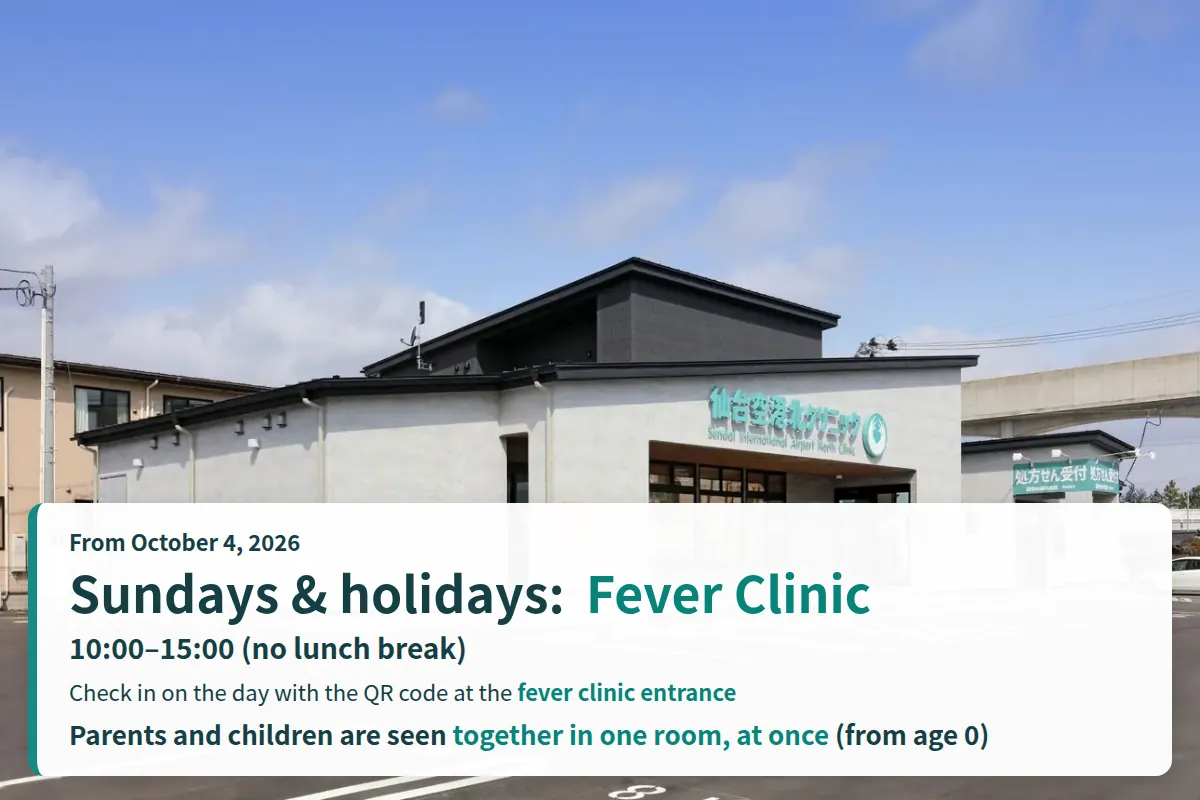
First, a note about our fever clinic on Sundays and national holidays. PCR testing for influenza and COVID (a test that copies the virus’s genetic material in order to detect it) gives results the same day.
From October 4, 2026, we also run the fever clinic on Sundays and national holidays
10:00 to 15:00 (no lunch break). You check in on the day. We give you the PCR result the same day. On Sundays and holidays we see fever patients only, and we do not offer general outpatient care or IV drips. Please check the clinic calendar for clinic dates and closed days. Notice: fever clinic on Sundays and national holidays
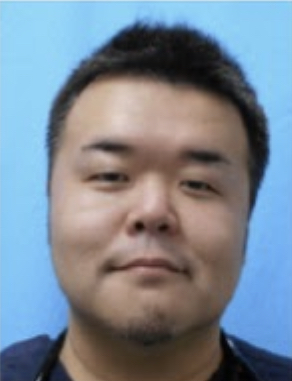
Shunichi Gamo, MD, PhD
Director, Sendai International Airport North Clinic
Born and raised locally, he attended Yuriage Elementary School and Yuriage Junior High School in Natori City. After graduating from Tohoku University School of Medicine, he worked at Sendai Open Hospital and Kesennuma City Hospital, and then at Tohoku University Hospital. In April 2021, in the middle of the COVID-19 pandemic, he opened Sendai International Airport North Clinic. Holding to a fever clinic that never turns patients away, he cared for well over 20,000 patients with fever in the two years before COVID-19 was moved to Class 5 under Japan’s infectious disease law.
Society memberships and board certifications
Certified Member and Board Certified Fellow, Japanese Society of Internal Medicine
Board Certified Pulmonologist, Japanese Respiratory Society
Board Certified Allergist, Japanese Society of Allergology
Board Certified Specialist, Japanese Society of Anti-Aging Medicine
PhD in Medicine (Tohoku University)
In short: 3 things to check first when your child has hives and a fever
When your child has hives and a fever as well, first look at the following 3 things.
- How the rash fades
Check whether the raised red patches disappear without a trace within tens of minutes to 24 hours and keep coming and going[1] - Whole-body symptoms
Look for fever, abdominal pain, vomiting, a feeling of something stuck in the throat, or feeling unwell - Breathing and consciousness
Check that your child is not struggling to breathe and is not limp
If the third point, breathing and consciousness, is not right, act quickly whatever the fever or the rash looks like. I have set out the details in “Signs that you need care quickly” below.
 Dr. Gamo
Hives typically come and go. Please stay calm and watch how they fade.
Do hives in children often come with an infection?
Yes. The Japanese Dermatological Association’s Guidelines for the Diagnosis and Treatment of Urticaria 2026 also state that acute hives, especially in children, often appear with a short-lived infection, such as an upper respiratory infection[1]. The Japanese Society of Allergology also explains that acute hives that clear up within 6 weeks are “often caused by bacterial or viral infections and the like”[2].
Let’s look at the numbers. A 2008 study from Taiwan looked at 953 children who came to an emergency department with their first episode of acute hives, and the most common recorded cause was infection, at 48.4%[3]. By age, the figures were 56.5% in infants, 51.2% in preschool children, 42.1% in school-age children, and 17.1% in adolescents, so the younger the child, the higher the share of infections tended to be[3].
On the other hand, a 2022 study of 250 children with acute hives at an emergency department in Portugal found that infection was suspected in 22%, and the cause was unknown in 44%[4]. The gap between 48.4% and 22% comes from differences in who was studied and how, and these figures do not show the proportion in Japanese children.
The guideline also mentions an old report in which 19 of 22 children were linked to an acute throat infection[1]. In addition, a 2009 study from Taiwan of 65 children hospitalized with acute hives that did not respond well to antihistamines found evidence of Mycoplasma infection in 21 of them (32%)[5]. However, this result applies only to a small group of children who were hospitalized, and it does not mean that most hives are caused by Mycoplasma[5]. Having a cough and hives does not by itself mean it is Mycoplasma, either.
Dr. GamoKnowing it is not unusual for an infection to trigger hives can help you stay calmer. Let’s figure out the cause together at the visit.
How do you tell hives from insect bites? The shape of the rash does not reveal the cause
Hives and insect bites look a lot alike, but the biggest difference is “how they go away”[6].
| What to look at | Hives | Insect bites |
|---|---|---|
| How it goes away | Disappears without a trace within tens of minutes to 24 hours[1][6] | A lump-like spot may remain for several days[6] |
| Skin changes | Even when raised and red, leaves no mark[6] | Scratching can make the surface ooze or the spots increase in number[6] |
| Itching | Present in most cases[1] | Present[6] |
Conversely, even bumps that look like insect bites at first glance are likely to be hives if they disappear without a trace within a few hours[6]. If a rash, once it has appeared, stays in the same place for days, turns brown, or becomes rough or flaky on the surface, a condition other than hives should be considered[6].
Dr. GamoIf you are unsure what it is, taking a photo makes it easier to show what it looked like even after it fades.
And the important point is that the shape of hives (round, oval, linear, petal-like, map-like, and so on) has no essential meaning[6]. The shape of the rash alone does not tell you which virus or bacterium is the cause[1][6].
What if there is both a fever and a rash? Kawasaki disease is another possibility
When a fever and a rash occur together, besides hives we also keep in mind a disease called Kawasaki disease. Kawasaki disease is most common in infants and young children aged 4 and under, and it is a disease of unknown cause in which the blood vessels throughout the body become inflamed[7].
According to the National Center for Child Health and Development, Kawasaki disease is diagnosed when 5 or more of these 6 symptoms are present: high fever, redness of the whites of both eyes (the conjunctiva), bright red lips and a bumpy, strawberry-like tongue, a red rash on the body, swelling of the hands and feet, and swollen lymph nodes in the neck[7]. If several of these signs appear together, it is important to have your child seen early by a pediatrician. Bringing the fever down as early as possible during the high-fever phase and calming the inflammation of the blood vessels is considered very important to prevent aneurysms (bulges) in the coronary arteries[7].
However, you cannot tell whether hives are actually Kawasaki disease from the look of the rash alone. If you notice any worrying signs, do not judge for yourself; please see a doctor.
Dr. GamoPlease do not decide from the look of the rash alone; also watch for other changes such as red eyes or redness of the lips and tongue.
Signs that you need care quickly: 119, the emergency department, or the same day
In many cases hives stay limited to the skin, but they can come with abdominal pain, fever, feeling unwell, a sense that the airway is blocked, vomiting, and so on. In that case, it is said that anaphylaxis and other whole-body diseases need to be ruled out[1].
Call 119 right away
If even one of the following applies, call 119 without hesitation. The same goes at night and on holidays. This is general safety advice that is widely shared as a guide in medical care.
- Difficulty breathing, wheezing or whistling breath, a hoarse voice, or a throat that feels blocked so it is hard to breathe[8]
- Limp, drowsy and confused, or not responding when you call to them[8][9]
- Having a seizure
- A pale face, fainting, or wetting themselves[8]
- Repeated, violent vomiting or severe abdominal pain[8]
Anaphylaxis can progress quickly, and its severity is said to be hard to predict in the early stage[8]. The Japanese Society of Allergology states that anaphylactic shock calls for a rapid response, with basic life support given as needed and transport to a medical facility arranged urgently[9]. If your child has a food allergy and you have used an EpiPen (an adrenaline auto-injector), still call an ambulance and go to a medical facility[8].
Dr. GamoWhat makes anaphylaxis frightening is that it can progress quickly even when it looks mild at first.
For food allergy and anaphylaxis, please also see Food Allergy: Fever and Anaphylaxis in Children (Call 119 After the EpiPen).
See a doctor the same day
If breathing and consciousness are fine but any of the following applies, do not wait and watch for too long; see a doctor the same day. If you are unsure at night or on a holiday, you can also consult an emergency department or the children’s emergency advice line (#8000).
- The hives come with fever, abdominal pain, vomiting, or a feeling of something stuck in the throat[1]
- The eyelids or lips have started to swell (angioedema)[2]
- A rash, once it has appeared, stays for days, turns brown, or becomes rough on the surface[6]
- The hives do not get better even with antihistamines[5]
- The hives have lasted 6 weeks or longer[2]
If your child’s condition changes during the night, go back to the “119” guide above at that point and decide again.
Treatment of hives, and what to tell us at the visit
The mainstay of treatment for hives is antihistamines[1]. Antihistamines are the basic treatment that can be expected to work whatever the type of hives, and second-generation antihistamines, which cause less drowsiness, are recommended as the first choice[1]. In children too, non-sedating second-generation antihistamines are the standard[1]. Medicines taken by mouth or given by injection can be expected to work, while creams and ointments are said to ease the itching only a little[6].
First-generation antihistamines and oral steroids, which carry a higher risk of side effects, and combination products containing them should be avoided in children as far as possible[1]. Do not use leftover medicine at home or over-the-counter cold medicine on your own judgement; use medicines exactly as your doctor instructs[1].
When there is a fever or swollen lymph nodes, general tests such as a complete blood count and blood chemistry are considered useful for understanding your child’s overall condition[1]. However, test results alone cannot diagnose an accompanying infection[1]. Acute hives are said to clear up within about 1 month in most cases with appropriate treatment[1]. Ask the doctor at the visit about the expected course and how to use the medicine. Hives that last 6 weeks or longer are called chronic hives, and their cause often cannot be identified, so please see a doctor to talk it over[2].
At the visit, it helps us a great deal if you can tell us the following.
- When it started / whether the rash keeps coming and going
- Whether there is fever, abdominal pain, vomiting, a feeling of something stuck in the throat, or difficulty breathing
- Whether there were signs of infection (runny nose, cough, sore throat) before the hives
- Anything that might be linked, such as food eaten, medicine taken, insect bites, or a new soap
- Medicines your child takes regularly, and whether your child has a food allergy
- Whether your child has ever been told they had anaphylaxis
In particular, the time the rash appeared, the time it faded, and whether there were any whole-body symptoms help us think about the cause. Please do tell us.
Dr. GamoKeeping a note on your smartphone of the time the rash appeared and the time it faded is handy.
Frequently asked questions
- My child has hives but no fever. Can an infection still be the cause?
-
Yes. Acute hives, especially in children, often appear with a short-lived infection, such as an upper respiratory infection[1]. Even without a fever, please tell us whether there were signs of infection, such as a runny nose or a cough, beforehand.
- My child has hives and a slight fever. Should we see a doctor right away?
-
When hives come with a fever, it is said that anaphylaxis and other whole-body diseases need to be ruled out[1]. Please see a doctor the same day to talk it over. If your child is struggling to breathe, is limp, or is having a seizure, call 119 without hesitation.
- Along with the hives, my child’s eyelids and lips have started to swell. What should I do?
-
Swelling of the eyelids or lips is called angioedema[2]. If the swelling reaches the lining of the throat, breathing can become difficult[2], so call 119 if there is any change in breathing; if not, see a doctor early.
- How many days does it take for hives to clear up?
-
Acute hives are said to clear up within about 1 month in most cases with appropriate treatment[1]. We will explain the expected course at the visit. Hives that last 6 weeks or longer are chronic hives, so please see a doctor to talk it over[2].
- Can I give my child medicine we have at home?
-
Please do not use leftover medicine at home or over-the-counter cold medicine on your own judgement. In children, first-generation antihistamines, oral steroids, and combination products containing them should be avoided as far as possible[1]. Use medicines exactly as your doctor instructs.
- Can the shape of the hives tell us which virus is the cause?
-
No. The shape of hives is said to have no essential meaning[6]. And even when an infection is involved, the site of the infection cannot always be identified[1]. We do not decide the cause from the rash alone; the doctor judges it at the examination together with the course and the symptoms.
Summary: Hives with a fever in children often come with an infection
- Hives in children often appear with an infection, and antihistamines can often control the symptoms
- If your child has difficulty breathing, is limp, is having a seizure, or shows signs of anaphylaxis, call 119
- If the hives come with fever, abdominal pain, vomiting, or a feeling of something stuck in the throat, have your child seen by a doctor
- The shape of the rash does not determine the cause. If it disappears without a trace in tens of minutes to 24 hours, think of hives
- At the visit, tell us when the rash appeared and when it faded, any whole-body symptoms, any signs of infection, and medicines and allergies
Hives and a fever in your child are a combination that can come together when an infection is the trigger. Details such as “there was a cough or runny nose first” or “they were fine yesterday” give us clues about the cause. Please pass on what you noticed to us just as it is. Leave the medical care to us.
That’s all.
Disclaimer
This article is intended to provide general medical information and does not replace an examination, diagnosis, or treatment by a doctor. The content is based on medical knowledge at the time of publication, but the right course of action differs for each person. If you are worried about symptoms, please consult a medical facility.
References
- Urticaria Clinical Practice Guideline Committee (Fukunaga A, Washio K, Oda Y, Morioke S, Hayama K, Tanaka A, et al.). Japanese Guidelines for the Diagnosis and Treatment of Urticaria 2026 (4th edition). Jpn J Dermatol. 2026;136(4):375-493. Japanese Dermatological Association website (in Japanese). Accessed October 2026. https://www.dermatol.or.jp/dermatol/wp-content/uploads/2013/08/fd75d78b6dc0a9199d380222719cd41b.pdf
- Japanese Society of Allergology. Urticaria (hives) / Q&A. Japanese Society of Allergology website (in Japanese). Accessed October 2026. https://www.jsaweb.jp/modules/citizen_qa/index.php?content_id=12
- Liu TH, Lin YR, Yang KC, Chou CC, Chang YJ, Wu HP. First attack of acute urticaria in pediatric emergency department. Pediatr Neonatol. 2008 Jun;49(3):58-64. doi:10.1016/S1875-9572(08)60014-5 PMID: 18947000
- Santa C, Valente CL, Mesquita M, Lopes J, Cardoso I, Rodrigues J, et al. Acute urticaria in children: from pediatric Emergency Department to allergology consultation at a Central Hospital. Eur Ann Allergy Clin Immunol. 2022 Jul;54(4):168-74. doi:10.23822/EurAnnACI.1764-1489.204 PMID: 33944542
- Wu CC, Kuo HC, Yu HR, Wang L, Yang KD. Association of acute urticaria with Mycoplasma pneumoniae infection in hospitalized children. Ann Allergy Asthma Immunol. 2009 Aug;103(2):134-9. doi:10.1016/S1081-1206(10)60166-4 PMID: 19739426
- Japanese Dermatological Association. Dermatology Q&A: Urticaria (hives), Q1, Q2, Q13. Japanese Dermatological Association website (in Japanese). Accessed October 2026. https://qa.dermatol.or.jp/qa9/q01.html, https://qa.dermatol.or.jp/qa9/q02.html, https://qa.dermatol.or.jp/qa9/q13.html
- National Center for Child Health and Development. Kawasaki disease. National Center for Child Health and Development website (in Japanese). Accessed October 2026. https://www.ncchd.go.jp/hospital/sickness/children/030.html
- Japanese Society of Allergology, Anaphylaxis Committee. Anaphylaxis Guidelines 2022. Japanese Society of Allergology website (in Japanese). Accessed October 2026. https://www.jsaweb.jp/uploads/files/Web_AnaGL_2022_1201.pdf
- Japanese Society of Allergology. Anaphylaxis / Q&A. Japanese Society of Allergology website (in Japanese). Accessed October 2026. https://www.jsaweb.jp/modules/citizen_qa/index.php?content_id=14
▶ Overview of this topic: Fever clinic on Sundays and national holidays (from October 4, 2026, 10:00 to 15:00)
More articles to read when you have a fever
For diseases behind a fever with a rash, see Headache and Fever in Children: Signs of Meningitis Not to Miss; for skin infections, see Impetigo in Children: A Skin Infection That Increases in Summer; and for emergency care for allergies, see Food Allergy: Fever and Anaphylaxis in Children.