
Quick answer
- Fever is the body’s natural response to fighting infections like coughs and colds [1]. You can usually look after a child with fever at home with fluids, rest, and acetaminophen (a fever and pain medicine) if they are distressed or uncomfortable [1].
- Any fever of 38.0°C or higher in a baby under 3 months needs medical advice the same day.
- Call 119 (free, ambulance) for danger signs. These include a seizure that does not stop, hard or very fast breathing, blue or grey lips, a child who cannot be woken, or a rash that does not fade when pressed.
- In a Japanese drugstore, look for acetaminophen on children’s products and check the label. Do not give aspirin to children [1].
- Keep every receipt and ask for an English medical certificate for insurance.
A high temperature itself is not the whole story. How your child behaves, drinks, and breathes matters more than the number on the thermometer.
What could be causing my child’s fever on the trip?
Fever is the body’s natural response to fighting infections like coughs and colds [1]. In travelling children, the usual suspects are the same childhood infections found anywhere in the world [2]:
- Viral respiratory infections (infections of the nose, throat, and lungs): influenza, COVID-19, RSV (respiratory syncytial virus, a common cause of chest infections in babies), human metapneumovirus, adenovirus, rhinovirus/enterovirus, and parainfluenza virus [2][8].
- Hand-foot-and-mouth disease and herpangina (viral illnesses with mouth sores, common in summer).
- Viral gastroenteritis (stomach and bowel infection with vomiting and diarrhea).
- Acute otitis media (a bacterial infection of the middle ear, behind the eardrum).
- Strep throat (a throat infection caused by group A streptococcus bacteria).
- Urinary tract infection (an infection of the bladder or kidneys), especially in infants who have no cold symptoms.
- Mycoplasma pneumoniae [14] and pertussis (whooping cough) [3], when a cough has lasted a long time.
In summer, heat illness can also raise the body temperature. That is not an infection. And if a fever lasts 5 days or more, see a doctor, because some causes, such as Kawasaki disease (an illness that inflames blood vessels and needs specific treatment), must be ruled out.
These are possibilities, not a diagnosis. Only a doctor can tell which one applies to your child.
What should I do first at the hotel?
1. Measure the temperature
Use a digital thermometer to take your child’s temperature. A high temperature is 38.0°C or more [1]. If your child has just had a bath or been wrapped in a blanket, wait a few minutes and measure again [1].
2. Fluids first, food second
- Give plenty of fluids [1].
- Oral rehydration solution (a drink that replaces water and salts) is available at drugstores.
- If your baby is breastfed, continue to breastfeed as normal [1].
3. Keep the child comfortable
Do not undress your child or sponge them down to cool them, and do not cover them up in too many clothes [1]. A fever medicine is for comfort; it is not required for every fever. Give acetaminophen by body weight, following the package or the doctor. Do not wake a sleeping child just to give medicine.
4. Write things down
Record when the fever started, the temperatures you measured, which medicines you gave and when, how many wet diapers (urine outputs) there were, and other symptoms. Japanese clinics will ask for these details.
5. Ask for help
Contact the hotel front desk; many can help you find a clinic. For phone help in English, Chinese, or Korean, the JNTO Japan Visitor Hotline is available 24 hours a day at 050-3816-2787.
When to see a doctor, and when to call 119
Call 119 now
In Japan, 119 is the free emergency number for fire and ambulance. If you need an ambulance, show the sentence below to a nearby Japanese person so they will call one for you: “Kyukyusha o yonde kudasai” (Please call an ambulance.). Call for:
- A seizure (fit) that does not stop, or a seizure followed by a child who does not wake up. Most short febrile seizures (seizures caused by fever) stop by themselves; lay the child on their side and do not put anything in the mouth.
- Breathing difficulty: the chest pulling in, grunting noises, or very fast breathing.
- Blue or grey lips.
- A child who is unresponsive, very floppy, or confused.
- Purple or red spots that do not fade when pressed under a glass.
- A stiff neck.
- Signs of a severe allergic reaction (anaphylaxis). If an adrenaline auto-injector is used, still call 119.
See a doctor soon (same day or next day)
- Any baby under 3 months with 38.0°C or higher — the same day.
- Age 3–6 months with a temperature of 39.0°C or higher.
- Not drinking, or signs of dehydration such as nappies that are not very wet [1].
- Persistent vomiting.
- Ear pain.
- Painful swallowing with a rash, or without a cough.
- Fever for 5 days or more.
- Fever after returning from your trip [3].
- An underlying condition such as asthma, heart disease, or a weakened immune system [9].
- Simply put: a parent’s instinct that something is wrong [1].
How is the cause diagnosed, and why does it matter?
The doctor starts with the history and a physical examination: ears, throat, chest, skin, and hydration. Tests are then chosen according to the findings [6][7]:
- Rapid antigen tests (quick swab tests that detect pieces of a germ) for common viruses such as influenza.
- Multiplex PCR panels — a test that looks for the genetic material of many germs at once, from one nasal swab [8].
- Urine tests in infants, because urinary tract infection is a common hidden cause of fever in babies [6].
- Blood tests and chest X-ray when indicated.
A diagnosis matters for three reasons:
- It decides whether a specific medicine is needed. Examples are an antiviral (a medicine that works against influenza) or an antibiotic (a medicine that works only against bacteria), for strep throat, Mycoplasma, pertussis, urinary tract infection, or some ear infections.
- It avoids unnecessary antibiotics for viral infections [8][9].
- It tells the family about contagiousness and flying. An insurer also needs a named diagnosis.
Know the limits of a respiratory PCR panel: it covers only respiratory pathogens, so it does not detect causes such as urinary tract infection, otitis media, gastroenteritis, or Kawasaki disease. A positive rhinovirus/enterovirus result does not rule out another cause, and a negative result does not prove there is no infection. No test is 100% accurate.
How is it treated in Japan? Medicines, prescriptions and drugstores
Fever and pain medicine
Acetaminophen is the fever medicine commonly used for children in Japan, and dosing is based on body weight and is set by the doctor. Prescription forms include syrups, powders, and suppositories; your doctor will choose the form that suits your child.
Rectal suppositories (small bullets inserted into the bottom) are very common in Japan. They are useful when a child vomits or refuses oral medicine. Insert according to the package instructions, and store them as the package says — usually away from heat, because they can soften.
In drugstores, children’s fever products containing acetaminophen exist as granules, chewables, and suppositories. Each product has its own minimum age on the box, so read the label or ask the pharmacist. The same applies to ibuprofen (an anti-inflammatory fever medicine): check the age range on the Japanese package, and ask the pharmacist or a doctor if you are not sure.
Avoid in children:
- Aspirin — do not give aspirin to children under 16 years of age [1].
- Diclofenac and mefenamic acid in children with influenza: after case series linked these drugs to worse outcomes in influenza-associated encephalopathy (a rare brain complication of flu), Japan recommended acetaminophen for influenza fever in children [10].
Be careful with brand names: the same brand name can contain different ingredients in different countries, so the brand name alone is not a safe guide — always check the ingredient. Do not alternate acetaminophen and ibuprofen unless a doctor tells you to [1].
Specific treatments
- Influenza antivirals such as oseltamivir and baloxavir are prescribed by a doctor according to age and the timing of symptom onset; antivirals work best when started early [11][12][13].
- Antibiotics are only for bacterial causes — for example amoxicillin for strep throat or ear infection. For Mycoplasma, macrolides (a class of antibiotics) are first line, but macrolide resistance is common in Japan, so alternatives such as tetracyclines may be used [14][15][16].
- Most viral infections receive supportive care only: fluids, rest, and fever medicine as needed [2].
The prescription process
The clinic issues a prescription, and you collect the medicines at a separate dispensing pharmacy, usually next to or near the clinic. You pay for medicines separately there. Bring your child’s weight and allergy list.
Travel-specific points: flying, siblings and parents, and insurance documents
Flying
Delay flights while a child has a high fever or a contagious illness, and ask the doctor whether the child is fit to fly. If the child has a cold, swallowing during landing (for example, a drink for an older child) can help with ear pressure.
Siblings and parents
Siblings and parents often get ill one after another. Wash your hands often, cover coughs, and try to avoid contact with people who are sick [2]. Keep the sick child’s cups and towels separate.
Medicines from home
Bring the medicines (including over-the-counter medicines) you think you might need. Some prescription drugs may be restricted, so check with Japan’s embassy before travel. Do not give a mix of home products and Japanese products containing the same ingredient.
Documents for insurance
- Call your insurer’s assistance line early; some arrange cashless care or recommend facilities. Bring your passport and policy number.
- Ask the clinic for an itemized receipt and an English medical certificate with the diagnosis and dates.
- Keep the pharmacy receipt and the prescription or medication list.
- Clinics may charge separately for certificates and may take time to issue them. Insurance payment is not assured, so check your policy.
Frequently asked questions
Can I give the fever medicine I brought from home?
Yes, if it is acetaminophen or ibuprofen dosed for your child’s weight and age. Do not double up with a Japanese product containing the same ingredient. Bring the box to the doctor.
Why did the Japanese doctor give a suppository?
Rectal suppositories are standard practice in Japan. They are useful when a child vomits or refuses oral medicine. Insert the suppository into the bottom as the package directs; the medicine dissolves and is absorbed there.
My child’s fever went down but came back. Is that dangerous?
It is common in viral infections for the fever to rise and fall over several days. See a doctor if the fever lasts 5 days or more, if danger signs appear, or if a new problem appears.
Should I ask for antibiotics so the trip isn’t ruined?
Only bacterial infections benefit from antibiotics. Antibiotics are frequently prescribed for viral illness, but a diagnosis decides [8][9].
Can the whole family be seen together?
It depends on the facility. Many Japanese clinics register each patient separately, and each person needs their own receipt and certificate for insurance.
If you are near Sendai Airport
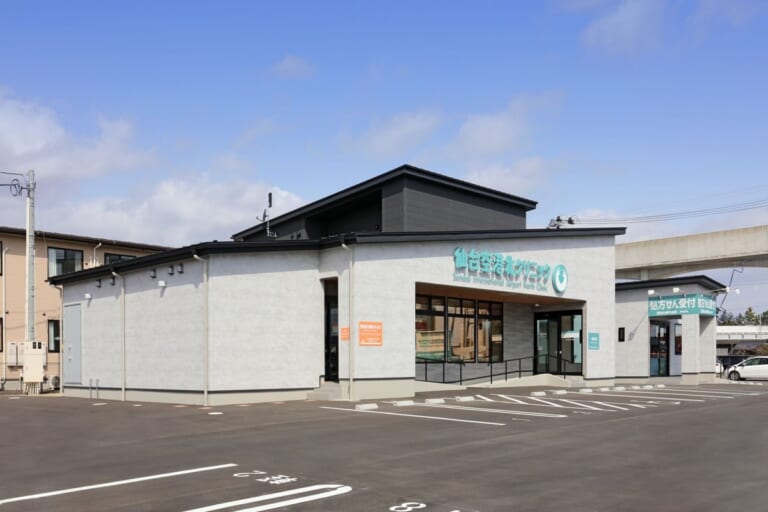
Sendai International Airport North Clinic, 8-1-8 Mitazono, Natori, Miyagi, is about 10 minutes by car from Sendai International Airport. The director is Shunichi Gamo, M.D., Ph.D., board certified in internal medicine, pulmonology (Japanese Respiratory Society) and allergology (Japanese Society of Allergology).
The fever clinic has its own entrance. You check in on the same day with a QR code at the fever clinic entrance (the check-in page is available in English); no advance contact is needed. Hours: Monday, Tuesday, Wednesday, Friday, and Saturday 10:00–12:00 and 14:30–18:00. Sundays and Japanese national holidays are 10:00–15:00 (check the calendar on the clinic page). The clinic is closed Thursdays. Children from age 0 are seen, and family members with fever can be seen together in the same room by the same doctor at one visit.
For visitors without Japanese health insurance, there is a flat fee of USD 700, charged in yen at the day’s rate (card or cash). It includes an English consultation, the BioFire SpotFire R Panel multiplex PCR (one nasal swab, about 15 minutes, 11 viruses and 4 bacteria), a same-day English medical certificate with ICD-10 codes, and a prescription if needed. Medicines are paid separately at the pharmacy next door. Group A streptococcus is not on the panel. Residents with Japanese health insurance are seen under insurance, and the flat fee does not apply.
References
- High temperature (fever) in children — NHS
- Influenza (seasonal) — WHO
- Japan — Traveler view — CDC
- For safe travels in Japan — Guide for when you are feeling ill — JNTO
- Prophylactic drug management for febrile seizures in children (Cochrane Review)
- Febrile infant update
- Validation of the “Step-by-Step” Approach in the Management of Young Febrile Infants
- Multiplex PCR and Antibiotic Use in Children with Community-Acquired Pneumonia
- Antimicrobial prescribing after rapid influenza PCR implementation in the emergency department
- Non-Steroidal Anti-Inflammatory Drug Versus Acetaminophen Initiation at Influenza Diagnosis and 14-Day Neuropsychiatric Diagnoses in Adults
- Baloxavir Marboxil Single-dose Treatment in Influenza-infected Children (miniSTONE-2)
- Baloxavir Marboxil for Uncomplicated Influenza in Adults and Adolescents
- Comparative Effectiveness of Baloxavir Marboxil and Oseltamivir Treatment in Reducing Household Transmission of Influenza
- Macrolide-Resistant Mycoplasma pneumoniae Among Japanese Children from 2008 to 2024
- Treatment of Macrolide-resistant Mycoplasma pneumoniae Pneumonia in Children: A Meta-analysis of Macrolides Versus Tetracyclines
- Growing Threat of Macrolide-Resistant Mycoplasma pneumoniae Among Children