
Quick answer
- Fever, sore throat or cough in Japan could be COVID-19, influenza (flu) or another respiratory infection. Symptoms alone cannot tell them apart.
- Japan currently has no legal isolation order and no entry testing for visitors; COVID-19 is handled like other seasonal respiratory infections, with recommendations to stay in rather than legal rules. Check official Japanese sources before travel [1].
- Test early. Some antiviral medicines used in Japan only help when started within a few days of symptom onset [2].
- Call 119 for an ambulance if you have danger signs such as difficulty breathing (ambulance transport is typically free in Japan).
- Keep your medical certificate and all receipts for travel insurance.
Is it COVID-19, flu, or something else?
COVID-19 is an infection caused by the SARS-CoV-2 virus. Common symptoms are fever, chills and sore throat. Other symptoms include cough, runny or blocked nose, fatigue (tiredness), headache, muscle aches, and sometimes loss or change of sense of taste or smell.
These symptoms overlap heavily with influenza (flu), RSV (a virus that causes cold-like illness), human metapneumovirus, adenovirus, Mycoplasma (a bacterium that causes respiratory infections) and ordinary colds. You cannot tell them apart by how you feel.
Respiratory infections circulate in Japan throughout the year, with waves in winter and summer. Loss of taste or smell suggests COVID-19 but does not confirm it, and it does not happen to everyone.
What should I do first at the hotel?
- Measure your temperature.
- Wear a mask around other people.
- Stay in your room. Avoid the lobby, breakfast room and public baths (onsen/sento).
- Tell the front desk you are unwell, by phone if possible.
- Use room delivery or convenience store delivery for food.
- Drink fluids regularly.
- Note the day your symptoms started. This is “day 0” and matters for treatment timing.
Buying a self-test kit
Japanese pharmacies and drugstores sell approved COVID-19 antigen self-test kits (a test that detects viral proteins from a nasal swab in about 15 minutes). Look for kits labelled as approved in-vitro diagnostic products. Kits labelled “research use only” are not approved diagnostics.
A negative antigen test early in the illness does not rule out COVID-19. Antigen tests are less sensitive (they miss more infections) in the first days and may need repeating.
Japan’s current recommendation
Japanese health authorities recommend staying in while you are unwell and taking care to avoid spreading the virus to others, including wearing a mask around people for some time after symptoms start. This is a recommendation, not a legal obligation. Hotels are not legally required to let you extend your stay or to refuse you, so ask the front desk directly about your situation.
When to see a doctor
Call 119 (ambulance) if you have:
- Difficulty breathing
- Chest pain or pressure
- Bluish lips or face
- Confusion or difficulty staying awake
- Inability to drink or keep fluids down
- In infants: poor feeding or labored breathing
Ambulance transport is typically free in Japan. You may tell the ambulance crew your preferred hospital, but the destination depends on your medical condition and hospital availability.
See a doctor soon (same or next day) if you:
- Are aged 65 or older
- Are pregnant
- Have chronic lung, heart or kidney disease, diabetes, obesity, or a weakened immune system
- Have had fever for more than 3 days
- Are getting worse after initially improving
For help finding care in English, Chinese or Korean, call the JNTO Japan Visitor Hotline: 050-3816-2787 (24 hours, every day).
How is COVID-19 diagnosed, and why does the test matter?
Antigen tests
Antigen tests are fast and cheap but less sensitive, especially early in the illness or when viral load (the amount of virus) is low. In symptomatic people, sensitivity is highest in the first week of illness. A negative result does not exclude infection.
PCR and multiplex PCR
PCR (a test that looks for the genetic material of a virus) is more sensitive than antigen testing. A multiplex PCR panel (a test that looks for the genetic material of many germs at once) uses one nasal swab to check several respiratory pathogens at the same time. This helps the doctor decide whether a COVID-19 antiviral, an influenza antiviral, an antibiotic for Mycoplasma, or no medicine at all is appropriate [3].
Limits of testing
- A positive PCR shows viral genetic material but does not measure how contagious you are, and it can stay positive after you have recovered.
- Routine antigen tests and most routine PCR tests do not identify the virus variant; specific mutation assays or genomic sequencing may be used when variant identification is needed.
- Some causes of sore throat, such as group A streptococcus (a bacterium), need a separate test.
- Pneumonia (lung infection) may need a physical exam and imaging such as an X-ray; no swab test replaces this.
- No test is 100% accurate, and no single test excludes all infections.
How is COVID-19 treated in Japan?
Most people recover with rest and symptom relief [4].
Symptom relief (no prescription needed)
- Acetaminophen (paracetamol) is commonly used and widely available.
- Ibuprofen and loxoprofen products are sold at Japanese drugstores. Ask the pharmacist to check they are suitable for you, especially in pregnancy, kidney disease, or asthma triggered by NSAIDs (anti-inflammatory painkillers).
- Cough and throat remedies are also available. Ask the pharmacist and check ingredients, especially to avoid doubling up on the same painkiller in combination cold medicines.
Prescription antivirals (a doctor’s prescription is required in Japan)
- Ensitrelvir (Xocova): a Japanese-developed oral antiviral. In Japan, treatment is approved for adults and children aged 12 or older, and for children aged 6 to under 12 who weigh at least 20 kg. For children aged 6 to under 12, the treatment dose depends on weight. Post-exposure preventive use is approved for eligible adults and children aged 12 or older [5][6]. Started within 72 hours of symptom onset per the Japanese label. Contraindicated (not allowed) in pregnancy. It has many drug interactions. In a trial of patients aged 12 to under 70, starting treatment within 72 hours shortened typical symptoms by about one day versus placebo [2]. The main outcomes of the separate trial in children aged 6–11 were safety and how their bodies processed the medicine [7].
- Nirmatrelvir/ritonavir (Paxlovid): for people at risk of severe illness. Started within 5 days of onset. In Japan, treatment is approved for adults and for children aged 6 or older who weigh at least 20 kg. The dose differs for children weighing 20 to under 40 kg and those weighing 40 kg or more [11]. Ritonavir causes major drug interactions, so bring your medicine list. Recent trials in vaccinated higher-risk outpatients did not show a reduction in hospitalization or death, so doctors weigh the expected benefit for each patient [8].
- Molnupiravir (Lagevrio): for adults 18 and over at risk of severe illness. Within 5 days of onset. Not for use in pregnancy. The approved treatment course is 5 days. Detection of viral RNA after treatment does not by itself establish that extending the course improves clinical outcomes. Treatment decisions should follow the current prescribing information and the doctor’s clinical assessment.
- Remdesivir: an intravenous (drip) medicine used in medical settings.
Antivirals are prescribed by a doctor based on your age, risk factors, timing and current medicines. They are not sold over the counter. Visitors pay medicine costs at the pharmacy. Antibiotics do not treat COVID-19.
Travel points: flying home, companions, children and insurance
Flying home
Japan has no exit testing. General public-health advice is to stay in until your symptoms improve, then take extra precautions such as wearing a mask around other people. In practice this usually means postponing a flight while feverish. Contact the airline about changing your flight; airlines may refuse visibly unwell passengers, so check their rules. Masks matter: on long flights without masking, aircraft transmission of SARS-CoV-2 has been documented, while long flights with enforced masking reported no transmission [10]. Check the entry rules of your destination country (Taiwan, Hong Kong, mainland China, Korea, the US) on official sites before departure.
Companions
Travel companions may be infected too. They should watch for symptoms, test if symptoms appear, and avoid sharing your room where possible.
Children
Some antivirals have age limits (see above). Use child formulations of acetaminophen dosed by weight per the label or as a pharmacist advises. Do not give aspirin to children.
Insurance
Keep the medical certificate stating the diagnosis (an ICD-10 code, the international disease classification code, helps), itemized receipts, the pharmacy receipt, and records of flight-change or extra-hotel costs. Contact your insurer’s assistance line early. Reimbursement depends on your policy.
Frequently asked questions
Do I legally have to isolate in Japan?
No. There is no legal isolation requirement. Japanese health authorities recommend staying in while you are unwell and masking around others for some time after symptoms start.
Can I buy a COVID test at a Japanese drugstore?
Yes. Approved antigen self-test kits are sold at pharmacies and drugstores. Check the label for approved in-vitro diagnostic product status, not “research use only”.
Can I get Paxlovid or Xocova as a tourist?
Only with a doctor’s prescription, when the doctor judges it appropriate for your age, risk, timing and other medicines. They are not sold over the counter.
My antigen test is negative but I have a fever. What now?
Retest later or get a PCR test. A negative antigen test early in illness does not rule out COVID-19, and you could have influenza or another infection instead.
How long am I contagious?
Transmission risk is highest in the first few days of illness and varies between people. Japanese recommendations include masking around others for some time after symptoms start.
Will my home country require a test when I return?
Entry rules have been relaxed in many countries, but they change. Check your destination’s official sources before you fly.
If you are near Sendai Airport
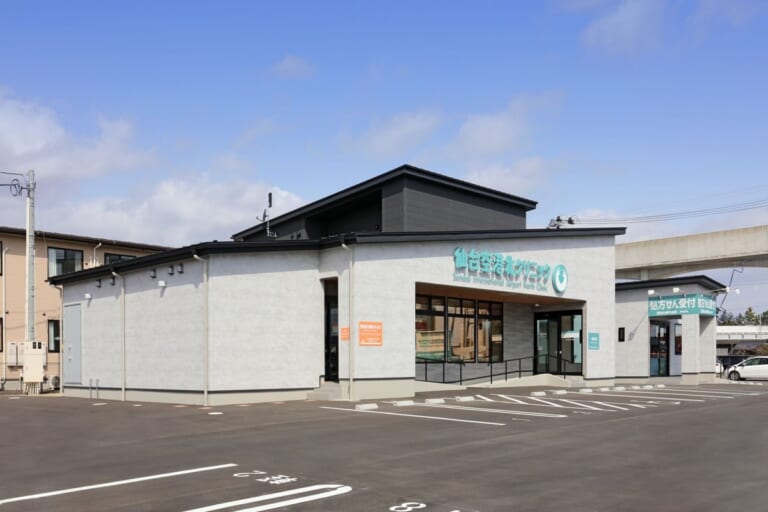
Sendai International Airport North Clinic is at 8-1-8 Mitazono, Natori, Miyagi, about 10 minutes by car from Sendai International Airport. The director is Shunichi Gamo, M.D., Ph.D., board certified in internal medicine, pulmonology and allergology.
The clinic runs a fever clinic with its own entrance and same-day QR check-in (the check-in page is available in English). Hours: Monday, Tuesday, Wednesday, Friday and Saturday 10:00-12:00 and 14:30-18:00; Sundays and national holidays 10:00-15:00 (check the calendar on the clinic page); closed Thursdays. Children from age 0 are seen, and family members with fever can be seen together.
For visitors without Japanese health insurance, the flat fee is USD 700, charged in yen at the day’s rate (card or cash). It covers an English consultation, the BioFire SpotFire R Panel, a same-day English medical certificate with ICD-10 codes for travel insurance, and a prescription if needed. The panel is a multiplex PCR test using one nasal swab, with results in about 15 minutes. It covers 11 viruses and 4 bacteria, including SARS-CoV-2 and influenza A/B. Medicines are paid separately at the pharmacy next door. Group A streptococcus is not on the panel, so a separate test is needed if strep throat is suspected. Residents with Japanese insurance are seen under insurance.
The clinic does not accept UnionPay. The doctor sees patients in English or Japanese, and clinic staff speak both languages. The clinic uses real-time AI voice translation to help communicate in other languages. For regular outpatient care, come directly to the general outpatient entrance during clinic hours. The fever clinic has a separate same-day check-in procedure.
References
- Japan Institute for Health Security (JIHS)
- Yotsuyanagi H, et al. Efficacy and Safety of 5-Day Oral Ensitrelvir for Patients With Mild to Moderate COVID-19: The SCORPIO-SR Randomized Clinical Trial. JAMA Netw Open 2024.
- Bigaud B, et al. Impact of multiplex PCR point-of-care platform implementation for respiratory pathogen detection in an emergency department. J Clin Microbiol 2026.
- WHO: Coronavirus disease (COVID-19) fact sheet
- Shionogi. Japanese approval of pediatric dosing for Xocova, June 19, 2026.
- PMDA. Xocova pediatric treatment dosing, review report (2026).
- Nakano T, et al. A Phase 3 Study of Ensitrelvir in Japanese Participants Aged 6-11 Years with SARS-CoV-2 Infection. J Pediatric Infect Dis Soc 2026.
- Butler CC, et al. Oral Nirmatrelvir-Ritonavir for Covid-19 in Higher-Risk Outpatients. N Engl J Med 2026.
- Standing JF, et al. Randomized controlled trial of molnupiravir SARS-CoV-2 viral and antibody response in at-risk adult outpatients. Nat Commun 2024.
- Zhao D, et al. The Risk of Aircraft-Acquired SARS-CoV-2 Transmission during Commercial Flights: A Systematic Review. Int J Environ Res Public Health 2024.
- PMDA. Paxlovid (nirmatrelvir/ritonavir), Japanese prescribing information.