
Quick answer
- A cough and fever that keep going for more than a few days — often a dry, stubborn cough — can be Mycoplasma pneumoniae pneumonia, sometimes called “walking pneumonia”. It is common in Japan in autumn and winter.
- A specific test — PCR or a similar molecular test (a test that looks for the genetic material of germs) from a nose or throat swab — is what tells it apart from flu, COVID-19 and other causes.
- Common antibiotics in the penicillin/cephalosporin family do not work against it. In Japan, doctors use macrolides first and switch to another antibiotic when resistance is suspected.
- Antibiotics need a doctor’s prescription in Japan. Drugstores sell only symptom relief.
- Breathing difficulty, chest pain, bluish lips or confusion: call 119 for an ambulance.
Could my cough and fever be mycoplasma?
Mycoplasma pneumoniae (known as 黴漿菌 / 肺炎支原體 / 支原体肺炎 in Chinese and 마이코플라스마 폐렴 in Korean) is a small bacterium that causes respiratory infections, especially in school-age children and young adults, though any age can get it.
The typical picture is gradual: fever, tiredness, headache and sore throat come first, then a dry cough that gets worse over days and can last for weeks. Many people feel less ill than the chest findings suggest, which is why it is sometimes called “walking pneumonia” — you are up and walking, not bedridden.
Symptoms do not appear immediately after exposure; there is usually a gap of some weeks between catching the germ and getting sick. This means you may have caught it before your trip or early in it, and symptoms can also start after you return home. It spreads from person to person by droplets from coughing [22], so illness can pass within families or travel groups.
Symptoms alone cannot confirm mycoplasma. Several illnesses look similar, including influenza, COVID-19 and RSV (respiratory syncytial virus), as well as other bacteria and viruses that cause pneumonia. A doctor and a test are needed to tell them apart [2].
Japan sees regular epidemics, roughly every few years, with a large epidemic season in 2024 recorded in national surveillance [1]. A major regional wave also occurred across East Asia in 2023–2024.
What should I do first?
- Rest and drink fluids. For fever and pain, acetaminophen (paracetamol) is sold in Japanese drugstores. Ask a pharmacist (薬剤師) for help choosing a product.
- Protect others. Wear a mask and keep some distance from your companions, especially infants, older people and pregnant women.
- Keep a simple record. Note when the fever and cough started, and write down your temperatures. This helps the doctor later.
- Prepare your documents. Keep your passport, travel insurance policy number, and a list of any medicines you take, ready.
Two cautions. First, some cough medicines contain codeine; consult a pharmacist before giving them to children. Second, antibiotics cannot be bought over the counter in Japan — a prescription is always needed. Do not use leftover antibiotics brought from home without medical advice.
If you need help finding an English-speaking medical facility, the JNTO Japan Visitor Hotline (050-3816-2787, 24 hours, English/Chinese/Korean) can introduce medical institutions where foreign languages are supported.
When to see a doctor, and when is it an emergency?
See a doctor if any of these apply:
- A fever that will not settle, or a cough that keeps getting worse.
- A child who is unusually tired, or not eating or drinking.
- You have asthma, a lung or heart condition, are pregnant, or have a weakened immune system.
- Fever not improving after starting an antibiotic.
Call 119 (free, ambulance; you can ask for English) if there is:
- Difficulty breathing or very fast breathing.
- Chest pain.
- Bluish lips.
- Confusion or seizures.
- Signs of dehydration in a small child.
- A blistering rash or mouth sores.
Uncommon complications include severe pneumonia, skin reactions, ear problems and, rarely, effects on the nervous system or blood — but most cases recover well [3].
How is it diagnosed, and why does a specific test matter?
The right treatment depends on the cause. Mycoplasma has no cell wall, so penicillins and cephalosporins — common first choices for other pneumonias — simply do not work against it [2]. Influenza and COVID-19 need different medicines again. That is why a specific test matters.
Tests used in Japan:
- Molecular tests — PCR, LAMP, or multiplex PCR (a test that looks for the genetic material of many germs at once) — from a nasal or throat swab.
- Chest X-ray — if pneumonia is suspected.
Multiplex PCR panels can detect multiple pathogens from one swab in a single visit. While useful, note that a positive result must be interpreted together with symptoms, as asymptomatic carriage can occur [7].
Two limits to know. A positive mycoplasma result can sometimes reflect carriage — the germ sitting quietly in the nose or throat without causing illness — especially in children, so the doctor interprets the result together with your symptoms and examination [7]. Also, standard panels do not report macrolide resistance, and a PCR panel does not replace a chest X-ray or a doctor’s examination. No test is 100% accurate.
How is mycoplasma treated in Japan?
First-line treatment for children and adults is usually a macrolide: azithromycin, clarithromycin or erythromycin [12]. These are prescription-only in Japan.
Macrolide resistance (when the germ no longer responds to these drugs) is common in East Asia. Rates are very high in parts of China. One Beijing study found 100% resistance to erythromycin and azithromycin in 2023 [8], and a nationwide study saw the resistant proportion rise from 80% to 93% between 2023 and 2024 [9]. Rates are also high in Korea [10]. In Japan, resistance is significant but lower: about 54% of isolates in the 2024 epidemic year [1].
If fever does not improve on a macrolide, the doctor may switch. A meta-analysis of children with resistant mycoplasma found tetracyclines shortened fever and hospital stay compared with continuing macrolides [11].
Options in Japan:
- Children: tosufloxacin (a quinolone used in Japanese children) or a tetracycline. Minocycline is generally avoided under 8 years because of tooth staining; the doctor weighs this [12].
- Adults: tetracyclines (minocycline, doxycycline) or respiratory fluoroquinolones such as levofloxacin [12].
- Pregnancy: some antibiotics used for mycoplasma are not suitable in pregnancy, so treatment choices need a doctor’s advice.
Symptom medicines — acetaminophen, cough medicine, sometimes inhalers — may be added. Severe cases may need hospital care and sometimes steroids. Mild cases can resolve on their own; whether antibiotics are needed is the doctor’s decision, and no specific drug works in every case.
Practical points: prescriptions are filled at a dispensing pharmacy (調剤薬局), often next to the clinic. Bring the medicine name list home with you. The cough can last weeks after the infection is treated — that alone does not mean treatment failed.
Travel points: flying, companions, children and insurance papers
Flying: there is no general ban, but do not fly while short of breath or with a high fever. Airlines may refuse visibly unwell passengers. If pneumonia is diagnosed, ask a doctor about fitness to fly, and wear a mask on board.
Companions: watch them for symptoms over the following weeks. Preventive antibiotics for well contacts are not routine.
Children: a practical approach is to keep the child home (or in the hotel) until the fever is gone and the child is well.
Insurance: ask for an English medical certificate showing the diagnosis (with ICD-10 codes — the international disease classification), test results, itemised receipts and prescription details. Keep pharmacy receipts separately. Contact your insurer early. Reimbursement is decided by your insurer.
Frequently asked questions
How long am I contagious?
It spreads most when you are coughing, and it spreads slowly, needing close contact. There is no exact cut-off, so the safe action is to wear a mask and keep distance from others while you have symptoms.
Can I buy azithromycin at a Japanese drugstore?
No. All antibiotics, including azithromycin, need a doctor’s prescription in Japan. Drugstores sell only symptom-relief medicines.
I took azithromycin and still have fever. What now?
Possible macrolide resistance or another cause. See a doctor again if the fever has not improved; the doctor may switch to a different antibiotic.
Does my child need a test if they only have a cough?
It depends on how ill the child is, how long symptoms have lasted, and any underlying conditions. The doctor decides based on the examination and whether the result would change treatment.
My cough lasted weeks after treatment. Is that normal?
Yes. The airways stay irritated after the infection clears, and a cough can last for weeks. That alone does not mean the treatment failed — but see a doctor if it worsens or new symptoms appear.
Will I need a chest X-ray?
If the doctor suspects pneumonia, a chest X-ray may be taken. It is not needed for every cough, and a PCR test does not replace it.
If you are near Sendai Airport
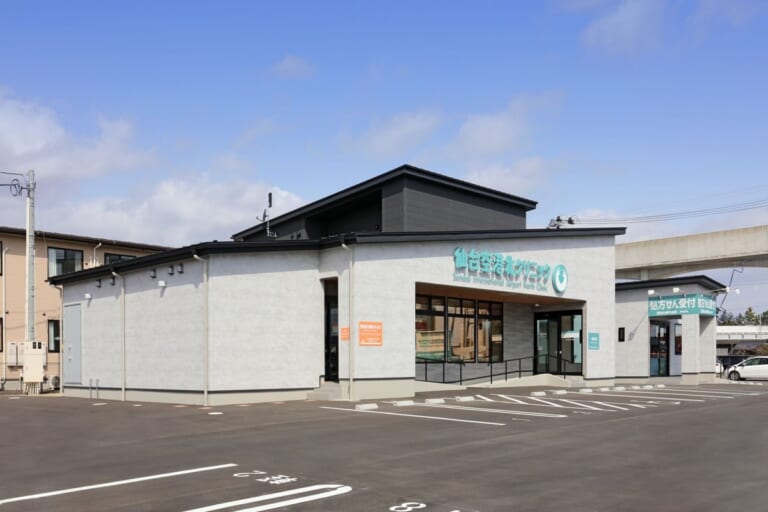
Sendai International Airport North Clinic (仙台空港北クリニック), 8-1-8 Mitazono, Natori, Miyagi, is about 10 minutes by car from Sendai International Airport. The director is Shunichi Gamo, M.D., Ph.D., board certified in internal medicine, pulmonology and allergology.
The fever clinic has its own entrance. Check in on the same day with a QR code at the fever clinic entrance; the check-in page is available in English. Hours: Monday, Tuesday, Wednesday, Friday and Saturday 10:00–12:00 and 14:30–18:00; Sundays and Japanese national holidays 10:00–15:00 (check the calendar on the clinic page); closed Thursdays. Children from age 0 are seen, and feverish family members can be seen together in the same room by the same doctor at one visit.
For visitors without Japanese health insurance, a flat fee of USD 700 covers an English consultation, a same-day English medical certificate with ICD-10 codes, and a prescription if needed. The fee is charged in yen at the day’s rate, by card or cash. It also covers the BioFire SpotFire R Panel multiplex PCR: one nasal swab, about 15 minutes, testing for Mycoplasma pneumoniae, Chlamydia pneumoniae, pertussis, influenza, COVID-19 and other viruses. Medicines are paid separately at the pharmacy next door. Group A streptococcus is not on the panel. Residents with Japanese health insurance are seen under insurance at the regular fever clinic.
References
- Oishi T, Kenri T, Yoshioka D. Macrolide-Resistant Mycoplasma pneumoniae Among Japanese Children from 2008 to 2024. Microorganisms 2025. PMID 41156703
- Miyashita N. Atypical pneumonia: Pathophysiology, diagnosis, and treatment. Respir Investig 2022. PMID 34750083
- Waites KB, Talkington DF. Mycoplasma pneumoniae and its role as a human pathogen. Clin Microbiol Rev 2004. PMID 15489344
- de Groot RCA, et al. Resurgence of Mycoplasma pneumoniae infections in children: emerging challenges and opportunities. Curr Opin Infect Dis 2025. PMID 40767380
- Japan National Tourism Organization. For safe travels in Japan — Guide for when you are feeling ill. https://www.jnto.go.jp/emergency/eng/mi_guide.html
- Honkila M, et al. Asymptomatic Mycoplasma pneumoniae Infections in Children During a Mycoplasma Outbreak. Acta Paediatr 2026. PMID 41848346
- Spuesens EB, et al. Carriage of Mycoplasma pneumoniae in the upper respiratory tract of symptomatic and asymptomatic children. PLoS Med 2013. PMID 23690754
- Jia X, et al. Increased in vitro antimicrobial resistance of Mycoplasma pneumoniae isolates obtained from children in Beijing, China, in 2023. Front Cell Infect Microbiol 2024. PMID 39760095
- Sun Y, et al. Characterizing the epidemiology of Mycoplasma pneumoniae infections in China in 2022-2024. Emerg Microbes Infect 2025. PMID 40146610
- Eun BW, et al. Mycoplasma pneumoniae Infections Among Children and Adolescents in Korea, 2014-2024. J Korean Med Sci 2025. PMID 41120107
- Bolormaa E, et al. Treatment of Macrolide-resistant Mycoplasma pneumoniae Pneumonia in Children: A Meta-analysis of Macrolides Versus Tetracyclines. Pediatr Infect Dis J 2025. PMID 39383346
- Pereyre S, Goret J, Bébéar C. Mycoplasma pneumoniae: Current Knowledge on Macrolide Resistance and Treatment. Front Microbiol 2016. PMID 27446015
- Okada T, et al. Rapid effectiveness of minocycline or doxycycline against macrolide-resistant Mycoplasma pneumoniae infection in a 2011 outbreak among Japanese children. Clin Infect Dis 2012. PMID 22972867
- Morozumi M, et al. Killing kinetics of minocycline, doxycycline and tosufloxacin against macrolide-resistant Mycoplasma pneumoniae. Int J Antimicrob Agents 2017. PMID 28579455
- Wang YS, et al. Expert consensus on the diagnosis and treatment of macrolide-resistant Mycoplasma pneumoniae pneumonia in children. World J Pediatr 2024. PMID 39143259
- Zhang M, et al. Multicenter analysis of the Mycoplasma pneumoniae resurgence in China 2023-2024. Sci Rep 2025. PMID 41361338
- Saraya T. The Post-Pandemic Return of Mycoplasma pneumoniae: Why Children Matter and What Clinicians Should Know. J Clin Med 2026. PMID 41753331
- Palma SC, et al. Asymptomatic pharyngeal carriage of Mycoplasma pneumoniae in Chilean children. Rev Chilena Infectol 2005. PMID 16077892
- Zhu X, et al. Global molecular epidemiology of Mycoplasma pneumoniae and its association with macrolide resistance and disease severity. Emerg Microbes Infect 2026. PMID 41544187
- CDC. Japan — Traveler view. https://wwwnc.cdc.gov/travel/destinations/traveler/none/japan
- WHO. Upsurge of respiratory illnesses among children — Northern China, Disease Outbreak News, 23 November 2023. https://www.who.int/emergencies/disease-outbreak-news/item/2023-DON494
- WHO. Pneumonia in children (fact sheet). https://www.who.int/news-room/fact-sheets/detail/pneumonia
- WHO. ICD-10 Version:2019. https://icd.who.int/browse10/2019/en
- Japan National Tourism Organization. Travel Japan (official site). https://www.japan.travel/en/
- Pharmaceuticals and Medical Devices Agency (PMDA). https://www.pmda.go.jp/english/