
Quick answer
- Most colds and sore throats are caused by viruses and get better within about a week with rest, fluids and symptom relief [1]. Japanese drugstores sell effective symptom medicines without a prescription.
- A drugstore pharmacist or registered seller can help you choose a product, but cannot diagnose you and cannot sell antibiotics.
- Call 119 for breathing difficulty, noisy breathing at rest in a child (stridor), drooling or being unable to swallow, or confusion. Ambulances are free.
- When to see a doctor: if fever persists, throat pain is severe or one-sided, symptoms worsen after starting to improve, or symptoms drag on longer than expected.
- Keep all receipts, and ask for a written medical certificate if you may claim on travel insurance.
Is it just a cold? What it may be
Most “colds” are upper respiratory infections (infections of the nose and throat). The most common cause is the rhinovirus or enterovirus group of viruses [1]. Seasonal coronaviruses (types 229E, OC43, NL63 and HKU1) also cause ordinary colds — these are not the same virus as COVID-19. Parainfluenza viruses are the main cause of croup in young children.
A typical cold starts with a sore or scratchy throat, then a runny or blocked nose, sneezing and a mild cough. Adults usually have a low fever or none at all.
Croup
Croup is an infection that swells the voice box and windpipe of young children. It causes a barking, “seal-like” cough and a hoarse voice, and sometimes stridor — a high-pitched noisy sound when breathing in. Symptoms are often worse at night.
Look-alikes
- Influenza and COVID-19: sudden high fever, body aches and severe tiredness [3].
- Group A streptococcal pharyngitis (strep throat): a bacterial throat infection with fever, swollen tender neck glands and pus on the tonsils, usually without a cough.
- Mycoplasma and early pneumonia: lung infections that can start like a cold but last longer or worsen.
- Allergy: itchy eyes and sneezing without fever; relevant in Japan’s autumn pollen season.
- RSV and human metapneumovirus: important in infants and older adults.
Symptoms alone cannot reliably tell which virus is causing the illness.
What should I do first?
- Rest and drink plenty of fluids. Warm drinks, throat lozenges and gargling can ease a sore throat.
- Humidify the air. Heated Japanese hotel rooms are very dry. Ask the front desk for a humidifier: say “kashitsuki”.
- Measure your temperature with a thermometer — drugstores sell them.
- Wear a mask on trains and in crowded places. This is a common courtesy in Japan when you are unwell.
- For cough, honey can help — but only for people over 1 year old [5].
Getting help at the drugstore
Write your symptoms down or use a translation app. Tell the staff the patient’s age, whether the patient is pregnant or breastfeeding, any allergies, regular medicines, and any kidney or liver problems. Check that you are not doubling up on ingredients — especially paracetamol/acetaminophen, which appears in several products. Follow the package instructions and the pharmacist’s advice; do not guess doses.
Do not reuse leftover antibiotics from home or from a previous illness.
If you need help finding care, the JNTO Japan Visitor Hotline (050-3816-2787) is open 24 hours a day, every day, in English, Chinese and Korean.
When to see a doctor, and when to call 119
Call 119 (ambulance — free) if there is:
- Difficulty breathing, or stridor (noisy breathing) at rest
- Drooling, or inability to swallow saliva
- A child who is unusually drowsy or floppy
- Blue lips, chest pain, or confusion
- Signs of dehydration in an infant
See a doctor the same or next day if there is:
- A fever that persists, or any fever in a very young baby
- Severe throat pain, especially one-sided, with a muffled voice or trouble opening the mouth (possible peritonsillar abscess — a collection of pus beside the tonsil)
- Throat pain with fever and no cough
- Ear pain, or facial pain with symptoms that drag on, or a “second sickening” after improving
- A cough that will not go away, or wheezing
- Asthma, COPD (chronic lung disease), heart disease, pregnancy, a weakened immune system, or older age — with worsening symptoms
How is it diagnosed, and why does it matter?
A doctor examines the throat, ears and chest, and may use tests. Rapid antigen tests (quick swab tests) for influenza and COVID-19 are common in Japanese clinics. For suspected strep throat, a rapid strep test or throat culture may be used. A multiplex PCR panel (a test that looks for the genetic material of many germs at once) uses one nasal swab to check for many respiratory pathogens at the same time.
Why a diagnosis matters to a traveller:
- It identifies treatable causes — influenza antivirals work best when started as soon as possible after symptoms begin, and antibiotics help strep throat [6].
- It avoids unnecessary antibiotics, which helps prevent antimicrobial resistance [7].
- It guides isolation and whether you are fit to fly.
- It gives you a documented diagnosis for travel insurance.
Be aware of the limits: a positive rhinovirus/enterovirus result does not rule out a second infection and can persist after recovery. A negative panel does not exclude all causes, and a nasal panel does not test for group A streptococcus. Croup and peritonsillar abscess are diagnosed by examination, not by a swab. No test is 100% accurate.
How is it treated in Japan? Prescription vs drugstore medicine
Japan’s over-the-counter system
Drugstore products carry a class label:
- Class 1 products (dai-ichi-rui iyakuhin): need a pharmacist; sold only when a pharmacist is on duty.
- Class 2 and Class 3 products (dai-2-rui / dai-3-rui): can be sold by a registered seller (toroku hanbaisha).
Antibiotics, oseltamivir and other antivirals, and oral steroids are prescription-only in Japan.
Common ingredients in Japanese combination cold medicines (sogo kaze-gusuri)
- Acetaminophen or ibuprofen for fever and pain (check the age label — many OTC ibuprofen products are for older children and adults only).
- Antihistamines such as chlorpheniramine for runny nose — these cause drowsiness [8].
- Cough suppressants such as dextromethorphan or dihydrocodeine (codeine-type cough medicines are generally not for young children — check the label).
- dl-methylephedrine (a decongestant), caffeine, and tranexamic acid in some throat products.
- Loxoprofen (a Class 1 product) is an OTC pain reliever.
Evidence for combination cold medicines is limited; in adults they may give some general benefit, but this must be weighed against side effects, and there is no evidence of effectiveness in young children [9]. Kampo (traditional Japanese herbal) medicines such as kakkonto are widely sold, but the evidence is limited.
If you have only one symptom, a single-ingredient product is often a better choice than an “all-in-one” product. Children need products labelled for their age; never cut adult tablets; and no aspirin for children or teenagers.
Prescription treatment
Doctors treat colds mainly by relieving symptoms. Croup is treated with a steroid such as dexamethasone — glucocorticoids reduce croup symptoms, and dexamethasone in particular reduces return visits [10]. Antibiotics are used only for confirmed or strongly suspected bacterial infection — they shorten sore throat symptoms only modestly [6]. Antivirals are used for diagnosed influenza or COVID-19 when needed. Prescriptions are filled at a separate dispensing pharmacy (chozai yakkyoku), often next to the clinic.
Travel-specific points: flying, companions, children and insurance
- Flying: a blocked nose risks ear or sinus pain during descent. Swallowing, yawning, or a short course of decongestant nasal spray before descent (no more than a few days) can help. Do not fly with a high fever or breathing difficulty, and check your airline’s policy.
- Companions: wash your hands often, avoid close contact with people who are sick, and stay in your room if you are unwell.
- Children: watch for croup at night. Cool night air or sitting upright may comfort a child, but neither replaces seeking care for stridor at rest.
- Medicines: keep them in the original box and note the ingredient names for your doctor at home. Check your home country’s rules before carrying Japanese medicines home, especially codeine or ephedrine-type ingredients.
- Insurance: keep itemised receipts (ryoshusho) from the clinic and pharmacy, and ask for a medical certificate (shindansho) in English with the diagnosis and dates. Contact your insurer’s assistance line early.
Frequently asked questions
Can a Japanese pharmacist give me antibiotics for a sore throat?
No. Antibiotics are prescription-only in Japan. A pharmacist can recommend symptom medicines but cannot diagnose you or sell antibiotics.
Which Japanese cold medicine should I buy?
Choose by symptom and ingredient, and ask the pharmacy staff. Check labels so you do not double up on paracetamol/acetaminophen across products.
Can I give Japanese cold medicine to my child?
Only products labelled for the child’s age. See a doctor for any young child with fever or breathing changes.
My child has a barking cough at night. Is it an emergency?
Call 119 if there is stridor (noisy breathing) at rest or breathing difficulty. Otherwise, see a doctor that day.
How long can I expect a cold to last, and when should I worry?
Typically about a week; a cough may last longer [1]. Worry — and seek care — if warning signs appear: breathing difficulty, persistent fever, worsening after improvement, or symptoms that drag on.
If you are near Sendai Airport
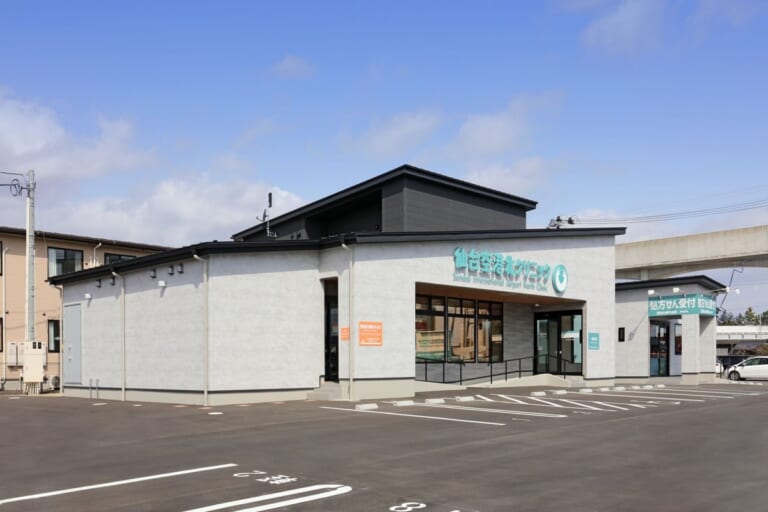
Sendai International Airport North Clinic, 8-1-8 Mitazono, Natori, Miyagi, is about 10 minutes by car from Sendai International Airport. The director is Shunichi Gamo, M.D., Ph.D., board certified in internal medicine, pulmonology and allergology. The fever clinic has its own entrance, and check-in is same-day by QR code — the check-in page is in English and no advance arrangement is needed. Hours: Mon/Tue/Wed/Fri/Sat 10:00–12:00 and 14:30–18:00; Sundays and national holidays 10:00–15:00 (check the clinic calendar); closed Thursdays. Children from age 0 are seen, and family members with fever can be seen together.
Visitors without Japanese insurance pay a flat USD 700 (charged in yen at the day’s rate; card or cash). This covers an English consultation, the BioFire SpotFire R Panel PCR (one nasal swab, about 15 minutes, testing 11 viruses and 4 bacteria), a same-day English medical certificate with ICD-10 codes, and a prescription if needed. The panel includes rhinovirus/enterovirus, seasonal coronavirus and parainfluenza. Medicines are paid separately at the pharmacy next door. Group A strep is not on the panel. Residents with Japanese insurance are seen under insurance.
References
- Arroll B. Common cold. BMJ Clinical Evidence 2011. PMID 21406124
- Japan National Tourism Organization. For safe travels in Japan — Guide for when you are feeling ill. https://www.jnto.go.jp/emergency/eng/mi_guide.html
- World Health Organization. Influenza (seasonal). https://www.who.int/news-room/fact-sheets/detail/influenza-(seasonal)
- World Health Organization. Pneumonia in children. https://www.who.int/news-room/fact-sheets/detail/pneumonia
- Abuelgasim H, et al. Effectiveness of honey for symptomatic relief in upper respiratory tract infections. BMJ Evidence-Based Medicine 2021. PMID 32817011
- Spinks A, Glasziou PP, Del Mar CB. Antibiotics for treatment of sore throat in children and adults. Cochrane Database of Systematic Reviews 2021. PMID 34881426
- World Health Organization. Antimicrobial resistance. https://www.who.int/news-room/fact-sheets/detail/antimicrobial-resistance
- De Sutter AI, Saraswat A, van Driel ML. Antihistamines for the common cold. Cochrane Database of Systematic Reviews 2015. PMID 26615034
- De Sutter AI, Eriksson L, van Driel ML. Oral antihistamine-decongestant-analgesic combinations for the common cold. Cochrane Database of Systematic Reviews 2022. PMID 35060618
- Aregbesola A, et al. Glucocorticoids for croup in children. Cochrane Database of Systematic Reviews 2023. PMID 36626194
- Centers for Disease Control and Prevention. Japan — Traveler view. https://wwwnc.cdc.gov/travel/destinations/traveler/none/japan