
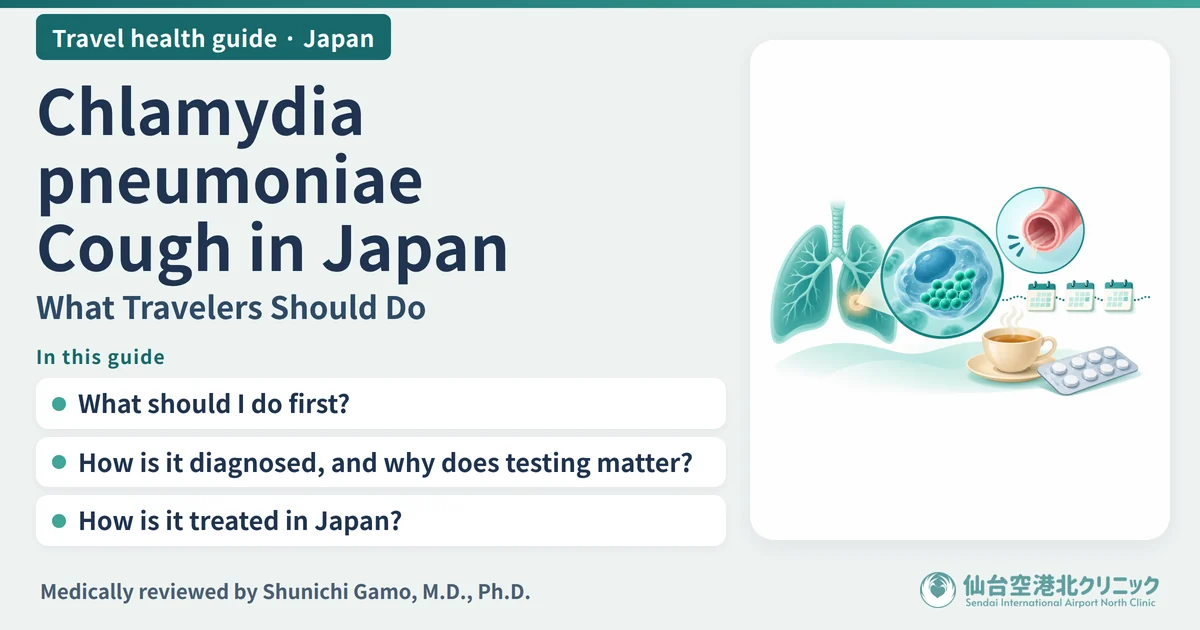
Quick answer
- Chlamydia pneumoniae is a respiratory bacterium that spreads in droplets from coughs and sneezes. It is not the sexually transmitted kind (Chlamydia trachomatis) [1,2].
- It typically causes a dry, long-lasting cough, often with mild or no fever, plus sore throat or hoarseness. It can cause mild pneumonia [3].
- A doctor can look for it with a nasal-swab PCR test. Some multiplex PCR panels include C. pneumoniae alongside SARS-CoV-2, influenza viruses and Mycoplasma pneumoniae. Availability and targets vary by product and facility [4].
- Treatment, when needed, is a prescription antibiotic: a macrolide, a tetracycline, or sometimes a quinolone for adults. Penicillin-type drugs are not recommended as targeted treatment for C. pneumoniae [5].
- Call 119 (ambulance and fire) for trouble breathing, chest pain, coughing blood, or confusion [6].
What could this lingering cough be?
Chlamydia pneumoniae is an intracellular bacterium: it lives inside the cells lining your airways. It spreads from person to person through respiratory droplets released by coughing or sneezing [13].
Symptoms usually start gradually. The typical picture is sore throat or hoarseness first, then a dry cough that can last for weeks, with a low-grade fever or none at all [8].
It is one of the causes of community-acquired pneumonia (pneumonia caught outside hospital). It is usually mild, and atypical organisms cause a substantial share of such pneumonia cases [1,3,9,10]. Older adults, and people with long-term lung or heart disease, can become more unwell [11].
Several other things cause coughs that last for weeks, and they look very similar from the outside:
- Mycoplasma pneumoniae, another respiratory bacterium that typically attaches to airway epithelial cells.
- Whooping cough (pertussis), a bacterial infection with long coughing fits [12].
- A postinfectious cough, which is common among adults with prolonged cough. In one Japanese series it was the largest single category, accounting for about 40% of prolonged-cough cases (39.4%) [12].
- Asthma and other non-infectious causes.
- Less commonly, tuberculosis.
These cannot be told apart reliably by symptoms alone. In a Japanese study of adults with cough lasting 3 to 8 weeks, the symptoms and clinical findings did not reliably distinguish the infections studied [12]. A clinician can decide whether targeted tests are appropriate. Also, do not confuse C. pneumoniae with its relatives: C. trachomatis is the sexually transmitted chlamydia, and C. psittaci causes psittacosis, a bird-linked infection. They are different species with different symptoms and treatments [1].
When should I see a doctor?
Knowing when to see a doctor matters. Decide using three levels: emergencies, problems that need care within a day or two, and mild symptoms you can manage with rest and pharmacy advice.
Emergency: call 119 (ambulance and fire)
As general emergency advice, seek an ambulance urgently for warning signs such as:
- Shortness of breath at rest, or fast, laboured breathing.
- Chest pain.
- Lips or face turning bluish.
- Confusion or unusual drowsiness.
- Coughing up blood.
- A child who is struggling to breathe or cannot drink.
Do not wait out these symptoms. Show the JNTO phrase sheet that says “please call an ambulance” to someone nearby.
See a doctor within a day or two if
- The cough is persistent or clearly worsening.
- Fever is rising, or returns after it seemed to settle.
- Breathing is fast or wheezy.
- There are coughing fits, with vomiting after coughing.
Also see a doctor promptly if you are older, have asthma, COPD or heart disease, have a weakened immune system, or the patient is an infant [3,7,11]. As general advice, if you are pregnant and develop respiratory symptoms, seek medical advice promptly rather than waiting.
If you are unsure where to go, use the JNTO medical institution search. You can also call the Japan Visitor Hotline, a 24-hour multilingual service that helps visitors who feel ill [6]. When travelling, rely on officially listed services such as these rather than on unverified local numbers.
What should I do first?
If your cough is mild and you feel otherwise fine, start with these steps:
- Rest and drink fluids. Warm drinks can soothe an irritated throat.
- Protect others. Wear a mask in crowds and on trains. Cover coughs with a tissue or your sleeve, wash your hands often, and avoid close contact with people who are sick [13,14].
- Keep track. Write down how many days the cough has lasted, your temperature, and how it relates to your travel dates. Doctors will ask exactly this.
- Ask a pharmacist about symptom relief. Japanese drugstores sell over-the-counter remedies that ease coughs and fever, and an English-language search for OTC medicines exists. These do not treat the infection itself. Ask the pharmacist for help, especially for children, during pregnancy, or if you take other medicines. Tell them the person’s age and any other drugs involved. Keep the package so you can show it later.
Do not take leftover or imported antibiotics without a doctor. In Japan, antibiotics require a prescription and are usually dispensed at a pharmacy, although some medical facilities dispense them on site. Self-treatment with the wrong drug may delay proper diagnosis.
How is it diagnosed, and why does testing matter?
Diagnosis is made from a doctor’s assessment plus testing. Symptoms alone do not prove C. pneumoniae; clinical differentiation is difficult [10,12].
- PCR (nucleic-acid testing) of a nasal or throat swab looks directly for the germ’s genetic material. Multiplex PCR panels check many viruses and bacteria from a single swab. Some panels include C. pneumoniae and Mycoplasma pneumoniae; targets depend on the product [4,15,16]. A study in children evaluated real-time PCR for C. pneumoniae and Mycoplasma pneumoniae [17]. The CDC prefers nucleic acid amplification testing for acute C. pneumoniae infection [18].
- Serology (antibody blood tests) is also used. Serology may provide additional diagnostic information in selected cases, but it has limitations in diagnosing acute infection [18]. A separate comparison found that PCR produced results sooner than serology [20]. A single IgG result cannot establish an acute infection [18].
- Chest examination and X-ray. Chest imaging can help confirm pneumonia and assess its extent. Whether an X-ray is needed depends on the patient’s age, clinical findings and severity.
Why testing matters
- It guides antibiotic choice. Atypical pathogens do not respond to beta-lactam antibiotics (penicillins such as amoxicillin, and cephalosporins) [1,3,10].
- It avoids unnecessary antibiotics. Identifying a respiratory virus does not exclude bacterial coinfection. Antibiotic treatment should be determined by the clinical assessment and evidence of bacterial infection.
- It changes handling for some germs. Pertussis, for example, matters especially around infants.
- Documentation. A test result and diagnosis support an insurance claim later.
Limits of testing
- A negative result does not rule out every cause of the cough. PCR sensitivity can vary with specimen quality, bacterial burden and the timing of collection. A negative PCR result does not completely exclude C. pneumoniae infection [18].
- There are diagnostic challenges in distinguishing carriage from infection in C. pneumoniae [21].
- Multiplex panels do not test for everything, and not every pathogen is covered [15,16].
No test is accurate in every situation, and a fast swab does not mean the whole visit takes only minutes. History, examination and explanation all take time.
How is it treated in Japan?
Many mild cases improve on their own. When treatment is needed, clinicians select an antibiotic active against the suspected or confirmed pathogen [5]:
| Group | Generic name | Notes |
|---|---|---|
| Macrolides | azithromycin, clarithromycin, erythromycin | Older children are commonly treated with a macrolide [9]. |
| Tetracyclines | doxycycline | An option for outpatient treatment of immunocompetent adults [9]. |
| Respiratory quinolones | levofloxacin | For adults; a fluoroquinolone alone is an option for hospitalised adults, but fluoroquinolone monotherapy is not recommended for patients in intensive care [9]. |
In Japan, macrolide-resistant Mycoplasma pneumoniae has emerged in Asia. This resistance problem is recognised for Mycoplasma, not for C. pneumoniae [21].
Two practical points apply. First, the Japanese pneumonia guidelines emphasise distinguishing typical from atypical pneumonia early, so the right antibiotic class is chosen [3]. Second, in elderly patients or those with underlying disease, a beta-lactam plus a macrolide or tetracycline, or a fluoroquinolone alone, may be considered from the start, because mixed infection is possible [3]. Also, the cough often persists for weeks even after effective treatment. That alone is not a sign that the drug failed.
If medication is needed, the doctor may issue a prescription to be filled at a dispensing pharmacy, where medicines are generally paid for separately. Some medical facilities dispense prescribed medicines on site. Over-the-counter sections of drugstores sell medicines for symptom relief. Prescription antibiotics are dispensed by pharmacies, including pharmacy counters inside some drugstores. Ask the pharmacy for an English drug information sheet, and bring your current medicine list or the original packages.
Travel-specific points: flying, companions, children and insurance
Flying
- A mild cough alone is not usually a reason to cancel a flight.
- Do not fly with breathlessness, high fever or diagnosed pneumonia without a doctor’s advice. Airlines may refuse passengers who look seriously ill.
- Wear a mask on board and carry symptom-relief medicines in original packaging [14].
Companions
The germ spreads through respiratory droplets, and close contact matters [7]. A companion who develops similar symptoms should be assessed. There is no routine preventive antibiotic for people who feel well, and taking one “just in case” is not advised.
Children
Children can be infected. In a children’s cohort with community-acquired pneumonia, C. pneumoniae infection was substantially less common than Mycoplasma infection [22]. Symptoms in children are usually mild: hoarseness and prolonged cough were relatively characteristic in a Japanese study [8]. C. pneumoniae has been investigated as a cause of acute lower respiratory tract infections among children in Japan [23]. Tell the doctor the child’s age and weight, because drug choices differ by age [9].
Insurance
- Keep everything: the clinic receipt, the itemised bill, the pharmacy receipt, and a medical certificate stating the diagnosis and its ICD-10 code.
- Contact your insurer early. Cashless payment conditions vary by insurance company, so check beforehand.
- Bring your passport, insurance details, and a list of your current medicines [14].
Frequently asked questions
Is this the same as sexually transmitted chlamydia?
No. Chlamydia pneumoniae is a different species that spreads by coughing and sneezing. The sexually transmitted one is Chlamydia trachomatis. A diagnosis of “chlamydia pneumoniae” is not a statement about how you had sex [1,2].
Am I contagious? Can I keep sightseeing?
The germ spreads in droplets from coughs and sneezes. Cover coughs, wash your hands and consider a mask around others [13]. It is sensible to rest while you have a fever. There is no fixed day count at which you become non-contagious; follow your doctor’s advice.
Can I buy antibiotics at a Japanese drugstore?
No, not without a prescription. In Japan, antibiotics require a doctor’s prescription and are usually dispensed at a pharmacy, although some medical facilities dispense them on site. Japanese drugstores can sell over-the-counter medicines for symptom relief, but prescription antibiotics require a doctor’s prescription.
I started antibiotics — why am I still coughing?
The cough often outlasts the infection by weeks; airway irritation takes time to settle even after the bacteria are gone. Return to a doctor if breathing worsens, fever returns, or you feel increasingly unwell.
My COVID and flu tests were negative. What now?
Other causes can produce a weeks-long cough, including Chlamydia pneumoniae, Mycoplasma pneumoniae and pertussis [12]. See a doctor to assess the cause of the persistent cough. Depending on the symptoms, duration and exposure history, the doctor may recommend targeted respiratory pathogen testing.
Is there a vaccine?
There is no vaccine specifically against Chlamydia pneumoniae. Routine vaccines, including pertussis and influenza, protect against other causes of cough and pneumonia [11,14].
Medical care near Sendai Airport
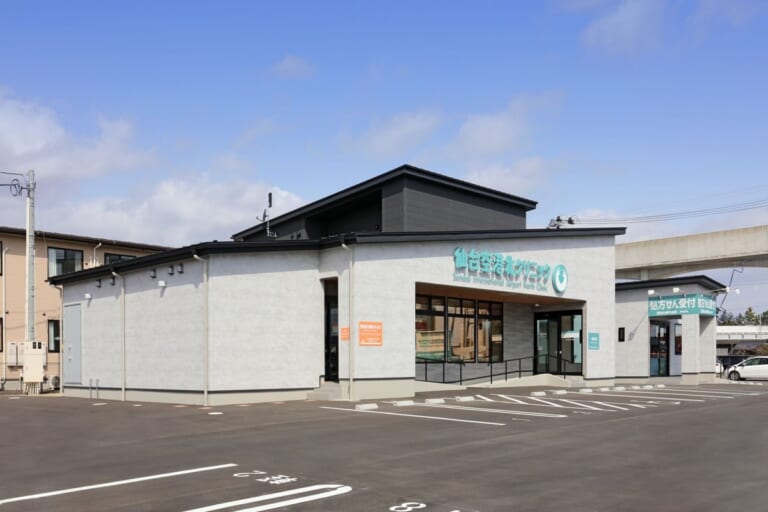
Sendai International Airport North Clinic (Sendai Kuko Kita Clinic), 8-1-8 Mitazono, Natori, Miyagi, is about 10 minutes by car from Sendai International Airport. The director is Shunichi Gamo, M.D., Ph.D., board certified in internal medicine, pulmonology (Japanese Respiratory Society) and allergology (Japanese Society of Allergology).
The clinic runs a fever clinic with its own entrance. You check in the same day with a QR code at the fever clinic entrance. The check-in page is available in English, and no advance arrangement is needed. Hours: Monday, Tuesday, Wednesday, Friday and Saturday 10:00–12:00 and 14:30–18:00. Sundays and Japanese national holidays: 10:00–15:00 (check the calendar on the clinic page). The clinic is closed on Thursdays. Children from age 0 are seen, and family members with fever can be seen together in the same room by the same doctor at one visit.
For visitors without Japanese health insurance, there is a flat fee of USD 700, charged in yen at the day’s rate by card or cash. It covers an English consultation and the BioFire SpotFire R Panel PCR, a multiplex PCR using one nasal swab that takes about 15 minutes. The panel covers 11 viruses and 4 bacteria, including Chlamydia pneumoniae, Mycoplasma pneumoniae, Bordetella pertussis and Bordetella parapertussis. The fee also covers a same-day English medical certificate with ICD-10 codes for travel insurance, and a prescription if needed. Medicines are paid for separately at the pharmacy next door. Group A streptococcus is not on the panel.
Residents of Japan with Japanese health insurance are seen under insurance, and the flat fee does not apply.for details.
References
- Cunha BA. The atypical pneumonias: clinical diagnosis and importance. Clin Microbiol Infect. 2006;12 Suppl 3:12-24.
- Wolff BJ, Gaines A, Conley AB, Norris E, Rishishwar L, Chande AT, et al. Multiplex Real-time PCR Assay for the Detection of all Chlamydia Species and Simultaneous Differentiation of C. psittaci and C. pneumoniae in Human Clinical Specimens. Ann Lab Med. 2023;43(4):375-380.
- Miyashita N. Atypical pneumonia: Pathophysiology, diagnosis, and treatment. Respir Investig. 2022;60(1):56-67.
- Wang H, Liang J, Chen K, Ma Y, Zhang X, Shi Y, et al. Rapid and accurate detection of respiratory pathogens using a field-deployable POCT system based on multiplex real-time PCR. Diagn Microbiol Infect Dis. 2026;115(1):117317.
- Centers for Disease Control and Prevention. Clinical Overview of Chlamydia pneumoniae Infection [Internet]. [cited 2026 Nov 22]. Available from: https://www.cdc.gov/cpneumoniae/hcp/clinical-overview/index.html
- Japan National Tourism Organization. For safe travels in Japan: guide for when you are feeling ill [Internet]. [cited 2026 Nov 22]. Available from: https://www.jnto.go.jp/emergency/eng/mi_guide.html
- World Health Organization. Pneumonia in children [Internet]. [cited 2026 Nov 22]. Available from: https://www.who.int/news-room/fact-sheets/detail/pneumonia
- Yamada S. Chlamydia pneumoniae infection in children with lower respiratory tract infections. Kurume Med J. 1995;42(2):107-20.
- Thibodeau KP, Viera AJ. Atypical pathogens and challenges in community-acquired pneumonia. Am Fam Physician. 2004;69(7):1699-706.
- Georgakopoulou VE, Lempesis IG, Tarantinos K, Sklapani P, Trakas N, Spandidos DA. Atypical pneumonia (Review). Exp Ther Med. 2024;28(5):424.
- World Health Organization. Pneumonia [Internet]. [cited 2026 Nov 22]. Available from: https://www.who.int/health-topics/pneumonia
- Ishida T, Yokoyama T, Iwasaku M, Saigusa M, Fukuyama H, Nakagawa H, et al. [Clinical investigation of postinfectious cough among adult patients with prolonged cough]. Nihon Kokyuki Gakkai Zasshi. 2010;48(3):179-85.
- Centers for Disease Control and Prevention. About Chlamydia pneumoniae Infection [Internet]. [cited 2026 Nov 22]. Available from: https://www.cdc.gov/cpneumoniae/about/index.html
- Centers for Disease Control and Prevention. Japan: Traveler View [Internet]. [cited 2026 Nov 22]. Available from: https://wwwnc.cdc.gov/travel/destinations/traveler/none/japan
- Nielsen MC, Ren P, Kavuri SB, Culbreath K, Selvarangan R, Banerjee D, et al. High-throughput multiplex detection of respiratory pathogens: multicenter evaluation of the NxTAG Respiratory Pathogen Panel v2 assay. J Clin Microbiol. 2026;64(4):e0174325.
- Zhao L, Dong X, Cao L, Jiang Y, Zhang H, Mo R, et al. Multicenter evaluation of the Acaruiter Respiratory Panel for diagnosis of respiratory tract infections in Chinese children. Microbiol Spectr. 2023;11(6):e0058923.
- Otomo S, Yamamura J, Hayashi E, Nakamura T, Kakinuma H, Nakamoto Y, et al. Analysis of children with Chlamydophila (Chlamydia) pneumoniae and Mycoplasma pneumoniae respiratory infections by real-time PCR assay and serological tests. APMIS. 2008;116(6):477-83.
- Centers for Disease Control and Prevention. Laboratory Testing for Chlamydia pneumoniae [Internet]. [cited 2026 Nov 22]. Available from: https://www.cdc.gov/cpneumoniae/php/laboratories/index.html
- Birkebaek NH, Jensen JS, Seefeldt T, Degn J, Huniche B, Andersen PL, et al. Chlamydia pneumoniae infection in adults with chronic cough compared with healthy blood donors. Eur Respir J. 2000;16(1):108-11.
- Haaheim H, Vorland L, Gutteberg TJ. Laboratory diagnosis of respiratory diseases: PCR versus serology. Nucleosides Nucleotides Nucleic Acids. 2001;20(4-7):1255-8.
- Basarab M, Macrae MB, Curtis CM. Atypical pneumonia. Curr Opin Pulm Med. 2014;20(3):247-51.
- Baer G, Engelcke G, Abele-Horn M, Schaad UB, Heininger U. Role of Chlamydia pneumoniae and Mycoplasma pneumoniae as causative agents of community-acquired pneumonia in hospitalised children and adolescents. Eur J Clin Microbiol Infect Dis. 2003;22(12):742-5.
- Ouchi K, Nakazawa T, Karita M, Kanehara Y. Prevalence of Chlamydia pneumoniae in acute lower respiratory infection in the pediatric population in Japan. Acta Paediatr Jpn. 1994;36(3):256-60.