
Quick answer
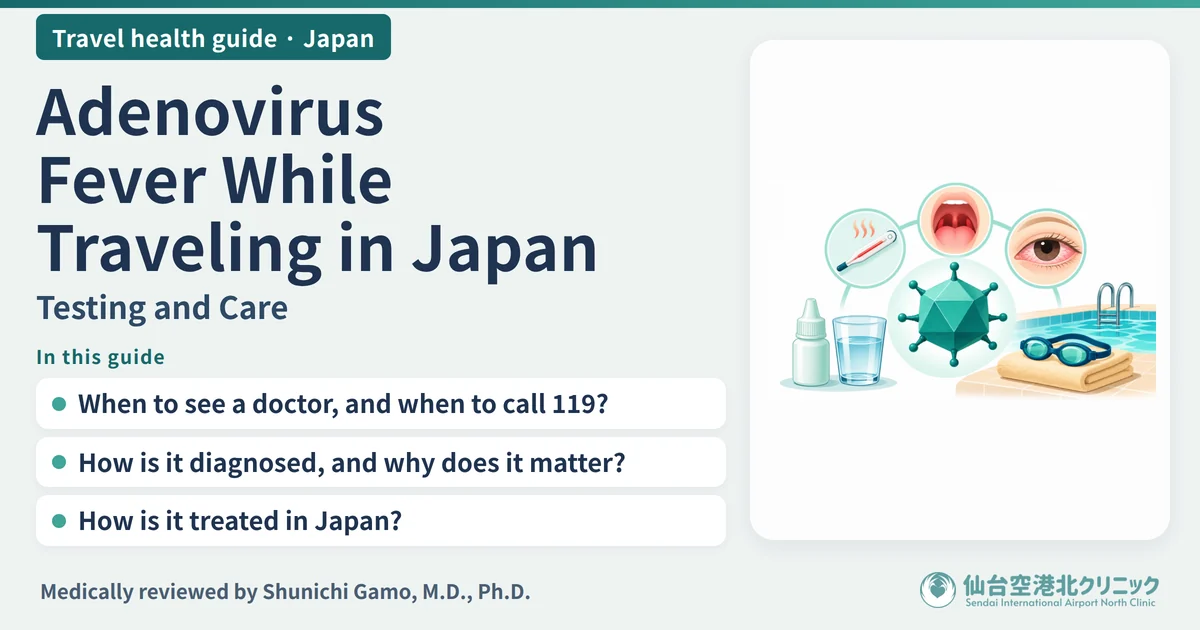
- A high fever with a sore throat and red, watery eyes, especially in a child, may suggest an adenovirus infection. In Japan this illness is called pharyngoconjunctival fever (PCF), often nicknamed “pool fever”.
- The fever may last for several days, and the red eyes can last longer.
- There is no routine antiviral medicine for it, and antibiotics do not treat viruses. Care means fever and pain relief, fluids and rest.
- A doctor’s test can help tell it apart from strep throat, influenza, COVID-19 and other conditions that need different treatment. Testing is not required for everyone.
- Call 119 for breathing difficulty, a seizure, unresponsiveness or severe dehydration.
What could it be?
Adenovirus is a common virus with many types. One well-known illness it causes is pharyngoconjunctival fever (PCF). The typical picture is:
- Sudden high fever, often 39–40°C
- Sore throat, sometimes with white patches on the tonsils
- Red, watery eyes (conjunctivitis, an inflammation of the thin layer covering the eye). The eye symptoms often start in one eye and then spread to the other.
- Swollen glands in the neck, cough, runny nose and sometimes diarrhoea
It is most common in children, but adults get it too. The time between catching the virus and becoming ill (the incubation period) is usually short, so an illness that appears early in your trip may have been caught before you arrived. Cases rise in the warmer months of the year [1].
Why “pool fever”? The virus spreads mainly through close contact, droplets from coughs and sneezes, hands, and shared towels. Poorly chlorinated pool water is a historical route of spread, but properly managed pools are not the main source today.
Conditions that can look similar
Several other illnesses may suggest a similar picture. Only a doctor can tell them apart:
- Strep throat (group A streptococcal pharyngitis) – a bacterial throat infection that needs antibiotics
- Influenza and COVID-19 – viral illnesses with specific antiviral treatments
- Kawasaki disease – a serious inflammatory illness of children. Warning signs are a fever lasting 5 days or more, red eyes, red or cracked lips, a rash, and swollen or red hands and feet.
- Measles – fever, red eyes and cough, followed by a rash
- Epidemic keratoconjunctivitis (EKC) – an eye-dominant adenovirus infection. It is very contagious and the eye problems are the main feature, without the high fever and sore throat of PCF.
What should I do first?
For the first 24 hours in a hotel, the goal is comfort, hydration and preventing spread:
- Measure and record the temperature with times, so you can show the pattern to a doctor if needed.
- Give fluids in small, frequent sips. For children, oral rehydration solution (ORS – a special drink that replaces water and salts) is sold at drugstores and convenience stores.
- Rest, and use a fever reducer only if the person is uncomfortable.
- For children, use acetaminophen (paracetamol) as the first choice. Never give aspirin to children or teenagers (see the treatment section below).
- Protect the eyes and others: use a separate towel for the sick person, wash hands after touching the eyes, do not share eye drops, and avoid contact lenses until recovered.
- Keep the sick person out of pools, hot springs (onsen) and shared baths while symptoms continue. Facilities may refuse people with red eyes.
- Wear a mask in shared spaces such as hotel corridors and lifts.
- Check what your travel insurance requires before seeing a doctor: an assistance hotline to call, which documents to keep, and whether payment must be made on site JNTO guide for when you feel ill
At a Japanese drugstore, show the pharmacist the active ingredient (the generic drug name) rather than a foreign brand name, because the same brand name can contain different ingredients in Japan.
When to see a doctor, and when to call 119?
Call 119 immediately (ambulance, free of charge)
Show a nearby Japanese person the phrase ‘Please call an ambulance’ (Kyukyu-sha wo yonde kudasai) JNTO guide for when you feel ill Call for any of these:
- Difficulty breathing or very fast breathing
- A seizure lasting more than about 5 minutes, repeated seizures, or not waking normally after a seizure
- Unresponsiveness or extreme drowsiness
- Blue lips
- Signs of severe dehydration: no urine for many hours, no tears when crying, or a very dry mouth
See a doctor the same or next day
- A baby under 3 months with a fever of 38°C or more – this needs prompt care
- Fever lasting more than 3 days, or reaching 5 days or more – in a child this raises the possibility of Kawasaki disease
- Eye pain, sensitivity to light or blurred vision – an ophthalmology (eye) clinic may be needed
- Severe throat pain with drooling or inability to swallow
- Chronic illness, pregnancy or a weakened immune system
- Symptoms getting worse after improving
The Japan National Tourism Organization (JNTO) runs the Japan Visitor Hotline, a 24-hour multilingual call centre (English, Chinese, Korean) that can help with emergencies and introductions to medical institutions JNTO guide for when you feel ill
How is it diagnosed, and why does it matter?
Common tests in Japan
- Rapid adenovirus antigen test – a swab rubbed against the throat (or the eye, for conjunctivitis) that detects viral proteins. Results take minutes. A negative result does not fully rule out adenovirus.
- Multiplex PCR panel – PCR (a test that looks for the genetic material of germs) in “multiplex” form tests one swab for many respiratory viruses and some bacteria at once. It is more sensitive than rapid antigen tests, though co-detections of several germs on one panel can be hard to interpret.
Why a diagnosis matters
- It helps avoid unnecessary antibiotics, which do not work on viruses.
- It identifies conditions that do need specific treatment: strep throat needs antibiotics, and influenza needs antivirals that work best when started early.
- It guides decisions about isolation, continuing your trip and caring for travel companions.
- It gives a named diagnosis for insurance documents.
Important limits of testing
- A positive PCR for adenovirus shows viral genetic material and does not by itself prove it caused every symptom, because adenovirus can be shed (released from the body) for some time after an infection [7].
- A nasal swab panel is not an eye test. Eye symptoms may need a separate eye swab.
- No test is 100% accurate, and results must always be read together with the clinical picture.
How is it treated in Japan?
There is no routine antiviral approved for adenovirus in otherwise healthy people. Treatment is supportive – relieving symptoms while the body clears the virus.
Fever and pain
- Acetaminophen is the standard choice for children; the prescription brand in Japan is Calonal. Paediatric doses are calculated by body weight – always follow the dose and interval on the label and the doctor’s or pharmacist’s instructions.
- Adults may also be offered NSAIDs (a group of anti-inflammatory painkillers), such as Japanese over-the-counter loxoprofen (Loxonin S) and ibuprofen products. Japanese over-the-counter strengths and age limits differ from those abroad. Ask the pharmacist.
- Never give aspirin to children or teenagers. Note that in Japan some adult “Bufferin” products contain aspirin, while children’s Bufferin CII contains acetaminophen – so always choose by active ingredient, not brand name.
What medicines do NOT treat it
- Antibiotics do not treat the virus. They are used only if a bacterial infection is found on top of it.
- Influenza antivirals (of the Tamiflu type) do not work on adenovirus.
- Cidofovir, an antiviral drug, is used only for severe adenovirus disease in hospitalised patients with weakened immune systems – not for ordinary travellers.
The eyes
- Doctors may prescribe lubricating drops or, in some cases, antibiotic drops against a secondary bacterial infection. Treatment of adenoviral conjunctivitis is mostly supportive, and uncomplicated cases settle on their own [5].
- Steroid eye drops are used only under a doctor or ophthalmologist.
- Do not self-treat with over-the-counter redness-relief or antihistamine eye drops.
The throat
Lozenges, soft cool foods and fluids help. A pharmacist can suggest suitable lozenges.
How prescriptions and pharmacies work
The doctor writes a prescription, which is filled at a separate dispensing pharmacy, often next door to the clinic. Drugstores sell non-prescription fever reducers, oral rehydration solution and lozenges. Bring a list of current medicines and allergies. Payment for medicines is made separately at the pharmacy.
Travel-specific points: flying, companions, children and insurance
Flying
There is no general rule banning flights during adenovirus infection, but airlines may decline passengers who are visibly ill. If you are unwell, check with the airline before you fly. Congestion can cause ear pain during descent; a mask and good hydration help on board.
Contagiousness and companions
The virus spreads easily while symptoms continue, and it can continue to be shed in the throat and stool for some time afterwards. Keep up hand washing, use separate towels, and handle nappies carefully. Watch companions for symptoms over the following days and weeks; sick family members can be assessed together at one visit.
School and nursery rules (for families living in Japan)
Families living in Japan should ask their child’s school or nursery for its rules on returning after pharyngoconjunctival fever or epidemic keratoconjunctivitis. These rules do not apply to tourists, but hotel pools, swim schools and onsen may refuse people with conjunctivitis. Avoid public pools and baths until recovered.
Insurance paperwork
Keep all receipts, the prescription or medicine information sheet, and a medical certificate stating the diagnosis in English. Check whether your insurer requires pre-approval or a cashless arrangement before you need care JNTO guide for when you feel ill Travellers should also be ready to seek medical follow-up after returning home if illness continues WHO: travel and health
Frequently asked questions
Is “pool fever” caught from hotel pools?
Mostly no. The name is historical. It spreads mainly through close contact, droplets, hands and shared towels. Properly managed pools are not the main source, but you should still stay out of pools and shared baths while symptomatic.
How long is my child contagious, and when can they swim again?
There is no fixed day count. The virus spreads easily while symptoms continue and can be shed afterwards [7]. Wait until symptoms have settled, and ask your school or nursery about its rules, before returning to pools or baths.
Will antibiotics or an injection speed recovery?
No. Antibiotics do not treat viruses. Intravenous (drip) fluids are given only if a person is dehydrated and cannot drink enough.
The rapid test was negative but the eyes are red. Could it still be adenovirus?
Yes. Rapid antigen tests are not perfect. If symptoms fit, a doctor may use a PCR panel or an eye swab, and will also look for other causes.
Can adults get it, and can it happen twice?
Yes to both. Adenovirus has many types, so immunity to one type does not protect against all of them.
Can my child’s red eyes affect vision?
Usually not in pharyngoconjunctival fever, which is mostly self-limited. See an ophthalmologist promptly if there is eye pain, sensitivity to light or blurred vision.
If you are near Sendai Airport
(Sendai Kuko Kita Clinic), 8-1-8 Mitazono, Natori, Miyagi, is about 10 minutes by car from Sendai International Airport. The director, Shunichi Gamo, M.D., Ph.D., is board certified in internal medicine, pulmonology (Japanese Respiratory Society) and allergology (Japanese Society of Allergology).
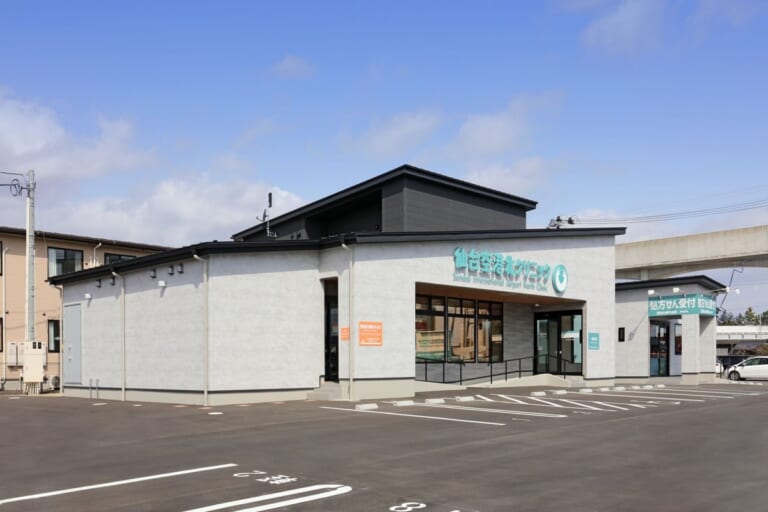
The fever clinic has its own entrance and offers same-day check-in by QR code at the fever clinic entrance; walk-in visits are accepted and the check-in page is available in English. Fever clinic hours: Monday, Tuesday, Wednesday, Friday and Saturday 10:00–12:00 and 14:30–18:00; Sundays and Japanese national holidays 10:00–15:00 (please check the calendar on the clinic page). The clinic is closed on Thursdays.
Children from age 0 are seen, and family members with fever can be seen together in the same room by the same doctor at one visit.
For visitors without Japanese health insurance, there is a flat fee of USD 700, charged in yen at the day’s rate (card or cash). It covers an English consultation and the BioFire SpotFire R Panel multiplex PCR. That test uses one nasal swab and takes about 15 minutes, detecting 11 viruses including adenovirus and 4 bacteria. The fee also covers a same-day English medical certificate with ICD-10 codes for travel insurance, and a prescription if needed. Medicines are paid separately at the pharmacy next door. Group A streptococcus is not on the panel. People living in Japan with Japanese health insurance are seen at the regular fever clinic under insurance; the flat fee does not apply.
References
- González-López JJ, et al. Adenoviral keratoconjunctivitis: an update. Arch Soc Esp Oftalmol 2013 (PMID 23473088)
- Barone SR, et al. The differentiation of classic Kawasaki disease, atypical Kawasaki disease, and acute adenoviral infection. Arch Pediatr Adolesc Med 2000 (PMID 10807294)
- JNTO. For safe travels in Japan – Guide for when you are feeling ill (including the Japan Visitor Hotline)
- Choi Q, Kim HJ. Respiratory Viruses Co-detection on a Multiplex RT-PCR Panel: a Comparative Clinical Study. Clin Lab 2024 (PMID 38965948)
- Jhanji V, et al. Adenoviral keratoconjunctivitis. Surv Ophthalmol 2015 (PMID 26077630)
- Shunmugam M, et al. An Update on Viral Conjunctivitis Treatment Strategies: A Narrative Literature Review. Microorganisms 2025 (PMID 40871219)
- Jarju S, et al. Incidence, shedding, and transmission of common respiratory viruses. EBioMedicine 2026 (PMID 43025374)
- WHO. Travel and health