
Quick answer
- A new cough without fever is usually a common cold, or a cough that lingers after a cold (a “post-viral cough”). Most improve with rest, fluids and drugstore remedies.
- Mycoplasma (a bacterium that causes stubborn dry coughs) and pertussis (whooping cough) often cause cough with little or no fever, especially in adults. Coughing fits, a “whoop” sound, vomiting after coughing, or a cough lasting more than 2–3 weeks are reasons to see a doctor.
- See a doctor today for breathlessness, wheezing, coughing blood or chest pain. Call 119 for severe breathing difficulty, blue lips, collapse, or sudden chest pain or breathlessness, especially after a long flight.
- In Japan, clinics that see people with fever or respiratory symptoms often have a separate entrance (a “fever clinic”). Say at check-in that you have a cough without fever.
- If a fever starts, the likely causes and the advice change — see our fever-and-cough guide. Antibiotics are not usually needed for a simple cough.
What could a cough without fever be?
Doctors describe coughs by how long they last: acute (under 3 weeks), subacute (3–8 weeks) and chronic (over 8 weeks). A cough without fever can have many causes:
- Common cold (viruses such as rhinovirus): runny nose and sore throat, improving within about 1–2 weeks.
- Post-viral (post-infectious) cough: a dry cough that lingers 3–8 weeks after a cold, after the infection itself is over.
- Asthma, including cough-variant asthma (asthma whose only symptom is cough): night or early-morning cough, wheezing (a whistling sound when breathing), triggered by cold air, smoke or exercise. Travellers sometimes leave their inhaler at home.
- Mycoplasma pneumoniae (a bacterium): gradual onset with a stubborn dry cough, often in children and young adults; fever may be mild or absent. Surges have been noted globally since mid-2023 [4].
- Pertussis (whooping cough): starts like a cold, then comes coughing fits, a “whoop” when breathing in, and vomiting after coughing. Adults may only have a long cough, usually without high fever. It is most dangerous for young infants [2]. Pertussis cases have been rising globally.
- Other common causes: postnasal drip (mucus running down the back of the throat), dry hotel or aircraft air, reflux (stomach acid irritating the throat), smoke exposure, and blood-pressure medicines called ACE inhibitors.
Tuberculosis (TB, a bacterial lung infection) is only worth considering if a cough lasts for weeks together with weight loss, night sweats or coughing blood — it is not a likely cause for most travellers. Remember: no fever does not mean you are not infected or not contagious.
What should you do first?
- Drink fluids and rest.
- Humidify your room — hang a wet towel, or use the humidifier setting on the hotel air conditioner.
- Avoid smoking areas.
- Honey can soothe a cough for adults and children over 1 year old. Never give honey to a baby under 1 year.
- Throat lozenges are fine for older children and adults.
- Wear a mask in crowded places and on trains and buses. This is a normal courtesy in Japan.
- If the cough comes in fits, keep away from babies and pregnant people until pertussis has been ruled out.
- If you have known asthma, use your usual reliever and controller inhalers as prescribed.
- Write down when the cough started, what it sounds like, any fits, whoop, vomiting, wheeze or night cough, possible contacts, and medicines you have taken.
- Japanese drugstores are easy to find — ask the pharmacist for advice. Do not guess doses; follow the package label or ask the pharmacist.
For non-emergency advice in English, Chinese or Korean, the JNTO Japan Visitor Hotline (050-3816-2787) is open 24 hours a day, 365 days a year.
When to see a doctor, and when to call 119
Call 119 (free ambulance; say “kyūkyū” and give your address or hotel name) if:
- Severe breathlessness, or being unable to speak in full sentences
- Blue or grey lips
- Confusion or collapse
- Coughing large amounts of blood
- Sudden chest pain or sudden breathlessness, especially after a long flight or with a swollen leg (a possible pulmonary embolism — a blood clot in the lungs)
- An infant with pauses in breathing, turning blue, or exhausted during coughing fits
- An asthma attack not relieved by a reliever inhaler
If you are severely unwell, do not drive yourself — call 119.
See a doctor the same day if:
- Breathlessness on exertion
- Wheezing
- Any blood in the sputum
- Chest pain on breathing or coughing
- Coughing fits with a whoop or vomiting
- A baby under 6 months with any significant cough
- Pregnancy with a fit-like cough
- Underlying lung or heart disease, or a weakened immune system
- A cough that disturbs sleep for several nights
- A cough lasting more than 2–3 weeks
How is the cause diagnosed, and why does it matter?
The doctor works out the cause from your history (duration, pattern, contacts) and an examination that includes listening to your chest. Oxygen saturation (the oxygen level in your blood, measured with a small clip on the finger) is often checked. A chest X-ray or other tests are used when the doctor judges them necessary.
Why the diagnosis matters:
- A viral cough does not need antibiotics.
- Pertussis and mycoplasma may need a specific antibiotic — and in Japan the usual first choice may not work, because resistance to macrolides (a common antibiotic group) is widespread.
- Asthma needs inhaled treatment, not antibiotics [3].
- Pertussis has implications for infants and pregnant people travelling with you [2].
A multiplex PCR (a test that looks for the genetic material of many germs at once) from a nasal swab can detect several viruses plus Mycoplasma pneumoniae, Chlamydia pneumoniae, Bordetella pertussis and Bordetella parapertussis in one test [9]. Its limits:
- Pertussis PCR is most sensitive in the first 2–3 weeks of cough and less reliable later.
- A positive virus result (for example rhinovirus) can reflect leftover virus rather than the current cause.
- A negative result does not rule out every cause.
- PCR does not diagnose asthma, pneumonia severity, pulmonary embolism, TB or group A streptococcus.
Not every cough needs a PCR test; the doctor decides.
How is a cough treated in Japan?
Prescription options (generic names)
- Cough suppressants: dextromethorphan, tipepidine, and codeine for adults — all prescription-only.
- Mucus medicines: carbocisteine, ambroxol.
- Asthma or cough-variant asthma: inhaled corticosteroids (anti-inflammatory inhalers), with or without a long-acting bronchodilator (a medicine that opens the airways); montelukast; and tulobuterol skin patches.
- Mycoplasma: a macrolide (azithromycin, clarithromycin) is usually tried first. If resistance is suspected, adults may receive a tetracycline (doxycycline or minocycline) or a quinolone such as levofloxacin. Children under 8 generally avoid tetracyclines; a quinolone may be an option for children. The choice is always the doctor’s.
- Pertussis: a macrolide. Macrolide-resistant pertussis has now been reported in Japan [7][8], including an outbreak in infants in 2025 [10], so the doctor may consider alternatives. Treatment early in the illness mainly shortens contagiousness — it does not stop the cough quickly. Close contacts, especially infants, may need preventive treatment.
Drugstore versus prescription
- Over-the-counter cough and cold products are sold at drugstores. Check the age limits on the label.
- Antibiotics and inhaled steroids need a doctor’s prescription.
- Prescriptions are filled at a separate pharmacy. Take the prescription there; the pharmacy prepares the medicines and explains how to take them.
Travel-specific points: flying, companions, children and insurance papers
Flying
- A mild cough alone usually does not prevent flying.
- Breathlessness, chest pain or low oxygen needs medical review before flying.
- Sudden breathlessness after a flight needs urgent assessment.
- Wear a mask on board.
Companions
- If pertussis is possible, infants and pregnant companions should be protected [2].
- Family members with similar symptoms may need checking too.
Children
- Honey is not for babies under 1 year.
- Check age limits on OTC medicines; do not give adult medicines to children.
- Children with persistent coughing fits or breathing trouble need prompt care.
Bringing medicines into Japan
Some foreign cold medicines and inhalers — for example products containing pseudoephedrine above a set level, or certain nasal inhalers — are restricted. Check the Pharmaceuticals and Medical Devices Agency (PMDA) page on medicines in Japan before you travel [14].
Insurance documents to keep
- An English medical certificate with the diagnosis (ICD-10 codes if possible)
- Itemised receipts and pharmacy receipts
- The prescription details
- Your policy number
Check your travel insurer’s requirements before paying, where possible.
What to bring to any clinic
Passport, insurance details, a list of current medicines and inhalers (generic names are best), your symptom timeline, a payment card or cash, and a phone to complete the check-in page.
Frequently asked questions
Can I go to a fever clinic if I have no fever?
In Japan, outpatient services for suspected infections (“fever clinics”) commonly see people with respiratory symptoms such as cough, which keeps them apart from other patients. Report “cough, no fever” at check-in, and phone the clinic first if you are unsure.
My cough has lasted 3 weeks after a cold. Is that normal?
A post-viral cough is common and can last 3–8 weeks. But get checked if the cough comes in fits, or if there are any danger signs such as breathlessness, blood, chest pain or weight loss.
Do I need antibiotics?
Usually no. Antibiotics are used only for specific bacterial causes such as mycoplasma or pertussis — not for a viral or post-viral cough.
What if I develop a fever?
A fever changes the picture: influenza, COVID-19 and pneumonia become more likely, and the advice differs. See our fever-and-cough guide.
Am I contagious without a fever?
Possibly. Colds, mycoplasma and especially pertussis can spread without fever. Wear a mask and wash your hands.
How much does a visit cost without Japanese insurance?
Costs vary between clinics, so ask the clinic about fees for visitors without Japanese health insurance before your visit.
If you are near Sendai Airport
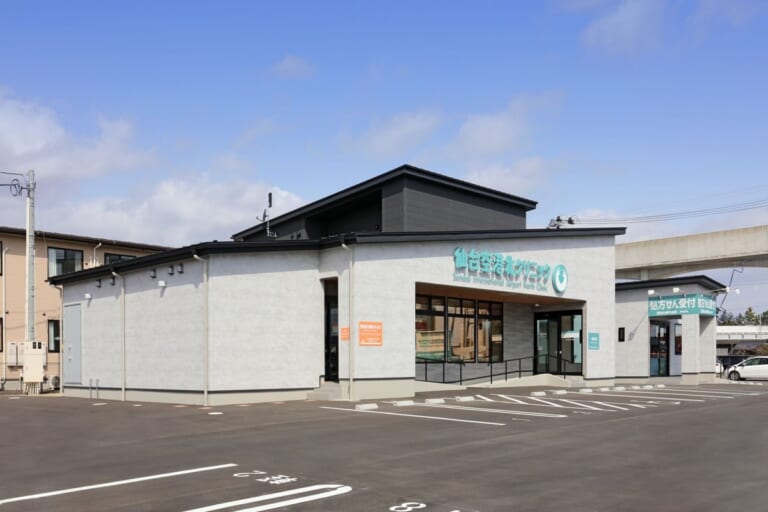
Sendai International Airport North Clinic, 8-1-8 Mitazono, Natori, Miyagi, is about 10 minutes by car from Sendai International Airport. The director is Shunichi Gamo, M.D., Ph.D., board certified in internal medicine, pulmonology (Japanese Respiratory Society) and allergology (Japanese Society of Allergology) — relevant here because asthma and allergy are common causes of cough without fever. The fever clinic has its own entrance.
Check-in and arrival: same-day check-in with the QR code at the fever clinic entrance; no advance arrangement is needed. The check-in page is available in English, Traditional Chinese, Simplified Chinese and Korean. Enter your name, phone number and date of birth, then answer the questions.
- With a Japanese phone number: follow the wait and call instructions shown after check-in.
- With only a foreign phone number: follow the check-in confirmation. On regular clinic days, press the intercom at the fever clinic entrance, give your name, and ask staff where to wait and how they will let you know when it is your turn. On Sundays and national holidays, ask staff when they check your documents at the regular-clinic entrance.
On Sundays and national holidays the regular clinic does not run; insurance status is confirmed at the regular-clinic entrance after check-in. Patients are seen in check-in order in principle, but the order may change with the severity of symptoms.
Hours: Mon, Tue, Wed, Fri, Sat 10:00–12:00 and 14:30–18:00; Sundays and national holidays 10:00–15:00 (check the calendar on the clinic page); closed Thursdays. Telephone: 022-797-9523.
Patients and fees: children from age 0 are seen, and family members with fever can be seen together in the same room by the same doctor at one visit. Visitors without Japanese health insurance pay a flat fee of USD 700, charged in yen at the day’s rate by card or cash. It covers an English consultation, the BioFire SpotFire R Panel PCR (one nasal swab, about 15 minutes, detecting 11 viruses and 4 bacteria), a same-day English medical certificate with ICD-10 codes, and a prescription if needed. The bacteria on the panel include Mycoplasma pneumoniae, Chlamydia pneumoniae, Bordetella pertussis and Bordetella parapertussis. Medicines are paid separately at the pharmacy next door. Group A streptococcus is not on the panel. Residents with Japanese insurance are seen under insurance; the flat fee does not apply.
References
- Morice AH, et al. ERS guidelines on the diagnosis and treatment of chronic cough in adults and children. Eur Respir J 2020.
- WHO — Pertussis (health topic).
- WHO — Asthma (fact sheet).
- Yun KW. Growing Threat of Macrolide-Resistant Mycoplasma pneumoniae Among Children. J Korean Med Sci 2025.
- Oishi T, Ouchi K. Recent Trends in the Epidemiology, Diagnosis, and Treatment of Macrolide-Resistant Mycoplasma pneumoniae. J Clin Med 2022.
- Smith C, et al. Resistant Mycoplasma pneumoniae in children. Can Fam Physician 2025.
- Yamaguchi T, et al. The First Report of Macrolide-Resistant Bordetella pertussis Isolation in Japan. Jpn J Infect Dis 2020.
- Taniguchi K, et al. Clinical and Microbiological Characteristics of Macrolide-Resistant Bordetella pertussis Infection: A Case Series in Osaka, Japan (2024–2025). J Infect Chemother 2026.
- Leber AL, et al. Multicenter Evaluation of BioFire FilmArray Respiratory Panel 2. J Clin Microbiol 2018.
- Obara T, et al. Localized Outbreak of Macrolide-Resistant Pertussis in Infants, Japan, March–May 2025. Emerg Infect Dis 2026.
- JNTO — Japan Visitor Hotline.
- WHO — Tuberculosis (fact sheet).
- CDC — Japan Traveler View.
- Pharmaceuticals and Medical Devices Agency (PMDA).