
Quick answer
- Most colds clear up on their own. Suspect pneumonia (an infection inside the lung tissue) if a fever lasts several days or comes back after you were improving, if breathing becomes short or painful, or if phlegm (mucus coughed up from the lungs) turns coloured. This matters even more if you are over 65 or have a long-term illness [1].
- Pneumonia is confirmed by a chest X-ray or CT scan plus a doctor’s examination. Symptoms alone cannot prove it [1][2].
- Antibiotics should only be taken on a doctor’s prescription. Drugstore cold medicines can hide a fever, but they do not treat pneumonia.
- Call 119 (Japan’s number for ambulance and fire [15]) for severe breathlessness, blue lips, confusion, or chest pain at rest — these are general emergency warning signs of serious breathing illness.
- Do not fly until a doctor agrees your breathing is stable.
Could my cold have turned into pneumonia?
Pneumonia is an infection of the lung tissue itself, not just the nose and throat. The lungs contain tiny air sacs that fill with air when you breathe. With pneumonia, these sacs fill with pus and fluid, which makes breathing harder [3].
Several germs can cause it, and in Japan the common ones in autumn to spring include:
- Bacteria: pneumococcus (Streptococcus pneumoniae, the most common bacterial cause), Mycoplasma pneumoniae, and less often Legionella, a waterborne germ linked to hot springs, baths, spa pools and air-conditioning systems [3][5].
- Viruses: influenza, COVID-19, and RSV (respiratory syncytial virus, a common winter virus) [6].
- After influenza: a bacterial pneumonia can follow the flu once the airways are damaged. This is called secondary bacterial pneumonia.
Mycoplasma pneumonia is sometimes informally called “walking pneumonia”. It is common in children and young adults [14].
People at higher risk include those aged 65 or older, people with COPD (chronic obstructive pulmonary disease, a long-term lung disease) or asthma, heart disease, diabetes, smokers, pregnant women, people with weakened immune systems, and infants [1][4][6].
Important: no symptom pattern can tell you which germ is causing the illness. Coloured phlegm suggests something is going on, but it does not by itself prove a bacterial cause. Tests and a doctor’s examination are needed [1][2].
What should I do first?
If you feel feverish or coughing badly in your hotel, do this in order:
- Rest and drink fluids. Avoid travelling while you have a fever.
- Write down the day your symptoms started, and your temperature over time. This record helps the doctor.
- If you carry a pulse oximeter (a small clip that measures the oxygen level in your blood), take a reading. Treat it as one clue only, not a diagnosis; a low or falling reading is a reason to seek care urgently.
- Keep a list of all medicines you are already taking, and any long-term conditions. Show it to any doctor you see [15].
- Wear a mask when near other people, to protect them.
To find a clinic, Japan’s official travel guide offers a multilingual search of medical institutions, including ones certified for foreign patients, and tips on how Japanese clinics work [15]. The Japan Visitor Hotline run by JNTO (TEL 050-3816-2787, 24 hours a day, 365 days a year) can help you find medical care in English, Chinese or Korean [15]. Once warning signs appear, going to a clinic is better than waiting it out.
Do not take leftover antibiotics from home. Drugstore remedies may ease symptoms, but they cannot treat pneumonia.
When to see a doctor, and when to call 119
See a doctor the same day or next day if you have:
- A fever that lasts several days, or a fever that returns after you were improving.
- A cough that keeps getting worse.
- Pain when breathing in deeply.
- Coloured or bloody phlegm.
- Breathlessness on stairs that is new for you.
- Age 65 or older, or a chronic illness, and you feel you are getting worse.
Call 119 now if you have:
- Struggling to breathe at rest, or unable to speak full sentences.
- Blue or grey lips.
- Confusion or unusual drowsiness.
- Chest pain that does not go away.
- Coughing up a lot of blood.
- Fainting.
- An infant with grunting, chest retractions (the skin between or under the ribs pulling in with each breath) or poor feeding [3].
About 119: it is Japan’s number for both ambulance and fire [15]. Say “kyukyu” (救急, meaning ambulance) and give the full address, for example your hotel’s name and neighbourhood. You cannot choose which hospital an ambulance takes you to, so it helps to write down your symptoms, medicines and allergies in advance [15].
How do doctors in Japan check for pneumonia, and why does it matter?
The doctor will listen to your chest with a stethoscope, count your breathing rate, measure your temperature, and check pulse oximetry (oxygen saturation, the percentage of your blood carrying oxygen) [1][2].
Imaging confirms pneumonia. A chest X-ray, or a CT scan (a detailed X-ray scan of the body), shows whether the lung tissue is actually infected [2].
Blood tests such as the white cell count and CRP (a blood marker that rises with inflammation) are often used to judge how strong the infection is [2].
Tests to find the cause include:
- Rapid antigen tests for influenza and COVID-19 (a swab that detects pieces of the virus).
- Urinary antigen tests (a urine test that detects pieces of pneumococcus or Legionella). They are simple and quick, and a positive result points strongly to that germ, but they miss many cases, so they are used selectively [10].
- Multiplex PCR (a test that looks for the genetic material of many germs at once) from a nasal swab. It can detect several respiratory viruses and some bacteria such as Mycoplasma in one test [7].
Finding the cause may help guide treatment in some patients, but the clinical impact of these tests is variable and often limited unless there is a strategy for acting on the results. Treatment choices depend on the suspected cause, your risk factors and the severity of illness [2].
Doctors also grade severity to help decide between home treatment and hospital admission; Japanese guidelines set out how this is done [2].
Two cautions: a nasal swab test does not diagnose pneumonia itself, and a negative swab does not rule pneumonia out — the swab samples the upper airways and the germ may not show up there [7]. And not every small clinic has an X-ray or CT; you may be referred to a larger hospital.
How is pneumonia treated in Japan?
The drugs below are examples doctors choose from, depending on the suspected cause, your risk factors and severity. The doctor decides; these are not rules.
Typical bacterial pneumonia
- Amoxicillin or amoxicillin-clavulanate (a penicillin-type antibiotic) by mouth, or injectable ceftriaxone in hospital [1].
Atypical pneumonia (Mycoplasma, Chlamydia)
- Macrolides such as azithromycin or clarithromycin are used where macrolide resistance is low.
- However, macrolide-resistant Mycoplasma is common in Japan, so macrolides may not bring the fever down. For such cases the Japanese Society of Mycoplasmology recommends minocycline as the first choice, and respiratory fluoroquinolones such as levofloxacin or lascufloxacin are alternatives in adults. Tetracyclines (minocycline or doxycycline) are generally avoided in young children because they can affect teeth and bone.
Influenza
- People at high risk or with severe symptoms should be treated with antiviral medicines as soon as possible; these are prescription-only and the doctor chooses the medicine [4].
COVID-19 (for eligible higher-risk patients)
- Antiviral treatment is available in Japan for eligible higher-risk patients, on a doctor’s prescription.
Supportive care
- Fever reducers (acetaminophen is commonly preferred in Japan), fluids, and oxygen in hospital if needed [2][4].
Prescription versus drugstore: antibiotics and antivirals should only be taken on a doctor’s prescription. The doctor gives you a prescription slip and you buy the medicines at a pharmacy, often next door to the clinic [15]. Drugstore cold remedies only ease symptoms; they do not treat pneumonia, and antibiotics do not help viral infections.
Finish the course exactly as instructed, and take the medicine name list home with you in case you need follow-up abroad.
Travel-specific points: flying home, companions, children and insurance
Flying
A person recovering from pneumonia should fly only once breathing is stable and a doctor agrees. Anyone who needed oxygen should ask for a fitness-to-fly assessment. Airlines may require a medical information form (MEDIF), so contact the airline early. There is no fixed number of “safe days” after pneumonia — the decision is medical.
Companions
Masks and hand hygiene protect people around you. Watch your companions for their own symptoms, and take extra care if older people or infants are travelling together.
Children
In children, watch for fast breathing, chest retractions, and poor drinking [3]. Mycoplasma pneumonia is common at school age [14]. Do not give adult medicines to children, and never give aspirin to children. Ask a pharmacist or doctor before giving any medicine to a child.
Insurance
Keep everything: itemised receipts, an English medical certificate with the diagnosis (including the ICD-10 code, the international disease classification number), the dates of treatment, test results, and a list of prescribed medicines. Call your insurer’s assistance line before any hospital admission when possible, and check what your travel insurance covers before you need care [15].
Frequently asked questions
Can I buy antibiotics at a Japanese drugstore?
No. Antibiotics should only be taken with a doctor’s prescription; the doctor prescribes them and a pharmacy dispenses them.
Is a chest X-ray possible at any clinic?
Not all clinics have one. If imaging is needed, the clinic may refer you to a hospital that has an X-ray or CT.
Will a rapid test tell me if I have pneumonia?
No. Rapid tests find germs, such as influenza or Mycoplasma. Pneumonia itself is confirmed by chest imaging plus the doctor’s examination [1].
Is it safe to use a hot spring or onsen while sick?
No, not while you have a fever. Also, Legionella — a germ that can cause pneumonia — lives naturally in warm water environments including hot springs and spa pools, so baths and spas must be well maintained [5].
Can I fly tomorrow if I feel a bit better?
Only if a doctor agrees and your breathing is normal at rest. Flying while still recovering can put extra strain on breathing, so the decision is medical.
If you are near Sendai Airport
(仙台空港北クリニック) is at 8-1-8 Mitazono, Natori, Miyagi, about 10 minutes by car from Sendai International Airport. The director is Shunichi Gamo, M.D., Ph.D., a pulmonologist (lung specialist) board certified in internal medicine, pulmonology and allergology (allergy medicine).
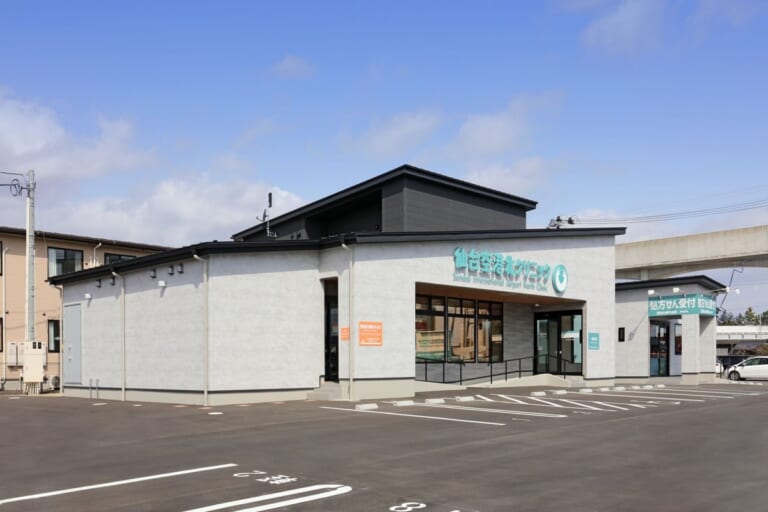
The clinic has a fever clinic with its own entrance. Same-day check-in is by QR code at the fever clinic entrance, and you can come directly without contacting the clinic in advance. The check-in page is available in English, Traditional Chinese, Simplified Chinese and Korean.
The arrival flow is: scan the QR code at the fever clinic entrance, enter your name, phone number and date of birth on the check-in page, and answer the questions. For Japanese phone numbers, follow the wait and call instructions shown after check-in. With a foreign phone number only, follow the check-in confirmation. On regular clinic days, press the intercom at the fever clinic entrance and give your name. Then ask staff where to wait and how they will let you know when it is your turn. On Sundays and national holidays, ask staff when they check your documents at the regular-clinic entrance. Examinations follow the check-in order in principle, but this may change with the severity of symptoms. On Sundays and national holidays the regular clinic does not run; after check-in, insurance status is confirmed at the regular-clinic entrance.
Fever clinic hours: Monday, Tuesday, Wednesday, Friday and Saturday 10:00–12:00 and 14:30–18:00; Sundays and Japanese national holidays 10:00–15:00 (check the calendar on the clinic page). Closed Thursdays. Telephone: 022-797-9523.
Children from age 0 are seen, and family members with fever can be seen together in the same room by the same doctor at one visit.
For visitors without Japanese health insurance there is a USD 700 flat fee, charged in yen at the day’s rate (card or cash). It covers an English consultation, a same-day English medical certificate with ICD-10 codes for travel insurance, and a prescription if needed. It also covers the BioFire SpotFire R Panel multiplex PCR: one nasal swab, about 15 minutes, detecting 11 viruses and 4 bacteria including SARS-CoV-2, influenza A and B, RSV, human metapneumovirus, Mycoplasma pneumoniae and Chlamydia pneumoniae. Group A streptococcus is not on the panel. Medicines are paid separately at the pharmacy next door. People living in Japan with Japanese health insurance are seen at the regular fever clinic under insurance; the flat fee does not apply.
Note that this nasal swab panel identifies which germs are present in the upper airways; it does not diagnose pneumonia, which needs a doctor’s assessment and imaging. People with 119-level danger signs should call 119 rather than come in.
References
- https://pubmed.ncbi.nlm.nih.gov/35704808/
- https://pubmed.ncbi.nlm.nih.gov/39111881/
- https://www.who.int/news-room/fact-sheets/detail/pneumonia
- https://www.who.int/news-room/fact-sheets/detail/influenza-(seasonal)
- https://www.who.int/news-room/fact-sheets/detail/legionellosis
- https://pubmed.ncbi.nlm.nih.gov/40021428/
- https://pubmed.ncbi.nlm.nih.gov/40749835/
- https://pubmed.ncbi.nlm.nih.gov/41033485/
- https://pubmed.ncbi.nlm.nih.gov/30618315/
- https://pubmed.ncbi.nlm.nih.gov/35510157/
- https://pubmed.ncbi.nlm.nih.gov/23459497/
- https://pubmed.ncbi.nlm.nih.gov/28288170/
- https://pubmed.ncbi.nlm.nih.gov/40530812/
- https://pubmed.ncbi.nlm.nih.gov/22972867/
- https://www.jnto.go.jp/emergency/eng/mi_guide.html
- https://wwwnc.cdc.gov/travel/destinations/traveler/none/japan