If you are in a hurry
- With the barking cough of croup, first check your child’s breathing and consciousness, and call 119 right away if there are danger signs
- Call 119 if your child wheezes even when resting, the chest sinks in, drooling does not stop, or your child is limp
- Even if breathing and consciousness are fine, see a doctor the same day if the barking cough continues
Hello. I am Shunichi Gamo, MD, PhD, a board-certified pulmonologist and the director of Sendai Airport North Clinic.
If your child starts coughing in the middle of the night with a sound like a dog barking, and wheezes every time they breathe in, anyone would panic. What we often hear at such times is
“What is this cough? What should I do at home?”
Many parents also wonder whether it is enough to “let the child breathe the steam from the bath” or “turn on a humidifier.”
To give you the conclusion first: with the barking cough of croup syndrome, the first things to check are how hard your child is working to breathe and their level of consciousness. If your child wheezes even when resting, the chest sinks in, drooling does not stop, or your child is limp, call 119 (Japan’s emergency number) without hesitation.
If breathing and consciousness are fine but the barking cough continues, see a doctor the same day. The mainstay of croup treatment is a medicine called a steroid, and this is an established treatment that is also used in outpatient clinics[1].
In this article, as a pulmonologist, I explain what croup syndrome is, the evidence that steroids work, what you can do at home and the question of humidity, and where to draw the line for calling 119.
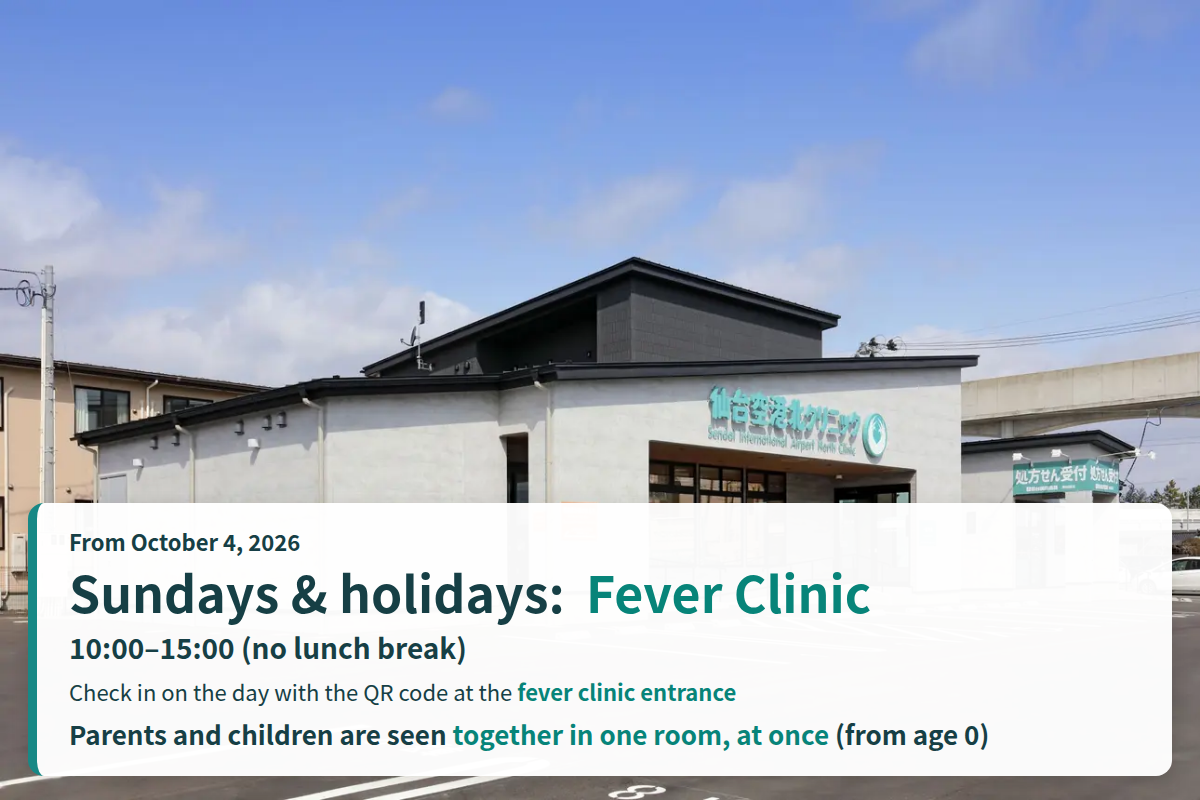
First, a note about our fever clinic on Sundays and national holidays. PCR testing for influenza and COVID (a test that copies the virus’s genetic material in order to detect it) gives results the same day.
From October 4, 2026, we also run the fever clinic on Sundays and national holidays
10:00 to 15:00 (no lunch break). You check in on the day. We give you the PCR result the same day. On Sundays and holidays we see fever patients only, and we do not offer general outpatient care or IV drips. Please check the clinic calendar for clinic dates and closed days. Notice: fever clinic on Sundays and national holidays
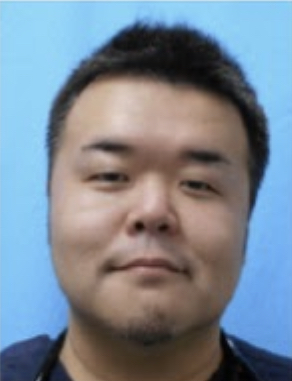
Shunichi Gamo, MD, PhD
Director, Sendai International Airport North Clinic
Born and raised locally, he attended Yuriage Elementary School and Yuriage Junior High School in Natori City. After graduating from Tohoku University School of Medicine, he worked at Sendai Open Hospital and Kesennuma City Hospital, and then at Tohoku University Hospital. In April 2021, in the middle of the COVID-19 pandemic, he opened Sendai International Airport North Clinic. Holding to a fever clinic that never turns patients away, he cared for well over 20,000 patients with fever in the two years before COVID-19 was moved to Class 5 under Japan’s infectious disease law.
Society memberships and board certifications
Certified Member and Board Certified Fellow, Japanese Society of Internal Medicine
Board Certified Pulmonologist, Japanese Respiratory Society
Board Certified Allergist, Japanese Society of Allergology
Board Certified Specialist, Japanese Society of Anti-Aging Medicine
PhD in Medicine (Tohoku University)
In short: with croup’s barking cough, first check breathing and consciousness, and call 119 for danger signs
When your child has a barking cough (a cough that sounds like a dog barking), roughly speaking, checking the following 3 points is enough.
- In short
With the barking cough of croup, first check your child’s breathing and consciousness, and call 119 right away if there are danger signs - Danger signs
Call 119 if your child wheezes even when resting, the chest sinks in, drooling does not stop, or your child is limp - The same day
Even if breathing and consciousness are fine, see a doctor the same day if the barking cough continues
Please do not skip the third point, “see a doctor the same day.” Croup is an illness in which breathing can suddenly become difficult while the cough continues[2]. I have put the detailed criteria in the “Signs to see a doctor urgently” section below.
 Dr. Gamo
A cough like a dog’s bark is truly startling the first time you hear it. First, please check breathing and consciousness.
What kind of illness is croup syndrome (barking cough)?
Croup syndrome is an acute illness of babies and young children in which the subglottis (the part just below the vocal cords), below the Adam’s apple, swells and narrows the upper airway. Its features are a cough that sounds like a dog barking (barking cough), a hoarse voice, and a harsh sound when breathing in (inspiratory stridor)[3].
It most often affects children from about 6 months to 3 years old[2], and it has been reported to be most common at 1 to 2 years of age[3]. Most cases are caused by parainfluenza viruses, of which type 1 is said to be the most common[3]. One report also says that parainfluenza infection accounts for about 75%[2].
Symptoms often appear suddenly at night[2], and in most cases they settle within 48 hours[2]. However, in rare cases severe upper airway obstruction can lead to respiratory failure or cardiac arrest, so you cannot let your guard down[2].
Dr. GamoCroup often starts suddenly at night. Even with a cough in the middle of the night, stay calm and check breathing first.
Illnesses that look similar but are urgent
Some illnesses with symptoms similar to croup need to be told apart quickly. Above all, acute epiglottitis (swelling of the epiglottis, the lid over the top of the windpipe) can suddenly block the airway and is life-threatening[4][5]. Check the differences in the table below.
| Illness to tell apart | Features |
|---|---|
| Croup syndrome | Barking cough, hoarse voice, inspiratory stridor. Often starts suddenly at night[3][2] |
| Acute epiglottitis | Starts with a high fever and sore throat, then difficulty swallowing, drooling, and a forward-leaning posture with the chin raised and the mouth open. The airway suddenly becomes blocked[5] |
Bacterial tracheitis, abscesses (collections of pus) behind the throat or around the tonsils, and aspiration of a foreign body (breathing food or other objects into the windpipe) also need to be ruled out[4]. When these are suspected, treatment including antibiotics is needed. When they are needed, it is important to start them without hesitation and to finish the whole course that was prescribed.
Do steroids work for croup?
Yes, they do. Steroids are the mainstay of croup treatment, and clinical guidelines and reviews from outside Japan also name them as the first choice[4][6].
A Cochrane review updated in 2023 (a highly reliable review that combines clinical trials from around the world) analysed 45 randomized controlled trials with a total of 5,888 children[1]. Compared with placebo (a dummy medicine), steroids improved croup severity scores[1].
| Time of assessment | Degree of improvement (standardized mean difference, SMD) | Number of studies and children |
|---|---|---|
| After 2 hours | SMD -0.65 (95% confidence interval -1.13 to -0.18) | 7 studies, 426 children[1] |
| After 6 hours | SMD -0.76 (95% confidence interval -1.12 to -0.40) | 11 studies, 959 children[1] |
| After 12 hours | SMD -1.03 (95% confidence interval -1.53 to -0.53) | 8 studies, 571 children[1] |
The SMD is a number that makes the size of an effect easier to compare. The larger the minus value, the more the severity score went down. However, in this review 98% of the included studies were rated as having a “high or unclear risk of bias,” and the certainty of the evidence was judged to be low[1].
Dr. GamoSteroids are a treatment prescribed by a doctor. They are not something to use at home on your own judgment.
What can I do at home? Does humidity (steam) help?
What you can do at home is to calm your child, keep them in a comfortable position, and judge correctly when to see a doctor. There is no confirmed evidence that humidity (steam or a humidifier) improves the swelling in the throat caused by croup itself[3][6]. Ordinary room humidification just to prevent dryness is fine.
Dr. GamoHolding your child and talking softly to calm them is also important care you can give at home.
Breathing in steam “has long been recommended,” but it has not been shown to cure croup
Treatment with humidified air used to be widely used and is still often recommended as a home remedy[3]. However, when 3 emergency department studies of 135 children with moderate croup were combined, the improvement in croup scores after 20 to 60 minutes was very small and not statistically meaningful (SMD -0.14, 95% confidence interval -0.75 to 0.47)[3].
Having the child breathe cold air or exposing them to a cold mist is also not supported by the published evidence[6]. Please remember that “letting your child breathe steam” and “turning on a humidifier” have not been shown to work as treatments for the throat swelling of croup. Room humidification just to prevent dryness is fine, but it is important not to rely on it to wait and see and so put off seeing a doctor.
Generally recommended measures (no studies have compared their effects)
- Hold your child with the upper body upright
Let them take a position in which breathing is easy. You do not need to force them to lie down - Keep them as calm as possible
Crying tends to make breathing harder, so soothe them while talking to them - If they can drink, give fluids little by little
If they cannot drink or are peeing less, see a doctor - A fever can be brought down with a fever reducer
You can use acetaminophen (Calonal and others). Follow the doctor’s instructions for the dose
These are generally recommended measures, and no studies have compared their effects. The most reliably effective step is to see a doctor and receive steroid treatment[1].
Inhalation given at a medical facility (adrenaline)
For moderate to severe croup, adrenaline (epinephrine) is given by inhalation with a nebulizer (a machine that turns medicine into a mist to breathe in)[4][6]. When 12 studies (325 children in the treatment groups and 347 in the control groups) were combined, croup scores improved significantly 30 minutes after inhalation (SMD -1.48, 95% confidence interval -2.83 to -0.13)[7]. However, the effect did not last long, and after 2 hours there was no longer a significant difference[7]. An effect of shortening the hospital stay was also not clearly shown (P = 0.07)[7]. Even so, it is regarded as a valuable early treatment in the acute phase of moderate to severe croup[7].
The key point is that both steroids and inhalation are treatments given at a medical facility[4][6]. Adrenaline cannot be inhaled at home.
Signs to see a doctor urgently: when should I call 119, and how soon should my child be seen?
Call 119 if your child wheezes even when resting, the chest sinks in, drooling does not stop, or your child is limp. If breathing and consciousness are fine, see a doctor the same day.
Call 119 right away
If even one of the following applies, call 119 without hesitation. This is the same at night and on holidays.
- The harsh sound when breathing in (stridor) continues even when resting
- The chest or throat sinks in with each breath (retractions)[6]
- Drooling does not stop, swallowing is difficult, or your child leans forward with the chin raised[5]
- Limp, too short of breath to talk, or so hoarse that no voice comes out[8]
- Poor lip color[8], unconscious, or having a seizure
The Japan Pediatric Society’s “Children’s Emergency” guide also lists the following as signs parents should check: limp, breathing roughly and looking distressed, poor lip color, the chest sinking in with each breath, too short of breath to talk, and so hoarse that no voice comes out[8].
Dr. GamoPlease remember that being unable to speak or make a sound because breathing is hard is an important sign.
See a doctor the same day (at night, go to a night-time facility)
If breathing and consciousness are fine but you notice the following, do not wait and watch for too long: see a doctor.
- The barking cough continues or keeps coming back
- The voice is hoarse and hard to get out
- Breathing is a little faster than usual, or your child has low energy
- Your child has trouble drinking, or is peeing less
- Your child gets croup again and again (the airway structure and any underlying illness need to be checked)[4]
When should I use #8000 (the children’s night-time advice line)?
If your child has symptoms at night and you are unsure whether to see a doctor, you can call Miyagi Prefecture’s children’s night-time advice line (#8000).
In Miyagi Prefecture, every day from 7 p.m. to 8 a.m. the next morning, nurses advise parents and others caring for children under about 15 on whether to see a doctor and on first aid[9]. From a landline without touch-tone dialing, call 022-212-9390[9]. The call gives advice only; no medical treatment is provided[9].
Dr. GamoIt is reassuring to have somewhere to ask when you are unsure at night. Please keep #8000 handy.
This service has been run nationwide since July 5, 2010 as the Ministry of Health, Labour and Welfare’s children’s medical telephone advice program, and in all 47 prefectures it also operates after midnight[10]. However, if you think it is an emergency or serious, call 119 without calling the advice line first[9]. For people aged 15 and over, the emergency advice line for adults (#7119) is available[9].
What should I tell the doctor at the visit?
At the visit, please tell us the following. Please bring a written note or enter it in the pre-visit questionnaire.
- Since when, and what kind of cough (like a dog barking, or with wheezing)
- Whether it started suddenly at night, and whether it keeps coming back
- Whether there is a fever and the temperature, and if you used a fever reducer, the time
- Whether your child can drink, and whether they are peeing
- Any long-term illness (asthma, heart or lung disease, etc.) and medicines your child usually takes
- Vaccination status (Hib vaccine, etc.)
A note to add. Invasive Hib infections (infections in which the germ gets deep into the body), such as acute epiglottitis, have fallen greatly since routine (publicly funded) Hib vaccination began[5]. The vaccine is for children aged 2 months up to (but not including) 60 months (5 years)[5]. Croup itself is mainly caused by viruses, so the vaccine prevents other serious illnesses, but routine vaccination is important[3][2].
Dr. GamoWhether your child has had the Hib vaccine is also information we would like you to share at the visit.
Frequently asked questions
- Is there any point in using a humidifier or steam from the bath at home?
-
There is no confirmed evidence that humidified air improves the throat swelling of croup. Room humidification just to prevent dryness is fine. In 3 studies of 135 children with moderate croup, croup scores hardly improved[3]. Cold mist is not supported either[6]. First, hold your child with the upper body upright and calm them. If there is wheezing even at rest, or the chest sinks in, call 119.
- Does one dose of steroid work?
-
For croup, a single oral dose of dexamethasone (a type of steroid) is the standard treatment[4][6]. In the Cochrane review, steroids improved croup scores from 2 hours onwards[1]. However, steroids are a treatment prescribed by a doctor, not something to use at home on your own judgment. Please talk to us at our clinic about the dose and how to use it.
- The cough got worse in the middle of the night. Can we wait until morning?
-
If your child wheezes even when resting, the chest sinks in, drooling does not stop, or your child is limp, do not wait until morning: call 119. Even if breathing and consciousness are fine, if the barking cough continues, call #8000 for advice or go to a night-time medical facility[9]. Most cases settle within 48 hours, but it is an illness that can suddenly become severe[2].
- Can I tell croup and acute epiglottitis apart at home?
-
Acute epiglottitis starts with a high fever and sore throat, and its features are difficulty swallowing, drooling, and a forward-leaning posture with the chin raised and the mouth open; the airway becomes blocked suddenly[5]. If you see these signs, call 119. If you cannot tell, contact a medical facility without hesitation.
- Can I use a fever reducer?
-
A fever can be brought down with acetaminophen (Calonal and others). Follow the doctor’s instructions for the dose. However, if breathing looks difficult, call 119 before giving a fever reducer.
- If my child keeps getting croup, is there an underlying cause?
-
When croup comes back again and again, an abnormality in the structure of the airway or an underlying illness may be hidden, so it needs to be checked[4]. At the visit, please tell us that “it keeps coming back.”
Summary: with a barking cough, check breathing and consciousness, and call 119 for danger signs
- With the barking cough of croup, first check your child’s breathing and consciousness, and call 119 right away if there are danger signs
- Call 119 if your child wheezes even when resting, the chest sinks in, drooling does not stop, or your child is limp
- Even if breathing and consciousness are fine, see a doctor the same day if the barking cough continues
- Steroids are the mainstay of croup treatment, with evidence that they improve symptoms from 2 hours onwards[1]
- Steam and cold mist have not been shown to cure the throat swelling of croup, so do not rely on them to wait and see and so put off seeing a doctor[3][6]
- If you are unsure about seeing a doctor at night, call #8000. If it is an emergency or serious, call 119
In most children croup settles within a few days, but it is an illness in which breathing can suddenly become difficult. When your family feels that your child “is different from usual,” please tell us exactly that. You can talk to us at our clinic about the treatment your child needs, including steroids. Leave the medical care to us.
That’s all.
Disclaimer
This article is intended to provide general medical information and does not replace an examination, diagnosis, or treatment by a doctor. The content is based on medical knowledge at the time of publication, but the right course of action differs for each person. If you are worried about symptoms, please consult a medical facility.
References
- Aregbesola A, Tam CM, Kothari A, Le ML, Ragheb M, Klassen TP. Glucocorticoids for croup in children. Cochrane Database Syst Rev. 2023 Jan;1(1):CD001955. doi:10.1002/14651858.CD001955.pub5 PMID: 36626194
- Johnson DW. Croup. BMJ Clin Evid. 2014 Sep;2014:0321. PMID: 25263284
- Moore M, Little P. Humidified air inhalation for treating croup. Cochrane Database Syst Rev. 2006 Jul;(3):CD002870. doi:10.1002/14651858.CD002870.pub2 PMID: 16855994
- Cooke A, Conway S, Griffin L. Croup: Rapid Evidence Review. Am Fam Physician. 2026 Mar;113(3):254-8. PMID: 41839076
- Ministry of Health, Labour and Welfare. Haemophilus influenzae type b (Hib) vaccine Q&A. Ministry of Health, Labour and Welfare website (in Japanese). Accessed October 2026. https://www.mhlw.go.jp/content/10900000/001237337.pdf
- Petrocheilou A, Tanou K, Kalampouka E, Malakasioti G, Giannios C, Kaditis AG. Viral croup: diagnosis and a treatment algorithm. Pediatr Pulmonol. 2014 May;49(5):421-9. doi:10.1002/ppul.22993 PMID: 24596395
- Wei Y, Li L, Wei N, Pu Y, Zhao J, Xiong P. Nebulized epinephrine for croup in children: an updated systematic review. Front Pediatr. 2026 Aug;14:1886410. doi:10.3389/fped.2026.1886410 PMID: 42719212
- Japan Pediatric Society. Children’s emergency guide (ONLINE-QQ): cough / wheezing. Children’s Emergency (in Japanese). Accessed October 2026. https://kodomo-qq.jp/index.php?pname=seki
- Miyagi Prefecture. Miyagi Prefecture children’s night-time advice line program (#8000). Miyagi Prefecture official website (in Japanese). Accessed October 2026. https://www.pref.miyagi.jp/soshiki/iryou/shouni04.html
- Ministry of Health, Labour and Welfare. About the children’s medical telephone advice program (#8000). Ministry of Health, Labour and Welfare website (in Japanese). Accessed October 2026. https://www.mhlw.go.jp/stf/seisakunitsuite/bunya/newpage_55223.html
▶ Overview of this topic: Fever clinic on Sundays and national holidays (from October 4, 2026, 10:00 to 15:00)
More articles to read when you have a fever
For when to see a doctor at night or on holidays, see Child’s Fever at Night or on a Holiday: Wait or Go Now?; for a lingering cough, see Whooping cough.