
If you are in a hurry
- If you develop a fever after returning from abroad, always tell the clinic that you have been overseas. Where you went, how long you stayed, your return date, mosquito bites, animal contact, untreated water, and any preventive medicine are the key clues
- Worldwide data show that, roughly, 1 in 3 fevers in people returning from the tropics or subtropics is a tropical disease, and 1 in 5 is malaria
- With dengue fever, the time when the fever is going down is the time to be careful. Abdominal pain, repeated vomiting, or bleeding means the emergency department, even at night. For fever medicine, use acetaminophen and avoid aspirin and NSAIDs
Hello. I am Shunichi Gamo, MD, PhD, a board-certified pulmonologist and the director of Sendai Airport North Clinic.
During the COVID-19 pandemic, our clinic issued negative-test certificates for people traveling to mainland China and Hawaii, as well as tests and certificates to shorten the home quarantine period after returning to Japan. As a clinic that carries the word “airport” in its name, we have always had a close connection with people who are leaving for, or coming home from, other countries.
Now, negative certificates are almost never needed, and overseas travel has fully returned. What has increased as a result is visits from people saying,
“I came back from abroad, and a few days to a few weeks later I developed a fever.”
To state the conclusion first, the most important thing about a fever after returning from abroad is to always tell the clinic, at your visit, that you have been overseas. This is because, for a fever after coming back from the tropics or subtropics, care begins by ruling out malaria first.
In this article, I explain what to tell your doctor when you have a fever after returning home, the basics of malaria and dengue fever, and which types of fever medicine to be careful with in dengue fever. I also talk, with data from published studies, about when we may refer you to a specialist medical institution.
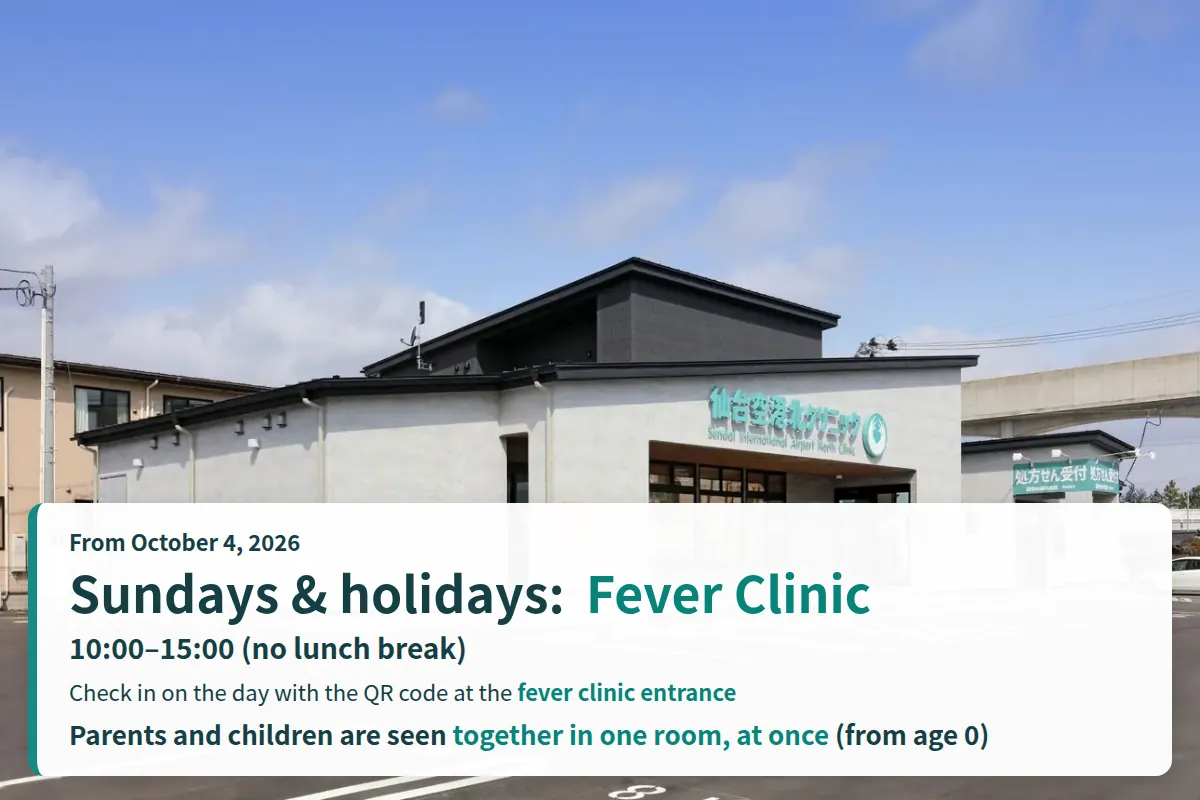
Since October 4, 2026, we also run the fever clinic on Sundays and national holidays
10:00 to 15:00 (no lunch break). We accept patients by same-day check-in. PCR test results are given on the same day. On Sundays and national holidays we run only the fever clinic; we do not offer general outpatient care or IV drips. Please check the clinic calendar for clinic dates and closed days. Announcement about the Sunday and national holiday fever clinic
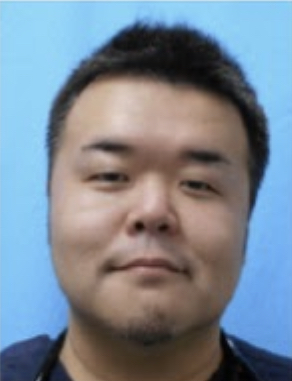
Shunichi Gamo, MD, PhD
Director, Sendai International Airport North Clinic
Born and raised locally, he attended Yuriage Elementary School and Yuriage Junior High School in Natori City. After graduating from Tohoku University School of Medicine, he worked at Sendai Open Hospital and Kesennuma City Hospital, and then at Tohoku University Hospital. In April 2021, in the middle of the COVID-19 pandemic, he opened Sendai International Airport North Clinic. Holding to a fever clinic that never turns patients away, he cared for well over 20,000 patients with fever in the two years before COVID-19 was moved to Class 5 under Japan’s infectious disease law.
Society memberships and board certifications
Certified Member and Board Certified Fellow, Japanese Society of Internal Medicine
Board Certified Pulmonologist, Japanese Respiratory Society
Board Certified Allergist, Japanese Society of Allergology
Board Certified Specialist, Japanese Society of Anti-Aging Medicine
PhD in Medicine (Tohoku University)
[Conclusion] With a fever after returning from abroad, always say that you were overseas
A fever after coming home looks just like an ordinary cold. Because you cannot tell them apart by appearance, your travel history (the fact that you were abroad) is the biggest clue. The Quarantine Stations of the Ministry of Health, Labour and Welfare also say that travel-related infections can occur for at least 6 months after returning[1]. They urge you to tell the doctor that you traveled overseas when you are seen, and to organize the following kinds of information[1]. At reception or at the start of your exam, please tell us the following points, even roughly.
- [Where you went]
Not only the country or region, but whether it was a city, and whether you also went to rural areas, mountains, or jungle - [Length of stay and return date]
When you stayed from and until, what date you returned, and how many days after returning the fever began - [Mosquito bites]
Whether you remember being bitten, and whether you were able to use insect repellent or a mosquito net - [Contact with animals]
Whether you were bitten, scratched, or licked by dogs, cats, monkeys, bats, or other animals - [Food and drink]
Whether you had untreated water, ice, raw vegetables, or uncooked meat, fish, or shellfish - [Water exposure]
Whether you swam or waded in a river, lake, or waterfall pool - [Prevention]
Whether you had vaccines before leaving and whether you took malaria preventive medicine - [Purpose of the trip and companions]
Whether it was sightseeing, work, or visiting relatives or friends there, and whether anyone who traveled with you has the same symptoms
“I don’t remember being bitten by a mosquito” and “I took preventive medicine” are not reasons to feel reassured. Malaria can occur even in people who took preventive medicine[1]. Please tell us everything, including that.
 Dr. Gamo
After a trip abroad, it is easy to think a fever is “just jet lag or tiredness.” If you have come home recently, please start by telling us where you went and the date you returned.
A fever after returning is not always “an ordinary cold” [worldwide data]
How much of a fever after returning is “just a cold,” and how much is a “tropical disease”? Let us look at worldwide data.
GeoSentinel is a network in which specialized travel medicine centers around the world pool their patient data. In its study, of 24,920 ill returned travelers seen between March 1997 and March 2006, 6,957 (28%) came mainly because of fever[2]. Of those with fever, 26% were hospitalized (compared with 3% of those without fever), and the most common cause was malaria, accounting for 21% of those with fever. Of the 12 deaths among people with fever, 33% were due to malaria[2].
There is also a systematic review and meta-analysis by Swiss researchers that pooled 30 studies on fever in travelers and migrants returning from the tropics and subtropics. A systematic review and meta-analysis is a method that gathers studies from around the world by a fixed procedure and combines their results statistically. In this review, 33% of fevers after return were tropical infections: malaria 22%, dengue fever 5%, and typhoid fever (a feverish illness caused by bacteria) 2%. On the other hand, 36% were infections that are not specific to the tropics, with gastroenteritis at 14% and respiratory infections at 13%[3].
In other words, of fevers in people returning from the tropics or subtropics, roughly 1 in 3 is a tropical disease and 1 in 5 is malaria. But the rest are illnesses such as gastroenteritis and colds that are common in Japan too. That is exactly why we need to sort things out first by “where you went” and “how many days after returning the fever began.”
Dr. GamoIt could be a tropical disease, and it could be an illness common in Japan. That is exactly why the first sorting-out matters.
With a fever after the tropics or subtropics, rule out malaria first [why it is urgent]
Malaria (a disease in which a parasite called the malaria parasite enters the body through the bite of an Anopheles mosquito) is endemic in the tropics and subtropics of Africa, Asia, Oceania, and Central and South America. There are several types, and falciparum malaria in particular can worsen rapidly[1].
Even at a specialist tropical medicine center, the number one cause of death
At a specialist tropical medicine institute in Antwerp, Belgium, researchers followed 1,743 people and 1,842 episodes of fever seen between 2000 and 2005 within 12 months of a stay in the tropics. The destination was sub-Saharan Africa for 68% and Southeast Asia and the Pacific region for 12%[4].
- Fever after Africa: malaria 35% (most of it falciparum malaria), rickettsial infection (a bacterial illness spread by bites from ticks and similar creatures) 4%
- Fever after Asia: dengue fever 12%, malaria 9%, typhoid fever 4%
- Fever after Central and South America: dengue fever 8%, malaria 4%
- 27% (503 episodes) were hospitalized, and 36% of the hospital admissions were falciparum malaria. Of the 9 people who died, 5 had falciparum malaria, and it was the only tropical disease that caused death
The order of diseases to suspect is completely different depending on where you went. And the one that threatens life is almost always falciparum malaria. That is the experience of the specialist center[4].
Malaria brought into Japan: 40 to 80 cases a year, about 65% from Africa
This is not someone else’s problem in Japan either. In the national infectious disease surveillance system, 704 cases of malaria were reported from 2006 to 2017, staying at about 40 to 80 cases a year. The largest group, 459 cases (65%), was presumed to have been infected in Africa, and 82% of those were falciparum malaria. Two deaths were recorded at the time of reporting[5].
In a Japanese study that analyzed 557 cases from 2006 to 2014, the median age was 33, 76% were men, 58% were falciparum malaria, and 30% were vivax malaria. Most falciparum malaria was acquired in Africa, and most vivax malaria in Asia and Oceania. At the time of reporting, 10% were severe, and nearly 80% of the severe cases were falciparum malaria[6].
Furthermore, among Japanese people with falciparum malaria, those aged 50 or older had an odds ratio (a ratio of how likely something is to happen) of 5.4 for being severe at the time of reporting, compared with those under 50[6]. The 95% confidence interval (the range within which the true value is thought to lie) was 1.9 to 15.2, and the figure was adjusted for differences in sex and access to medical care[6]. If you are in the generation that travels abroad often for work, or enjoys long trips after retirement, please do not take a fever after returning lightly.
The first month after returning is especially the “malaria period.” But do not let your guard down after one month either
The incubation period of malaria (the time from infection until symptoms appear) is 6 to 30 days for falciparum malaria and 8 to 30 days for vivax malaria[1]. However, vivax malaria often goes beyond one month[1]. The Quarantine Stations of the Ministry of Health, Labour and Welfare ask that if you develop a fever 6 or more days after you began staying in an endemic area, you get tested for diagnosis right away[1]. They also state that infections caused by parasites, such as malaria, may cause symptoms several weeks to several months after returning, and rarely even years later[1].
For a fever after returning from the tropics or subtropics, no matter how many weeks have passed since you got back, do not decide it is “a cold” until malaria testing is done. The first month after returning is especially important. If you get a fever after coming home, see a doctor the same day even if you feel well, and tell them that you were in the tropics.
Dr. GamoEven if several weeks have passed since you came home, the fact that you were in the tropics is an important clue.
With dengue fever, be careful about “which fever medicine” [avoid aspirin, ibuprofen, and loxoprofen]
Dengue fever is a disease caused by the bite of Aedes aegypti or Aedes albopictus mosquitoes carrying the dengue virus. It is endemic in Southeast Asia, South Asia, Central and South America, and other regions, and according to the Ministry of Health, Labour and Welfare, about 200 cases a year are reported in Japan in people who were infected abroad and came home[7].
After an incubation period of 3 to 7 days (up to 2 to 14 days), it starts with a sudden high fever, along with headache, joint and muscle pain, and nausea. The fever usually goes down 2 to 7 days after onset, and the rash typically appears around the time the fever falls[8].
The scary time is “when the fever is going down”
With dengue fever, the time that calls for care is when the fever has gone down and you feel relieved. In some people the illness progresses to dengue hemorrhagic fever, in which the fluid part of the blood leaks out of the blood vessels; this typically occurs 4 to 5 days after onset, right when the fever goes away[8]. If it worsens further, it leads to shock, in which blood pressure falls[8]. If left untreated, this severe form of dengue reaches a fatality rate of 10 to 20%, but with appropriate treatment it can be brought down to below 1%[8]. That is why I want you to know the following signs.
- Abdominal pain, or pain when the belly is pressed
- Vomiting that will not stop
- Bleeding from the mucous membranes, such as nosebleeds or bleeding gums
- Being limp and listless, or on the contrary being restless and agitated
These are listed as “warning signs” in the guidelines, and if even one is present, hospital admission is needed[8]. If these appear after a fever that began following your return, go to an emergency department even at night or on a holiday. Pregnant women, infants, older adults, and people with diabetes or kidney failure are said to be more likely to become severely ill, and admission is recommended for them even without warning signs[8].
For fever medicine, use “acetaminophen.” Avoid aspirin, ibuprofen, and loxoprofen
The basics of treating dengue fever are replacing fluids (with an IV drip if needed) and easing the fever and pain with a fever-reducing pain reliever such as acetaminophen[8]. What you use here is acetaminophen. Aspirin should not be used because it promotes bleeding, and nonsteroidal anti-inflammatory drugs (NSAIDs) such as ibuprofen should not be used either because they promote stomach inflammation and bleeding[8]. The Ministry of Health, Labour and Welfare Q&A also says to avoid NSAIDs such as ibuprofen and loxoprofen because of the risk of bleeding[7].
In fact, many over-the-counter fever and pain medicines contain ibuprofen or loxoprofen. For a fever after returning, please do not keep taking over-the-counter fever and pain medicine on your own judgment; see a doctor first. If you took any medicine before your visit, please tell us its name and the time you last took it.
Dr. GamoJotting down the names of any over-the-counter medicines you took and the times on your phone makes them easier to share.
Beyond malaria and dengue fever [typhoid fever, gastroenteritis, and infections going around in Japan]
The cause of a fever after returning is not only malaria and dengue fever. In the systematic review mentioned earlier, typhoid fever was 2%, gastroenteritis 14%, and respiratory infections 13%[3]. It is also quite common to catch influenza or COVID-19, which are going around in Japan, on the plane or in the airport and bring it home.
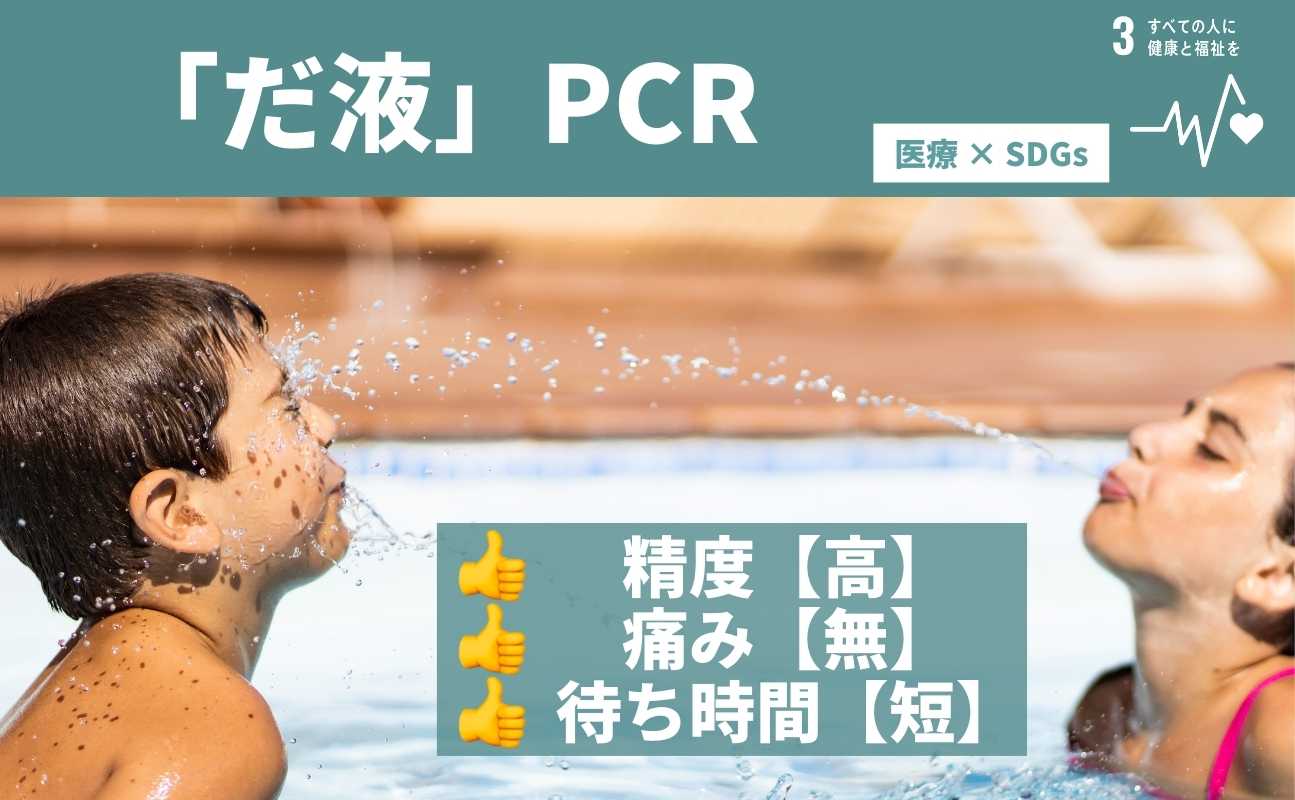
At our fever clinic we perform PCR tests and give you the result on the same day (How to take a saliva PCR test). However, the rule is that even if a disease going around in Japan tests positive, in someone back from the tropics we think about whether malaria may be hiding at the same time. Please do not feel fully reassured by “it was influenza.” If the fever course is long, or if it goes down and then rises again, be sure to come back.
 Dr. Gamo
Even after you learn that it was influenza, please keep an eye on how the fever progresses.
[See a doctor now or call 119] Signs you must not wait on after returning with a fever
If even one of the following applies, go to an emergency department even at night or on a holiday, whether or not you have just returned from abroad. If the person does not respond when called, seems to be struggling badly to breathe, or has a seizure lasting 5 minutes or more, call 119 (Japan’s emergency number) without hesitation. If you cannot decide whether it is serious enough for an ambulance, you can consult the Miyagi Prefecture adult emergency phone consultation line (#7119).
- Confused consciousness or speech that does not make sense (if the person does not respond when called, or does not wake even when shaken, call 119)
- Difficulty breathing, very fast breathing, or purplish lips
- A seizure lasting 5 minutes or more, or consciousness not returning after it stops
- Yellow whites of the eyes or yellow skin (jaundice), or dark brown urine
- Around the time the fever goes down, severe abdominal pain, vomiting that will not stop, a nosebleed or bleeding gums, or bloody stools
- Cold hands and feet with a cold sweat, or dizziness when standing
- Barely able to drink, or no urine for half a day or more
Even if it is not that serious, for a fever after returning from the tropics or subtropics, no matter how many weeks have passed, and even if you feel well, see a doctor the same day[1]. If you return on a holiday, please also use our Sunday and national holiday fever clinic.
Dr. GamoEven if you seem well, please do not take a fever after returning from the tropics lightly.
We may refer you to a specialist medical institution [infectious disease department, travel clinic]
Diagnosis and treatment of malaria, and inpatient management of dengue fever, are often handled at hospitals that have an infectious disease department or a travel clinic (an outpatient clinic that specializes in health consultations before and after overseas travel). When your travel history and symptoms suggest malaria, dengue fever, or similar illnesses, we may promptly refer you to a medical institution that can perform the necessary tests and treatment.
“First be seen nearby, and be connected to a specialist hospital if needed.” This is the fastest and most reliable route for a fever after returning from abroad. Please do not hold back, and come to our fever clinic first.
How to use our fever clinic [no reservation needed, open on Sundays and national holidays]
The fever clinic at Sendai Airport North Clinic (Mitazono, Natori City) accepts patients not by reservation for a set time, but through a pre-visit questionnaire and same-day check-in. Our policy is not to turn away anyone seeking the fever clinic (depending on your symptoms, we may guide you to a more suitable medical institution). We also see a fever after returning from abroad at the fever clinic.
| Day | Hours |
|---|---|
| Mon, Tue, Wed, Fri, Sat | 9:00-12:00 / 14:00-18:00 |
| Sundays and national holidays (from October 4, 2026) | 10:00-15:00 (no lunch break, fever clinic only) |
| Thursday | Closed |
Please check the clinic calendar for clinic dates and closed days. On Sundays and national holidays we run only the fever clinic; we do not offer general outpatient care or IV drips. For details, please see the announcement about the Sunday and national holiday fever clinic.
What happens during your visit
- Before you come, fill in the pre-visit questionnaire (optional; you may also fill it in when you check in at the entrance)
- Scan the QR code at the fever clinic entrance and check in by choosing “I have arrived and want to check in” (required)
- On weekdays, once you have checked in, please wait in your car
- On Sundays and national holidays, after check-in we confirm your health insurance card (My Number insurance card, certificate of eligibility, etc.) at the general outpatient entrance. We do not run general outpatient care on Sundays and national holidays, so please feel free to come in. When the confirmation is done, please wait in your car or elsewhere
- When your turn is near, we will call you by SMS or phone. Press the intercom at the fever clinic entrance and say your name
Patients are generally seen in order of check-in, but the order may change depending on how severe the symptoms are. For details, please see About the fever clinic pre-visit questionnaire and same-day check-in.
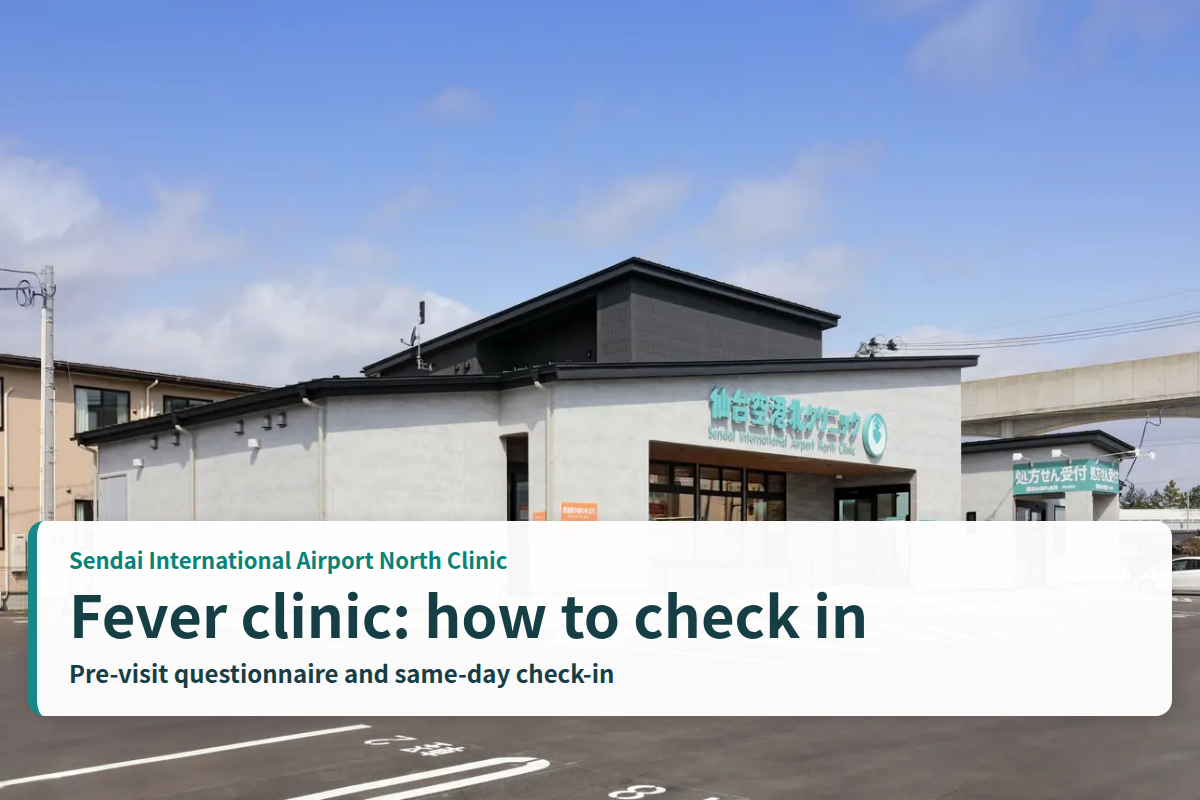
Please also note that we cannot give IV drips on Sundays and national holidays. If you can barely drink, have the warning signs described earlier, or are likely to need an IV drip or hospital admission, go to a medical institution that can give IV drips (an emergency department at night or on holidays).
Dr. Gamo“I got a fever after going abroad.” Those few words change how we go about your exam. Please do not hesitate to tell us.
Frequently asked questions (FAQ)
- My fever started more than 2 weeks after I came home. Could it be related to the trip?
-
It could very well be related. The incubation period of malaria is 6 to 30 days for falciparum malaria and 8 to 30 days for vivax malaria, and vivax often goes beyond one month. Dengue fever can take up to 14 days. No matter how many weeks have passed since you returned, always tell us where you went and your return date at your visit.
- Can I take the over-the-counter fever medicine I have at home for a fever after returning?
-
While dengue fever is still possible, aspirin, ibuprofen, loxoprofen, and similar drugs may promote bleeding and should be avoided. If you use something, use acetaminophen. Please do not keep taking medicine on your own judgment; see a doctor first and tell us the names and times of the medicines you took.
- I don’t remember being bitten by a mosquito. Do I not need to worry about malaria or dengue fever?
-
You can be infected even if you are not aware of being bitten, so “I don’t remember” is not a reason to feel reassured. What matters is where you stayed, until when, and how many days after returning the fever began. If you are back from the tropics or subtropics, please see a doctor the same day.
- I returned on a Sunday or national holiday and have a fever. Can your clinic see me?
-
Yes. We run the fever clinic on Sundays and national holidays too, from 10:00 to 15:00 (no lunch break). Please check the clinic calendar for clinic dates and closed days. We accept patients by same-day check-in. Please tell the reception staff where you went and your return date. If malaria or a similar illness is suspected, we may refer you to a specialist medical institution. We cannot give IV drips on Sundays and national holidays.
- My fever has gone down. Do I still need to see a doctor?
-
Dengue fever can become severe around the time the fever goes down, so if you have abdominal pain, repeated vomiting, or a nosebleed or bleeding gums, go to an emergency department even at night. For a fever after the tropics or subtropics, even if it has gone down, it is safest to see a doctor once and confirm whether malaria testing is needed.
Summary [With a fever after returning, first say “where you went and your return date”]
- If you develop a fever after returning from abroad, always tell the clinic that you have been overseas. Where you went, how long you stayed, your return date, mosquito bites, animal contact, untreated water, and any preventive medicine are the key clues
- Worldwide data show that, roughly, 1 in 3 fevers in people returning from the tropics or subtropics is a tropical disease, and 1 in 5 is malaria
- For a fever after returning from the tropics or subtropics, no matter how many weeks have passed, do not decide it is “a cold” until malaria testing is done. Even if you feel well, see a doctor the same day
- With dengue fever, the time when the fever is going down is the time to be careful. Abdominal pain, repeated vomiting, or bleeding means the emergency department, even at night. For fever medicine, use acetaminophen and avoid aspirin and NSAIDs
- Our fever clinic needs no reservation and is open on Sundays and national holidays too. If needed, we will refer you to a hospital with an infectious disease department or travel clinic
Getting a fever at the end of an enjoyable trip can dampen your spirits. But the things you need to tell us are, roughly, just three: “where, until when, and how many days since you returned.” Sorting out the rest is our job. Please leave the medical care to us.
That’s all.
Disclaimer
This article is intended to provide general medical information and does not replace an examination, diagnosis, or treatment by a doctor. The content is based on medical knowledge at the time of publication, but the appropriate response differs for each individual. If you are worried about your symptoms, please consult a medical institution.
References
- Quarantine Stations, Ministry of Health, Labour and Welfare (FORTH). After you return from a trip (in Japanese). Quarantine Stations website, Ministry of Health, Labour and Welfare. Accessed October 2026. https://www.forth.go.jp/moreinfo/topics/attention05.html
- Wilson ME, Weld LH, Boggild A, Keystone JS, Kain KC, von Sonnenburg F, et al. Fever in returned travelers: results from the GeoSentinel Surveillance Network. Clin Infect Dis. 2007 Jun;44(12):1560-8. doi:10.1086/518173 PMID: 17516399
- Buss I, Genton B, D’Acremont V. Aetiology of fever in returning travellers and migrants: a systematic review and meta-analysis. J Travel Med. 2020 Dec;27(8):taaa207. doi:10.1093/jtm/taaa207 PMID: 33146395
- Bottieau E, Clerinx J, Schrooten W, Van den Enden E, Wouters R, Van Esbroeck M, et al. Etiology and outcome of fever after a stay in the tropics. Arch Intern Med. 2006;166(15):1642-8. doi:10.1001/archinte.166.15.1642 PMID: 16908798
- Japan Institute for Health Security (JIHS), Infectious Disease Information site. IASR 39(10), 2018 [Special feature] Malaria 2006-2017 (in Japanese). Infectious Agents Surveillance Report (IASR). 2018. https://id-info.jihs.go.jp/niid/ja/malaria-m/malaria-iasrtpc/8366-464t.html
- Kanayama A, Arima Y, Matsui T, Kaku K, Kinoshita H, Oishi K. Epidemiology of Imported Malaria Cases in Japan, 2006-2014: A Sentinel Traveler Surveillance Approach. Am J Trop Med Hyg. 2017 Nov;97(5):1532-1539. doi:10.4269/ajtmh.17-0171 PMID: 29140229
- Ministry of Health, Labour and Welfare. Q&A on dengue fever (in Japanese). Ministry of Health, Labour and Welfare website. Accessed October 2026. https://www.mhlw.go.jp/bunya/kenkou/kekkaku-kansenshou19/dengue_fever_qa.html
- National Institute of Infectious Diseases. Clinical guidelines for mosquito-borne infections (version 5.1) (in Japanese). Japan Institute for Health Security (JIHS), Infectious Disease Information site. 2023. https://id-info.jihs.go.jp/manuals/arthropod-borne/mosquito-borne-infections-guidelines/20190207/Mosquito_Mediated_230906-5_1.pdf
Related articles on fever
For the fever clinic on Sundays and holidays, see the announcement about the fever clinic on Sundays and holidays; for how to visit, see the page on the fever clinic pre-visit questionnaire and same-day check-in.