If you are in a hurry
- The fever of adenovirus infection (pharyngoconjunctival fever) lasts about 3 to 5 days and sometimes as long as 7 days. See a doctor if it lasts 5 days or more
- White patches on the throat look just like strep throat. Red eyes and a runny nose make adenovirus more likely, and a rapid test can tell them apart
- See a doctor right away, even at night or on a holiday, if the child is limp, cannot keep fluids down, or is under 3 months old with a fever. Also see a doctor if the fever lasts 5 days or more. Call 119 (Japan’s emergency number) for a seizure lasting 5 minutes or more, no response, or trouble breathing
Hello. I am Shunichi Gamo, MD, PhD, a board-certified pulmonologist and the director of Sendai Airport North Clinic.
In our fever clinic, we often hear things like “My child’s fever is on its fourth day and is still in the high 39s,” or “There is something white on the throat and I am worried it might be strep throat.” When we examine the child, quite often the cause turns out to be adenovirus.
Pharyngoconjunctival fever (“pool fever”) caused by adenovirus triggered a warning in Miyagi Prefecture in October 2023, and an increase in reported patients was confirmed in May 2024[1]. It is often thought of as a summer illness, but in recent years outbreaks have also been seen in winter[1].
Let me start with the conclusion: the fever of adenovirus often lasts about 3 to 5 days, and sometimes as long as 7 days. However, if it lasts 5 days or more, please see a doctor to check that it is not something else. A high fever lasting several days is not unusual in this illness[2][3]. What I would like you to watch is not the number of days of fever itself but “how your child is doing”: whether your child is drinking fluids and is not limp.
This article explains the symptoms and course of adenovirus infection and pharyngoconjunctival fever, how it differs from strep throat (which looks similar in the throat), and rapid tests. I also summarize, roughly, the rules for school and nursery absence, ways to avoid spreading it at home, and guideposts for seeing a doctor.
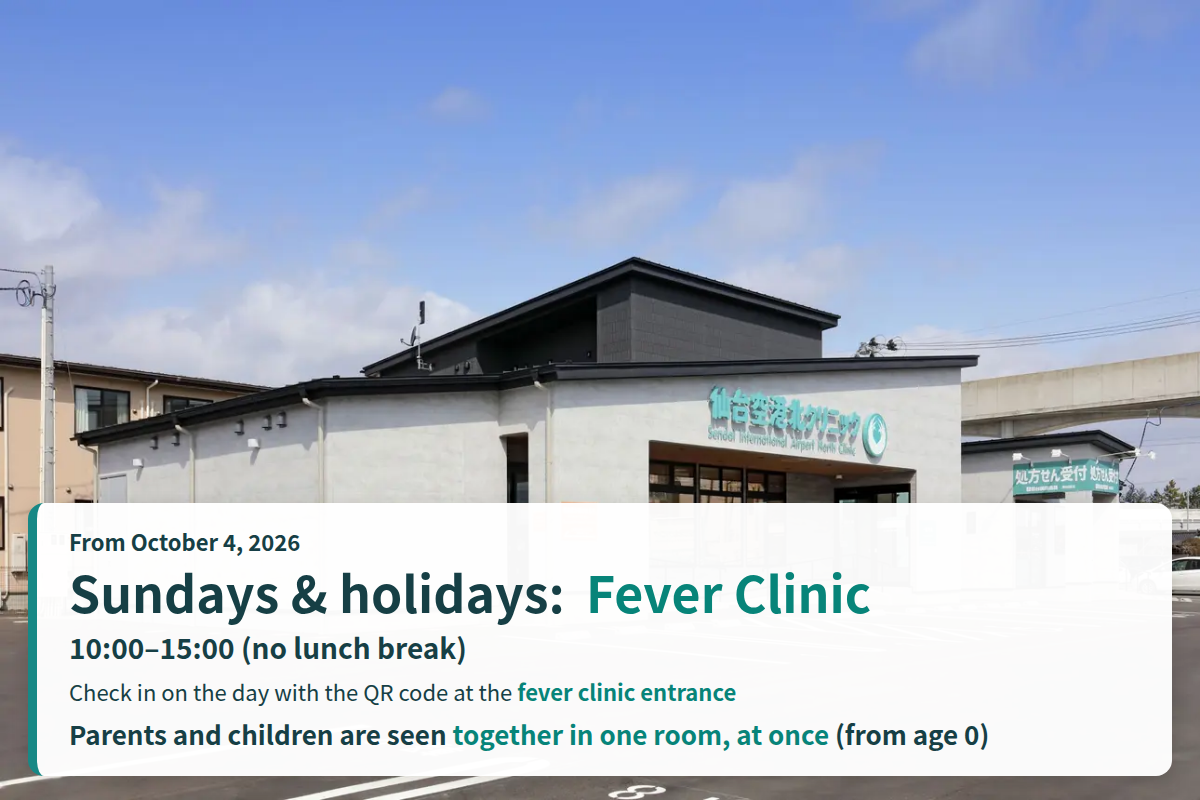
From October 4, 2026, we also run the fever clinic on Sundays and holidays
10:00 to 15:00 (no lunch break). You are seen by checking in on the day. We tell you the PCR test result on the same day. On Sundays and holidays we run the fever clinic only; there is no general outpatient clinic and no IV drip service. Please check the clinic calendar for clinic dates and closed days. Notice about the Sunday and holiday fever clinic
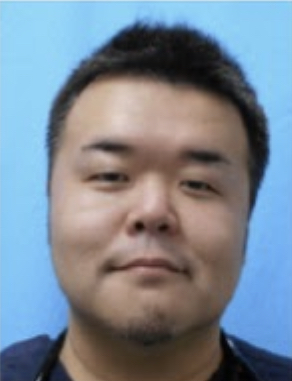
Shunichi Gamo, MD, PhD
Director, Sendai International Airport North Clinic
Born and raised locally, he attended Yuriage Elementary School and Yuriage Junior High School in Natori City. After graduating from Tohoku University School of Medicine, he worked at Sendai Open Hospital and Kesennuma City Hospital, and then at Tohoku University Hospital. In April 2021, in the middle of the COVID-19 pandemic, he opened Sendai International Airport North Clinic. Holding to a fever clinic that never turns patients away, he cared for well over 20,000 patients with fever in the two years before COVID-19 was moved to Class 5 under Japan’s infectious disease law.
Society memberships and board certifications
Certified Member and Board Certified Fellow, Japanese Society of Internal Medicine
Board Certified Pulmonologist, Japanese Respiratory Society
Board Certified Allergist, Japanese Society of Allergology
Board Certified Specialist, Japanese Society of Anti-Aging Medicine
PhD in Medicine (Tohoku University)
[Conclusion] The high fever of adenovirus often lasts 3 to 5 days
Adenovirus is a virus that causes many kinds of illness in children, such as sore throat colds, eye disease, and gastroenteritis. When three features occur together, fever, inflammation of the throat, and conjunctivitis (redness of the white of the eye), it is called pharyngoconjunctival fever[2].
- [Fever]
A high fever of 39 to 40°C lasts 3 to 7 days, together with sore throat, headache, and loss of appetite[3] - [Throat]
The throat becomes red and swollen, and white patches may appear on the tonsils (the lumps of lymphatic tissue on both sides at the back of the throat) - [Eyes]
The white of the eye turns red, with discharge, tears, and sensitivity to light. It often starts in one eye and spreads to the other[2] - [Other]
Lymph nodes in the neck or at the back of the head may swell and hurt[3]
For the incubation period (the time from catching it to symptoms), some sources give about 5 to 7 days[2][1], and others give a wider range of 2 to 14 days[4][3]. It is common in children 5 years old and younger, with an epidemic peak in summer, from June to August[2]. It spreads by droplets (breathing in the spray from coughs and sneezes) and by contact (touching the mouth, nose, or eyes with virus-contaminated hands)[2].
There is a three-year study in Japanese pediatric outpatient clinics that looked for the causes of respiratory infections in children whose fever of 38°C or higher lasted more than 3 days and reached 39°C or higher at the peak[5]. Among 495 specimens, adenovirus was found in 124 (about 25%), the second most common cause after RS virus (138)[5]. This count includes children in whom it was found together with other viruses, but in this study it means that “adenovirus was found in 1 in 4 children whose high fever lasted more than 3 days”[5]. That is how common it is.
On the other hand, in the same study, the proportion of adenovirus-only infections in which the inflammation reached the bronchi or lungs was 2.2%. That is far lower than the 37.6% of RS virus-only infections, for example[5]. The fever tends to be high and long, but the inflammation seldom reaches the bronchi or lungs. This is the rough overall picture of adenovirus.
 Dr. Gamo
I understand how worrying it is to think, “39°C for four days, could it be something serious?” Adenovirus is a virus that causes this kind of fever.
White patches on the throat [They look just like strep throat]
In adenovirus tonsillitis, white to yellowish patches (like pus) may appear on the tonsils. The same finding is seen in throat infection with strep (group A Streptococcus, a bacterium), and the two cannot be told apart just by looking at the throat.
There is a study from a Japanese hospital that reviewed the records of 420 children who had a rapid adenovirus test and in whom no other pathogen was found[6]. Eighty-six were positive on the rapid test, and the three findings most strongly linked to a positive result were a fever of 39.0°C or higher, a runny nose, and white patches on the tonsils[6]. When none of these three was present, the proportion with a negative rapid test was 90%[6].
Put the other way around, the more a fever of 39°C or higher, a runny nose, and white patches on the tonsils occur together, the more likely adenovirus is. Strep can make the throat look the same, so the sure way to know which it is is to check with a rapid test.
Dr. GamoEven when the throat looks just the same, the cause can be different. That is why a test is used to confirm it.
How it differs from strep throat [A rapid test tells them apart]
Both begin with “high fever, sore throat, and white patches on the tonsils,” but the treatment is completely different. Strep is a bacterium, so antibiotics (medicines that kill bacteria) work well, whereas adenovirus is a virus, and there is no medicine that acts on the virus itself[2][3].
According to a review article, typical strep throat in children is a sudden fever, a severe sore throat, red swollen tonsils, and tender lymph nodes at the front of the neck[7]. Fever, patches on the tonsils, swollen lymph nodes in the neck, and an age of 3 to 15 years make strep more likely, while a cough makes a virus more likely[8].
| Adenovirus (pharyngoconjunctival fever) | Strep throat | |
|---|---|---|
| Cause | Virus | Bacterium (group A Streptococcus) |
| Fever | 39 to 40°C for 3 to 7 days[3] | A sudden-onset fever is typical[7] |
| Throat | Red and swollen, sometimes with white patches[3][6] | Red and swollen, sometimes with white patches[8][7] |
| Eyes | Redness of the white of the eye, eye discharge (pharyngoconjunctival fever)[3] | Eye symptoms are not among the clues that suggest strep[8] |
| Runny nose and cough | A runny nose is common[6] | If there is a cough, a virus is more likely than strep[8] |
| Neck lymph nodes | May be swollen and painful[3] | Swollen at the front and often tender when pressed[8][7] |
| Test | Rapid throat test (adenovirus antigen)[3] | Rapid throat test (strep antigen)[8][7] |
| Treatment | Symptomatic treatment[2][3] | Start antibiotics without hesitation and finish them[7] |
Strep throat is explained in detail in our strep throat article. If the strep test is positive, start the antibiotic without hesitation and take all that was prescribed to the end. Even with adenovirus, a bacterial infection such as an ear infection can be added and antibiotics may become necessary. If they are prescribed, finish them in the same way.
Dr. GamoIf an antibiotic is prescribed, please take all of it, even after the fever goes down.
The rapid adenovirus test [A swab of the throat; a negative result does not rule it out]
The rapid adenovirus test is a test in which the back of the throat is swabbed to look for the virus’s antigen (a component of the virus). It is also introduced as a test that helps diagnosis in the school infectious disease handbook[3].
There is a study of the accuracy of the rapid test in a Japanese clinic from January to June 2003, in 138 people: 38 with pharyngoconjunctival fever and 100 with tonsillitis with white patches[9]. The specimens were swabs from the back of the nose, and the rapid test was positive in 84% (116) of the 138[9]. Of the 122 people positive on virus culture, 116 were also positive on the rapid test. That is, the sensitivity (the proportion of people who truly have it that the test correctly shows as positive) was 95%[9].
However, in the same study, even among people with a negative rapid test, the virus was found by culture in 6 and by PCR in another 5[9]. The researchers also concluded that “a negative result does not necessarily rule out adenovirus infection”[9].
On the other hand, everyone who was positive on the rapid test in this study was also positive on culture and PCR[9]. So you can take it that a rapid test is “almost confirmed if positive,” and “if negative but the symptoms fit, adenovirus is still possible.” Which test to do is decided by the doctor from your symptoms at the examination.
Dr. GamoEven if the test is negative, it is important to think about it together with the symptoms.
When can the child go back to school or nursery? [2 days after the main symptoms have gone]
Pharyngoconjunctival fever is defined as a “Class 2 infectious disease” in the enforcement regulations of the School Health and Safety Act[10]. The absence period reads as follows in the regulations.
“For pharyngoconjunctival fever, until two days have passed after the main symptoms have subsided”
The main symptoms are fever, inflammation of the throat, and conjunctivitis[3]. In other words, the child stays home until 2 days have passed after the fever has gone down and the sore throat and red eyes have settled[10][3]. However, there is also a proviso: “this does not apply when the school doctor or another doctor recognizes, depending on the condition, that there is no risk of infection”[10].
How to count starts from “day 0”
The nursery guideline explains that the day on which a change such as the fever going down is seen is not counted, and the following day is day 1[4]. This is the same way of counting as for influenza.
- The day the fever went down and main symptoms such as red eyes settled: day 0
- The next day: day 1 (stay home)
- The day after that: day 2 (stay home)
- The day after that: from day 3, the child can go to school or nursery
The safe way is not to count the time when the fever is only temporarily down because of a fever reducer. Count as day 0 the day the temperature stays normal without medicine and the red eyes and sore throat have both settled.
Guideline for nursery
A nursery is not a school, but the Children and Families Agency’s guideline gives a guideline for returning that follows the school standard[4]. For pharyngoconjunctival fever, the guideline for returning is “2 days have passed after the main symptoms such as fever and redness have disappeared”[4]. You can simply remember it as the same as school.
Note that an “adenovirus sore throat cold (tonsillitis)” without eye symptoms is not among the infections for which the enforcement regulations name the disease and set an absence period[10]. There is only a mechanism by which, when a large outbreak occurs at a school, the principal can, after hearing the school doctor’s opinion, order absence as an “other infectious disease”[10][3]. So handling differs by school and nursery. Please tell them the diagnosis and check. Also ask the nursery whether a return-to-nursery form or doctor’s note is needed[4].
Dr. Gamo“When can my child go back to school (or nursery)?” is probably what parents care about most. Please feel free to ask at the examination.
Preventing spread at home [eye discharge, towels, hand washing]
Adenovirus is highly contagious, and the nursery guideline says that sharing towels and similar items is strictly forbidden[4]. It is not unusual for it to spread to siblings and parents. The key points for preventing spread are roughly these four.
- [Towels]
Keep separate towels for wiping the face and hands for each family member, and wash them often. Throw away tissues used to wipe eye discharge right away[4] - [Hand washing]
Wash carefully with soap and running water before meals and after using the toilet or changing diapers. The virus is shed in stool for a long time even after recovery[4] - [Disinfection]
Alcohol does not work well against this virus[2]. Wipe down places everyone touches, such as doorknobs and switches, often[4] - [Eyes]
Do not touch other people or things with hands that have rubbed the eyes. Wipe eye discharge with clean gauze or tissue in one direction, from the inner corner to the outer corner
It can also spread through pool water, which is why it is called pool fever, but in fact spread by contact is said to be more common[4]. It is not only a summer illness, so please take the measures above in any season.
Dr. GamoEven just keeping towels separate is a worthwhile step.
Care at home and when to see a doctor [fever for 5 days or more, danger signs]
There is no medicine that acts on adenovirus itself, and treatment is mainly symptomatic treatment to ease symptoms[2]. Please care for your child at home as follows.
- [Fluids]
The throat hurts, so it is hard to drink. Give oral rehydration solution or barley tea little by little, often. Cold drinks, jelly, and pudding are fine too - [Fever reducer]
For children we basically use acetaminophen. It is meant for when the child looks miserable from the fever, cannot sleep, or cannot drink, and is used at the prescribed dose and interval - [Eyes]
Wipe away eye discharge so the eyes stay clean, and use eye drops as instructed if they were prescribed. If your child is sensitive to light, keep the room a little dim - [Notes]
Recording the course of the fever, the times you gave a fever reducer, how much your child drank, and how many times your child passed urine is useful for the examination and for counting the absence days
In addition, if even one of the following applies, see a doctor regardless of the number of days. If a seizure lasts 5 minutes or more, the child does not respond when called, or the child is struggling badly to breathe, call 119 without hesitation.
- Limp with a dull response, does not wake when you try to wake the child, or looks pale (see a doctor right away, even at night or on a holiday)
- Will not take any fluids at all, or has not passed urine for half a day or more (see a doctor right away, even at night or on a holiday)
- Appears to be struggling to breathe (breathing with the shoulders, the chest or the hollow below the throat sinking in) or has purplish lips (call 119)
- A temperature of 38°C or higher under 3 months of age (see a doctor right away even if the baby looks well, at night or on a holiday). Babies within 14 days of birth in particular can become severely ill[1]
- The fever has lasted 5 days or more (this is long for an adenovirus fever. Another illness needs to be checked)
- In addition to red eyes, very red lips, a rash on the body, or swollen hands and feet (this may be Kawasaki disease. See a doctor without waiting for the number of days)
- A fever that had gone down comes back up, or the child complains of ear pain (an ear infection or similar may have been added)
- Severe eye pain, cannot open the eyes, or blurred vision (an eye doctor’s examination may be needed[2])
If none of the signs above is present, a fever of 3 to 5 days in a child already diagnosed with adenovirus can be watched at home while giving fluids. If there is no diagnosis yet, see a doctor once the fever has lasted 3 days to find the cause. If your child vomits and cannot keep fluids down, please also see the article on what to do when a child with fever and vomiting cannot drink.
Dr. GamoJelly or pudding counts as fluid too. Whatever is easy to eat is fine.
If a child’s high fever continues, come to our fever clinic
“The fever has not gone down after 3 days,” “There is something white on the throat,” “The eyes are red.” In those cases, please come to the fever clinic. Our policy is that we do not turn away anyone who comes to the fever clinic (depending on the symptoms, we may direct you to a more suitable medical institution). We also see fevers in small children.
| Day | Hours |
|---|---|
| Mon, Tue, Wed, Fri, Sat | 9:00 to 12:00 / 14:00 to 18:00 |
| Sundays and holidays (from October 4, 2026) | 10:00 to 15:00 (no lunch break, fever clinic only) |
| Thursday | Closed |
The Sunday and holiday fever clinic runs from 10:00 to 15:00 (no lunch break). Please check the clinic calendar for clinic dates and closed days. On Sundays and holidays we run the fever clinic only, with no general outpatient clinic and no IV drip service. For details, please see Notice about the Sunday and holiday fever clinic.
How a visit works
- Before you come, fill in the pre-visit questionnaire (optional; you may also fill it in when you check in at the entrance)
- Scan the QR code at the fever clinic entrance and check in by choosing “I have arrived, check me in” (required)
- On weekdays, once you have checked in, please wait in your car
- On Sundays and holidays, after check-in we confirm your insurance card (My Number insurance card, certificate of eligibility, and so on) at the general outpatient entrance. The general outpatient clinic is not open on Sundays and holidays, so please feel free to go in. When the confirmation is done, please wait in your car or elsewhere
- When your turn is near, we will call you by SMS or phone. Press the intercom at the fever clinic entrance and give your name
Patients are seen in check-in order as a rule, but the order may change depending on the severity of symptoms and other factors. For details, please see About the pre-visit questionnaire and same-day check-in for the fever clinic.
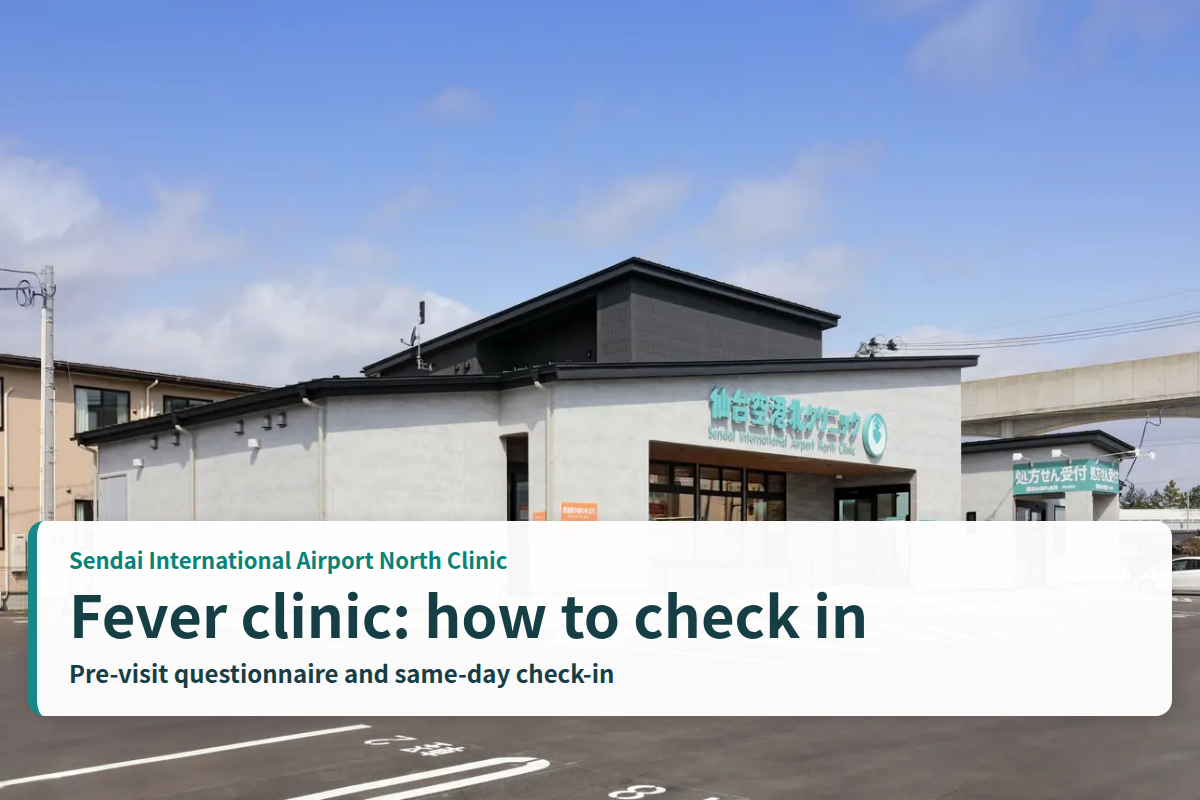
At your visit, please tell us the day the fever started, the highest temperature, when the throat and eye symptoms began, and illnesses going around nearby. This also helps when counting the absence days.
Please note that we cannot give IV drips on Sundays and holidays. If an IV drip seems likely to be needed, for example when the child cannot take any fluids and is limp, please go to a medical institution that can give IV drips.
Frequently asked questions (FAQ)
- The fever has lasted 4 days. I was told it is adenovirus; is it all right to keep watching?
-
The fever of adenovirus lasts about 3 to 5 days and sometimes as long as 7 days, and a high fever on day 4 is a common course in this illness. If your child is drinking, passing urine, and responds when you play with them, it is all right to watch. If your child is limp with a dull response or cannot take any fluids, see a doctor right away even at night or on a holiday, and if the fever lasts 5 days or more, see a doctor without waiting for more days.
- The rapid test was negative. Does that mean it is not adenovirus?
-
A negative result does not rule it out. In a Japanese study the sensitivity of the rapid test was 95%, but there were also people who were negative and yet had the virus found by culture or PCR. If a fever of 39°C or higher, a runny nose, white patches on the tonsils, and red eyes occur together, adenovirus remains possible even with a negative result. Watch the course, and see a doctor again if needed.
- Can strep and adenovirus be told apart by looking at the throat?
-
Both can cause white patches on the tonsils, and they cannot be told apart just by looking at the throat. Red eyes and a runny nose make adenovirus more likely. The treatment changes depending on which it is, so we check with a rapid test. For strep, finish the antibiotic; for adenovirus, we watch the course with symptomatic treatment.
- When can my child go to school or nursery?
-
School absence continues “until 2 days have passed after the main symptoms have subsided.” Count the day the fever, sore throat, and red eyes settled as day 0; days 1 and 2 are days at home, and the child can go to school from day 3. The guideline for nursery is also “2 days have passed after the main symptoms such as fever and redness have disappeared,” the same as school. Please check with the nursery about forms such as a return-to-nursery form.
- The fever is gone, but only the red eyes remain. Can my child go to school?
-
Conjunctivitis is one of the main symptoms of pharyngoconjunctival fever. While the red eyes remain, the main symptoms cannot be said to have “subsided,” so count the 2 days from when the redness has settled. If the eye pain is severe, the child cannot open the eyes, or vision is blurred, an eye doctor’s examination may be needed.
- Will it spread to siblings and parents?
-
Yes, it spreads. Adenovirus is highly contagious, and sharing towels is strictly forbidden. It also spreads through hands with eye discharge on them and doorknobs with the virus on them. Please be thorough about these three things: keep towels separate, wash hands with soap and running water, and do not touch other people with hands that have rubbed the eyes. The virus is shed in stool for a while even after recovery, so do not forget to wash your hands after changing diapers.
Summary [Even when a high fever continues, what to watch is “how your child is doing”]
- The fever of adenovirus infection (pharyngoconjunctival fever) lasts about 3 to 5 days and sometimes as long as 7 days. See a doctor if it lasts 5 days or more
- White patches on the throat look just like strep throat. Red eyes and a runny nose make adenovirus more likely, and a rapid test can tell them apart
- A positive rapid test is almost a confirmation; a negative one does not rule it out
- School absence continues “until 2 days have passed after the main symptoms have subsided.” The nursery guideline is the same. Count the day the symptoms settled as day 0
- Keep towels separate, wash hands with soap, and do not touch things with hands that have rubbed the eyes. Alcohol does not work well
- See a doctor right away, even at night or on a holiday, if the child is limp, cannot keep fluids down, or is under 3 months old with a fever. Also see a doctor if the fever lasts 5 days or more. Call 119 for a seizure lasting 5 minutes or more, no response, or trouble breathing
When a high fever continues for days, parents cannot help worrying that “we may be missing something.” Just knowing that adenovirus is an illness that causes this kind of fever should ease your mind quite a bit. If you are unsure, leave the medical care to us.
That’s all.
Disclaimer
This article is intended to provide general medical information and does not replace an examination, diagnosis, or treatment by a doctor. The content is based on medical knowledge at the time of publication, but the appropriate response differs from person to person. If you are worried about your symptoms, please consult a medical institution.
References
- Miyagi Prefecture, Department of Health and Welfare, Disease and Infectious Disease Control Division. Outbreak of pharyngoconjunctival fever (advisory) (press release). Miyagi Prefecture. May 30, 2024. https://www.pref.miyagi.jp/documents/1950/20240530_intouketumakunetu.pdf (in Japanese)
- Japan Institute for Health Security, Infectious Disease Information site. Pharyngoconjunctival fever. Japan Institute for Health Security (JIHS). Updated June 26, 2025, accessed October 2026. https://id-info.jihs.go.jp/infectious-diseases/adenovirus/index.html (in Japanese)
- Japan School Health Association (public interest incorporated foundation). Explanation of Infectious Diseases to Be Prevented in Schools (Reiwa 5 revision), Part III Individual Infectious Diseases, 7) Pharyngoconjunctival fever. Japan School Health Association. March 2024. (in Japanese)
- Children and Families Agency. Guidelines for Infectious Disease Control in Nursery Facilities (2018 revised edition; partially revised May 2023, partially amended October 2023). Children and Families Agency. 2023. https://www.mhlw.go.jp/content/10900000/20231010_policies_hoiku_25.pdf (in Japanese)
- Hara M, Takao S, Shimazu Y, Nishimura T. Three-year study of viral etiology and features of febrile respiratory tract infections in Japanese pediatric outpatients. Pediatr Infect Dis J. 2014 Jul;33(7):687-92. doi:10.1097/INF.0000000000000227 PMID: 24378946
- Takahashi K, Fujimoto T, Hanaoka N, Tamura M, Suzuki Y, Sugihara S. Useful manifestations to detect adenovirus in children with upper respiratory infections: A retrospective study. J Med Virol. 2022 Feb;94(2):582-586. doi:10.1002/jmv.25492 PMID: 31021428
- Leung AKC, Lam JM, Barankin B, Leong KF, Hon KL. Group A β-hemolytic Streptococcal Pharyngitis: An Updated Review. Curr Pediatr Rev. 2024;21(1):2-17. doi:10.2174/1573396320666230726145436 PMID: 37493159
- Hamilton JL, McCrea Ii L. Streptococcal Pharyngitis: Rapid Evidence Review. Am Fam Physician. 2024 Apr;109(4):343-349. PMID: 38648833
- Fujimoto T, Okafuji T, Okafuji T, Ito M, Nukuzuma S, Chikahira M, et al. Evaluation of a bedside immunochromatographic test for detection of adenovirus in respiratory samples, by comparison to virus isolation, PCR, and real-time PCR. J Clin Microbiol. 2004 Dec;42(12):5489-92. doi:10.1128/JCM.42.12.5489-5492.2004 PMID: 15583271
- Ministry of Education. Enforcement Regulations of the School Health and Safety Act (Ministry of Education Ordinance No. 18 of 1958), Articles 18 and 19. e-Gov Law Search. Accessed October 2026. https://laws.e-gov.go.jp/law/333M50000080018 (in Japanese)
Related articles to read when there is a fever
For the Sunday and holiday fever clinic, see Notice about the Sunday and holiday fever clinic; for how to visit, see About the pre-visit questionnaire and same-day check-in for the fever clinic.