If you are in a hurry
- When a child with a food allergy has a fever, look at “the symptoms that appeared after eating” rather than how high the fever is. If there is difficulty breathing, repeated vomiting, or limpness, suspect anaphylaxis, whether or not there is a fever
- If there are signs of anaphylaxis, such as drowsiness and confusion, a seizure, or difficulty breathing, call 119 (Japan’s emergency number) right away. After using an EpiPen, always call 119 and get medical care as well
- Once a reaction has occurred, talk to your child’s doctor about reviewing the cause and about whether an EpiPen is needed
Hello. I am Shunichi Gamo, MD, PhD, a board-certified pulmonologist and the director of Sendai Airport North Clinic.
If your child has a food allergy, have you ever been unsure, when a fever comes, whether “this is an allergic reaction or a cold”? In fact, infections that come with a fever are known to be one of the factors that can make anaphylaxis stronger[1].
To give you the answer first: if signs such as difficulty breathing, repeated vomiting, or limpness appear after your child eats the food that causes the allergy, treat it as anaphylaxis, with or without a fever, and call 119. Even if there are only skin symptoms, contact a doctor urgently if they are spreading quickly.
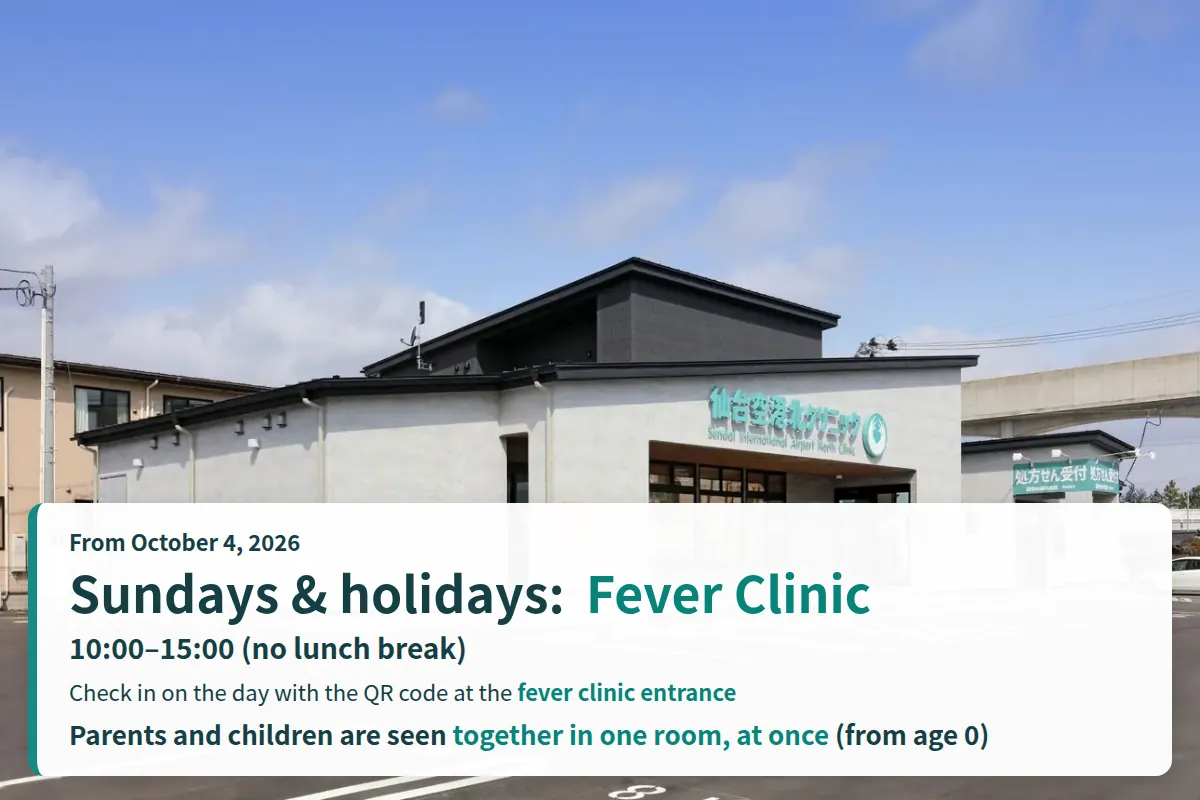
First, a note about our fever clinic on Sundays and national holidays. PCR testing for influenza and COVID (a test that copies the virus’s genetic material in order to detect it) gives results the same day.
From October 4, 2026, we also run the fever clinic on Sundays and national holidays
10:00 to 15:00 (no lunch break). You check in on the day. We give you the PCR result the same day. On Sundays and holidays we see fever patients only, and we do not offer general outpatient care or IV drips. Please check the clinic calendar for clinic dates and closed days. Notice: fever clinic on Sundays and national holidays
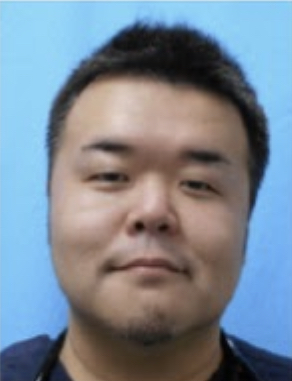
Shunichi Gamo, MD, PhD
Director, Sendai International Airport North Clinic
Born and raised locally, he attended Yuriage Elementary School and Yuriage Junior High School in Natori City. After graduating from Tohoku University School of Medicine, he worked at Sendai Open Hospital and Kesennuma City Hospital, and then at Tohoku University Hospital. In April 2021, in the middle of the COVID-19 pandemic, he opened Sendai International Airport North Clinic. Holding to a fever clinic that never turns patients away, he cared for well over 20,000 patients with fever in the two years before COVID-19 was moved to Class 5 under Japan’s infectious disease law.
Society memberships and board certifications
Certified Member and Board Certified Fellow, Japanese Society of Internal Medicine
Board Certified Pulmonologist, Japanese Respiratory Society
Board Certified Allergist, Japanese Society of Allergology
Board Certified Specialist, Japanese Society of Anti-Aging Medicine
PhD in Medicine (Tohoku University)
In short: When a child with a food allergy has a fever, what should you look at first?
What I would like you to look at first is not how high the fever is, but “what symptoms appeared, and how quickly, after your child ate the food that causes the allergy.”
Under the guideline criteria, symptoms after eating appear rapidly, within minutes to hours[1]. Anaphylaxis is a serious whole-body allergic reaction; it starts rapidly and can be fatal[1].
On the other hand, a fever itself is not necessarily a symptom of an allergic reaction. If your child has a fever but no difficulty breathing, repeated vomiting, or limpness after eating, you can first calmly take your child to a doctor. However, if even one of these signs is present, the rule is to call 119, whether or not there is a fever[1][2].
 Dr. Gamo
Even if you think “it is probably the fever,” if your child seems different after eating, give that change priority.
What are the criteria for anaphylaxis? The Japanese Society of Allergology guideline
According to the Japanese Society of Allergology’s Anaphylaxis Guideline 2022, anaphylaxis is very likely if either of the following two criteria is met[1].
| What to look at | Criterion 1 | Criterion 2 |
|---|---|---|
| Skin and mucous membrane symptoms | Hives all over the body, itching, flushing, swelling of the lips, tongue, or uvula, and so on, appearing rapidly within minutes to hours | May be absent |
| Other | With one or more of the following: severe respiratory symptoms / low blood pressure or symptoms of organ failure / severe digestive symptoms | After exposure to a known allergen or similar, low blood pressure, bronchospasm, or throat symptoms appear rapidly |
What matters here is that the breathing item is worded as “severe respiratory symptoms (difficulty breathing, expiratory wheeze/bronchospasm, inspiratory stridor, reduced PEF, hypoxemia, and so on)”[3]. This wording was changed in a correction issued on March 1, 2023[3].
These criteria were originally written for healthcare professionals. Parents do not need to measure blood pressure to decide. At home, use the list of symptoms introduced later and remember: “if even one is present, act quickly”[1][2].
Dr. GamoYou do not need to memorize the complex criteria. Just remember this: if even one is present, hurry.
After using an EpiPen (adrenaline auto-injector), what next?
If you use an EpiPen, always call 119 for an ambulance and get medical care, even if the symptoms seem to have settled[1][2].
Figure 14 of the guideline also says that after the injection you should “call an ambulance and get medical care”[1]. The Ministry of Health, Labour and Welfare’s guideline for nursery schools likewise says that after it has actually been used, the child must be taken promptly to hospital by ambulance and seen at a medical facility[2].
The first-choice medicine for anaphylaxis is adrenaline (epinephrine), and antihistamines and steroids play only a supporting role[1][4]. So if your child has been prescribed an EpiPen, it is important to use it without hesitation when symptoms such as difficulty breathing appear[4].
Parents are advised to practice using the EpiPen with a training device[4][5]. After the injection, follow the doctor’s instructions, and when the expiry date approaches, bring the unused pen to the doctor to get a new one prescribed[5].
Dr. GamoPracticing now and then with a trainer device helps keep your hands from freezing when the moment comes.
Note that the EpiPen is not prescribed for children who weigh less than 15 kg[2]. Ask your child’s doctor, such as a pediatrician or allergist, whether your child needs one[6].
How can you tell a fever from an allergic reaction?
You cannot assume that the fever itself is an allergic symptom, nor, the other way round, that “it is not an allergy because there is a fever.” What you look at are the symptoms that appeared after eating and how they develop over time.
Children cannot describe their symptoms clearly the way adults can. Changes such as being vaguely fussy, having low energy, or falling asleep can be symptoms of anaphylaxis[6]. Also, even severe anaphylaxis may occur without skin symptoms[6].
Dr. GamoYoung children may not be able to put their distress into words. Please also watch for fussiness or falling asleep.
The differences from conditions with similar symptoms can also help.
| Condition | How it differs from anaphylaxis |
|---|---|
| Asthma attack | Does not cause itching, hives, angioedema, abdominal pain, or low blood pressure[1] |
| Vasovagal reaction (fainting reflex) | Eases when lying down and usually comes with pallor and sweating. No hives, flushing, respiratory symptoms, or digestive symptoms[1] |
In a Japanese survey, the most common symptoms of immediate-type food allergy were skin symptoms, in more than 90%, followed by respiratory symptoms in about 30% and shock in about 10%[7]. Even though skin symptoms are common, skin symptoms alone are no reason to feel safe.
When hives and a fever occur together, do not decide on your own that “it is not an allergy because there is a fever.” If difficulty breathing, repeated vomiting, or limpness is added, treat it as anaphylaxis and call 119 right away[1][2].
Do fever and exercise make anaphylaxis more likely?
Yes. Infections, including those with a fever, and exercise are known as “cofactors” that amplify anaphylaxis[1].
The guideline lists exercise, acute infections (colds, fever, and so on), emotional stress, unusual activities (such as travel), and the premenstrual state as cofactors[1].
- Even a food that your child has been allowed to eat again in small amounts after the restriction was lifted can trigger a reaction together with a cold, tiredness, exercise, or bathing[1]
- Food-dependent exercise-induced anaphylaxis (FDEIA) usually occurs with exercise within 2 hours of eating the causative food, and some reports say up to 4 hours later[1]
- In food anaphylaxis in children, cofactors are reported in 14 to 18.3% of cases, with exercise and infection being the most common[8]
Dr. Gamo“It was fine last time” does not mean it will be fine now. On days with fever or exercise, watch your child more closely.
Signs you need care urgently: 119, the emergency department, or the same day
Call 119 right away
If your child has even one of the following, call 119 without hesitation, however high or low the fever is[2][9]. The same applies at night and on holidays.
- Is drowsy and confused, or limp[2][6]
- Is having a seizure, or the arms and legs are stiff[9]
- Tightness in the throat or chest, a hoarse voice, a barking cough like a dog, or difficulty breathing[2]
- Keeps vomiting again and again, or has severe (unbearable) abdominal pain that does not go away[2]
- Pale lips or nails, a pulse that is hard to feel or irregular, or wetting or soiling themselves[2]
- Seems to be struggling to breathe because of a hard cough or wheezing, or has purple lips[9]
The Ministry of Health, Labour and Welfare’s guideline for nursery schools also calls for a prompt response, such as using an EpiPen or calling 119, if a child with a food allergy shows even one highly urgent symptom[2].
See a doctor the same day, even at night or on a holiday
Even if it is not serious enough to call 119, see a medical facility as soon as possible after any symptom from a food allergy (material on drug allergies also advises seeing a doctor early once symptoms appear[6]).
- Even if hives or swelling settle once, they can get worse again a few hours later (a biphasic reaction)[4]
- Biphasic reactions occur in up to 11% of children, and about half appear within 6 to 12 hours of the first reaction[1]
- If you have used an EpiPen, always call 119 for transport to hospital and get medical care, even if the symptoms improve[1][2]
If you cannot decide what to do at night, you can also use the children’s emergency advice line (#8000) or the emergency advice service in your area. However, if any of the 119 signs above are present, skip the advice line and call 119.
Dr. GamoKeeping the #8000 number handy helps when you are unsure what to do at night.
What to tell the doctor at the visit
To confirm the cause and decide what to do from now on, please tell the doctor the following[1].
- What your child ate, how much, and when, and when the symptoms started[1]
- The symptoms that appeared (skin, breathing, digestion, consciousness) and how they developed afterwards[1]
- Whether your child had a fever, had exercised, or was tired at the time[1]
- Whether you have an EpiPen, whether you used it, and whether you are used to using it[4][5]
- Past allergies and any previous anaphylaxis[6]
For a child who has had a reaction, it is recommended to consult a specialist about whether an EpiPen is needed, along with reviewing the cause[6].
Dr. GamoOnce a reaction has happened, talking with a specialist about whether an EpiPen is needed gives peace of mind.
Frequently asked questions
- If my child only has a high fever, do I not need to worry about anaphylaxis?
-
You cannot judge from the fever alone. What matters is the symptoms that appeared after eating the food that causes the allergy. If there is difficulty breathing, repeated vomiting, limpness, drowsiness and confusion, or similar, call 119, whether or not there is a fever[1][2].
- My child has hives and a fever at the same time. Can I assume it is a cold?
-
You cannot say for sure that “it is not an allergy because there is a fever.” Even with hives alone, act quickly if they are spreading fast, or if difficulty breathing, repeated vomiting, or limpness is added. If you are worried, see a doctor the same day[1][2].
- We do not have an EpiPen. What should we do?
-
An EpiPen is considered for children who have had food anaphylaxis[1]. Your child’s doctor decides whether one is needed, so please ask a pediatrician or allergist[6]. Do not obtain or use one on your own judgment.
- Even after using an EpiPen, must we always call an ambulance?
-
Yes. An EpiPen is an emergency supporting treatment and does not replace treatment at a medical facility[5]. After the injection, always see a medical facility[5]. This is because, even if the symptoms improve, they can get worse again in a biphasic reaction[4]. It has also been reported that, worldwide, adrenaline is not used enough when anaphylaxis starts[10].
- My child used to be able to eat this food, but had a reaction this time. Why?
-
Even a food that your child has been allowed to eat again in small amounts after the restriction was lifted can trigger a reaction together with a cold, tiredness, exercise, bathing, and so on[1]. In food anaphylaxis in children, exercise and infection are the most common cofactors[8].
- What should children with food allergies be careful about?
-
Food is the main cause of anaphylaxis in children, and in East Asia, hen’s eggs and cow’s milk have been reported to be common causes[11]. It is important to discuss with your child’s doctor a review of the cause, whether an EpiPen is needed, and an emergency action plan[11].
Summary: Look at “the symptoms after eating” rather than the fever, and call 119 if there are danger signs
- With a food allergy and a fever, what matters is not how high the fever is, but “the symptoms that appeared after eating”. If there is difficulty breathing, repeated vomiting, or limpness, suspect anaphylaxis, whether or not there is a fever
- If there are signs of anaphylaxis, such as drowsiness and confusion, a seizure, or difficulty breathing, call 119 right away. After using an EpiPen, always call 119 and get medical care as well
- After a reaction has happened, review the cause with your child’s doctor and ask whether an EpiPen is needed
- Infections, including those with a fever, and exercise are cofactors that make reactions stronger[1][8]
- After a reaction, see a doctor the same day, even if the symptoms have settled[6]
The first to notice that your child is “not their usual self” is the family watching at their side. If anything about your child’s food allergy worries you, please see a doctor and talk it over. Leave the medical care to us.
That’s all.
Disclaimer
This article is intended to provide general medical information and does not replace an examination, diagnosis, or treatment by a doctor. The content is based on medical knowledge at the time of publication, but the right course of action differs for each person. If you are worried about symptoms, please consult a medical facility.
References
- Japanese Society of Allergology, Anaphylaxis Committee. Anaphylaxis Guideline 2022. Japanese Society of Allergology website (in Japanese). Accessed October 2026. https://www.jsaweb.jp/uploads/files/Web_AnaGL_2022_1201.pdf
- Ministry of Health, Labour and Welfare. Guideline for allergy management in nursery schools (2019 revised edition). Children and Families Agency, Sukoyaka 21 (in Japanese). Accessed October 2026. https://sukoyaka21.cfa.go.jp/media/tools/s04_nyu_gail029.pdf
- Japanese Society of Allergology. Correction to the “Anaphylaxis Guideline 2022,” March 1, 2023. Japanese Society of Allergology website (in Japanese). Accessed October 2026. https://www.jsaweb.jp/uploads/files/shusei_Ana2022_1MAR23.pdf
- Japanese Society of Pediatric Allergy and Clinical Immunology. Japanese Guidelines for Food Allergy 2021, digest edition, Chapter 7: Severity assessment and symptomatic treatment of immediate-type symptoms. JSPACI website (in Japanese). Accessed October 2026. https://www.jspaci.jp/guide2021/jgfa2021_7.html
- Pharmaceuticals and Medical Devices Agency (PMDA). Drug guide for patients: EpiPen injection 0.15 mg / EpiPen injection 0.3 mg. PMDA website (in Japanese). Updated July 2024. Accessed October 2026. https://www.info.pmda.go.jp/downfiles/ph/GUI/671450_2451402G2020_4_00G.pdf
- Ministry of Health, Labour and Welfare. Manual for management of individual serious adverse drug reactions: Anaphylaxis. Pharmaceuticals and Medical Devices Agency (PMDA) website (in Japanese). Revised February 2026. Accessed October 2026. https://www.pmda.go.jp/files/000279383.pdf
- Japanese Society of Allergology. Allergy Guide 2025: for healthcare professionals who care for patients. Japanese Society of Allergology website (in Japanese). March 2025. Accessed October 2026. https://www.jsaweb.jp/huge/JSA_tebiki2025.pdf
- Mohta A, Narvaez E, Mir-Ihara P, Bartra J, Muñoz-Cano R. Pediatric cofactor-enhanced food anaphylaxis: a narrative review of epidemiology, pathophysiology, and clinical phenotypes. Pediatr Allergy Immunol. 2025 Sep;36(9):e70194. doi:10.1111/pai.70194 PMID: 40910423
- Ministry of Health, Labour and Welfare. In these cases, call 119 without hesitation (symptoms in children). Jozu na Iryo no Kakarikata (How to use medical care wisely) (in Japanese). Accessed October 2026. https://kakarikata.mhlw.go.jp/kakaritsuke/urgency.html
- Miles LM, Ratnarajah K, Gabrielli S, Abrams EM, Protudjer JLP, Bégin P, et al. Community use of epinephrine for the treatment of anaphylaxis: a review and meta-analysis. J Allergy Clin Immunol Pract. 2021 Jun;9(6):2321-2333. doi:10.1016/j.jaip.2021.01.038 PMID: 33549844
- Sato S, Kodachi T, Yanagida N, Ebisawa M. Recent insights into the epidemiology and management of anaphylaxis. Balkan Med J. 2025 Sep;42(5):393-404. doi:10.4274/balkanmedj.galenos.2025.2025-5-86 PMID: 40719286
Related articles
What to do when seizures or reduced consciousness appear is explained in Danger signs of influenza encephalopathy. For visits on Sundays and national holidays, please see Notice: fever clinic on Sundays and national holidays.