
If you are in a hurry
- Think of oral herpes in children in two separate ways: the first infection (gingivostomatitis) tends to be severe, with a high fever and pain inside the mouth, while a recurrence is mild and appears in the same place
- If your child is not fully conscious, is having a seizure, or suddenly has trouble breathing, call 119 (Japan’s emergency number). If your child cannot take fluids and is limp, go to an emergency department, even at night or on a holiday
- Antiviral medicine is used if the doctor judges it necessary, and there are reports that starting it early shortened the symptoms, so if your child cannot drink and is suffering, see a doctor early
Hello. I am Shunichi Gamo, MD, PhD, a board-certified pulmonologist and the director of Sendai Airport North Clinic.
“Small blisters have appeared on my child’s lips and around the mouth.” “My child has a high fever, the mouth seems to hurt, and my child will not drink anything.” At times like this, it is natural to worry whether it is a cold sore or a more serious illness.
To give you the conclusion first: in children, the severity of herpes virus infection differs greatly from the “first infection (primary infection)” to “repeated recurrences”, and a first infection can appear as gingivostomatitis (inflammation of the gums and the inside of the mouth), with a high fever and strong pain inside the mouth that can stop a child drinking. If your child cannot drink and is limp, see a doctor early.
First, a note about our fever clinic on Sundays and national holidays. PCR testing for influenza and COVID (a test that copies the virus’s genetic material in order to detect it) gives results the same day.
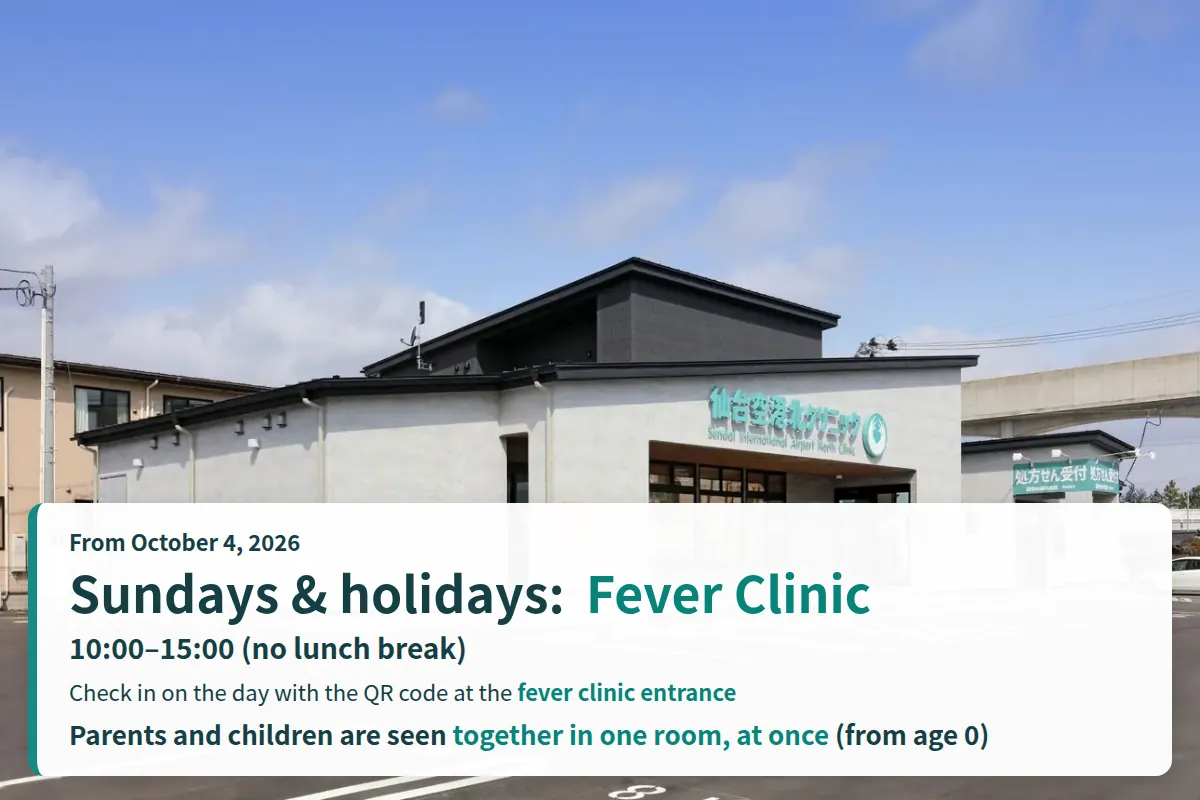
From October 4, 2026, we also run the fever clinic on Sundays and national holidays
10:00 to 15:00 (no lunch break). You check in on the day. We give you the PCR result the same day. On Sundays and holidays we see fever patients only, and we do not offer general outpatient care or IV drips. Please check the clinic calendar for clinic dates and closed days. Notice: fever clinic on Sundays and national holidays
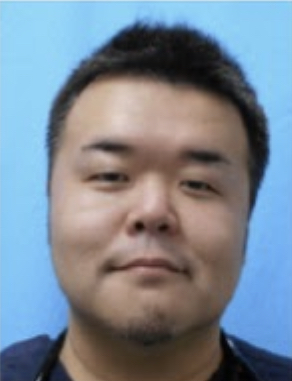
Shunichi Gamo, MD, PhD
Director, Sendai International Airport North Clinic
Born and raised locally, he attended Yuriage Elementary School and Yuriage Junior High School in Natori City. After graduating from Tohoku University School of Medicine, he worked at Sendai Open Hospital and Kesennuma City Hospital, and then at Tohoku University Hospital. In April 2021, in the middle of the COVID-19 pandemic, he opened Sendai International Airport North Clinic. Holding to a fever clinic that never turns patients away, he cared for well over 20,000 patients with fever in the two years before COVID-19 was moved to Class 5 under Japan’s infectious disease law.
Society memberships and board certifications
Certified Member and Board Certified Fellow, Japanese Society of Internal Medicine
Board Certified Pulmonologist, Japanese Respiratory Society
Board Certified Allergist, Japanese Society of Allergology
Board Certified Specialist, Japanese Society of Anti-Aging Medicine
PhD in Medicine (Tohoku University)
How does a first infection differ from a recurrence?
A first infection and a recurrence differ greatly in how severe the symptoms are and how they appear. When a child is infected with the virus for the first time, there is no immunity (the body’s defense system) against it yet, so it can become severe, with whole-body symptoms such as a high fever[1]. A recurrence, on the other hand, is generally mild because immunity has already formed, and it typically appears again and again in the same place[1]. However, most first infections are said to cause no symptoms and often go unnoticed[2][1].
| First infection (gingivostomatitis, etc.) | Recurrence (cold sores) | |
|---|---|---|
| Common ages | About 6 months to 3 years[2] | From children to adults |
| Whole-body symptoms | Often with whole-body symptoms such as a high fever[1] | Generally mild[1] |
| Mouth symptoms | Many aphthae inside the mouth, swollen or bleeding gums, blisters around the mouth[2] | Blisters that come back in the same place, such as the lips[1] |
| What to check at home | Whether your child is drinking, and whether your child is limp[2] | Whether your child’s general condition is good[2] |
Recurrences are triggered by things such as fever, ultraviolet light, stress, dental treatment, and a weakened ability to fight off illness[1]. After the first infection, the virus hides in the nerves, and when it recurs it may appear as mild blisters on the lips[1].
 Dr. Gamo
Many mouth ulcers with a high fever or not drinking? It’s important not to decide for yourself whether it’s a first infection or a recurrence.
What are the symptoms of first-infection gingivostomatitis?
In first-infection gingivostomatitis, there is a fever lasting about 4 to 5 days, many aphthae (small, painful ulcers inside the mouth), swollen or bleeding gums, and blisters around the mouth[2].
However, a report on children admitted to hospital found fever in 99.5%, lasting an average of 5.11 days (17 days in the longest case)[3]. So think of it as “it often settles in about 4 to 5 days, but it can last longer”.
Dr. GamoA fever lasting 4 to 5 days is worrying, but it is a common course for this illness.
In the same report, mouth ulcers were seen in 84.3% and swollen or bleeding gums in 67.6%[3]. Gingivostomatitis can be hard to tell apart from a bacterial throat infection or from viral infections such as hand, foot and mouth disease[3]. For illnesses inside the mouth, please also see the article on hand, foot and mouth disease and herpangina.
What are the signs of dehydration when your child cannot drink?
If a child keeps being unable to drink because of mouth pain, the child can become dehydrated (not enough water in the body) and may need to be admitted to hospital[2][4]. Among first infections, 13% to 30% have been reported to develop into gingivostomatitis[4].
The checklist below shows general signs of dehydration in children, as given in the nursery school guidelines[5]. They are not specific to herpes, but they are useful at home.
- Cannot take fluids
- Dry lips and tongue
- No urine for half a day or more
- Small amounts of dark urine
- Sunken-looking eyes
- Skin that has lost its firmness
If even one of these applies, see a doctor the same day. “Cannot take fluids” and “no urine for half a day or more” in particular are urgent signs.
Dr. GamoKeeping track of diapers and trips to the toilet makes it easier to notice whether urine is coming out.
What are the signs to seek care urgently?
The herpes virus can infect the brain and cause herpes simplex encephalitis, which presents with seizures or impaired consciousness and is sometimes fatal[2]. If any of the following signs appear, call 119 without hesitation, even at night or on a holiday.
- Your child does not answer when you call, or is drowsy and confused (not fully conscious)
- Your child is having a seizure
- Your child suddenly has trouble breathing, is breathing with the shoulders, or has purplish lips
- Your child collapsed or lost consciousness with chest pain
Judge consciousness, seizures, and breathing regardless of how high the fever is. This is the general guidance for calling 119.
If it is not that serious, but any of the following apply, do not wait until morning; go to an emergency department, even at night or on a holiday.
- Your child can hardly take any fluids, or has not passed urine for half a day or more
- Your child is limp, has no energy, and has a poor color
- The mouth pain is strong, and your child drools a lot and cannot swallow
- The eyes are sunken, and the lips and tongue are dry
If you are “unsure whether it is serious enough for the emergency department”, you can call the children’s emergency advice line (#8000) for your area. However, if there are clearly dangerous signs, call 119 directly without calling the advice line first.
Dr. Gamo#8000 is the line to call when you are unsure whether to go to the emergency department. Keeping the number handy gives peace of mind.
When is antiviral medicine used?
Antiviral medicine may be used for cold sores and gingivostomatitis, and when the doctor judges it necessary, starting it early has been reported to be effective[2][1][4].
For a first infection or for moderate or more severe cases, an anti-herpes medicine (such as aciclovir or valaciclovir) is taken by mouth[1]. For mild cold sores, a cream or ointment may be used[1]. If it is used, the early stage of the illness is best, and the effect of antiviral medicine has been reported to fall once about 72 hours have passed since onset[4].
In a study of 72 children aged 1 to 6, in the group that started antiviral medicine within 72 hours of onset, the mouth lesions improved in a median of 4 days (10 days in the placebo, or dummy medicine, group), and the duration of fever (1 day vs 3 days) and of difficulty eating and drinking was also shorter[6].
So it is important to see a doctor early and start antiviral medicine if needed. If “the mouth pain is so strong that my child cannot drink” or “the fever is high”, please do not hesitate to see a doctor.
Dr. GamoAntiviral medicine can help shorten the hard time until your child can drink and eat. We decide whether to use it after an examination.
Is it contagious? When can my child go back to school or nursery?
The herpes virus spreads mainly by contact, through touching the lesions or saliva, and through droplets (the spray from coughing or talking)[1]. A person can shed the virus even without symptoms, and can pass it on even without symptoms[1].
Whether your child can return to nursery or school is judged by your child’s condition. If there are only cold sores and the child is otherwise well, the child may be able to attend wearing a mask or similar. On the other hand, with gingivostomatitis where fever and painful aphthae in the mouth make eating and drinking difficult, or where there are blisters all over the body, the child stays home for treatment[2].
Dr. GamoIf there are only cold sores around the mouth and your child is well, they may be able to attend nursery wearing a mask.
Note that herpes simplex virus infection is not individually listed by law as a disease requiring children to stay off school[7]. Please make the final decision on returning to nursery or school in discussion with the doctor who examined your child and with the nursery or school.
What about the eyes and newborns?
The herpes virus can infect not only the skin but also the eyes and nerves[1]. An infection of the eye is called herpes keratitis (herpes on the surface of the cornea, over the colored part of the eye). If there is eye redness or pain, sensitivity to light, or blisters around the eye, see an eye doctor early.
When a newborn baby catches herpes, it is called neonatal herpes, and it can become severe[1]. Neonatal herpes presents with a high fever, seizures, impaired consciousness, and other symptoms, and because it can be life-threatening or leave lasting effects, it needs emergency care[2]. People with cold sores or blisters should avoid contact with newborns and young babies. This is a general safety precaution.
Dr. GamoWhen a family member has a cold sore, it is important to avoid close contact with the baby.
Also, children with skin conditions such as atopic dermatitis can develop Kaposi varicelliform eruption, in which many blisters appear all over the body[2]. If blisters spread over areas of dermatitis, see a doctor early.
How should my child spend time at home?
When the mouth hurts or there is a fever, acetaminophen (such as Calonal) can ease the fever and pain[8]. Acetaminophen is also a medicine used in pediatrics to reduce fever and relieve pain[8].
The important thing is to take it as instructed[8]. If your child is using other medicines that contain acetaminophen, such as over-the-counter cold medicines, tell the doctor or pharmacist so that they do not overlap[8]. Also, special care is said to be needed in people with dehydration[8], so if your child can hardly take any fluids or you are worried about dehydration, do not continue on your own judgment; see a doctor and ask.
When fever or pain is hard to bear, this is a medicine you can use rather than making your child put up with it. However, always follow the doctor’s or pharmacist’s instructions on whether to continue and how much to give.
Dr. GamoEven after the fever drops, mouth pain can stop your child drinking. Make “is my child drinking?” your most important guide.
Frequently asked questions
- How can I tell a first infection from a recurrence?
-
A first infection, because there is no immunity, tends to come with whole-body symptoms such as a high fever, and many aphthae appear inside the mouth. A recurrence, because there is immunity, is generally mild and comes back in the same place, such as the lips[1]. If there are many aphthae inside the mouth with a high fever or your child cannot drink, do not try to decide yourself whether it is a first infection or a recurrence; see a doctor early.
- My child is not drinking and is limp. What should I do?
-
If your child cannot take fluids and is limp, there is a risk of dehydration. If there are signs such as being unable to take fluids or no urine for half a day or more, go to an emergency department the same day, even at night or on a holiday[5]. If your child does not answer when you call or is having a seizure, call 119.
- Should my child take antiviral medicine?
-
It is used if the doctor judges it necessary. There are reports that starting it early, such as within 72 hours of onset, shortened the duration of the mouth lesions and the fever[4][6]. If your child cannot drink and is suffering, see a doctor early to discuss it.
- When can my child go back to nursery or school?
-
If there are only cold sores and your child is otherwise well, your child may be able to attend wearing a mask or similar. With gingivostomatitis where the pain is strong and eating and drinking are difficult, or where there are blisters all over the body, the child stays home for treatment[2]. By law, herpes simplex is not individually listed as a disease requiring children to stay off school[7].
- Can it spread to the eyes? Is it all right to see a newborn baby?
-
Herpes can infect the eye (herpes keratitis)[1]. If your child is sensitive to light or has eye redness or pain, see an eye doctor early. In newborn babies, neonatal herpes can become severe[1], so people with blisters should avoid contact. This is a general safety precaution.
- The fever has gone down, but mouth pain stops my child drinking.
-
Even after the fever goes down, the pain of the aphthae in the mouth can stop a child drinking. Acetaminophen (such as Calonal) can ease the pain, but use it as instructed, and see a doctor if your child still cannot drink[8]. If your child cannot take fluids, please seek medical advice early.
Summary: Know the difference between a first infection and a recurrence, and hurry when your child cannot drink
- For oral herpes in children, keep the first infection (gingivostomatitis) and recurrences apart: the first infection tends to be severe, with a high fever and pain inside the mouth, while a recurrence is mild and comes back in the same place
- If your child is not fully conscious, is having a seizure, or suddenly has trouble breathing, call 119. If your child cannot take fluids and is limp, go to an emergency department, even at night or on a holiday
- Antiviral medicine may be used when the doctor judges it necessary, and starting it early has been reported to shorten the symptoms, so if your child cannot drink and is suffering, see a doctor early
- Watch for signs of dehydration (cannot take fluids, no urine for half a day or more, dry lips and tongue, sunken eyes)
- Infection of the eyes or of newborns can become severe, so talk to a doctor early about any worrying symptoms
The biggest worry with first-infection gingivostomatitis is that a child may become unable to drink. If the mouth seems painful and your child cannot take fluids, please talk to us early. Leave the medical care to us.
That’s all.
Disclaimer
This article is intended to provide general medical information and does not replace an examination, diagnosis, or treatment by a doctor. The content is based on medical knowledge at the time of publication, but the right course of action differs for each person. If you are worried about symptoms, please consult a medical facility.
References
- Japanese Dermatological Association. Dermatology Q&A: Herpes and herpes zoster (supervised by Watanabe D). Japanese Dermatological Association website (in Japanese). Accessed October 2026. https://www.dermatol.or.jp/qa/qa5/index.html
- Japan Pediatric Society, Committee on Immunization and Infectious Disease Control. Explanation of infectious diseases to be prevented in schools, kindergartens, certified centers for early childhood education and care, and nursery schools (revised April 2025): Herpes simplex virus infection. Japan Pediatric Society website (in Japanese). Accessed October 2026. https://www.jpeds.or.jp/general/prevention/yobo-kansensho/kansensho03-30.html
- Huang CW, Hsieh CH, Lin MR, Huang YC. Clinical features of gingivostomatitis due to primary infection of herpes simplex virus in children. BMC Infect Dis. 2020 Oct;20(1):782. doi:10.1186/s12879-020-05509-2 PMID: 33081701
- Coppola N, Cantile T, Adamo D, Canfora F, Baldares S, Riccitiello F, et al. Supportive care and antiviral treatments in primary herpetic gingivostomatitis: a systematic review. Clin Oral Investig. 2023 Nov;27(11):6333-6344. doi:10.1007/s00784-023-05250-5 PMID: 37733027
- Children and Families Agency. Guidelines for infectious disease control in nursery schools (2018 revision) (partly revised May 2023, partly corrected October 2023). Ministry of Health, Labour and Welfare website (in Japanese). Accessed October 2026. https://www.mhlw.go.jp/content/10900000/20231010_policies_hoiku_25.pdf
- Amir J, Harel L, Smetana Z, Varsano I. Treatment of herpes simplex gingivostomatitis with aciclovir in children: a randomised double blind placebo controlled study. BMJ. 1997 Jun;314(7097):1800-3. doi:10.1136/bmj.314.7097.1800 PMID: 9224082
- Ordinance for Enforcement of the School Health and Safety Act (Ordinance of the Ministry of Education No. 18 of 1958), Article 18. e-Gov Law Search (in Japanese). Accessed October 2026. https://laws.e-gov.go.jp/law/333M50000080018
- Pharmaceuticals and Medical Devices Agency (PMDA). Drug guide for patients: Calonal Tablets 200 / Calonal Tablets 300 / Calonal Tablets 500 (updated September 2026). PMDA website (in Japanese). Accessed October 2026. https://www.info.pmda.go.jp/downfiles/ph/GUI/172190_1141007F1063_5_07G.pdf