
Quick answer: which documents do you need for a travel insurance claim in Japan?
- Call your insurer’s 24-hour assistance number before or right after the visit, if you can. Insurers can give claiming advice and, sometimes, arrange help on the spot [1].
- In Japan you usually pay the clinic and the pharmacy yourself and claim later. Payment methods vary by facility. Some clinics accept cash only, while others accept credit cards or other electronic payments. Check the clinic’s accepted payment methods before your visit if possible.
- Ask your insurer which documents it needs. If it requires an English medical certificate (shindansho), ask the clinic to include the diagnosis, visit date and treatment, plus the ICD-10 code if your insurer requires it. Also ask for a receipt (ryōshūsho) and an itemised statement of charges (shinryō meisaisho).
- If you receive medicines from an outside pharmacy, ask for its receipt, itemised statement and medicine information sheet. Charges from an outside pharmacy are separate from the clinic bill. Medicines dispensed directly by a medical institution may be included in that institution’s bill.
- Keep proof of payment and your passport or entry record. Not every clinic issues English certificates, certificates are not free, and no one can promise a claim will be paid.
What kind of illness usually leads to a claim?
Most travel insurance claims for illness are for ordinary, sudden problems. In one large study of claims by Australian travellers, the most common medical claims were respiratory problems (such as cough, sore throat and fever), muscle and joint problems, and stomach and gut upsets [2]. Dental problems also appear often [2].
Insurers usually cover sudden, unforeseen illness that starts during the trip. Conditions you already had before travel, and routine care, are often excluded, so read your policy wording before you go.
What should you do first?
- Find your policy number and your insurer’s 24-hour assistance hotline. Keep them on your phone.
- Ask the insurer whether they can arrange direct (cashless) billing, where the clinic bills the insurer instead of you. Most small Japanese clinics will not bill a foreign insurer directly, and cashless conditions vary by insurer. Plan to pay and claim back.
- Bring your passport, any claim form your insurer uses, and a card or cash. Clinics generally accept cash, and many also accept credit cards or other electronic payments. Payment methods differ from clinic to clinic, so it is worth asking before you go.
- When you check in, say early that you need documents for travel insurance. A useful phrase: “Ryokō hoken no shindansho o eigo de onegai shimasu” (Please give me a travel insurance medical certificate in English).
- Photograph every document before you send the originals to the insurer.
If you are unsure where to go, the JNTO Japan Visitor Hotline (050-3816-2787, 24 hours a day, 365 days a year, in English, Chinese and Korean) can help with emergencies and introduce medical institutions with foreign-language support [3].
When to see a doctor, and when to call 119
Call 119 for an ambulance (the same number is used for fire) if there is:
- difficulty breathing, or chest pain
- confusion or fainting, or a seizure (a fit)
- signs of stroke, such as sudden weakness on one side or slurred speech
- severe dehydration
- a child who is hard to wake or is breathing fast
- a stiff neck with fever
Do not delay emergency care to sort out insurance first.
See a doctor promptly for a high fever that is not settling, or a cough that is getting worse. Also see a doctor if you are pregnant, if the patient is an infant, or if someone has a chronic illness such as diabetes or asthma. When in doubt, see a doctor or call the JNTO hotline.
How is it diagnosed, and why does the diagnosis matter for your claim?
Insurers usually want a named diagnosis, not just “fever”. They often ask for an ICD-10 code (a World Health Organization code that classifies diseases) [4], the date the illness started, the test results and the treatment. These details may help your insurer assess when the illness started and whether the treatment meets the policy’s requirements. Check with your insurer which documents and codes are required.
Common tests in Japan include:
- Rapid antigen tests (a quick swab test that detects parts of the virus) for influenza and COVID-19.
- Multiplex PCR (a test that looks for the genetic material of many germs at once) where available.
- Blood tests or a chest X-ray if the doctor thinks they are needed.
Ask for the test results in writing. Two limits to know: a negative test does not rule out every cause of your symptoms, and a respiratory PCR panel does not test for everything. For example, it may not include group A streptococcus (the bacterium causing strep throat). A test result does not promise that your insurer will reimburse you.
How is it treated in Japan, and which medicine receipts should you keep?
The prescription route
Our clinic’s travel package covers issuing a prescription (shohōsen) when needed. Take the prescription to a dispensing pharmacy (chōzai yakkyoku) outside the clinic and pay for the medicine there separately. Keep the pharmacy receipt, itemised statement (chōzai meisaisho) and medicine information sheet (okusuri setsumeisho) for your insurance claim.
Medicines a doctor may prescribe (no doses are given here — the doctor decides which medicine, if any, is suitable):
- For influenza: antivirals such as oseltamivir and baloxavir. In the AD ASTRA trial of adults with non-severe influenza and a low risk of severe disease, fever resolved sooner with the antiviral treatments than with no study drug. The trial found no significant difference between groups in the time until all symptoms resolved [5].
- For COVID-19, prescription oral antivirals may be considered; whether one is suitable is decided by the doctor. See our COVID-19 guide for details.
- Antibiotics do not treat uncomplicated viral colds. They may be prescribed when a bacterial infection is diagnosed or suspected, or when there is another appropriate medical indication.
The drugstore route
Over-the-counter (OTC) medicines are sold without a prescription at pharmacies and drugstores. Keep the receipt, but note that many policies do not reimburse OTC medicines unless a doctor was seen. Check your policy.
Travel-specific points: flying, companions, children and the document checklist
Flying while ill
Airlines may refuse boarding to passengers who are visibly sick, and if you change your flights insurers usually need a doctor’s statement that you were unfit to travel — only the doctor can decide whether to write one. For whether you can fly and what to prepare before going to the airport, see our fever before a flight guide.
Companions and children
Each insured person usually needs their own certificate and receipt. A companion’s extra costs may need proof of the relationship. For a child, the claim needs the child’s own documents and passport.
Document checklist
| Document | Romaji | Why it is needed |
|---|---|---|
| Medical certificate | shindansho | States the diagnosis, visit date and treatment. Ask the clinic about adding the ICD-10 code if your insurer requires it. |
| Receipt | ryōshūsho | Proof you paid the clinic |
| Itemised statement | shinryō meisaisho | Shows what each charge was for |
| Prescription copy or pharmacy statement | shohōsen / chōzai meisaisho | Supports medicine costs |
| Test results | kensa kekka | Supports the diagnosis |
| Proof of card payment | kādo riyō meisai | Confirms the payment |
| Passport and entry stamp or record | pasupōto | Proves you were travelling |
| Boarding passes | tōjōken | Proves the trip dates |
| Insurer’s own claim form | — | Required by many insurers |
Fees and lost receipts
In Japan, a medical certificate is usually charged as a separate document fee (bunshoryō) and may not be ready the same day. Lost receipts are often not reissued; instead, the clinic may offer a payment certificate (ryōshū shōmeisho). Medical care in Japan is high quality but expensive, and you should expect to pay the whole cost of treatment yourself [6].
Can your home health system pay you back?
Some countries’ public health systems may reimburse self-paid medical costs incurred abroad. However, the rules differ widely. They cover points such as what counts as a reimbursable illness, and which documents are required (for example, original certificates and receipts, itemised statements, and proof of entry and exit). Other points include whether documents need to be stamped or translated, and any deadlines or limits on the amount paid back. Check your home country’s public health system and your private insurer’s rules before you rely on them. Because your public system and a private insurer may both want original documents, ask the clinic for duplicate originals or certified copies, and ask whether the certificate can be stamped or issued in English.
Frequently asked questions
Will a Japanese clinic write the certificate in English?
Often yes, but not always. Ask at check-in. If only a Japanese certificate is available, your insurer may accept it with a translation.
Do I need ICD-10 codes?
Many insurers ask for them, so request that the code is written on the certificate. ICD-10 is the WHO’s international classification of diseases.
Can the clinic bill my insurer directly?
Usually not at small clinics. Ask your insurer whether cashless billing is possible; conditions vary by insurer.
I paid by card; is the card slip enough?
No. Keep the clinic receipt and the itemised statement as well. The card slip alone does not show what was treated.
My insurer has its own form; will the doctor fill it in?
Possibly, usually for a fee and with a delay. Ask at the clinic and allow time before you fly home.
Can I claim drugstore medicines?
It depends on the policy. Keep the receipt, but many policies do not reimburse OTC medicines without a doctor’s visit.
If you are near Sendai Airport
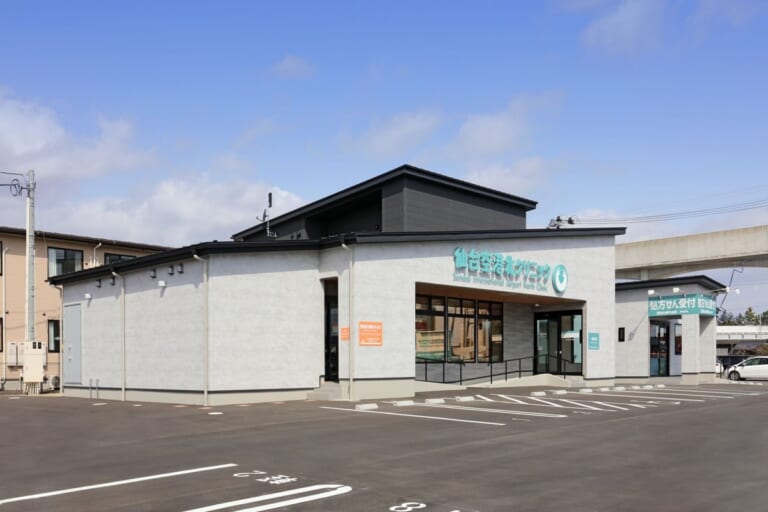
Sendai International Airport North Clinic (Sendai Kūkō Kita Clinic), 8-1-8 Mitazono, Natori, Miyagi, is about 10 minutes by car from Sendai International Airport. The director is Shunichi Gamo, M.D., Ph.D., board certified in internal medicine, pulmonology (Japanese Respiratory Society) and allergology (Japanese Society of Allergology).
The clinic runs a fever clinic with its own entrance. Same-day check-in is done with a QR code at the fever clinic entrance; no advance arrangement is needed, and the check-in page is available in English. Fever clinic hours: Monday, Tuesday, Wednesday, Friday and Saturday 10:00–12:00 and 14:30–18:00; Sundays and Japanese national holidays 10:00–15:00 (please check the calendar on the clinic page); closed Thursdays. Children from age 0 are seen, and family members with fever can be seen together in the same room by the same doctor at one visit.
For visitors without Japanese health insurance, there is a flat fee of USD 700, charged in yen at the day’s rate (card or cash). It covers an English consultation, the BioFire SpotFire R Panel multiplex PCR (one nasal swab, about 15 minutes), a same-day English medical certificate with ICD-10 codes for travel insurance, and a prescription if needed. The panel detects 11 viruses and 4 bacteria: SARS-CoV-2, influenza A including H1-2009 and H3, influenza B, RSV, human metapneumovirus, adenovirus, parainfluenza virus, rhinovirus/enterovirus, seasonal coronavirus, Mycoplasma pneumoniae, Chlamydia pneumoniae, Bordetella pertussis and Bordetella parapertussis. Note that group A streptococcus is not on the panel. Medicines are paid separately at the pharmacy next door, so keep that receipt for your claim. People living in Japan with Japanese health insurance are seen at the regular fever clinic under insurance; the flat fee does not apply.
The clinic does not accept UnionPay. The doctor sees patients in English or Japanese, and clinic staff speak both languages. The clinic uses real-time AI voice translation to help communicate in other languages. For regular outpatient care, come directly to the general outpatient entrance during clinic hours. The fever clinic has a separate same-day check-in procedure.
References
- Leggat PA, Griffiths R, Leggat FW. Emergency assistance provided abroad to insured travellers from Australia. Travel Med Infect Dis. 2005;3(1):9-17.
- Leggat PA, Leggat FW. Travel insurance claims made by travelers from Australia. J Travel Med. 2002;9(2):59-65.
- For safe travels in Japan — Guide for when you are feeling ill. Japan National Tourism Organization.
- ICD-10 Version:2019. World Health Organization.
- Jittamala P, Schilling WHK, Leopold SJ, Watson JA, Kotchum K, Wongnak P, et al. Baloxavir marboxil, favipiravir, or oseltamivir in patients with non-severe symptomatic seasonal influenza (AD ASTRA): a phase 2, open-label, adaptive, randomised controlled trial. Lancet Infect Dis. 2026 Jul 28. doi: 10.1016/S1473-3099(26)00255-0. Epub ahead of print.
- Health — Japan travel advice. GOV.UK.