
Quick answer
- A fever alone does not automatically ban you from flying. Airlines may refuse boarding to a passenger who looks obviously unwell or may have a contagious disease. The real questions are whether you are well enough to fly and whether you could infect others.
- Get checked the same day if you can. A doctor can examine you and test for common respiratory infections.
- Go to emergency care or call 119 (Japan’s ambulance number) if you have danger signs such as difficulty breathing or chest pain.
- If you change your flight, keep a dated medical certificate and all receipts for the airline and your travel insurer.
- Do not take fever reducers to hide a fever at airport temperature screening. Treat them as medicine for comfort, not as a way to pass a check.
What could this fever be?
A fever can have many different causes. Only a doctor’s examination and tests can tell what is causing your fever.
Respiratory viruses
Most fevers in travellers come from respiratory infections, meaning infections of the nose, throat, or lungs:
- Influenza (the flu) — a viral illness that starts suddenly with fever, cough, sore throat, body aches, and tiredness. In temperate countries like Japan it occurs mainly in winter, though it can happen year-round [1].
- COVID-19 — caused by the SARS-CoV-2 virus. The most common symptoms of currently circulating variants are fever, chills, and sore throat. It circulates throughout the year without a fixed season [2].
- RSV (respiratory syncytial virus, a common cause of coughs and chest infections), human metapneumovirus, adenovirus, and rhinovirus (the usual cause of the common cold). These can all cause fever, and symptoms alone cannot reliably tell influenza from COVID-19 or from each other [2].
Other causes
- Strep throat — a bacterial throat infection caused by Group A streptococcus.
- Mycoplasma pneumoniae — a bacterium that causes a lingering cough and fever, sometimes called “walking pneumonia.”
- Gastroenteritis — infection of the stomach and intestines with vomiting or diarrhoea; norovirus is a common winter example.
- Urinary tract infection — a bacterial infection of the bladder or kidneys.
- Heat illness — in Japan’s hot, humid summer, dehydration and overheating can raise body temperature.
Less common but important
- Measles — a highly contagious viral illness with high fever, cough, runny nose, and a rash. Measles cases have been rising worldwide, and travellers who are not fully vaccinated are at risk [3][4].
- Infections picked up earlier in your trip — if you visited a tropical country before Japan, illnesses such as dengue (a mosquito-borne viral fever) or malaria can appear days later. Tell the doctor where you have travelled.
What should you do first?
If you develop a fever the evening or morning before your flight:
- Measure your temperature and write it down with the time.
- Write down when your symptoms started. Timing matters: influenza antiviral medicines work best when started early, within about 48 hours of the first symptoms [5].
- Drink fluids and rest.
- Wear a mask around other people and keep away from your travel companions where possible.
- Check your flight’s change rules and your travel insurance policy terms now, before you decide anything.
- Find a clinic that can see you the same day. If you need help finding care in your language, the Japan Visitor Hotline operated by JNTO (Japan National Tourism Organization) is available 24 hours a day in English, Chinese, and Korean: 050-3816-2787 [6].
For comfort, acetaminophen (a common fever and pain reducer, available without a prescription at Japanese drugstores) is the usual first choice. Follow the package label for the dose. Do not take a fever reducer just to get through airport screening — a hidden fever is still a fever, and you may be spreading infection.
When to see a doctor urgently or call 119
119 is Japan’s emergency number for an ambulance. If you are taken to hospital, treatment is charged separately, and clinics generally accept payment for treatment [6].
Danger signs in adults
- Difficulty breathing
- Chest pain
- Confusion or unusual sleepiness
- Stiff neck with headache
- A new rash with high fever
- Fainting
- Inability to keep fluids down
- Very little urine
Danger signs in children
- Any fever in a baby under 3 months of age
- Fast or labored breathing
- Being very hard to wake
- A seizure (convulsion)
- Signs of dehydration, such as a dry mouth and little urine
If you are unsure whether a child needs to see a doctor, contact a local medical consultation service or the Japan Visitor Hotline [6].
How is the cause diagnosed, and why does it matter before a flight?
- The doctor takes a history and examines you, including listening to your breathing and, where appropriate, measuring your oxygen level with a small clip on the finger.
- Tests. Rapid antigen tests (quick swab tests that detect pieces of the virus) are common in Japan. A multiplex PCR test (a test that looks for the genetic material of many germs at once) uses one nasal swab to check for many respiratory viruses and some bacteria at the same time. No test detects everything: strep throat needs a throat test, and measles, dengue, urinary infections, and the severity of pneumonia may need examination or imaging instead.
- What results mean. A positive result shows that the organism is present, but not always that it is the whole cause of your illness — rhinovirus, for example, is sometimes found in people whose fever comes from something else. A negative result does not rule out other illnesses.
- Why it matters before a flight. Influenza and COVID-19 have antiviral treatments that work best when started early [5][7]. A diagnosis helps you judge how contagious you are, and insurers usually require a certificate that states a diagnosis.
A test result does not prove that you are fit to fly or that you are no longer contagious.
How is it treated in Japan?
Influenza
Prescription antiviral medicines used in Japan include:
- Oseltamivir (Tamiflu) — capsules or a liquid taken for several days
- Baloxavir (Xofluza) — a single oral dose; in trials it shortened the time to relief of influenza symptoms compared with placebo [7]
- Inhaled zanamivir (Relenza)
- Inhaled laninamivir (Inavir) — a Japan-specific product
- Intravenous peramivir (Rapiacta) — given by infusion
These medicines are most effective when started within about 48 hours of symptom onset [5].
COVID-19
Prescription oral antivirals for COVID-19 are available in Japan, and whether you can take them depends on your risk factors and on interactions with medicines you already take — the doctor will check. See our COVID-19 guide for details.
Bacterial infections
Confirmed bacterial infections, such as Mycoplasma pneumoniae, may need antibiotics (medicines that kill bacteria). Viral colds do not respond to antibiotics.
Prescription vs drugstore
Antivirals and antibiotics require a doctor’s prescription in Japan. Prescriptions are filled at a separate pharmacy, which is normal practice here. At a drugstore you can buy acetaminophen, loxoprofen, and ibuprofen products without a prescription. Pharmacy staff can help you choose.
Some Japanese combination cold medicines contain ingredients such as codeine-type painkillers or decongestants. Check the import rules of your home country and any transit country before bringing medicines back.
Children
Acetaminophen is the preferred fever reducer for children. Never give aspirin to a child with a fever, because of the risk of Reye’s syndrome (a rare but serious condition affecting the liver and brain). Follow the package label or the doctor’s instructions for doses.
Should you fly, and what helps with the airline and insurance?
Deciding whether to fly
Weigh how unwell you feel against how contagious you may be. Flying with dehydration, breathing difficulty, or severe congestion is uncomfortable — a blocked nose and congested sinuses can make ear and sinus pain worse during descent. Respiratory infections can spread on aircraft, and in-flight transmission of influenza and SARS-CoV-2 has been documented in investigations, though it does not happen on every flight [8]. Airlines can deny boarding to passengers who look visibly ill. Some airlines ask for a medical clearance form (often called a MEDIF) or a doctor’s note; contact your airline directly about their rules.
There is no single rule that tells you how long to stay home with a fever; follow your doctor’s advice and your airline’s rules. Measles is different: because it is one of the most contagious diseases known, the doctor will advise against travel [4].
Arrival screening
Some destinations use airport temperature screening or health declarations on arrival. Check your destination’s current rules before you fly, and report honestly rather than hiding a fever.
Companions and children
Your travel companions may be infected too, even if they have no symptoms yet. Watch children carefully for fluid intake and complaints of ear pain during the flight.
Documents to keep
- A dated medical certificate stating the diagnosis
- Receipts for the consultation
- The prescription or pharmacy receipt
- Test results
- Airline correspondence about the changed flight
Insurers and airlines each have their own requirements, so no document can ensure a refund, rebooking, or a payout — but complete, dated paperwork makes a claim much easier.
Frequently asked questions
Can I fly with a fever if I take medicine?
Medicine can lower your temperature and make you more comfortable, but it does not make you non-contagious, and it does not ensure boarding. Airlines may still refuse boarding to a passenger who looks unwell. Take medicine for comfort, not to hide the fever.
Will I be stopped at the airport in Japan for a fever?
Some airports use thermal cameras or temperature checks, but there is no single nationwide rule that stops travellers with a fever from departing Japan. Check your airline’s and destination’s current requirements.
Can a Japanese doctor give me a “fit to fly” letter?
A doctor can write a medical certificate describing your condition and diagnosis. Whether it says you are fit to fly is the doctor’s judgement, and the airline makes the final decision on boarding.
My child has a fever; can the whole family be seen?
Yes. Many clinics, including fever clinics, can see family members together at one visit. Look for a clinic that accepts children and ask when you arrive.
Is a PCR test enough if I test negative?
No. A negative PCR result means the germs on that panel were not found; it does not rule out other illnesses such as strep throat, measles, dengue, or a urinary infection. If you still feel unwell, follow the doctor’s advice.
Can I buy Tamiflu at a drugstore?
No. Oseltamivir (Tamiflu) and other influenza antivirals need a doctor’s prescription in Japan. Drugstores sell fever reducers such as acetaminophen, loxoprofen, and ibuprofen without a prescription.
If you are near Sendai Airport
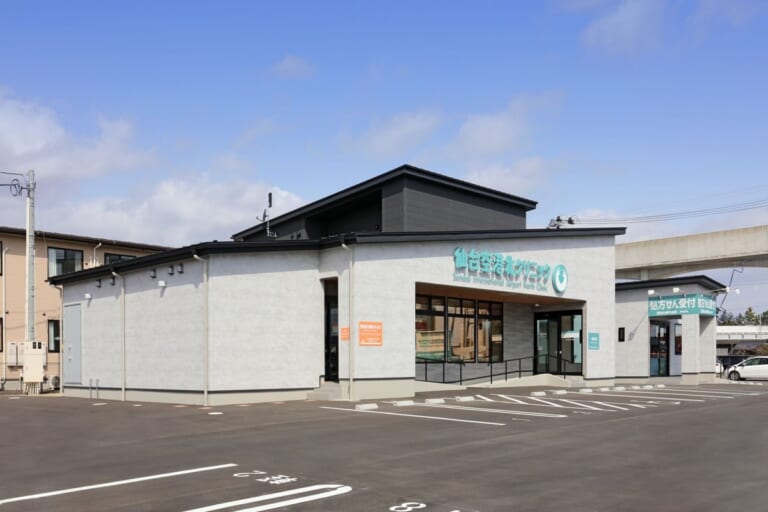
Sendai International Airport North Clinic is located at 8-1-8 Mitazono, Natori, Miyagi, about 10 minutes by car from Sendai International Airport. The director is Shunichi Gamo, M.D., Ph.D., board certified in internal medicine, pulmonology, and allergology.
It operates a fever clinic with its own entrance and same-day QR check-in, with an English check-in page and no advance notice needed. Hours are Mon, Tue, Wed, Fri, and Sat 10:00–12:00 and 14:30–18:00; Sundays and national holidays 10:00–15:00 (check the calendar on the clinic page); closed Thursdays. Children from age 0 are seen, and family members can be seen together.
Visitors without Japanese health insurance pay a flat fee of USD 700, charged in yen (card or cash). It covers an English consultation, the BioFire SpotFire R Panel PCR (one nasal swab, about 15 minutes, testing for 11 viruses and 4 bacteria), and a same-day English medical certificate with ICD-10 codes for travel insurance. A prescription is included if needed. Medicines are paid separately at the pharmacy next door. Group A strep is not on the panel. Residents with Japanese insurance are seen under insurance at the regular fever clinic.
References
- Influenza (seasonal) — World Health Organization
- Coronavirus disease (COVID-19) — World Health Organization
- Japan — Traveler view, CDC Travelers’ Health
- Measles — World Health Organization
- Moghadami M. A Narrative Review of Influenza: A Seasonal and Pandemic Disease. Iranian journal of medical sciences 2017.
- For safe travels in Japan — Guide for when you are feeling ill, JNTO
- Hayden FG, et al. Baloxavir Marboxil for Uncomplicated Influenza in Adults and Adolescents. The New England journal of medicine 2018.
- Rafferty AC, et al. Does 2×2 airplane passenger contact tracing for infectious respiratory pathogens work? A systematic review of the evidence. PloS one 2023.