
Quick answer
- Call 119 for an ambulance if you have danger signs such as difficulty breathing, chest pain, confusion, a seizure, bluish lips, or you cannot drink. The call itself is free.
- If you are stable, a fever clinic is the usual place in Japan to be seen for fever or cough. These clinics see fever patients separately from other patients.
- Testing can identify common respiratory causes on the same day, and that result guides which medicine, if any, is used.
- Keep all your receipts and ask for a medical certificate for your travel insurance.
- If you are near Sendai Airport, see the section “If you are near Sendai Airport” near the end.
What could a fever or cough be while travelling in Japan?
Most fevers and coughs in travellers are caused by respiratory infections. Common respiratory viruses include influenza A and B, COVID-19, RSV (respiratory syncytial virus, a virus that mainly affects the airways), human metapneumovirus, adenovirus, parainfluenza virus, rhinovirus/enterovirus (rhinoviruses are among the most common causes of the common cold) and seasonal coronaviruses. Bacterial causes include Mycoplasma pneumoniae (a bacterium that causes long-lasting cough and sometimes “walking pneumonia”), Chlamydia pneumoniae, pertussis (whooping cough) and group A streptococcal sore throat (strep throat).
The season shapes what is likely. In temperate climates such as Japan’s, influenza epidemics occur mainly during winter, though timing can vary from year to year [1]. COVID-19 circulates without a fixed season.
A fever after travel to the tropics may be something else, such as dengue (a mosquito-borne viral illness) or malaria, and a doctor needs to know your travel history to consider these [6][7]. Fevers from contaminated food or water, such as traveller’s diarrhoea with fever, are also possible.
You cannot tell the cause from symptoms alone. Many of these illnesses look the same in the first days. A test is needed to know which germ is responsible.
What should I do first?
- Rest and drink fluids.
- Take your temperature so you can report it accurately.
- Wear a mask, and avoid crowds and public transport where possible.
- For comfort, paracetamol (acetaminophen) is generally the safest fever reducer, including for children. Note what you have already taken, and when.
- Write down when symptoms started, your vaccinations, and your recent travel (countries and dates).
- Check whether your travel insurance has a 24-hour assistance line, and contact it early.
Do not self-treat with leftover antibiotics. Antibiotics do not help viral infections, and the right antibiotic depends on the cause.
When to see a doctor, and when to call 119
Call 119 (ambulance; the call is free) if you have any of these danger signs:
- Difficulty breathing
- Chest pain
- Confusion
- A seizure
- Bluish lips
- Inability to drink
- Very low urine output
In children, seek urgent care or call 119 for: an infant under 3 months with fever, unusual drowsiness, fast breathing, or a rash that does not fade when pressed.
See a doctor early if you are at higher risk of severe illness: pregnant people, older adults, people with chronic heart, lung or kidney disease or diabetes, and people with weakened immunity [1][2].
Antiviral medicines for influenza and COVID-19 generally work best when started promptly after symptoms begin [1][2]. If you are in a risk group, do not wait several days before seeking care.
How is it diagnosed, and why does it matter?
Diagnosis starts with a doctor’s examination. For respiratory illness, a nasal swab test is usually taken.
- A rapid antigen test (a rapid test that detects pathogen proteins) may check for one pathogen or several using a combination kit.
- A multiplex PCR panel (a test that looks for the genetic material of many germs at once) tests one swab for many viruses and some bacteria.
Why this matters:
- It shows whether an antiviral (a medicine that works against viruses) is appropriate.
- It shows whether an antibiotic may be appropriate, alongside symptoms, examination and other clinical findings. Most uncomplicated viral infections do not require antibiotics.
- It shows which antibiotic fits. Mycoplasma needs a different class of antibiotic from typical throat or lung bacteria.
- It helps decide how long to stay away from others.
Limits: no panel detects every cause. For example, group A streptococcus is not on the BioFire SpotFire R Panel. A negative result does not rule out pneumonia or non-respiratory infections; a chest X-ray or blood tests may still be needed. No test is 100% accurate, and a test result never replaces a doctor’s judgement. A test result is not a “fit-to-fly” certificate — see the fever before a flight guide.
How is it treated in Japan? Which medicines are used, and which need a prescription?
Influenza
All of these need a doctor’s prescription in Japan:
- Oseltamivir (Tamiflu) — oral
- Baloxavir marboxil (Xofluza) — a single oral dose
- Zanamivir (Relenza) — inhaled
- Laninamivir (Inavir) — a single-dose inhaled treatment that may require multiple inhalations
COVID-19
Prescription oral antivirals are used for COVID-19 in Japan, and treatment works best when started early. Because these medicines can interact with other medicines, bring a list of everything you take, and see the COVID-19 guide for details.
Mycoplasma
Treated with macrolides (a class of antibiotics) such as azithromycin and clarithromycin. Macrolide resistance has been reported in Japan, so the doctor may choose an alternative such as minocycline or tosufloxacin [3][4][5]. Pertussis is also treated with macrolides [8].
RSV, human metapneumovirus, adenovirus and rhinovirus
Treatment is supportive: rest, fluids and fever relief. Antibiotics do not help these viral infections.
Drugstores
Over-the-counter paracetamol (acetaminophen) and ibuprofen products are sold at drugstores. Many Japanese cold remedies are combination products, so check the ingredients with the pharmacist. Antibiotics and antivirals are not sold over the counter. Do not give aspirin to children with flu.
How prescriptions work
The doctor gives you a prescription, which you take to a dispensing pharmacy (often next to the clinic). The pharmacist prepares the medicine and you pay for it there.
Travel-specific points: flying, companions, children and insurance papers
Flying
Airlines may refuse boarding to visibly ill passengers. If you are unwell, consider postponing your flight if you can, and check the airline’s policy and your insurance’s rules about changes before going to the airport; see the fever before a flight guide. If you have a congested nose or ears, flying can cause ear pain; decongestants and swallowing or yawning during descent can help.
COVID-19 in Japan
There is no legal isolation requirement for the general public in Japan. If you have COVID-like symptoms or test positive, stay at home and away from others, avoid close contact with people at high risk, and wear a properly fitted mask when you must be around other people. Follow any current guidance from Japanese health authorities.
Companions
People you travel with may be infected too. Watch them for symptoms.
Children
Use children’s formulations of fever medicines. Families can be seen together where the clinic allows it.
Insurance papers
Keep all receipts — clinic and pharmacy separately — and ask for a medical certificate showing the diagnosis or ICD-10 code. Contact your insurer early, and if your home country’s health insurance reimburses care received abroad, check its official website for required documents and deadlines before you travel. See the travel insurance documents guide for details.
Frequently asked questions
Can I just go to a hospital emergency department with a fever?
If you are stable, a fever clinic is the usual first stop in Japan for fever or cough; emergency departments are for emergencies. If you have danger signs such as difficulty breathing or chest pain, call 119.
Do I need Japanese health insurance?
No. Short-term visitors without Japanese insurance pay out of pocket and should keep all documents for their travel insurance claim.
Can I buy Tamiflu or antibiotics at a drugstore?
No. Tamiflu, other influenza and COVID-19 antivirals, and oral antibiotics require prescriptions in Japan. Paracetamol, ibuprofen and some cold and cough medicines are available over the counter.
Can I bring my own medicines into Japan?
Usually yes, but some medicines that are common elsewhere may be restricted in Japan. Check official guidance (such as the MHLW or Japan embassy information) before you travel.
Will a negative test mean I can fly?
Not necessarily. A test result is not a fit-to-fly certificate, and a negative result does not rule out every illness. Airlines make their own decisions about visibly ill passengers.
Can my child be seen?
Yes, at clinics that see children. Some fever clinics, including the one below, see children from age 0 and can see family members with fever together.
If you are near Sendai Airport
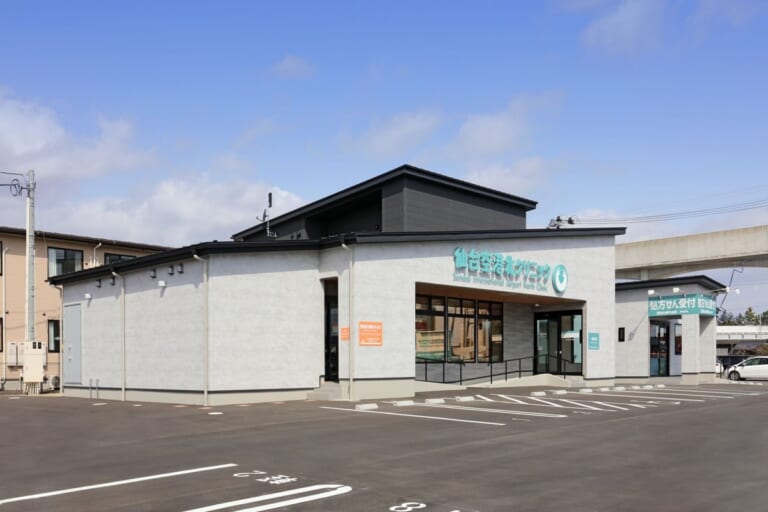
Sendai International Airport North Clinic (仙台空港北クリニック), 8-1-8 Mitazono, Natori, Miyagi, is about 10 minutes by car from Sendai International Airport. Telephone: 022-797-9523. Director: Shunichi Gamo, M.D., Ph.D., board certified in internal medicine, pulmonology and allergology.
Arrival steps
- Go to the fever clinic’s own entrance, scan the QR code and check in on the page (available in English). Enter your name, phone number and date of birth, and answer the questions.
- Wait in your car or nearby. Staff will call you by SMS or phone when your turn is near.
- Press the intercom at the fever clinic entrance and give your name.
You do not need to call ahead. Patients are seen in check-in order in principle, but more severe cases may be seen first. On Sundays and national holidays, insurance status is confirmed at the regular-clinic entrance after check-in.
Hours
Mon, Tue, Wed, Fri, Sat: 10:00–12:00 and 14:30–18:00. Sundays and national holidays: 10:00–15:00 (please check the calendar on the clinic page). Closed Thursdays.
Who is seen
Children from age 0 are seen. Family members with fever can be seen together in one room by the same doctor at one visit.
Visitors without Japanese insurance
A flat fee of USD 700 applies, charged in yen at the day’s rate, by card or cash. It covers the English consultation, the BioFire SpotFire R Panel multiplex PCR, a same-day English medical certificate with ICD-10 codes for travel insurance, and a prescription if needed. The PCR uses one nasal swab and takes about 15 minutes. It detects 11 viral targets — SARS-CoV-2, influenza A including H1-2009 and H3 subtype targets, influenza B, RSV, human metapneumovirus, adenovirus, parainfluenza virus, rhinovirus/enterovirus, and seasonal coronavirus — and 4 bacteria: Mycoplasma pneumoniae, Chlamydia pneumoniae, Bordetella pertussis and Bordetella parapertussis. Group A streptococcus is not included. Medicines are paid separately at the pharmacy next door. Residents with Japanese insurance are seen under insurance; the flat fee does not apply.
References
- Influenza (seasonal) — WHO fact sheet
- Coronavirus disease (COVID-19) — WHO fact sheet
- Kawai Y, et al. Therapeutic efficacy of macrolides, minocycline, and tosufloxacin against macrolide-resistant Mycoplasma pneumoniae. Antimicrob Agents Chemother 2013.
- Ishiguro N, et al. Therapeutic efficacy of azithromycin, clarithromycin, minocycline and tosufloxacin against macrolide-resistant and -sensitive Mycoplasma pneumoniae. PLoS One 2017.
- Okada T, et al. Rapid effectiveness of minocycline or doxycycline against macrolide-resistant Mycoplasma pneumoniae. Clin Infect Dis 2012.
- Paquet D, et al. Fever in the Returning Traveler. Dtsch Arztebl Int 2022.
- Camprubí-Ferrer D, et al. Causes of fever in returning travelers: a European multicenter prospective cohort study. J Travel Med 2022.
- Wang K, Harnden A. Pertussis-induced cough. Pulm Pharmacol Ther 2011.