
Quick answer
- Most clinics in Japan close on Sundays and national holidays, but holiday care exists. Always check a clinic’s own page before you travel to it.
- Call 119 at once for danger signs such as breathing difficulty, confusion, a seizure, or a very sick infant.
- A clinic near Sendai Airport runs a Sunday and holiday fever clinic, 10:00–15:00, only on the dates shown on its published calendar. Check the current month on the official page.
- At that fever clinic, you check in on the day with a QR code at the entrance and wait for your turn; no advance arrangement is needed.
- Keep all receipts and ask for a medical certificate, so your travel insurer can process your claim.
What could be causing a fever while travelling in Japan?
Fever is a rise in body temperature, usually caused by an infection. Most fevers in travellers come from common infections, and many are caused by viruses (germs that need living cells to multiply). The most common causes of a sudden fever in visitors to Japan are respiratory (breathing-related) infections:
- Respiratory viruses: influenza (the flu), COVID-19, RSV (respiratory syncytial virus), human metapneumovirus, adenovirus, and rhinovirus (the usual cause of the common cold). Influenza typically causes a sudden fever with cough, sore throat, body aches and tiredness. Symptoms usually begin 1–4 days after infection. In temperate regions, seasonal influenza epidemics occur mainly in winter, though influenza and other respiratory viruses can appear at other times of year too [1].
- Mycoplasma pneumoniae, a bacterium (a germ made of a single cell) that can cause a long-lasting cough and pneumonia (a lung infection). It is seen especially in children and young adults.
- Strep throat: a throat infection caused by group A streptococcus, a common bacterium.
- Gastroenteritis: infection of the stomach and intestines, causing vomiting or diarrhoea with fever.
- Urinary tract infection: infection of the bladder or kidneys, often with pain when passing urine.
- Infections acquired before arrival: some infections take days or weeks to show symptoms. A fever after landing can therefore come from something you caught before your trip. Measles, for example, is rising in many countries, and international travellers should be fully vaccinated against it [3].
This list is not a diagnosis. A fever is not “just a cold”: the same symptom can belong to very different illnesses, some of which need specific treatment. Mosquito bites can still spread diseases in some areas, including dengue, so take care to avoid bug bites; for your specific destination, check official travel-health guidance before your trip [3].
What should you do first?
- Measure your temperature, if you have a thermometer, and write down the reading and the time.
- Rest, drink fluids, and stay away from other people so you do not spread the illness. Wash your hands often and cover coughs and sneezes.
- Wear a mask in shared spaces and on public transport.
- A basic fever reducer such as paracetamol (acetaminophen) is a reasonable option for most adults, taken at the dose on the label. Ask a pharmacist if you are unsure. Do not give aspirin to children.
- Write down, on paper or your phone: when the symptoms started, any medicines you take and allergies you have, your passport number, and your travel insurance details. Doctors in Japan will need this information.
- Before going to any clinic on a Sunday or holiday, check that it is actually open that day. Do not assume weekend hours.
- For multilingual help finding care, contact the Japan Visitor Hotline run by the Japan National Tourism Organization (JNTO). It is staffed 24 hours a day, 365 days a year, in English, Chinese and Korean: JNTO — Guide for when you are feeling ill. It can introduce medical institutions where foreign-language care is possible, though as a rule it does not arrange visits on your behalf [4].
When to see a doctor, and when to call 119?
Call 119 immediately for these danger signs
- Difficulty breathing, or bluish lips
- Chest pain
- Confusion or unusual drowsiness
- A seizure (fit)
- A stiff neck
- A rash that does not fade when you press on it
- Unable to drink, or passing almost no urine
In infants (babies), also call 119 or see a doctor urgently if the baby is under 3 months old and has a fever, is feeding poorly, or is unusually limp and sleepy.
119 is Japan’s emergency number for both fire and ambulance calls. Say the word “ambulance”, give your location, and describe the danger sign. English support may be limited, so speak slowly and clearly. If you cannot call yourself, show a nearby person a written sentence in Japanese meaning “Please call an ambulance” [4]. Do not drive yourself to a clinic if you have any danger sign.
When to see a doctor the same day
- A high fever lasts more than 2–3 days, or you are getting worse instead of better.
- Your cough is getting worse, or you have ear or throat pain together with fever.
- You belong to a higher-risk group: pregnancy, chronic (long-term) lung or heart disease, a weakened immune system (for example from chemotherapy or immunosuppressive medicines), or age 65 or older. These groups are more likely to develop severe influenza complications [1].
- You need a medical certificate for your airline or insurer before a flight.
How is the cause diagnosed, and why does it matter?
Symptoms alone cannot reliably tell influenza from COVID-19, RSV or Mycoplasma pneumoniae. These illnesses overlap, and even doctors cannot tell them apart by symptoms alone [1]. The cause matters because it decides the treatment:
- Antivirals (medicines that act against specific viruses) work only against certain viruses, and work best when started early in the illness.
- Antibiotics (medicines that act against bacteria) help only bacterial infections. They do nothing against viruses.
- The isolation advice (how long to stay away from others) also depends on the cause.
Two kinds of tests are commonly used:
- Rapid antigen tests (quick tests that detect virus proteins) give fast results but are less sensitive than molecular tests, meaning they miss more true infections [1].
- Multiplex PCR (a test that looks for the genetic material of many germs at once) uses one nasal swab to check for many respiratory pathogens (germs that cause disease) at the same time. Modern point-of-care panels can do this quickly. For example, the BioFire SpotFire platform, in its Respiratory/Sore Throat (R/ST) configuration, detected 15 respiratory and sore-throat pathogens from a swab in about 17 minutes in studies, with high agreement against reference methods [5]. Note that the composition differs between panel versions; the fever clinic near Sendai Airport uses the R Panel (respiratory targets only), which does not include the streptococcus targets of the R/ST version. Head-to-head studies of rapid multiplex platforms showed agreement above 95% for influenza A and B detection [6]. In an emergency-department study in Chile, this kind of rapid molecular testing increased the rate at which a cause was identified and reduced extra test requests and antimicrobial prescriptions [7]. A Japanese outpatient study found that a multiplex panel could reduce unnecessary antibiotic use, because many “respiratory infection” patients were actually infected with viruses alone [8].
Know the limits of a multiplex PCR panel:
- It tests respiratory germs only. It does not test for group A streptococcus (strep throat), urinary infections, gut infections, or blood infections.
- A positive result does not always mean that germ is the cause of your illness. For example, rhinovirus often lingers after a cold has passed, so finding it does not prove it is what is making you ill now.
- A negative result does not rule out every possible cause.
The doctor’s examination still matters, and the test supports — it does not replace — the doctor’s judgement.
How is it treated in Japan?
Influenza
Antiviral medicines for influenza are available in Japan only after a doctor’s consultation and prescription; they are not sold over the counter. Medicines a doctor may prescribe for influenza include:
| Generic name | Japanese brand | Note |
|---|---|---|
| oseltamivir | Tamiflu | Capsule or liquid, taken for several days |
| baloxavir | Xofluza | One oral dose |
| zanamivir | Relenza | Inhaled |
| laninamivir | Inavir | Inhaled |
All influenza antivirals are most useful when started within about 48 hours of the first symptom. In randomised trials, baloxavir (one oral dose) shortened the time to relief of influenza symptoms compared with placebo and was similar to oseltamivir [9]. This was also shown in outpatients at high risk of complications [10]. A review of the trials concluded that baloxavir is a useful alternative to the older neuraminidase inhibitors (oseltamivir, zanamivir, laninamivir) [11]. A meta-analysis (a combined analysis of many trials) of 21 randomised trials in 11,697 patients found that antiviral treatment shortened the time to recovery and reduced influenza complications and antibiotic prescriptions [12].
COVID-19
Oral antiviral medicines for COVID-19 in Japan require a prescription (see the guide to COVID-19 treatment in Japan). Tell the doctor if you are or might be pregnant and list all the medicines you take so they can check for interactions and choose a suitable treatment.
Mycoplasma and pertussis (whooping cough)
These bacterial infections are treated with macrolides (a family of antibiotics), such as azithromycin or clarithromycin. Important for Japan and East Asia: many M. pneumoniae strains here are macrolide-resistant (the macrolide does not work). This problem was first reported in Japan in 1968 and is now common in East Asia [2]. In children with macrolide-resistant M. pneumoniae, studies show macrolides work less well than tetracyclines (another antibiotic family, e.g. doxycycline or minocycline) [13]. However, tetracyclines and some fluoroquinolones (another antibiotic family) are used with caution in children because of possible effects on growing bones and teeth. Further studies in children are needed, and the doctor chooses the antibiotic based on age and the situation [2, 14].
Viral infections: relief only
For most viral respiratory infections there is no specific cure. Treatment is symptom relief: rest, fluids, and fever reducers. Antibiotics do not help and should not be taken for influenza, COVID-19, or other viral infections [8].
Prescription versus drugstore
- Basic over-the-counter fever reducers can be bought at pharmacies and drugstores in Japan without a prescription. Labels are in Japanese, and many combination cold remedies contain several active ingredients mixed together. Consult a pharmacist or a registered sales clerk before buying; some medicines cannot be sold when the pharmacist is not there [4]. For children, ask a doctor or pharmacist which fever reducer is suitable; do not give aspirin to children.
- After a doctor’s visit you receive a prescription, which you submit to a pharmacy to obtain the medicines; you are charged separately at the pharmacy for any medicine you need [4].
Travel-specific points: flying, companions, children and insurance
Flying with fever
Airlines may refuse boarding if you look ill, so postpone your flight if you can and check your airline’s policy before going to the airport (see flying with a fever in Japan). If you have danger signs, get medical care first instead of going to the airport hoping to board.
Companions
The people travelling with you may have caught the same infection, even if they feel fine today. Watch for symptoms, and if they develop fever, arrange testing for them too rather than assuming they are well.
Children
Acetaminophen (paracetamol) and ibuprofen are the fever reducers most commonly used for young children; give them at the label dose and ask a pharmacist or doctor if unsure. Aspirin is not given to children (it is linked to Reye’s syndrome, a rare but serious condition). In studies comparing acetaminophen with ibuprofen in children younger than 2 years, both were commonly used and had similar serious-safety profiles [15]. Ibuprofen was slightly better at lowering temperature and reducing pain in the first 24 hours [15, 16].
Insurance and documents
- Keep itemised clinic and pharmacy receipts and ask for a certificate showing the diagnosis, with ICD-10 diagnostic codes if possible (see documents for an insurance claim).
- Before or during your trip, call your travel or home health insurer early to confirm cover and paperwork, ideally before making a large payment: many small clinics take only cash, cards are mainly accepted at major hospitals, and without cash-free cover you may have to pay the full amount on the spot [4].
Frequently asked questions
Are clinics open on Sundays in Japan?
Only a few. Most small clinics close on Sundays and national holidays. Where after-hours care is available varies by region, so always check before you go [4]. The JNTO Japan Visitor Hotline can help you find care in foreign languages [4].
Do I need to arrange a visit in advance?
At the fever clinic near Sendai Airport, no. You check in on the day with a QR code at the entrance and wait for your turn. Other clinics may have their own rules, so check their pages.
Can I buy fever medicine without a prescription?
Yes. Basic over-the-counter medicines can be purchased at pharmacies and drugstores without a prescription [4]. Labels are in Japanese, so consult a pharmacist, especially about combination cold remedies that mix several ingredients.
Will I get antibiotics?
Only if a bacterial cause is likely. Antibiotics do not work against influenza, COVID-19, or other viral infections [8]. Rapid testing that identifies a virus can help the doctor avoid unnecessary antibiotics [7, 8].
Can my family be seen together?
At the fever clinic near Sendai Airport, children from age 0 are seen, and family members with fever can be examined together in the same room by the same doctor at one visit. Other clinics set their own rules.
Is a fever after landing in Japan from abroad different?
It can be. Some infections show symptoms days or weeks after you caught them, so a fever after arrival may come from an infection picked up before your trip. Tell the doctor where you travelled and what you did, including any animal bites or mosquito exposure [3]. Mosquito-borne infections such as dengue are a reason to avoid bug bites in some areas [3].
If you are near Sendai Airport
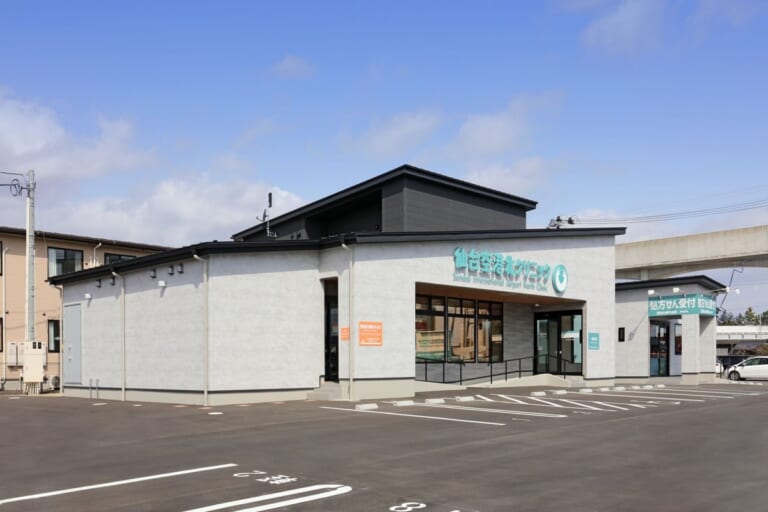
Sendai International Airport North Clinic is at 8-1-8 Mitazono, Natori, Miyagi, about 10 minutes by car from Sendai International Airport. The director is Shunichi Gamo, M.D., Ph.D., board certified in internal medicine, pulmonology (Japanese Respiratory Society) and allergology (Japanese Society of Allergology). Telephone: 022-797-9523.
The clinic runs a fever clinic with its own entrance. Hours:
- Monday, Tuesday, Wednesday, Friday, Saturday: 10:00–12:00 and 14:30–18:00. Closed Thursdays.
- Sundays and Japanese national holidays: 10:00–15:00, only on the dates shown on the calendar on the clinic’s official page. Check the current month there; the regular clinic does not run on Sundays and national holidays.
How to arrive: scan the QR code at the fever clinic entrance, then enter your name, phone number and date of birth on the English check-in page and answer the questions. Wait in your car or nearby; when your turn is near, staff contact you by SMS or phone. Then press the intercom at the entrance and give your name. The order of examinations follows the check-in order in principle, but may change with the severity of symptoms. On Sundays and holidays, insurance status is confirmed at the regular-clinic entrance after check-in. Children from age 0 are seen, and family members with fever can be seen together.
For visitors without Japanese health insurance, the flat fee is USD 700, charged in yen at the day’s rate, by card or cash. It covers an English consultation, the BioFire SpotFire R Panel multiplex PCR, a same-day English medical certificate with ICD-10 codes for travel insurance, and a prescription if needed. The PCR uses one nasal swab and takes about 15 minutes. It tests 11 viruses and 4 bacteria: SARS-CoV-2, influenza A including H1-2009 and H3, influenza B, RSV, human metapneumovirus, adenovirus, parainfluenza virus, rhinovirus/enterovirus, seasonal coronavirus, Mycoplasma pneumoniae, Chlamydia pneumoniae, Bordetella pertussis and Bordetella parapertussis [5]. Medicines are paid separately at the pharmacy next door. Group A streptococcus is not on the panel. People living in Japan with Japanese health insurance are seen at the regular fever clinic under insurance.
References
- WHO. Influenza (seasonal) fact sheet, 28 February 2025.
- Wang YS, et al. Expert consensus on the diagnosis and treatment of macrolide-resistant Mycoplasma pneumoniae pneumonia in children. World J Pediatr 2024. PMID 39143259.
- CDC. Japan – Traveler view. Travelers’ Health.
- JNTO. For safe travels in Japan – Guide for when you are feeling ill.
- Locher K, et al. Analytical performance evaluation of the BioFire SPOTFIRE respiratory and sore throat panel. Diagn Microbiol Infect Dis 2026. PMID 41338059.
- Banerjee D, et al. Head-to-head comparison of the performance of BIOFIRE SPOTFIRE Respiratory/Sore Throat Panel, Cepheid Xpert Xpress SARS-CoV-2/Flu/RSV and Cobas SARS-CoV-2 & Influenza A/B assay. J Clin Virol 2026. PMID 41319349.
- Benadof D, et al. Evaluating the clinical impact of BioFire Spotfire R/ST on the management of pediatric respiratory presentations in the emergency department. Viruses 2026. PMID 41600900.
- Kaku N, et al. Evaluation of FilmArray respiratory panel multiplex PCR assay for detection of pathogens in adult outpatients with acute respiratory tract infection. J Infect Chemother 2018. PMID 29895452.
- Hayden FG, et al. Baloxavir marboxil for uncomplicated influenza in adults and adolescents. N Engl J Med 2018. PMID 30184455.
- Ison MG, et al. Early treatment with baloxavir marboxil in high-risk adolescent and adult outpatients with uncomplicated influenza (CAPSTONE-2). Lancet Infect Dis 2020. PMID 32526195.
- Shirley M. Baloxavir marboxil: a review in acute uncomplicated influenza. Drugs 2020. PMID 32601915.
- Tejada S, et al. Neuraminidase inhibitors and single dose baloxavir are effective and safe in uncomplicated influenza: a meta-analysis of randomized controlled trials. Expert Rev Clin Pharmacol 2021. PMID 33861168.
- Bolormaa E, et al. Treatment of macrolide-resistant Mycoplasma pneumoniae pneumonia in children: a meta-analysis of macrolides versus tetracyclines. Pediatr Infect Dis J 2025. PMID 39383346.
- Miyashita N. Atypical pneumonia: pathophysiology, diagnosis, and treatment. Respir Investig 2022. PMID 34750083.
- Tan E, et al. Comparison of acetaminophen (paracetamol) with ibuprofen for treatment of fever or pain in children younger than 2 years: a systematic review and meta-analysis. JAMA Netw Open 2020. PMID 33125495.
- Alaje EO, et al. Ibuprofen versus paracetamol for treating fever in preschool children in Nigeria: a randomized clinical trial. Pan Afr Med J 2020. PMID 33224416.