
Quick answer
- A mild cold with no danger signs can usually be managed with a Japanese drugstore medicine chosen by its active ingredient: look for acetaminophen (also called paracetamol) or ibuprofen on the box, not the brand name.
- Use one fever/pain ingredient at a time. Many combination cold remedies (sogokanbo-yaku) already contain acetaminophen or ibuprofen, so adding a separate fever reducer can double the dose.
- Children, pregnancy, asthma and medicine allergies need extra care. When unsure, ask the pharmacist and show them the ingredient name.
- For danger signs, seek urgent help. In a baby younger than 3 months, a temperature of 38°C (100.4°F) or higher requires immediate medical assessment. See a doctor if fever lasts more than about 3 days, you are at higher risk, or you need a diagnosis for travel, work or insurance.
- For a medical emergency, call 119 (ambulance, free) [1].
What could it be? Common causes of fever and cold symptoms in travellers
Fever, sore throat, runny nose and cough can be caused by many different germs. They include rhinovirus (a common cause of colds), influenza, COVID-19, and RSV (respiratory syncytial virus, which can circulate outside winter in Japan and can cause severe illness in infants and older adults).
Other causes include human metapneumovirus, adenovirus, Mycoplasma pneumoniae (a bacterium that causes lingering cough) and whooping cough (pertussis), as well as bacterial throat infection with group A streptococcus.
In temperate climates such as Japan, influenza epidemics occur mainly in winter [2]. COVID-19 circulates year-round, but seasonal increases can also occur [3]. Symptoms alone cannot reliably tell these infections apart. Non-infectious look-alikes exist too: hay fever (pollen allergy) is common in spring, and fatigue or jet lag can make you feel feverish when you are not.
Important: you cannot tell “it’s just a cold” from symptoms alone. A doctor may identify the cause through clinical assessment, with tests when appropriate.
What should I do first?
First steps
- Rest and drink fluids.
- Check your temperature. Thermometers are sold at drugstores.
- Wear a mask in crowded places and on trains and buses.
- Write down when symptoms started and each temperature reading. This helps a doctor later.
How to read a Japanese medicine box
Find the ingredients (seibun) panel. Ingredient amounts are often listed per daily dose, not per tablet: for example, “3錠中” (san-jo-chu) means “contained in 3 tablets”, while “9錠中” means “contained in 9 tablets”. Check the dosage instructions separately to determine how many tablets to take. The dosage (yoho-yoryo; 用法・用量) table lists age bands such as “age 15 and over” and states which ages must not take it.
Key words:
- Acetaminophen (asetoaminofen) = acetaminophen / paracetamol (the same drug; brands like Tylenol or Panadol use it)
- Ibuprofen (ibupurofen; イブプロフェン); loxoprofen (rokisopurofen; ロキソプロフェン)
- Aspirin (asupirin)
- Sogokanbo-yaku = combination cold medicine; genetsu-chintsu-yaku = fever/pain reliever
- Shoniyo = for children
- Nemukunaru = causes drowsiness; do not drive or operate machinery
Sales classes
Some types of medicines in Japan cannot be purchased when the pharmacist is not there, so some stores do not sell them at night [1]. Ask the pharmacist if you are unsure.
Show the pharmacist the ingredient you normally take, and tell them about allergies, pregnancy, asthma and any other medicines you use. Follow the Japanese label and the pharmacist, not doses from your home country.
When to see a doctor instead of buying medicine (and when to call 119)
Call 119 (free ambulance; say “kyūkyūsha” (救急車) for ambulance and give your location) [1] for any of the following. If you need language help, the JNTO Japan Visitor Hotline, a 24/7 multilingual service in English, Chinese and Korean, can assist [1].
- difficulty breathing
- chest pain
- confusion or unusual drowsiness
- seizure
- blue lips
- severe dehydration
- stiff neck with severe headache
- a rash that does not fade when pressed
If a baby younger than 3 months has a temperature of 38°C (100.4°F) or higher, seek medical assessment immediately.
See a doctor the same day for:
- fever lasting more than about 3 days, or getting worse after initial improvement
- severe sore throat or trouble swallowing
- ear pain
- coughing fits or whooping, particularly if someone in close contact is an infant
- higher-risk people: pregnancy, age 65 or over, young children, chronic heart, lung or kidney disease, diabetes, or weakened immunity [2]
Also see a doctor when you need a diagnosis to decide on travel, isolation or antiviral treatment, or a certificate for insurance.
Seek immediate medical assessment if a child is breathing fast or the skin pulls in between or below the ribs. Call 119 for severe trouble breathing, blue lips or difficulty waking the child. A child who drinks very little, urinates less or is unusually irritable or drowsy also needs prompt assessment. If a cough lasts several weeks and there are no danger signs, arrange a regular appointment.
Note: drugstore medicine only relieves symptoms. It can mask fever without treating the infection.
How is it diagnosed, and why does a diagnosis matter?
A doctor will ask about your history, examine your throat, ears and chest, and may measure the oxygen level in your blood. Tests may include rapid antigen tests (quick swab tests for virus proteins) for influenza or COVID-19. Another option is multiplex PCR. The BioFire SpotFire R Panel used at this clinic tests for 11 viral targets and four bacterial targets from one nasopharyngeal swab [4].
Manufacturer instructions (https://www.biomerieux.com/content/dam/biomerieux-com/service-support/support-documents/instructions-for-use-and-manuals/BFR0002-1764-BIOFIRE-SPOTFIRE-R-Panel-Instructions-for-Use-EN.pdf)
Why the result matters:
- Test results can help guide antiviral treatment, but decisions also depend on symptom duration, risk factors, disease severity and possible drug interactions. In some cases, treatment may be started before laboratory confirmation. Influenza and COVID-19 antivirals generally work best when started early.
- Test results can help determine whether antibiotics are indicated, alongside clinical assessment and the likelihood of bacterial infection. Antibiotics do not treat viral colds.
- It guides how long to stay away from others and what to tell fellow travellers.
- The clinician uses the history, examination and any test results to establish a diagnosis for a medical certificate or insurance claim, when the findings support one.
Limits: no test is perfect, a negative result does not rule everything out, and some infections (for example group A strep throat) need a different test.
Self-test antigen kits exist in Japan, but before relying on one, check that the kit is approved for diagnosis and follow its instructions. Regulatory information about medicines and diagnostic products in Japan is published by the Pharmaceuticals and Medical Devices Agency (PMDA) [5].
How is it treated in Japan? Drugstore medicines vs prescription medicines
Drugstore options, by ingredient
(a) Acetaminophen is often the first choice for children and in pregnancy. A systematic review found broadly similar safety and tolerability profiles for acetaminophen and ibuprofen in children [6]. A separate meta-analysis examined wheezing and asthma exacerbations specifically [7]. The main danger is liver damage if you take more than the label allows, or combine two products that both contain acetaminophen. Avoid alcohol while taking it.
(b) Ibuprofen and loxoprofen are NSAIDs (non-steroidal anti-inflammatory drugs, which reduce fever, pain and inflammation). Many Japanese OTC products are not for children under 15 — check the label. Avoid them if you have NSAID/aspirin-sensitive asthma [8], an active stomach ulcer or significant kidney disease. If you are pregnant, consult a clinician before using an NSAID. The FDA advises avoiding NSAIDs from 20 weeks unless specifically advised by a clinician [9]. Japanese loxoprofen tablets such as Loxonin S must not be taken within 12 weeks of the expected delivery date [10].
FDA safety communication (https://www.fda.gov/drugs/drug-safety-and-availability/fda-recommends-avoiding-use-nsaids-pregnancy-20-weeks-or-later-because-they-can-result-low-amniotic)
PMDA Loxonin S label (https://www.pmda.go.jp/PmdaSearch/otcDetail/ResultDataSetPDF/430549_K1101000003_10_01/A)
(c) Aspirin: do not give aspirin to children or teenagers with fever or flu, because of the risk of Reye syndrome (a rare but serious illness affecting the liver and brain).
(d) Combination cold remedies (sogokanbo-yaku) may contain an antihistamine (for example chlorpheniramine, which causes drowsiness), cough suppressants (dextromethorphan or dihydrocodeine), a bronchodilator (dl-methylephedrine), a decongestant (pseudoephedrine), and caffeine. In Japan, do not give cough or cold medicines containing codeine or dihydrocodeine to children younger than 12 [11]. Main risks: duplicate ingredients, drowsiness when driving a rental car, and worsening of high blood pressure, heart disease, glaucoma or prostate problems. Cough and cold products for infants and very young children have limited evidence of benefit and a real risk of dosing errors and adverse events [12,13].
PMDA codeine safety notice (https://www.pmda.go.jp/safety/info-services/drugs/calling-attention/revision-of-precautions/0355.html)
(e) Kampo (traditional Japanese herbal medicine) such as kakkonto is widely sold. It contains ephedra (mao), so the same cautions as decongestants apply.
Prescription-only medicines
These are prescribed by a doctor after diagnosis and are not sold over the counter in Japan.
- Influenza antivirals: oseltamivir, baloxavir, zanamivir, laninamivir, and intravenous peramivir. In a trial in people with uncomplicated influenza, baloxavir relieved symptoms faster than placebo [14]. Other studies compared baloxavir with oseltamivir [15,16]. The clinician chooses the medicine based on the patient, symptoms and time since onset.
- COVID-19 antivirals: prescription oral antivirals, for eligible patients only, and interactions with other medicines must be checked — see our COVID-19 guide.
- Antibiotics are for bacterial causes only — they do not treat viral colds. Macrolides or tetracyclines may be used for Mycoplasma pneumoniae; macrolides for whooping cough; penicillins for strep throat.
Prescriptions are usually filled at a separate dispensing pharmacy (chozai-yakkyoku) near the clinic. Bring a list of your regular medicines and allergies.
Travel-specific points: flying, companions, children and insurance paperwork
Flying
- Airlines may refuse boarding to visibly ill passengers — check the airline’s policy before going to the airport; see our flying with a fever guide.
- Congestion can cause ear pain on descent (when the plane comes down to land).
- Taking a fever reducer before a flight hides the fever but not the infection.
Companions
Travel partners and family members may catch the same illness. Hand hygiene and masks help. If several people are ill, a doctor may want to see them together. If you are ill, stay home and away from others while you have symptoms, and follow any current local public-health guidance in Japan.
Children
Use child-specific products (shoniyo) and dose by the age/weight on the label. Never cut adult tablets as a guess. In a study of 513 reported errors involving over-the-counter cough and cold medicines in children, 93.2% were dosing errors and 45.0% involved administration by a parent [13].
Bringing medicine into Japan
Some medicines common abroad cannot be brought into Japan — for example, some products containing pseudoephedrine and some codeine-containing products have limits. Check the MHLW (Ministry of Health, Labour and Welfare) import page before you fly, for the product’s ingredients and amount [17,18]. Official sources: https://www.mhlw.go.jp/stf/seisakunitsuite/bunya/kenkou_iryou/iyakuhin/kojinyunyu/topics/tp010401-1_00001.html · https://www.ncd.mhlw.go.jp/en/application2.html.
Insurance paperwork
Carry your passport and travel insurance details. Keep all receipts (ryoshusho), ask for an itemised receipt, and request a medical certificate (shindansho) in English with a named diagnosis. Without Japanese health insurance expect to pay the full cost at the clinic; unpaid medical bills can cause problems on future visits to Japan [1]. See our insurance documents guide for the papers needed for a claim.
Frequently asked questions
Can I buy paracetamol (Tylenol, Panadol) in Japan?
Yes. Look for the ingredient name acetaminophen. The brand may differ from the one at home, and the amount per tablet may be lower, so follow the Japanese label.
Can I buy ibuprofen, and can children take it?
Yes for adults. But many Japanese OTC ibuprofen products are labelled for age 15 and over, and Loxonin S tablets, an oral OTC loxoprofen product, can only be sold when a pharmacist is present. For children, ask a pharmacist or doctor.
Can I take a cold remedy and a fever reducer together?
Usually not without checking. Many Japanese combination cold remedies already contain acetaminophen or ibuprofen, and doubling up risks overdose.
Are antibiotics or Tamiflu (oseltamivir) sold at drugstores?
No. Oral antibiotics for respiratory infections and influenza antivirals such as oseltamivir require a doctor’s prescription in Japan.
Do I need Japanese health insurance to see a doctor?
No, but without it you pay the full cost yourself. Keep every receipt for your travel insurance claim [1].
Can I bring my own cold medicine to Japan?
Check the MHLW import rules first. Some pseudoephedrine-containing products and some codeine-containing products are restricted.
If you are near Sendai Airport
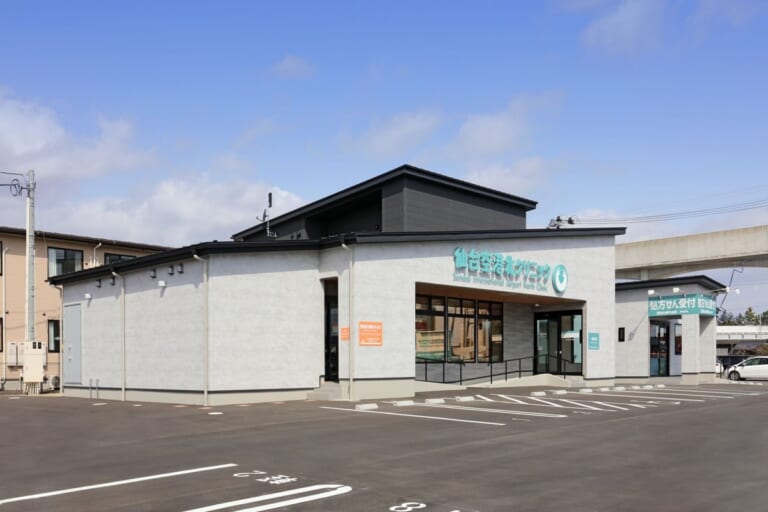
Sendai International Airport North Clinic, 8-1-8 Mitazono, Natori, Miyagi, is about 10 minutes by car from Sendai International Airport. The director is Shunichi Gamo, M.D., Ph.D., board certified in internal medicine, pulmonology and allergology.
The clinic runs a fever clinic with its own entrance. No advance contact is needed. Scan the QR code at the fever clinic entrance and complete the same-day check-in page, which is available in English, Traditional Chinese, Simplified Chinese and Korean. Enter your name, phone number and date of birth and answer the questions. With a Japanese phone number, follow the wait and call instructions shown after check-in. With a foreign phone number, on regular clinic days press the intercom at the fever clinic entrance and give your name. Then ask staff where to wait and how they will let you know when it is your turn. On Sundays and national holidays, ask staff when they check your documents at the regular-clinic entrance. Patients are seen in check-in order in principle, but more severe cases may be seen first. On Sundays and national holidays the regular clinic does not run, and insurance status is confirmed at the regular-clinic entrance.
Hours: Monday, Tuesday, Wednesday, Friday and Saturday 10:00–12:00 and 14:30–18:00; Sundays and national holidays 10:00–15:00 (check the calendar on the clinic page); closed Thursdays. Tel 022-797-9523. Children from age 0 are seen, and family members with fever can be seen together in the same room by the same doctor at one visit.
Visitors without Japanese health insurance pay a flat USD 700, charged in yen at the day’s rate (card or cash). This covers an English consultation, the BioFire SpotFire R Panel multiplex PCR (one nasopharyngeal swab, with results typically available in about 15 minutes), and a same-day English medical certificate with ICD-10 codes for travel insurance. A prescription is included if needed. Medicines are paid separately at the pharmacy next door. Group A streptococcus is not on the panel. Residents with Japanese insurance are seen under insurance, and the flat fee does not apply.
The clinic does not accept UnionPay. The doctor sees patients in English or Japanese, and clinic staff speak both languages. The clinic uses real-time AI voice translation to help communicate in other languages. For regular outpatient care, come directly to the general outpatient entrance during clinic hours. The fever clinic has a separate same-day check-in procedure.
References
- Japan National Tourism Organization. For safe travels in Japan: guide for when you are feeling ill [Internet]. [cited 2026 Nov 22]. Available from: https://www.jnto.go.jp/emergency/eng/mi_guide.html
- World Health Organization. Influenza (seasonal) [Internet]. [cited 2026 Nov 22]. Available from: https://www.who.int/news-room/fact-sheets/detail/influenza-(seasonal)
- World Health Organization. Coronavirus disease (COVID-19) [Internet]. [cited 2026 Nov 22]. Available from: https://www.who.int/news-room/fact-sheets/detail/coronavirus-disease-(covid-19)
- bioMérieux. BIOFIRE SPOTFIRE Respiratory (R) Panel Instructions for Use. BFR0002-1764-01. 2023 Feb [Internet]. [cited 2026 Nov 22]. Available from: https://www.biomerieux.com/content/dam/biomerieux-com/service-support/support-documents/instructions-for-use-and-manuals/BFR0002-1764-BIOFIRE-SPOTFIRE-R-Panel-Instructions-for-Use-EN.pdf
- Pharmaceuticals and Medical Devices Agency. Pharmaceuticals and Medical Devices Agency [Internet]. [cited 2026 Nov 22]. Available from: https://www.pmda.go.jp/english/
- Southey ER, Soares-Weiser K, Kleijnen J. Systematic review and meta-analysis of the clinical safety and tolerability of ibuprofen compared with paracetamol in paediatric pain and fever. Curr Med Res Opin. 2009;25(9):2207-22.
- Sherbash M, Furuya-Kanamori L, Nader JD, Thalib L. Risk of wheezing and asthma exacerbation in children treated with paracetamol versus ibuprofen: a systematic review and meta-analysis of randomised controlled trials. BMC Pulm Med. 2020;20(1):72.
- Elahi S, Peters AT, Kato A, Stevens WW. Clinical and mechanistic advancements in aspirin exacerbated respiratory disease. J Allergy Clin Immunol. 2025;155(5):1411-1419.
- US Food and Drug Administration. FDA recommends avoiding use of NSAIDs in pregnancy at 20 weeks or later because they can result in low amniotic fluid [Internet]. [cited 2026 Nov 22]. Available from: https://www.fda.gov/drugs/drug-safety-and-availability/fda-recommends-avoiding-use-nsaids-pregnancy-20-weeks-or-later-because-they-can-result-low-amniotic
- Pharmaceuticals and Medical Devices Agency. ロキソニンS 添付文書 第12版 [Internet]. [cited 2026 Nov 22]. Available from: https://www.pmda.go.jp/PmdaSearch/otcDetail/ResultDataSetPDF/430549_K1101000003_10_01/A
- Pharmaceuticals and Medical Devices Agency. 使用上の注意改訂情報(令和元年7月9日指示分)その1 [Internet]. [cited 2026 Nov 22]. Available from: https://www.pmda.go.jp/safety/info-services/drugs/calling-attention/revision-of-precautions/0355.html
- Vassilev ZP, Kabadi S, Villa R. Safety and efficacy of over-the-counter cough and cold medicines for use in children. Expert Opin Drug Saf. 2010;9(2):233-42.
- Wang GS, Reynolds KM, Banner W, Bond GR, Kauffman RE, Palmer RB, et al. Medication Errors From Over-the-Counter Cough and Cold Medications in Children. Acad Pediatr. 2020;20(3):327-332.
- Hayden FG, Sugaya N, Hirotsu N, Lee N, de Jong MD, Hurt AC, et al. Baloxavir Marboxil for Uncomplicated Influenza in Adults and Adolescents. N Engl J Med. 2018;379(10):913-923.
- Ison MG, Portsmouth S, Yoshida Y, Shishido T, Mitchener M, Tsuchiya K, et al. Early treatment with baloxavir marboxil in high-risk adolescent and adult outpatients with uncomplicated influenza (CAPSTONE-2): a randomised, placebo-controlled, phase 3 trial. Lancet Infect Dis. 2020;20(10):1204-1214.
- Shiraishi C, Kato H, Hagihara M, Asai N, Iwamoto T, Mikamo H. Comparison of clinical efficacy and safety of baloxavir marboxil versus oseltamivir as the treatment for influenza virus infections: A systematic review and meta-analysis. J Infect Chemother. 2024;30(3):242-249.
- Ministry of Health, Labour and Welfare. Information for those who are bringing medicines for personal use into Japan [Internet]. [cited 2026 Nov 22]. Available from: https://www.mhlw.go.jp/stf/seisakunitsuite/bunya/kenkou_iryou/iyakuhin/kojinyunyu/topics/tp010401-1_00001.html
- Narcotics Control Department, Ministry of Health, Labour and Welfare. Application Guidance [Internet]. [cited 2026 Nov 22]. Available from: https://www.ncd.mhlw.go.jp/en/application2.html