
Quick answer
- Most fever with vomiting or diarrhea on a trip is a short viral or foodborne infection that settles in a few days. It needs a doctor when danger signs appear.
- The first priority is fluids: small, frequent sips of an oral rehydration solution. This is clean water with the right mix of salt and sugar, sold in Japanese drugstores as “keiko hosui-eki”.
- In an emergency, call 119 for an ambulance. 119 also covers the fire service [2].
- Wash your hands with soap and running water. Keep a separate towel and, if possible, a separate toilet, to protect your travel companions.
- See a doctor when the fever is high or lasts, when the sick person is a young child, older or pregnant, or when you need a diagnosis or a certificate for travel insurance.
What could be causing fever with vomiting or diarrhea in Japan?
Only a doctor who examines you can make a diagnosis. Here are the patterns doctors usually suspect with each combination of symptoms.
- Norovirus (a very contagious stomach virus): nausea, explosive vomiting, watery diarrhea and abdominal pain, with low or no fever [3].
- Campylobacter (a foodborne bacterium): symptoms can include fever, headache, nausea, vomiting, abdominal pain and diarrhea. Outbreaks are mainly linked to raw or undercooked poultry and to raw milk [3].
- Salmonella and other bacterial pathogens: listed among common causes of diarrhea, often from contaminated food or water [3].
- Shiga toxin-producing E. coli (a bacterium that makes a toxin): linked to raw or undercooked meat, dairy products from unpasteurized milk and raw leafy greens. It causes bloody diarrhea, and some treatments can be unwise [3].
- Toxin-type food poisoning (for example Staphylococcus aureus, which produces poison already in the food): vomiting can start within hours of the meal.
- Rotavirus and other viruses: among young children, the most common viral causes of diarrheal disease are rotavirus, norovirus, adenovirus and astrovirus.
- Influenza and COVID-19: influenza can cause vomiting or diarrhea together with fever, especially in children [5].
Lookalikes that need a doctor
- Appendicitis (inflammation of a small pouch in the gut): pain that moves to the lower right abdomen. This needs urgent surgical assessment.
- Heat illness in summer (overheating): heat-related illness such as heat stroke can be deadly [4]. If you or a companion feel unwell after heat exposure, seek medical care.
- Urinary infection: fever with pain when urinating.
- Anisakis (a worm in raw fish, for example in sushi or sashimi): as general information, sudden severe stomach pain and vomiting without diarrhea can suggest this. Severe abdominal pain always needs a doctor’s assessment.
Important: if the sick person passed through a tropical or malaria area before Japan, a fever needs prompt medical assessment. Tell the doctor the full travel route [4].
What should I do first?
- Rehydrate. Take small sips — a spoonful or mouthful every few minutes — of an oral rehydration solution (ORS). WHO defines ORS as clean water with salt and sugar, and lists it as the core treatment for diarrhea [1]. Some products sold in Japan as “keiko hosui-eki” come as a jelly, which is easier to keep down when you feel nauseous.
- Eat bland food when you can: rice porridge (okayu), udon noodles, bananas. Keep giving nutrient-rich food, including breast milk, to children [1].
- Rest, and watch hydration (losing too much water and salt). WHO lists lethargy, sunken eyes and being unable to drink or drinking poorly as signs of dehydration.
- Ease fever or pain with acetaminophen (also called paracetamol), which is sold in Japanese drugstores. Follow the package label, or ask a pharmacist [2].
- Isolate and keep hygiene: stay in your room, use a separate towel and, if possible, a separate toilet. See also the tips for protecting travel companions.
- Show a phrase card to drugstore staff asking for oral rehydration solution (“keiko hosui-eki”).
Do not fast, and do not drink alcohol — the gut recovers better with fluids and light food. Undiluted juice and soda are not recommended for rehydration.
When to see a doctor, or call 119
Call 119 now if any of these appear :
- confusion, unusual drowsiness or difficulty waking
- fainting
- severe or worsening abdominal pain, especially in the lower right
- vomiting blood or material like coffee grounds
- black or heavily bloody stool
- signs of severe dehydration: very drowsy or unconscious, sunken eyes, unable to drink or drinking poorly, or a skin pinch that goes back very slowly
- a stiff neck, or a rash that does not fade when pressed
- difficulty breathing
See a doctor the same day if any of these apply:
- you cannot keep fluids down for several hours
- there is blood or mucus in the stool
- the fever is high
- fever that lasts several days
- diarrhea not improving after a few days
- a young infant with fever, or any baby or toddler drinking poorly
- pregnancy, age over 65, or a chronic illness such as diabetes, kidney or heart disease, or a weakened immune system
- recent travel through tropical areas
119 covers both ambulance and fire services [2]. Japan’s official tourism site (JNTO) also runs the multilingual Japan Visitor Hotline for foreign visitors, including emergencies such as illness: TEL 050-3816-2787 (24 hours a day, 365 days a year) [2]. If you need an ambulance and cannot explain in Japanese, show a nearby person the phrase on the JNTO page that reads “Please call an ambulance” (in Japanese: kyukyusha o yonde kudasai) [2].
How is it diagnosed, and why does it matter?
The diagnosis changes the treatment:
- Antivirals (medicines that fight viruses) only help influenza and similar respiratory infections.
- Antibiotics (medicines that fight bacteria) only help some bacterial infections. They are useless against viral gastroenteritis (stomach flu) and can be harmful in some cases.
- With Shiga toxin-producing E. coli, some treatments — for example certain antidiarrheal medicines or antibiotics — may be unwise; as a general rule, a doctor should assess bloody diarrhea.
- Danger conditions such as appendicitis must be ruled out.
A doctor in Japan typically takes a history (what you ate, when symptoms started, who else is ill), examines you, and assesses how hydrated you are. Tests are chosen by the doctor, not automatic:
- a rapid influenza or COVID-19 test, or a multiplex PCR (a test that looks for the genetic material of many germs at once), when there are fever and respiratory symptoms such as cough or sore throat
- stool tests or a stool culture (growing bacteria from a stool sample) when diarrhea is bloody or prolonged
- blood tests, and imaging (such as X-ray) if a surgical cause like appendicitis is suspected
Many viral gastroenteritis cases are diagnosed clinically — from the pattern of symptoms alone — without a specific test.
How is it treated in Japan? Medicines, prescriptions and drugstores
Buyable at drugstores (OTC, over-the-counter)
- Oral rehydration solution — the priority treatment for diarrhea [1].
- Acetaminophen (paracetamol) products for fever and pain — follow the label.
- Probiotic “intestinal regulators” (seicho-yaku in Japanese), widely used in Japan. Evidence that probiotics prevent this kind of illness is not sufficient, so treat them as a mild support, not a treatment [6].
- Loperamide (an anti-diarrhea medicine that slows the gut). Many Japanese OTC products are labeled for adults. It can be used for milder watery diarrhea in adults, but it should not be used with high fever or bloody stool, and not in children.
Prescription-only — a doctor must prescribe these
Antibiotics normally require a prescription in Japan and cannot be bought over the counter; they are usually filled at a separate pharmacy near the clinic. Do not expect to fill a foreign prescription yourself — bring your own medicine list or packaging and tell the doctor what you have taken [2].
- Antiemetics (medicines against vomiting) generally require a prescription from a doctor in Japan. Tell the doctor if you are pregnant, because the choice of medicine depends on it.
- Influenza antivirals used in Japan — oseltamivir, baloxavir, zanamivir, laninamivir — when influenza is diagnosed. Ideally they are started early.
- Antibiotics only when a bacterial cause such as severe Campylobacter or a dysentery-like illness is suspected.
- IV fluids (a drip) — WHO reserves these for severe dehydration or shock, that is, when oral rehydration is not enough [1].
Note: as a general rule, aspirin or other NSAIDs (anti-inflammatory painkillers) should not be given to children with fever or possible influenza; acetaminophen is the usual choice.
Travel-specific points: flying, companions, children and insurance documents
Flying
- Consider postponing your flight while you are actively vomiting, have frequent diarrhea, or have a high fever.
- Dehydration worsens on long flights.
- Airlines may deny boarding to visibly unwell passengers.
- Check with your airline and insurer about changing flights; a medical certificate may help.
Protecting companions
- Norovirus spreads very easily from person to person [3].
- Wash hands with soap and running water — this is the main way to protect others [3].
- Do not share towels, food or drinks.
- The sick person should not prepare food for others.
- Clean vomit and diarrhea promptly, wearing disposable gloves; tell hotel staff so soiled bedding is handled safely.
- People with stomach infections can remain contagious after symptoms stop; keep handwashing and avoid preparing food for others until you are well.
Children
- Children dehydrate faster; give ORS in small, frequent amounts [1].
- Keep breastfeeding [1].
- See a doctor early for infants.
Insurance documents
- Ask for an English medical certificate stating the diagnosis, plus receipts and an itemized statement [2].
- Keep pharmacy receipts too.
- Contact your insurer’s assistance line early.
Frequently asked questions
Is Pocari Sweat enough, or do I need oral rehydration solution?
Sports drinks such as Pocari Sweat are better than nothing for mild cases, but an oral rehydration solution is preferred when diarrhea is heavy, and for children and older people.
Can I take an anti-diarrhea medicine?
Yes for mild watery diarrhea in adults. No with high fever or blood in the stool, and not in children — many Japanese OTC loperamide products are labeled for adults.
Do I need antibiotics or an IV drip?
Usually not. Antibiotics only help some bacterial infections and can be harmful or useless for viral gastroenteritis. IV fluids are reserved for severe dehydration or shock — that is, when oral rehydration is not enough [1].
I ate raw chicken or raw seafood. Is it food poisoning?
Possibly. Vomiting within hours of the meal suggests toxin-type food poisoning. Diarrhea, fever and cramps after raw or undercooked poultry suggests Campylobacter. Sudden explosive vomiting and watery diarrhea after raw seafood suggests norovirus. See a doctor if danger signs appear.
Can I fly home tomorrow?
If you are still vomiting often, have frequent diarrhea, or have a high fever, consider postponing. Airlines may deny boarding to visibly unwell passengers, and dehydration worsens on long flights. Ask your airline and insurer about changing flights; a medical certificate may help.
How long is norovirus contagious?
People with stomach infections can remain contagious after symptoms stop. Keep up handwashing with soap and running water, and do not prepare food for others until you are well.
If you are near Sendai Airport: when to see a doctor there
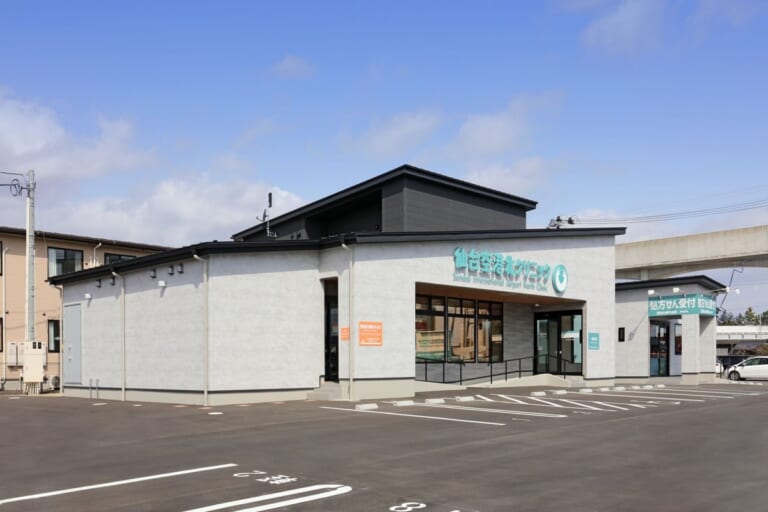
Sendai International Airport North Clinic, 8-1-8 Mitazono, Natori, Miyagi, is about 10 minutes by car from Sendai International Airport; telephone 022-797-9523. The director is Shunichi Gamo, M.D., Ph.D., board certified in internal medicine, pulmonology (Japanese Respiratory Society) and allergology (Japanese Society of Allergology).
The clinic runs a fever clinic with its own entrance. Same-day check-in is done with a QR code at the fever clinic entrance, so you do not need to arrange a visit in advance. The check-in page is available in English, Traditional Chinese, Simplified Chinese and Korean.
On arrival: scan the QR code at the fever clinic entrance. Enter your name, phone number and date of birth on the check-in page, and answer the questions. With a Japanese phone number, follow the wait and call instructions shown after check-in. With a foreign phone number only, follow the check-in confirmation. On regular clinic days, press the intercom at the fever clinic entrance, give your name, then ask staff where to wait and how they will let you know when it is your turn. On Sundays and national holidays, ask staff when they check your documents at the regular-clinic entrance.
The order of examinations follows the check-in order in principle, but may change with the severity of symptoms. On Sundays and national holidays the regular clinic does not run. After check-in, insurance status is confirmed at the regular-clinic entrance.
Hours of the fever clinic: Monday, Tuesday, Wednesday, Friday and Saturday 10:00–12:00 and 14:30–18:00. Sundays and Japanese national holidays 10:00–15:00 (check the calendar on the clinic page); closed Thursdays. Children from age 0 are seen. Family members with fever can be seen together in the same room by the same doctor at one visit.
For visitors without Japanese health insurance, the clinic charges a flat fee of USD 700, converted to yen at the day’s rate and payable by card or cash. The fee covers an English consultation, the BioFire SpotFire R Panel multiplex PCR, a same-day English medical certificate with ICD-10 codes (standard diagnosis codes used worldwide) for travel insurance, and a prescription if needed. The PCR uses one nasal swab, takes about 15 minutes, and detects 11 viruses and 4 bacteria. Medicines are paid separately at the pharmacy next door. People living in Japan with Japanese health insurance are seen under insurance, and the flat fee does not apply.
Please note honestly what this test is: it is a respiratory panel. It can help when fever comes with cough, sore throat or runny nose — for example, influenza or COVID-19 with stomach symptoms. It does not test for norovirus, rotavirus, or foodborne bacteria such as Campylobacter or Salmonella, and Group A streptococcus is not on the panel. With danger signs, call 119 instead of travelling to a clinic.
References
- World Health Organization — Diarrhoeal disease
- JNTO — For safe travels in Japan: Guide for when you are feeling ill
- World Health Organization — Food safety
- CDC — Japan Traveler View
- Alaoui-Inboui FZ, Slaoui B, Kettani AE, Yakine FZ. Influenza A (H1N1) in Hospitalized Children. Clinical laboratory. 2024. PMID: 39257114.
- Libman M. Summary of the CATMAT Statement on Travellers’ Diarrhea. Canada communicable disease report. 2015. PMID: 29769922.
- DuPont HL. Systematic review: the epidemiology and clinical features of travellers’ diarrhoea. Alimentary pharmacology & therapeutics. 2009. PMID: 19392866.