
Quick answer
- hMPV (human metapneumovirus) is a common respiratory virus that causes cold-like illness, and sometimes bronchitis, wheezing or pneumonia. In Japan it is most active in late winter and spring [1][2].
- Its symptoms overlap with flu, RSV and COVID-19, so symptoms alone cannot identify it. A nasal swab test can.
- There is no antiviral medicine for hMPV. Care means rest, fluids, and medicine for fever and cough. A diagnosis still matters, because it helps rule flu or COVID-19 in or out, and those do have specific treatment [3].
- Call 119 (the free ambulance number in Japan) for breathing difficulty or the other danger signs listed below.
What could this be? hMPV compared with flu, RSV and COVID-19
hMPV is a virus of the paramyxovirus family (a large family of viruses that includes RSV). It was first described in 2001 and has circulated worldwide for decades; most people are infected in childhood [4][5]. It spreads through droplets (small drops from coughs and sneezes) and by touching contaminated surfaces. The incubation period (the time from catching the virus to getting sick) is roughly 3–5 days [6].
Typical symptoms are cough, runny nose, fever, sore throat and wheezing (a whistling sound when breathing out). Most healthy adults recover in about a week, though the cough can last longer. Some people get more severe illness: infants and young children, older adults, and people with asthma, COPD (chronic obstructive pulmonary disease, a long-term lung disease) or weakened immunity [4][7][8]. Reinfection is common, even in adults [5].
Symptoms alone cannot reliably tell these viruses apart. A laboratory test is needed.
| hMPV | Influenza (flu) | RSV | COVID-19 | |
|---|---|---|---|---|
| Onset | Gradual, cold-like | Sudden fever, body aches [9] | Cold-like, then cough and wheezing [10] | Varies |
| Typical features | Cough, runny nose, fever, wheezing | Fever, cough, muscle and joint pain, severe tiredness [9] | Runny nose, cough, wheezing; severe in infants and the elderly [10] | Fever, cough, sore throat, loss of taste or smell |
| Who is at risk of severe illness | Young children, older adults, people with asthma, COPD or weak immunity [4][7] | Pregnant women, children under 5, people over 65, chronic illness [9] | Infants under 6 months, elderly people, heart or lung disease [10] | Older adults, chronic illness |
| Antiviral available | No | Yes | No | Yes |
What should I do first if I get sick in Japan?
- Rest and drink fluids. Take your temperature if you have a thermometer.
- Wear a mask and wash your hands often to protect people around you.
- Avoid crowded tours and onsen (hot springs) while you have a fever.
- Note when your symptoms started. Doctors will ask.
- Check your travel insurance assistance line early. Some insurers want to be contacted before you visit a clinic.
- For mild illness, buying fever or cold remedies at a Japanese drugstore is fine. Ask the pharmacist, because ingredients and strengths differ from those at home.
If you need help finding a doctor, the Japan National Tourism Organization (JNTO) offers a multilingual guide and a 24-hour Japan Visitor Hotline [11]. Its website also lets you search for medical institutions that serve foreign patients in English, Chinese or Korean.
When to see a doctor, and when to call 119?
Call 119, the free ambulance number in Japan, if there are:
- difficulty breathing, or rapid or laboured breathing
- chest retractions in a child
- bluish lips
- confusion or unusual drowsiness
- inability to drink, or signs of dehydration
- chest pain
- a seizure
Do not drive yourself if you have any of these signs; call an ambulance.
See a doctor the same or next day if you have:
- a high fever lasting more than 2–3 days
- wheezing or a worsening cough
- an infant with any fever
- an underlying lung, heart or immune condition
How is hMPV diagnosed, and why does it matter on a trip?
Diagnosis is by a nasal swab. Options are a rapid antigen test (a quick test that detects viral proteins) or a PCR test, often a multiplex PCR (a test that looks for the genetic material of many germs at once) [4][12]. A multiplex panel checks many respiratory viruses and some bacteria from one swab.
Why a diagnosis matters on a trip:
- It can confirm or rule out flu or COVID-19, which have antiviral medicines.
- It can help avoid unnecessary antibiotics. Studies of rapid multiplex PCR show fewer antibiotics given when a virus is identified [13][14].
- It gives your insurer a documented diagnosis.
Limits to know: a positive PCR shows viral genetic material, not necessarily the cause of every symptom. Two viruses can be found at the same time (co-detection) [15]. A negative result does not exclude every infection. Rapid antigen tests for hMPV miss some cases (moderate sensitivity, meaning they can be falsely negative) [16]. A panel does not diagnose pneumonia; that may need a doctor’s examination or a chest X-ray. No test is 100% accurate, and a panel does not replace a doctor’s examination.
How is hMPV treated in Japan? Prescription and drugstore medicines
There is no approved antiviral medicine or vaccine for hMPV. Treatment is supportive, meaning it relieves symptoms while your body recovers [3][4].
- Fever and pain: acetaminophen is the usual choice and is safe for children, with doses based on weight (follow the label or the doctor). Adults may also use ibuprofen or other non-steroidal anti-inflammatory drugs (NSAIDs). Do not give aspirin to children.
- Cough and mucus: medicines commonly prescribed for cough and mucus include cough suppressants and mucolytics. Avoid codeine-containing cough medicine for children unless prescribed by a doctor.
- Children are treated with child formulations and doses decided by the doctor.
- Wheezing may be treated with inhaled bronchodilators.
- Severe cases need oxygen or hospital care.
- Antibiotics are used only if a bacterial infection is suspected.
Prescriptions are filled at a pharmacy. Ask the pharmacist about ingredients and strengths, as they may differ from products in your home country.
Travel points: flying, companions, children and insurance documents
- Flying: airlines may refuse boarding to visibly ill passengers. Nasal congestion can cause ear pain on descent. Anyone with breathing difficulty should consult a doctor before flying.
- Companions: use masks and hand hygiene, and watch for symptoms. Family members who are ill may be assessed together.
- Children: watch hydration and breathing.
- Insurance: keep all receipts and the medical certificate. Ask whether your insurer needs a certificate in English. Reimbursement depends on your policy.
Frequently asked questions
Is hMPV dangerous, and is it a new virus?
No, it is not new. It was identified in 2001 and has circulated worldwide for decades; most people are infected in childhood. Most cases are mild cold-like illness, but infants, older adults and people with chronic lung, heart or immune problems can get more severe disease [4][5][7].
I tested negative for flu and COVID; could it be hMPV?
Yes. hMPV causes similar symptoms and is one of the common respiratory viruses that circulate alongside flu and COVID-19 [1]. A multiplex PCR panel can test for hMPV and many other germs from one nasal swab.
Is there a vaccine or antiviral for hMPV?
No. There is no approved antiviral or vaccine for hMPV; treatment is supportive. Vaccines and monoclonal antibodies are under development [3][6].
How long am I contagious, and can I keep sightseeing?
There is no fixed rule for hMPV isolation in Japan. As general guidance, stay in your hotel until you are improving, rest, and wear a mask around others. Avoid crowded tours while you have a fever.
Can my child be tested in Japan?
Yes. Children can be tested with a nasal swab. Ask the clinic in advance whether it accepts children and what languages are supported.
If you are near Sendai Airport
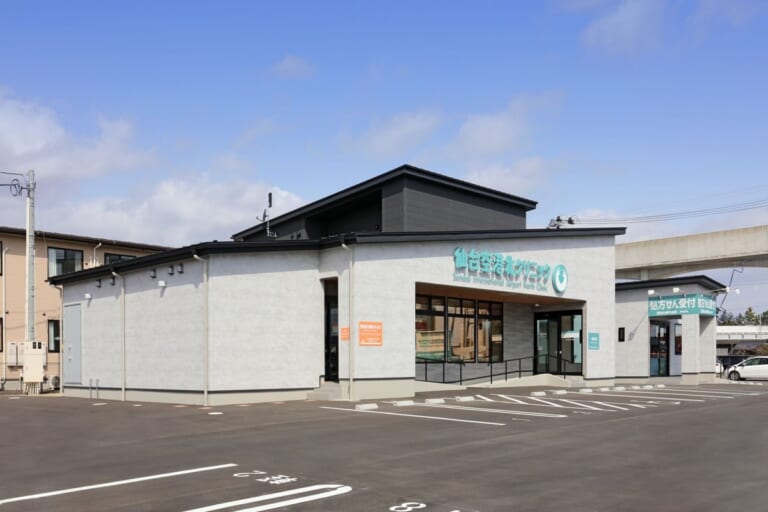
Sendai International Airport North Clinic (仙台空港北クリニック) is at 8-1-8 Mitazono, Natori, Miyagi, about 10 minutes by car from Sendai International Airport. The director is Shunichi Gamo, M.D., Ph.D. (internal medicine, pulmonology and allergology). The fever clinic has its own entrance and same-day QR check-in with an English page. Hours: Mon, Tue, Wed, Fri and Sat 10:00–12:00 and 14:30–18:00; Sundays and holidays 10:00–15:00 (check the calendar); closed Thursdays. Children from age 0 are seen, and family members can be seen together.
For visitors without Japanese insurance, a flat fee of USD 700 is charged in yen at the day’s rate, by card or cash. It covers an English consultation, a same-day English certificate with ICD-10 codes, and a prescription if needed. It also covers the BioFire SpotFire R Panel: one nasal swab, about 15 minutes, 11 viruses including hMPV, influenza, RSV and SARS-CoV-2, plus 4 bacteria. Medicines are paid separately at the pharmacy next door. Group A strep is not on the panel. Residents with Japanese insurance are seen under insurance.
References
- WHO. Trends of acute respiratory infection, including human metapneumovirus, in the Northern Hemisphere (2025)
- Kikuta H. Human metapneumovirus. Uirusu 2006.
- Liu JW et al. Resurgence of human metapneumovirus in the post-COVID-19 era. Lancet Infect Dis 2025.
- Twumasi S et al. Human Metapneumovirus: A Review of Its Epidemiology, Clinical Features, Public Health Implications and Treatment Options. Rev Med Virol 2025.
- Schuster JE, Williams JV. Human metapneumovirus. Pediatr Rev 2013.
- Lianou A et al. hMPV Outbreaks: Worldwide Implications of a Re-Emerging Respiratory Pathogen. Microorganisms 2025.
- Pott H et al. Human Metapneumovirus Epidemiology Among Middle-aged and Older Adults Hospitalized With Acute Respiratory Infection. J Infect Dis 2025.
- Esposito S, Mastrolia MV. Metapneumovirus Infections and Respiratory Complications. Semin Respir Crit Care Med 2016.
- WHO. Influenza (seasonal) fact sheet
- WHO. Respiratory syncytial virus (RSV) fact sheet
- JNTO. For safe travels in Japan – Guide for when you are feeling ill
- Matsuzaki Y et al. Evaluation of a new rapid antigen test for detection of human metapneumovirus. J Clin Microbiol 2009.
- Meltzer AC et al. Point-Of-Care Respiratory Diagnosis and Antibiotic Utilization in the Emergency Department. Acad Emerg Med 2026.
- Bigaud B et al. Impact of multiplex PCR point-of-care platform implementation for respiratory pathogen detection. J Clin Microbiol 2026.
- Arimura K et al. Age-Dependent Risk of Bronchial Asthma Exacerbation in Respiratory Syncytial Virus Co-infection. Lung 2025.
- Gentilotti E et al. Diagnostic accuracy of point-of-care tests in acute community-acquired lower respiratory infections. Clin Microbiol Infect 2022.