If you are in a hurry
- A fever in a baby under 3 months old needs a doctor’s visit the same day (at a night emergency clinic if it is night), even if the baby looks well
- If the baby is limp and will not wake, is struggling to breathe, has a seizure, or looks pale or bluish, call 119 (Japan’s emergency number) without hesitating
- Ask a doctor before giving any fever medicine (such as Calonal), and use it only as directed after an examination
Hello. I am Shunichi Gamo, MD, PhD, a board-certified pulmonologist and the director of Sendai Airport North Clinic.
Your 2-month-old baby feels hot. The thermometer reads over 38°C. It is the middle of the night. Is it all right to let the baby sleep and wait until morning?
For new parents, this kind of worry can be overwhelming. A small baby cannot tell you what hurts. It is natural to be unsure what to do.
Let me give you the conclusion first. If a baby under 3 months (12 weeks) old has a temperature of 38.0°C or higher, please have a doctor see the baby the same day, even if the baby looks well[1]. This is true at night, too. Waiting until morning is not an option.
In this article, I explain, as a respiratory specialist, why a visit is needed, how to take a temperature correctly, how to think about fever medicine, how to tell which help you need at night (119, a night emergency clinic, the #8000 line), and what to tell the doctor.
First, a note about our fever clinic on Sundays and national holidays. PCR testing for influenza and COVID (a test that copies the virus’s genetic material in order to detect it) gives results the same day.
From October 4, 2026, we also run the fever clinic on Sundays and national holidays
10:00 to 15:00 (no lunch break). No appointment is needed; you check in on the day. We give you the PCR result the same day. On Sundays and holidays we see fever patients only, and we do not offer general outpatient care or IV drips. We are closed on Sunday, October 25, and from November we are generally open every Sunday and national holiday. Notice: fever clinic on Sundays and national holidays
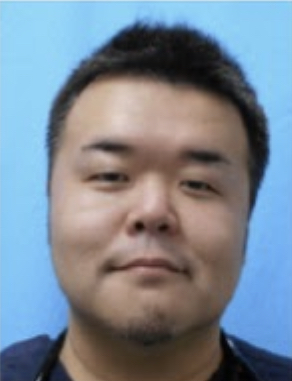
Shunichi Gamo, MD, PhD
Director, Sendai International Airport North Clinic
Born and raised locally, he attended Yuriage Elementary School and Yuriage Junior High School in Natori City. After graduating from Tohoku University School of Medicine, he worked at Sendai Open Hospital and Kesennuma City Hospital, and then at Tohoku University Hospital. In April 2021, in the middle of the COVID-19 pandemic, he opened Sendai International Airport North Clinic. Holding to a fever clinic that never turns patients away, he cared for well over 20,000 patients with fever in the two years before COVID-19 was moved to Class 5 under Japan’s infectious disease law.
Society memberships and board certifications
Certified Member and Board Certified Fellow, Japanese Society of Internal Medicine
Board Certified Pulmonologist, Japanese Respiratory Society
Board Certified Allergist, Japanese Society of Allergology
Board Certified Specialist, Japanese Society of Anti-Aging Medicine
PhD in Medicine (Tohoku University)
In short: does a fever in a baby under 3 months always need a doctor’s visit, even if the baby looks well?
Yes. If a baby under 3 months (12 weeks) old has a temperature of 38.0°C or higher, contact a pediatrician right away and have the baby examined[1].
The UK’s NICE guideline also places babies under 3 months old with a temperature of 38°C or higher in the high-risk group for serious illness[2]. In short, just keep to these three points.
- When:
During the day, right away. At night or on a holiday, go to a night emergency clinic without waiting for morning[1] - Where:
A medical facility with pediatric care. At night, a night or holiday emergency department. If you are unsure where to go, phone for advice first - Before you leave:
Do not give fever medicine on your own judgment. Write down the temperature, the time, and how the baby is feeding, and take the notes with you
If anything is wrong with the baby’s breathing, alertness, or color, call 119 without stopping to ask for advice. The details are in the section below on signs that mean you should hurry.
For fevers at night or on holidays in children 3 months and older, see Fever in a child at night, on Sundays, or on holidays: can it wait until morning, or should you go now? This article is limited to babies under 3 months.
Why does a fever in a small baby need a visit right away?
Because a serious bacterial infection (an illness in which bacteria multiply inside the body) can be hiding behind a small baby’s fever.
One study looked at 1,821 febrile babies aged 60 days or younger in 26 emergency departments in the United States[3]. A serious bacterial infection was found in 170 of them (9.3%)[3]. The breakdown is as follows[3].
| Serious bacterial infection | Number of babies (out of 1,821) | Percentage |
|---|---|---|
| Urinary tract infection (bacteria entering the passage that carries urine) | 151 babies | 8.3% |
| Bacteremia (bacteria getting into the blood) | 26 babies | 1.4% |
| Bacterial meningitis (an infection of the membranes covering the brain and spinal cord) | 10 babies | 0.5% |
Some babies had two or more of these at once, so the numbers do not add up to 170[3].
There is also a report from Japan. Among 275 febrile babies under 90 days old admitted through pediatric emergency care in Japan, 45 had a serious bacterial infection and 32 had a serious viral infection[4]. The most common virus was respiratory syncytial virus (RSV), in 11 babies[4].
In other words, serious illness turns up at a certain rate whether the cause is bacteria or a virus. For how to assess a baby who is feeding poorly because of RSV, please also see Fever in a baby: when RSV reduces feeding.
 Dr. Gamo
We examine and test even a baby who looks well so that we do not miss a serious illness. At this age, we cannot say “the baby looks fine, so it must be all right,” so please do bring your baby in.
What happens at the visit?
The American Academy of Pediatrics (AAP) guideline sets out how to evaluate and treat well-appearing febrile babies aged 8 to 60 days[5]. It has separate procedures for three age groups: 8 to 21 days, 22 to 28 days, and 29 to 60 days[5].
The NICE guideline says that for a fever in a baby under 3 months, doctors carry out blood tests, a blood culture (a test for bacteria in the blood), a urine test, and so on[2]. Depending on the baby’s age and condition, a test of the spinal fluid (the fluid around the brain and spinal cord) and antibiotics (medicines that stop bacteria) given by drip or injection may be needed[2].
It is important to start antibiotics early when they are needed. The set of tests changes with the baby’s age, so please follow the explanation of the doctor who examines your baby.
How should I take my baby’s temperature?
Use a digital thermometer and check whether the reading is 38.0°C or higher[1]. Accuracy differs depending on where you measure.
| Where you measure | How it ranks for a small baby |
|---|---|
| Bottom (rectal) | The AAP says rectal measurement is the most accurate and is especially suited to infants under 3 months[6] |
| Armpit | The AAP says it is the least accurate but can be used for screening at any age[6]. NICE advises measuring babies under 4 weeks old in the armpit with an electronic thermometer[2] |
| Forehead (temporal artery) | In a pooled analysis of studies in children, the sensitivity (ability to detect children who have a fever) was 72%[7]. It tends to read low, especially in children 4 years and under, and is not recommended as a substitute for the rectal method[7] |
| Ear | The AAP says the ear canal is too narrow in young babies, so ear thermometers can be used from 6 months of age[6] |
Note that NICE does not routinely recommend measuring by the rectum or mouth in general care of children aged 0 to 5 years[2]. As you can see, policies differ from country to country and from organization to organization.
For a rectal reading, the AAP advises putting petroleum jelly or a similar lubricant on the tip of the thermometer and on the baby’s bottom, then inserting it slowly. If you meet resistance, stop and do not force it[6]. If you are not confident about the technique, take the temperature in the armpit and ask for advice right away.
- If the reading is 38.0°C or higher, write down where and when you measured and contact a medical facility right away[1]
- Even if the thermometer does not reach 38.0°C, please ask for advice if you feel the baby is feverish or “not quite right.” NICE also asks clinicians to take parents’ impressions seriously[2]
- Do not add layers or wrap the baby in blankets because of the fever. NICE advises avoiding both overdressing and underdressing[2]
There is no need to waste time measuring again and again in the hope that “it might be lower the next time.” If even one reading is 38.0°C or higher, start getting ready to go.
Can I give fever medicine (such as Calonal) before the visit?
For a baby under 3 months, do not give it on your own judgment. Contact a doctor first and follow the instructions.
According to the AAP, acetaminophen (a fever medicine such as Calonal) should not be given to children under 2 years old without a doctor’s guidance[8]. It also states that a fever in a baby up to 12 weeks old can be a sign of a serious infection and needs testing at a medical facility[8].
NICE asks that, in a child who has been given fever medicine, clinicians not judge whether the illness is serious by whether the fever came down[2]. In other words, a fever coming down is not a reason to feel reassured.
Of course, fever medicine can lower a fever. After the examination, if the doctor decides it is needed, the doctor will specify the right medicine and amount for your baby. The amount depends on age and weight, so please use it “exactly as the doctor directs.”
- Do not use fever medicine left at home (medicine prescribed for an older sibling, leftover suppositories, and so on) on your own judgment
- If you have already given fever medicine, be sure to tell the doctor the name of the medicine, the amount, and the time
- If the fever started after a vaccination, do not decide on your own; ask a doctor[8]
Signs that mean you should hurry (119, night emergency clinic, #8000)
A temperature of 38.0°C or higher in a baby under 3 months needs a visit even without any other sign. Here I sort out the signs that separate “call an ambulance” from “go right away, even at night.”
Call 119 right away
If even one of the following is present, call 119 (Japan’s emergency number) without hesitating, no matter how high the temperature is. This is the same at night and on holidays.
- The baby does not wake when you call, or falls back asleep right away even when woken[2]
- A seizure has occurred (the arms and legs stiffen, jerk and shake, or the eyes roll back)
- The baby seems to be struggling to breathe: grunting sounds, the chest sucking in with each breath, or more than 60 breaths per minute[2]
- The face is pale, mottled, or bluish-purple[2]
- The cry is weak, high-pitched and strange, or the baby cannot be soothed[2]
- The fontanelle (the soft spot at the top of the head) is bulging, the neck is stiff, or there is a rash that does not fade when pressed[2]
The list above is based on NICE’s “high risk (red)” criteria[2]. If a seizure occurs, do not put anything in the baby’s mouth; turn the face to the side and call 119.
If you are unsure, call #8000 (children’s night-time advice line)
If you cannot decide whether to call an ambulance or go to a night emergency clinic, you can phone Miyagi Prefecture’s children’s night-time advice line (#8000). Nurses answer every day from 7:00 p.m. until 8:00 a.m. the next morning[9].
From a landline that cannot dial #8000, call 022-212-9390[9]. Note that this line gives advice only and does not provide medical treatment[9]. It helps the call go smoothly if you start by saying, “The baby is X months old, and the temperature is 38.0°C.”
This call is not meant to talk you out of going. For a fever in a baby under 3 months, use it to decide where to go after you have talked.
Go to a medical facility with pediatric care the same day (a night emergency clinic at night)
Even if breathing, alertness, and color are all fine, when a baby under 3 months has a temperature of 38.0°C or higher, please act as follows[1].
- In the daytime, phone your regular pediatrician or a medical facility with pediatric care, and go right away
- At night or on a holiday, do not wait for morning; go to a night or holiday emergency department
- On the way, keep a close eye on the baby’s breathing and color
- If any of the “119” signs above appear along the way, call 119 on the spot
For how to judge fevers in children 3 months and older, which often start at night, our article on children’s fevers at night, on Sundays, and on holidays may help.
What should I tell the doctor at the visit?
If you jot down the following, the examination goes more smoothly. Please also bring the maternal and child health handbook.
- Age in months (and days), whether the baby was born earlier than the due date, and how the baby was at birth
- Temperature: the highest reading, where you measured it (bottom, armpit, and so on), and the time
- Since when the baby has had a fever, and how it rose
- Feeding amount (about what fraction of the usual), the number of wet diapers, the stools, and whether the baby has vomited
- Mood and sleep (how the baby cries, how hard it is to wake, any limpness), plus breathing, cough, and runny nose
- Family situation: fever, cough, or diarrhea in siblings or other family members, and any outbreaks at nursery school or elsewhere
- The date of any vaccination, and, if you gave fever medicine, its name, the amount, and the time
The AAP guideline covers well-appearing full-term babies (born on their due date), and it also defines exclusions[5]. Babies born early or with an underlying condition may need a different procedure, so be sure to tell the doctor.
The baby’s age, since when the fever started, and the feeding amount are important details that only the family can provide. Please tell us.
Frequently asked questions
- My 2-month-old baby’s temperature was 37.8°C. Should we see a doctor?
-
The AAP threshold is 38.0°C or higher[1]. Even at 37.8°C, however, please come in if the baby feels hot to the touch, is feeding less, or seems different from usual. Measure the temperature again and tell the doctor the readings along with the times. NICE also asks clinicians to take a parent’s feeling that the baby is “feverish” seriously[2].
- The fever started in the middle of the night. Can we wait until morning?
-
Please do not wait; go to a night or holiday emergency department. A temperature of 38.0°C or higher in a baby under 3 months needs a doctor’s examination the same day, even at night[1]. If you are unsure where to go, you can call #8000 (every day from 7:00 p.m. to 8:00 a.m. the next morning)[9]. If the baby is limp and will not wake, is struggling to breathe, or has a seizure, call 119.
- The fever has gone down on its own and the baby looks well. Do we still need a visit?
-
Yes, please come in. When a baby under 3 months has had a temperature of 38.0°C or higher, the basic rule is to have a doctor see the baby even if the baby looks well[1]. Even when the fever came down after fever medicine, the drop in temperature cannot tell you whether the illness is serious[2].
- Can I give fever medicine and then go to the doctor?
-
Contact a doctor first and follow the instructions. According to the AAP, acetaminophen should not be given to children under 2 years old without a doctor’s guidance[8]. If the doctor decides after the examination that it is needed, the doctor will specify the right amount for your baby, so please use it exactly as directed.
- The fever started after a vaccination. Can we just keep watching at home?
-
A fever can occur after a vaccination[8]. Even so, for a temperature of 38.0°C or higher in a baby under 3 months, do not decide on your own, even after a shot; ask a doctor. Please also tell the doctor the date of the vaccination and the type of vaccine.
Summary: a fever in a baby under 3 months always needs a visit, even if the baby looks well
- A fever in a baby under 3 months old needs a doctor’s visit the same day (at a night emergency clinic if it is night), even if the baby looks well
- If the baby is limp and will not wake, is struggling to breathe, has a seizure, or looks pale, call 119 without hesitating
- Ask a doctor before giving fever medicine (such as Calonal), and use it only as directed after an examination
- Take the temperature with a digital thermometer. If it is 38.0°C or higher, write down where and when you measured it and contact a medical facility right away[1]
- If you are unsure where to go at night, call #8000 (every day from 7:00 p.m. to 8:00 a.m. the next morning)[9]
The first person to notice that something is “just not right” with a small baby is the parent who is always close by. Even in the middle of the night, please come in when you are unsure. Please pass that observation on to the doctor just as it is. Leave the medical care to us.
That’s all.
Disclaimer
This article is intended to provide general medical information and does not replace an examination, diagnosis, or treatment by a doctor. The content is based on medical knowledge at the time of publication, but the right course of action differs for each person. If you are worried about symptoms, please consult a medical facility.
References
- American Academy of Pediatrics. Fever Without Fear: Information for Parents. HealthyChildren.org. Accessed October 2026. https://www.healthychildren.org/English/health-issues/conditions/fever/Pages/Fever-Without-Fear.aspx
- National Institute for Health and Care Excellence (NICE). Fever in under 5s: assessment and initial management (NG143). NICE website. Accessed October 2026. https://www.nice.org.uk/guidance/ng143/chapter/Recommendations
- Kuppermann N, Dayan PS, Levine DA, Vitale M, Tzimenatos L, Tunik MG, et al. A Clinical Prediction Rule to Identify Febrile Infants 60 Days and Younger at Low Risk for Serious Bacterial Infections. JAMA Pediatr. 2019 Apr;173(4):342-351. doi:10.1001/jamapediatrics.2018.5501 PMID: 30776077
- Hayakawa I, Nomura O, Uda K, Funakoshi Y, Sakakibara H, Horikoshi Y. Incidence and aetiology of serious viral infections in young febrile infants. J Paediatr Child Health. 2020 Apr;56(4):586-589. doi:10.1111/jpc.14692 PMID: 31729791
- Pantell RH, Roberts KB, Adams WG, Dreyer BP, Kuppermann N, O’Leary ST, et al. Evaluation and Management of Well-Appearing Febrile Infants 8 to 60 Days Old. Pediatrics. 2021 Aug;148(2):e2021052228. doi:10.1542/peds.2021-052228 PMID: 34281996
- American Academy of Pediatrics. How to Take Your Child’s Temperature. HealthyChildren.org. Accessed October 2026. https://www.healthychildren.org/English/health-issues/conditions/fever/Pages/How-to-Take-a-Childs-Temperature.aspx
- Kiekkas P, Aretha D, Almpani E, Stefanopoulos N. Temporal Artery Thermometry in Pediatric Patients: Systematic Review and Meta-Analysis. J Pediatr Nurs. 2019 May-Jun;46:89-99. doi:10.1016/j.pedn.2019.03.004 PMID: 30865876
- American Academy of Pediatrics. Acetaminophen Dosing Tables for Fever and Pain in Children. HealthyChildren.org. Accessed October 2026. https://www.healthychildren.org/English/safety-prevention/at-home/medication-safety/Pages/Acetaminophen-for-Fever-and-Pain.aspx
- Miyagi Prefecture. Miyagi Prefecture Children’s Night-time Advice Line Program (#8000). Miyagi Prefecture website (in Japanese). Accessed October 2026. https://www.pref.miyagi.jp/soshiki/iryou/shouni04.html
▶ Overview of this topic: Fever clinic on Sundays and national holidays (from October 4, 2026, 10:00 to 15:00)
More articles to read when you have a fever
For our Sunday and holiday fever clinic, see Notice: fever clinic on Sundays and national holidays.