
Quick answer
- A sudden high fever with body aches during the winter flu season is often influenza (the flu).
- Antiviral medicines in Japan need a doctor’s prescription and work best when started as soon as possible, so see a doctor early.
- Call 119 if you are seriously ill and have danger signs such as trouble breathing, chest pain, confusion or seizures [2].
- Rest, keep apart from your travel companions, and do not fly while you still have a fever.
- Keep all receipts and ask for a medical certificate so you can claim on your travel insurance.
Could it be the flu? What else it might be
Influenza is a respiratory infection caused by influenza viruses. In temperate climates like Japan’s, seasonal epidemics occur mainly during winter [1]. Typical symptoms come on suddenly: fever, chills, muscle and joint pain, headache, strong tiredness, sore throat, and a cough [1]. Children may sometimes also have vomiting or diarrhoea, and older adults may have little or no fever.
Other illnesses can look very similar, including COVID-19, RSV (respiratory syncytial virus, a common cause of chest infections), other respiratory viruses, Mycoplasma pneumoniae (a bacterium that causes “walking pneumonia”) and strep throat (a bacterial throat infection). Symptoms alone cannot confirm flu [1].
What should you do first?
- Note the time your symptoms started. This matters, because antiviral treatment works best when started as soon as possible [1].
- Check your temperature.
- Rest and drink fluids. Stay in your hotel room as much as possible [1].
- Wear a mask and keep apart from your companions. Tell your hotel front desk; they can often help.
- For fever, use acetaminophen (paracetamol), sold at Japanese drugstores. As a general medical safety rule, children and teenagers should not take aspirin during flu, and doctors also avoid some NSAIDs (a group of anti-inflammatory painkillers) for children with flu.
Antiviral medicines are not sold over the counter in Japan; a doctor’s prescription is always needed. To find a clinic, use the JNTO Japan Visitor Hotline (050-3816-2787, 24 hours, English/Chinese/Korean) or JNTO’s online medical institution search [2].
When to see a doctor, and when to call 119?
Anyone who wants antiviral treatment should see a doctor early. People at higher risk of severe flu should always do so. High-risk groups include pregnant people, children under 5, people aged 65 and over, and people with chronic heart, lung (including asthma), kidney or metabolic disease, or weakened immunity [1].
Call 119 for an ambulance if you are seriously sick or injured [2], for example if you have:
- trouble breathing
- chest pain or pressure
- bluish lips
- confusion
- seizures, difficulty waking, or unusual behaviour — in children, these can signal a rare brain complication of flu
- inability to keep fluids down, or signs of dehydration
- fever or cough that improves and then returns or worsens
How is flu diagnosed, and why does testing matter?
Japanese clinics commonly take a swab from inside the nose. The most common test is a rapid antigen test (a test that detects viral proteins and gives a result in about 15–30 minutes). It is convenient, but it can miss flu, especially very early after symptoms start — roughly the first 12 hours — and false negatives are possible [3][4][5]. Molecular tests such as PCR (a test that looks for the genetic material of a virus) are more sensitive [3].
Why does a diagnosis matter for a traveller?
- It lets the doctor choose an antiviral within the effective time window.
- It tells you whether you have flu or COVID-19, since isolation and treatment differ.
- It helps you protect your companions.
- It supports your insurance claim.
A multiplex PCR panel (a test that looks for the genetic material of many germs at once) can check several respiratory pathogens from a single swab [6][7]. No test is 100% accurate, and a panel does not detect every cause of fever. For example, it does not detect group A streptococcus, the bacterium causing strep throat. A positive result also does not always prove that the detected germ is causing your current illness [6].
How is flu treated in Japan?
Antiviral medicines used in Japan (all prescription only) include:
| Generic name | How it is taken |
|---|---|
| oseltamivir | Oral, twice daily for 5 days [8] |
| zanamivir | Inhaled, twice daily for 5 days [9] |
| laninamivir octanoate | Inhaled, single administration [8][9] |
Baloxavir marboxil is another antiviral used in Japan [10]. These medicines work best when started as soon as possible after symptoms begin [1], though doctors may still treat severe or high-risk patients later. The doctor chooses the medicine based on your age, weight, ability to inhale, pregnancy and other conditions.
You usually collect the medicine at a pharmacy (often next to the clinic) and pay for it separately from the consultation.
Antibiotics do not treat influenza. They are used only for bacterial complications.
Parents: as a general safety rule, watch children and teenagers for unusual behaviour (such as sudden stumbling, delirium or wandering off) for at least 2 days after flu starts, whether or not they take medicine.
Travelling with flu: flying, companions, children and insurance
Flying
Avoid flying while you have a fever. Public-health guidance suggests resting at home and resuming your plans only once your symptoms are settling and your fever has come down [1]. Contact your airline about changing your flight; some airlines may ask for a fit-to-fly note from a doctor.
Companions
Use masks, wash hands often, ventilate rooms, and sleep in separate rooms if possible. Doctors may prescribe preventive antivirals to close contacts, especially high-risk ones, and a single inhalation of laninamivir octanoate has been shown to reduce flu in household contacts when given soon after exposure [11]. This is generally not covered by Japanese insurance for travellers, so you pay yourself.
Children
A doctor should see children with flu; dosing is by weight. Japan has school attendance rules for children with flu, but these apply to Japanese schools — they are not a law for tourists.
Insurance
Keep the clinic receipt, the pharmacy receipt and prescription details, and ask for a medical certificate in English with the diagnosis (ICD-10 code). Contact your insurer as early as you can.
Frequently asked questions
Can I buy Tamiflu at a Japanese drugstore?
No. All flu antivirals in Japan, including Tamiflu, are prescription only.
I tested negative on day 1; could it still be flu?
Yes. Rapid tests can miss flu very early after symptoms start. Retesting or a molecular (PCR) test may help [3].
Is it too late after 48 hours?
Antivirals work best when started as soon as possible after symptoms begin [1], so the benefit may be smaller later. Even so, a doctor can still treat high-risk or severe cases after that window. A doctor can also evaluate you for complications such as pneumonia, whatever the timing.
Should my family take preventive medicine?
Discuss with a doctor. Preventive antivirals are possible for close contacts [11] but are generally self-pay in Japan.
Can I fly home tomorrow?
It depends on your fever and symptoms. See the flying guidance above: avoid flying while you still have a fever, and travel only once your symptoms are settling [1].
Does a flu shot mean I can’t get flu?
No. It reduces your risk and can make illness milder, but you can still catch flu [1].
If you are near Sendai Airport
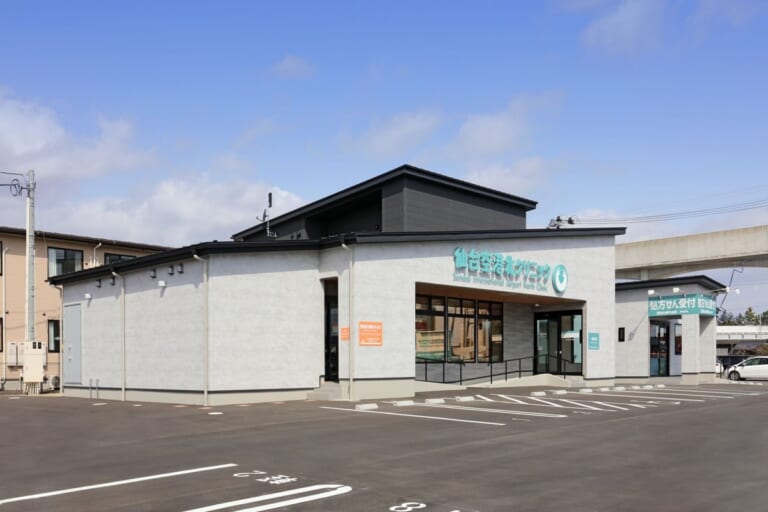
Sendai International Airport North Clinic (仙台空港北クリニック) is at 8-1-8 Mitazono, Natori, Miyagi, about 10 minutes by car from Sendai International Airport. The director is Shunichi Gamo, M.D., Ph.D., board certified in internal medicine, pulmonology and allergology.
It runs a fever clinic with its own entrance and same-day QR check-in in English; no advance contact is needed — just walk in during clinic hours. Hours: Mon, Tue, Wed, Fri, Sat 10:00–12:00 and 14:30–18:00; Sundays and national holidays 10:00–15:00 (check the calendar on the clinic page); closed Thursdays. Children from age 0 are seen, and family members with fever can be seen together.
For visitors without Japanese insurance, the flat fee is USD 700 (charged in yen). It covers an English consultation and a same-day English medical certificate with ICD-10 codes, plus a prescription if needed. It also covers the BioFire SpotFire R Panel multiplex PCR: one nasal swab, results in about 15 minutes, 15 targets including influenza A/H1-2009/H3, influenza B and SARS-CoV-2; group A strep is not on the panel. Medicines are paid separately at the pharmacy next door. Residents with Japanese insurance are seen under insurance.
References
- WHO — Influenza (seasonal)
- JNTO — Guide for when you are feeling ill
- Mikamo H, et al. Comparing the cobas Influenza A/B Nucleic acid test with rapid antigen tests at the point of care. PLoS One 2022.
- Marimón JM, Navarro-Marí JM. Rapid diagnostic test for respiratory infections. Enferm Infecc Microbiol Clin 2017.
- Rohana H, et al. A new antigen test device for rapid influenza A and B detection. Heliyon 2024.
- Caldwell JM, et al. Rapid diagnosis of acute pediatric respiratory infections with point-of-care and multiplex molecular testing. Infection 2025.
- Vecino-Ortiz AI, et al. Impact of a multiplex PCR point-of-care test for influenza A/B and RSV. Diagn Microbiol Infect Dis 2018.
- Watanabe A, et al. Laninamivir octanoate versus oseltamivir for treatment of influenza. Clin Infect Dis 2010.
- Katsumi Y, et al. Effect of a single inhalation of laninamivir octanoate in children with influenza. Pediatrics 2012.
- Ikematsu H, et al. Comparative effectiveness of baloxavir marboxil and oseltamivir in reducing household transmission of influenza. Influenza Other Respir Viruses 2024.
- Kashiwagi S, et al. Laninamivir octanoate as post-exposure prophylaxis for influenza. Clin Infect Dis 2016.