
Quick answer
- Most regular medicines, including asthma reliever and preventer inhalers, cannot be bought over the counter in Japan. You need a prescription from a doctor in Japan.
- Japanese pharmacies generally dispense prescription medicines against prescriptions issued by doctors licensed to prescribe in Japan. Bring your home prescription or a doctor’s letter to help the doctor understand your history.
- Bring what identifies your medicine: the generic name, strength, dose, device type, a photo of the box or inhaler, and your home prescription if you have it.
- If you cannot breathe properly, or your reliever inhaler is gone and you are getting worse, call 119 for an ambulance.
- Keep every receipt and medical document. You will need them for your travel insurance claim.
What kind of situation is this?
If you have lost an inhaler or forgotten a regular medicine in Japan, the right action depends on which medicine is missing.
You lost your reliever (rescue) inhaler
A reliever inhaler, such as one containing salbutamol (also called albuterol), opens the airways quickly during an asthma attack [1]. Losing a reliever inhaler can be particularly time-sensitive, especially if breathing symptoms are present. If you have asthma or COPD (chronic obstructive pulmonary disease, a long-term lung disease that makes breathing hard) and your reliever is gone, plan to see a doctor the same day.
You lost your daily controller inhaler
A controller inhaler, such as an inhaled corticosteroid (a steroid medicine breathed into the lungs that reduces airway inflammation) or a combination inhaler, may be prescribed for regular use to control asthma [2,3]. In COPD, maintenance treatment generally centers on long-acting bronchodilators, while ICS-containing combinations are used in selected patients when clinically indicated. Missing doses of a controller-only inhaler may be less immediately urgent than losing a reliever, but asthma or COPD control can deteriorate. Some combination inhalers containing ICS–formoterol are prescribed for asthma maintenance and symptom relief [3]. If your missing inhaler serves both purposes, you may also have lost your reliever treatment. Seek prompt medical assessment, especially if symptoms are present. Studies involving children have reported loss of asthma control after withdrawal of inhaled corticosteroids [4] or discontinuation of long-acting beta-agonists [5]. The risk for an individual depends on their treatment and condition.
You forgot other regular medicines
This includes tablets for blood pressure, diabetes, thyroid disease, epilepsy, depression, or contraception. Some regular medicines should not be stopped or rationed suddenly, and the risk depends on the drug. Do not make this decision on your own; ask a doctor promptly before your supply runs out.
What should I do first?
- Search carefully. Check all luggage, your hotel room, and the lost-and-found of trains, buses, and airports you used.
- Check how much medicine is left. Count the doses remaining in any other inhaler or box you carry.
- Write down the details of your medicine: the generic (INN) name, the strength, the dose and how often you take it, and the device name. Common inhaler device types include pMDI (pressurized metered-dose inhaler, an aerosol spray), Diskus, Ellipta, Turbuhaler, and Respimat. Brand names differ by country, so the generic name is what matters.
- Get a photo of the box or label, or ask family at home to send one.
- Get a copy of your home prescription or a letter from your doctor if possible.
- Contact your travel insurer’s assistance line. Insurers often help find an English-speaking clinic.
- Use the JNTO medical institution search to find clinics that accept foreign patients and speak your language [6].
Do not assume that medicines can be mailed to Japan. Import restrictions differ by medicine, and some may need an Import Confirmation [7]. Controlled medicines have separate rules. Narcotics cannot be mailed to Japan. Check the Narcotics Control Department’s instructions for your medicine before arranging shipment [8]. It is not instant and may require import confirmation paperwork, so it is usually not the fastest fix. Do not buy medicine online from abroad during your trip, and do not borrow someone else’s inhaler.
When to see a doctor urgently or call 119
Call 119 (the ambulance number in Japan) if you have any of these danger signs [1]:
- Breathless even at rest
- Cannot speak full sentences
- Lips or face look bluish or grey
- Drowsiness or confusion
- Your reliever is not helping, or is not available, while symptoms worsen
- Chest tightness getting rapidly worse
In a child, also watch for skin sucking in between the ribs when breathing, or being too breathless to feed or talk.
For missed non-respiratory medicines, call 119 for a seizure, severe or persistent chest pain, or confusion or reduced consciousness, including in someone with diabetes. Seek urgent medical assessment for other concerning symptoms of high or low blood sugar.
If the situation is not urgent, plan a same-day or next-day clinic visit before your supply runs out.
How does a doctor in Japan decide what to prescribe, and why does it matter?
In Japan, prescription medicines generally require a prescription issued by a doctor licensed to prescribe in Japan after a medical consultation. Depending on the circumstances, an eligible online consultation may also be possible. The doctor will review your medical history and any available documents to assess your diagnosis and current treatment. They will also check how well controlled you are, using your symptoms, breathing sounds, and possibly oxygen saturation (a measure of oxygen in your blood) or other simple tests. The doctor will then decide whether a prescription is appropriate and select a clinically suitable medicine available in Japan.
If your breathing problem started with a cold or fever, a viral infection may be the trigger. Viral respiratory infections are a major cause of asthma and COPD flare-ups [9]. Testing for influenza or COVID-19 can change treatment, because antiviral medicines exist for those infections, while most other viral triggers have no specific antiviral drug. A test is not needed just to replace a lost inhaler. Also, a respiratory PCR panel (a test that looks for the genetic material of many germs at once) only identifies the pathogens on its list [10,11]. It does not diagnose asthma or COPD. The BioFire SpotFire R Panel does not include group A streptococcus among its targets.
How is it treated in Japan: what can a pharmacy sell, and what needs a prescription?
Prescription-only in Japan: asthma and COPD inhalers, including short-acting relievers such as salbutamol and procaterol, inhaled corticosteroids (ICS), and ICS/LABA combinations (a steroid plus a long-acting airway-opening medicine). Also prescription-only are LAMA and LAMA/LABA inhalers (long-acting airway-opening medicines used mainly for COPD); montelukast (a daily anti-asthma tablet); oral steroid tablets; systemic antibiotics; and most chronic-disease medicines. The doctor chooses which product is right for you.
What a drugstore can sell without a prescription: some symptom-relief products, such as certain antihistamines (anti-allergy medicines) for hay fever, pain and fever relievers, and cough and cold products. Some types of medicines cannot be purchased when the pharmacist is not there. Over-the-counter “asthma” or cough products are not a substitute for a reliever or controller inhaler.
Visitors without Japanese health insurance pay the full cost themselves at the clinic and again at the pharmacy. Prescription medicines are commonly dispensed at a separate pharmacy (調剤薬局), although some medical facilities also dispense medicines on-site.
Travel points: flying, companions, children, insurance documents
- Flying: keep inhalers and essential medicines in your carry-on luggage, in their original labelled boxes. Carry a spare if you have one. Get a replacement before a long flight [12].
- Companions: a travel companion can help gather documents and call your insurer, but must not share their own prescription inhaler with you.
- Children: a child’s aerosol inhaler often needs a spacer (a plastic container that holds the spray so more medicine reaches the lungs) [1]. Bring the spacer, or ask about one at the visit. Children’s doses and devices differ from adults’, so the doctor decides.
- Insurance: ask the clinic for receipts (領収書), an itemized statement, and a medical certificate or diagnosis document in English if available. Keep pharmacy receipts separately. Insurance coverage differs by policy, so check with your insurer what costs are covered, including replacement of lost medicines. Insurance reimbursement is not always paid out.
One more practical point: inhaler devices differ, and technique errors are common when people switch devices. Serious technique errors are made by many patients, especially with a device that is new to them [13]. If you receive a different device in Japan, ask the doctor or pharmacist to show you how to use it [14].
Frequently asked questions
Can a Japanese pharmacy accept my prescription from home?
No. Japanese pharmacies generally cannot fill prescriptions issued abroad. For prescription medicines, you generally need a prescription issued by a doctor licensed to prescribe in Japan. Your home prescription or a doctor’s letter is still useful as information to help the Japanese doctor understand your history.
Can I buy salbutamol/albuterol (Ventolin) over the counter in Japan?
No. Salbutamol inhalers and all other asthma and COPD inhalers are prescription-only in Japan.
Will I get exactly the same inhaler?
Not necessarily. The doctor will assess whether an appropriate equivalent or alternative is available in Japan. An exact equivalent may not be available. Brand names often differ between countries, so learn the generic name of your medicine. If the device is different, ask to be shown the correct technique.
Do I need Japanese health insurance to see a doctor?
No. Visitors without Japanese insurance pay the full cost themselves (self-pay) at the clinic and the pharmacy.
Can my family mail my medicine to Japan?
It is possible under Japan’s personal-import rules, but there are quantity limits, possible paperwork, and some substances are prohibited. It is slow, so it is usually not the fastest solution.
How much medicine can I get?
The amount prescribed depends on your condition, the medicine, applicable prescribing limits, and availability in Japan. It may not cover your entire stay. The doctor will consider your documents and your condition.
If you are near Sendai Airport
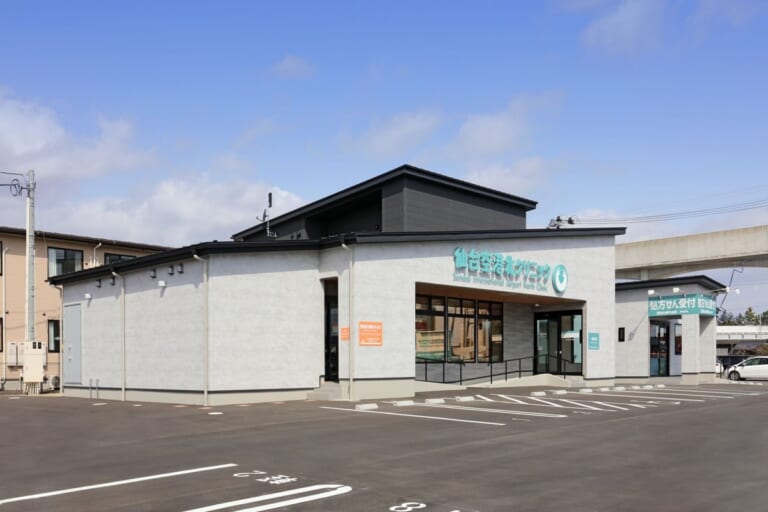
Sendai International Airport North Clinic (仙台空港北クリニック) is at 8-1-8 Mitazono, Natori, Miyagi, about 10 minutes by car from Sendai International Airport. The director is Shunichi Gamo, M.D., Ph.D., board certified in internal medicine, pulmonology (Japanese Respiratory Society) and allergology (Japanese Society of Allergology).
The clinic runs a fever clinic with its own separate entrance. Same-day check-in with a QR code is available at the fever clinic entrance, and the check-in page is available in English; no advance arrangement is needed. Hours are Mon, Tue, Wed, Fri, Sat 10:00-12:00 and 14:30-18:00, and Sun and national holidays 10:00-15:00 (check the clinic calendar); closed Thursdays. Children from age 0 are seen, and family members with fever can be seen together.
This service suits travellers whose breathing problem comes with fever or cold symptoms. For visitors without Japanese health insurance, the flat fee is USD 700, charged in yen at the day’s rate (card or cash). It covers an English consultation, a same-day English medical certificate with ICD-10 codes for travel insurance, and a prescription if needed. It also includes the BioFire SpotFire R Panel multiplex PCR: one nasal swab, about 15 minutes, detecting 11 viruses and 4 bacteria; group A streptococcus is not included. Medicines are paid separately at the pharmacy next door. Residents with Japanese insurance are seen under insurance.
The clinic does not accept UnionPay. The doctor sees patients in English or Japanese, and clinic staff speak both languages. The clinic uses real-time AI voice translation to help communicate in other languages. For regular outpatient care, come directly to the general outpatient entrance during clinic hours. The fever clinic has a separate same-day check-in procedure.
References
- Pollart SM, Compton RM, Elward KS. Management of acute asthma exacerbations. Am Fam Physician. 2011;84(1):40-7.
- World Health Organization. Asthma [Internet]. [cited 2026 Nov 22]. Available from: https://www.who.int/news-room/fact-sheets/detail/asthma
- Global Initiative for Asthma. Global Strategy for Asthma Management and Prevention, 2026 [Internet]. [cited 2026 Nov 22]. Available from: https://ginasthma.org/wp-content/uploads/2026/05/GINA-2026-Strategy-Report-WMS.pdf
- Chang DV, Teper A, Balinotti J, Castro Simonelli C, Garcia-Bournissen F, Kofman C. Exhaled nitric oxide predicts loss of asthma control in children after inhaled corticosteroids withdrawal. Pediatr Pulmonol. 2019;54(5):537-543.
- O’Hagan AR, Morton R, Eid N. Loss of asthma control in pediatric patients after discontinuation of long-acting beta-agonists. Pulm Med. 2012;2012:894063.
- Japan National Tourism Organization. For safe travels in Japan: guide for when you are feeling ill [Internet]. [cited 2026 Nov 22]. Available from: https://www.jnto.go.jp/emergency/eng/mi_guide.html
- Ministry of Health, Labour and Welfare. Q&A for those who are importing medicines into Japan [Internet]. [cited 2026 Nov 22]. Available from: https://www.mhlw.go.jp/content/001686827.pdf
- Narcotics Control Department, Ministry of Health, Labour and Welfare. Import/Export of medicines containing controlled substances [Internet]. [cited 2026 Nov 22]. Available from: https://www.ncd.mhlw.go.jp/en/application2.html
- Matsumoto K, Inoue H. Viral infections in asthma and COPD. Respir Investig. 2014;52(2):92-100.
- Brittain-Long R, Westin J, Olofsson S, Lindh M, Andersson LM. Access to a polymerase chain reaction assay method targeting 13 respiratory viruses can reduce antibiotics: a randomised, controlled trial. BMC Med. 2011;9:44.
- Sun Y, Tamura T, Kyaw Y, Setk S, Aye MM, Tin HH, et al. Surveillance of Respiratory Pathogens Among Rapid Diagnostic Test-Negative Acute Respiratory Infection Patients in Myanmar in 2023, with a Focus on Rhinovirus and Enterovirus Genotyping. Viruses. 2025;17(6):860. doi: 10.3390/v17060860.
- Centers for Disease Control and Prevention. Pack Smart [Internet]. [cited 2026 Nov 22]. Available from: https://wwwnc.cdc.gov/travel/page/pack-smart
- Chrystyn H, Price DB, Molimard M, Haughney J, Bosnic-Anticevich S, Lavorini F, et al. Comparison of serious inhaler technique errors made by device-naïve patients using three different dry powder inhalers: a randomised, crossover, open-label study. BMC Pulm Med. 2016;16:12.
- Chrystyn H, Azouz W, Tarsin W. Dry Powder Inhalers: From Bench to Bedside. J Aerosol Med Pulm Drug Deliv. 2023;36(6):324-335.
Further reading
- Narcotics Control Department, Ministry of Health, Labour and Welfare. Narcotics Control Department [Internet]. [cited 2026 Nov 22]. Available from: https://www.ncd.mhlw.go.jp/en/index.html
- Dekhuijzen PNR, Levy ML, Corrigan CJ, Hadfield RM, Roche N, Usmani OS, et al. Is Inhaler Technique Adequately Assessed and Reported in Clinical Trials of Asthma and Chronic Obstructive Pulmonary Disease Therapy? A Systematic Review and Suggested Best Practice Checklist. J Allergy Clin Immunol Pract. 2022;10(7):1813-1824.e1.
- Centers for Disease Control and Prevention. Japan: Traveler View [Internet]. [cited 2026 Nov 22]. Available from: https://wwwnc.cdc.gov/travel/destinations/traveler/none/japan
- Centers for Disease Control and Prevention. Diabetic Ketoacidosis [Internet]. [cited 2026 Nov 22]. Available from: https://www.cdc.gov/diabetes/about/diabetic-ketoacidosis.html