
Quick answer
- RSV (respiratory syncytial virus, a common cold-like virus) usually starts like a cold. In babies under 6 months, born preterm, or with heart or lung disease, it can move into the lower airways (the chest), and symptoms are usually worst around days 3–5 of illness.
- Older adults and adults with chronic heart or lung conditions can also develop serious RSV illness [5].
- Most cases are managed at home with fluids, clearing the nose, and fever control. There is no routine antiviral medicine for RSV, and antibiotics (which kill bacteria, not viruses) do not treat RSV.
- When to see a doctor urgently: call 119 (the ambulance number in Japan) for pauses in breathing, blue or grey lips, severe pulling in of the chest or neck, or a baby who cannot feed.
- A nasal swab test at a clinic can confirm RSV. A multiplex panel checks only the germs on its list, so a negative result does not reliably exclude every infection.
- Keep all receipts and ask for a medical certificate (診断書) for your travel insurance.
What could this be? RSV and look-alikes
RSV is a virus that spreads by droplets from coughs and sneezes. In babies, it typically causes a runny nose, cough and fever. It can then progress to bronchiolitis — an infection of the small airways in the chest — with wheezing (a whistling sound when breathing out), fast breathing, and poor feeding [2]. Symptoms are usually worst between days 3 and 5 [2]. Pauses in breathing (apnoea) can occur and are an emergency warning sign [2].
In older adults, RSV usually looks like a cold at first, but it can progress to wheezing, a worsening of COPD (chronic lung disease) or heart failure, or pneumonia (a lung infection). Adults hospitalised with RSV are typically older and often have other chronic conditions, and they may have no fever [5].
Several other infections common in Japan cause similar symptoms: influenza, COVID-19, human metapneumovirus, parainfluenza, adenovirus, rhinovirus, Mycoplasma (a bacterium that causes prolonged cough), and pertussis (whooping cough). Symptoms alone cannot reliably identify which infection is causing the illness — a clinician will decide whether a test would change care.
Seasonality: the time of year when RSV circulates varies from year to year and from place to place, so do not dismiss compatible symptoms just because it is not “RSV season”.
What should I do first in the hotel?
For a baby
- Offer smaller, more frequent feeds.
- Clear the nose with saline (salt-water) drops and a nasal aspirator (a small suction device) before feeds and sleep. These are available at Japanese drugstores and baby shops. Clearing the nose helps breathing, feeding and sleep [7].
- Count wet diapers — fewer wet diapers can mean the baby is getting dehydrated [2].
- Keep the baby upright when awake to help breathing [2]; place them on their back to sleep.
- Do not smoke around the baby.
- Avoid steam inhalation and honey (honey is not safe under 1 year), and do not give over-the-counter cough or cold syrups to an infant.
For an older adult
- Drink fluids, rest, and continue your usual inhalers and heart medicines as prescribed.
For everyone
- Check temperature and watch the breathing rate. Acetaminophen (paracetamol) can be used for comfort — not to reach a target temperature number [2]. Use an age-appropriate product and follow professional advice, especially for very young babies; if a baby under 3 months has a fever, seek urgent advice before giving any medicine at home.
- Wash hands often and wear a mask around travel companions.
Phone advice in Japan: some prefectures run telephone consultation services for medical advice, and there is a children’s after-hours consultation line in many areas, though these are mostly in Japanese. The JNTO Japan Visitor Hotline, 050-3816-2787, is 24 hours and multilingual (English, Chinese, Korean) and can help you find medical institutions.
When to see a doctor or call 119?
Call 119 now if:
- There are pauses in breathing (apnoea) [2].
- Lips or face look blue or grey [2].
- There is severe pulling in of the chest wall or neck between the ribs, grunting sounds, or flaring of the nostrils — signs the person is working hard to breathe.
- A baby is too breathless to feed, or is very floppy or hard to wake [2].
- An adult is confused, cannot speak in full sentences, or has chest pain — as a general rule, these are always emergency signs worth an ambulance.
In an emergency, call 119 for an ambulance. Hospital treatment is charged separately.
See a doctor the same day if:
- A baby under 3 months has any fever of 38°C or higher [2].
- A baby is feeding much less than normal [2], or has fewer than one wet diaper every 8 hours.
- Breathing is faster than usual, or there is wheezing.
- Symptoms are worsening, or not starting to improve after about a week.
- An adult is at higher risk of serious RSV — age 60 or older, or with chronic heart or lung disease or a weakened immune system. As a general precaution, adults in these groups should seek medical advice promptly rather than wait.
If you have a home pulse oximeter (a clip that measures oxygen in the blood), use it as extra information alongside symptoms. Readings and symptoms should be considered together — if a reading concerns you or the person looks unwell, seek medical advice even if the numbers seem borderline.
How is RSV diagnosed, and why does it matter?
Bronchiolitis in infants is diagnosed clinically — that is, mainly by examining the patient [1]. A nasal swab test can support the diagnosis. PCR is the reference standard for RSV diagnosis in adults; point-of-care tests perform less well at lower viral loads, and sampling a single respiratory site can result in underdetection [5].
A multiplex PCR panel (a test that looks for the genetic material of many germs at once) can test for many respiratory viruses and some bacteria from one swab in about 15 minutes [9]. This helps to:
- Confirm RSV versus influenza (which has antiviral medicines) or COVID-19.
- Detect bacterial targets such as Mycoplasma or pertussis, helping a clinician decide whether antibiotics are appropriate.
- Support infection-control decisions such as isolation [8].
Limits to know: an RSV-specific test checks only for RSV, and a multiplex panel checks only the germs on its target list — so a negative result does not reliably exclude every infection. Detecting genetic material does not by itself establish that a detected germ is causing the current symptoms. The test does not measure how severe the illness is, and it does not replace a physical examination, oxygen measurement, or — when needed — a chest X-ray. Panel coverage varies: for example, the BioFire SpotFire R Panel used at the clinic below does not include Group A streptococcus, and a negative respiratory panel does not exclude bacterial pneumonia.
How is RSV treated in Japan?
Treatment is supportive — helping the person breathe and stay hydrated while the body clears the virus. There is no routine antiviral for RSV, and antibiotics do not work against it unless a bacterial complication develops.
At a clinic
- Assessment, and nasal suction to clear the airway [7].
- Acetaminophen for fever and discomfort. Children’s acetaminophen is dosed by weight — the dose is set by the doctor or pharmacist, never guessed.
- Other medicines, such as cough preparations, are sometimes prescribed, but they are not established RSV-specific treatments.
- Inhaled bronchodilators (medicines that open the airways) are used selectively; they are not routinely effective for infant bronchiolitis [7][10]. Steroids are not routine for infants [1]. Adults with asthma or COPD flare-ups are treated for those conditions.
In hospital
Oxygen, high-flow nasal cannula (warm, humidified oxygen delivered through soft nasal prongs at higher flow) [11], intravenous fluids if a child is not drinking [3], and respiratory support when needed.
Prevention (not treatment)
Nirsevimab (Beyfortus) is a preventive antibody injection for eligible infants; trials of nirsevimab showed it reduced hospitalisation for RSV lower respiratory tract infection in babies [12,13]. RSV vaccines for older adults reduce RSV illness in that age group [14], and maternal vaccination with Abrysvo (RSVpreF) during pregnancy protects infants against severe RSV illness in the first months of life [15]. None of these can be used to cure RSV once you are sick.
Prescription vs drugstore
- Some medicines, including fever reducers and cold remedies, can be bought over the counter in Japan, but availability and formulations differ — ask a pharmacist, and check age labelling on the particular product.
- Prescriptions are often filled at a separate pharmacy, although some medical institutions dispense medicines in-house.
Travel-specific points: flying, companions, children, insurance documents
Flying
If a baby or adult is breathless, not feeding well, or otherwise unwell, get a medical assessment before flying. Ask your doctor whether flying is safe, and check with your airline about any medical clearance requirements or arrangements for travellers who need oxygen.
Companions
RSV spreads by droplets and can survive on surfaces. Siblings, grandparents and pregnant companions should wash hands often, avoid sharing cups and cutlery, and avoid kissing the baby.
Children
Bring a record of the baby’s weight, vaccination record and medical history — doctors in Japan will ask.
Insurance
Contact your insurer early. Keep the itemized receipts (領収書, 明細書), the medical certificate (診断書) with the diagnosis or ICD-10 code, pharmacy receipts, and any flight-change records. What an insurer reimburses depends on your policy.
Frequently asked questions
Can adults get RSV, and is it serious?
Yes. RSV infects all ages. In healthy adults it is usually a bad cold. In adults 60 and older, or with chronic heart or lung disease, it can cause pneumonia or worsening of their conditions, and can lead to hospitalisation.
How long is someone contagious, and can my child go sightseeing?
People with RSV can spread the virus for several days while they are ill. Keep the sick child resting in the hotel and away from other children until fever and heavy symptoms settle — the exact period varies, so follow your doctor’s advice.
Is there medicine to kill the RSV virus?
No. There is no antiviral in routine use for RSV in Japan. Treatment is supportive care, and antibiotics are used only for bacterial complications.
Can I buy a test at a Japanese pharmacy?
Ask a pharmacist what self-test kits are currently available. RSV testing is done with a nasal swab at a clinic, where results can be interpreted together with an examination.
My baby got nirsevimab, or the mother was vaccinated — can they still get RSV?
Yes. These preventions lower the chance of severe illness and hospitalisation but do not prevent every infection [12,13,15].
Do I need to go to a hospital, or can a clinic see us?
Clinics can see mild cases. If there are danger signs — pauses in breathing, blue or grey lips, severe chest pulling, a baby who cannot feed — call 119 and go to a hospital emergency department.
If you are near Sendai Airport
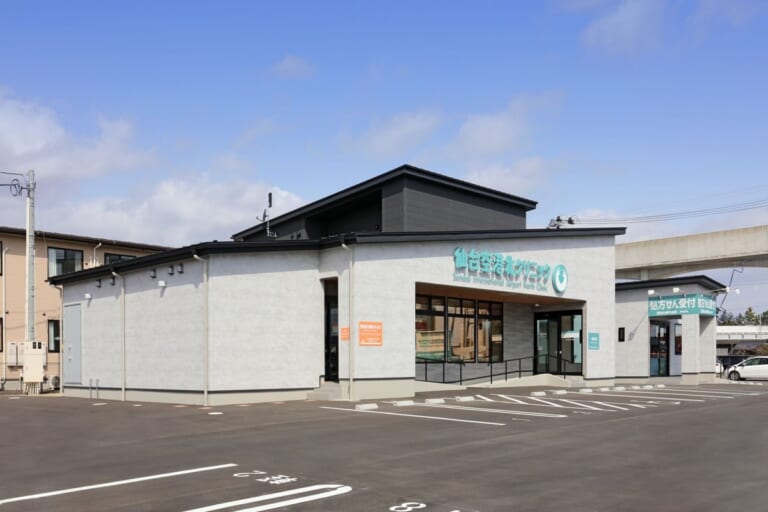
Sendai International Airport North Clinic (仙台空港北クリニック), 8-1-8 Mitazono, Natori, Miyagi, is about 10 minutes by car from Sendai International Airport. The director is Shunichi Gamo, M.D., Ph.D., board certified in internal medicine, pulmonology and allergology. The fever clinic has its own entrance with same-day QR check-in in English; you can walk in without arranging ahead. Hours: Monday, Tuesday, Wednesday, Friday and Saturday 10:00–12:00 and 14:30–18:00; Sundays and national holidays 10:00–15:00 (check the calendar on the clinic page); closed Thursdays. Children from age 0 are seen, and family members with fever can be seen together. For visitors without Japanese insurance, the fee is a flat USD 700, charged in yen by card or cash. It covers an English consultation and the BioFire SpotFire R Panel PCR (one nasal swab, about 15 minutes; 11 viruses including RSV and 4 bacteria; Group A strep is not on the panel). It also covers a same-day English certificate with ICD-10 codes and a prescription if needed. Medicines are paid separately at the pharmacy next door. Residents with Japanese insurance are seen under insurance. If danger signs are present, call 119 rather than travelling to a clinic.
References
- Virgili F, et al. Acute Bronchiolitis: The Less, the Better? Curr Pediatr Rev 2024.
- NHS. Bronchiolitis.
- HealthyChildren.org (AAP). RSV: When It’s More Than Just a Cold.
- Savic M, et al. RSV disease burden in adults aged 60 years and older in high-income countries. Influenza Other Respir Viruses 2023.
- Wildenbeest JG, et al. Respiratory syncytial virus infections in adults: a narrative review. Lancet Respir Med 2024.
- JNTO. For safe travels in Japan — Guide for when you are feeling ill.
- Norris CL, et al. Nasal Airway Clearance for Bronchiolitis. MCN 2018.
- Bigaud B, et al. Impact of multiplex PCR point-of-care platform implementation for respiratory pathogen detection. J Clin Microbiol 2026.
- Meltzer AC, et al. Point-Of-Care Respiratory Diagnosis and Antibiotic Utilization in the Emergency Department. Acad Emerg Med 2026.
- Casey SD, et al. Guideline-Discordant Bronchiolitis Care in Community Emergency Departments. J Pediatr 2026.
- Armarego M, et al. High-flow nasal cannula therapy for infants with bronchiolitis. Cochrane Database Syst Rev 2024.
- Drysdale SB, et al. Nirsevimab for Prevention of Hospitalizations Due to RSV in Infants. N Engl J Med 2023.
- Hammitt LL, et al. Nirsevimab for Prevention of RSV in Healthy Late-Preterm and Term Infants. N Engl J Med 2022.
- Walsh EE, et al. Efficacy and Safety of a Bivalent RSV Prefusion F Vaccine in Older Adults. N Engl J Med 2023.
- Simões EAF, et al. MATISSE Maternal RSV Prefusion F Protein Vaccine Trial. Obstet Gynecol 2025.