If you are in a hurry
- Spread within the household is common. One analysis found a secondary infection rate of 42.7% among household members for the COVID-19 Omicron variant[1]
- Spread to family tends to be concentrated in the first few days. Start precautions not “after a positive test” but “from the day the fever starts”
- People who are older, have chronic illness, or are pregnant should avoid being the caregiver. If there are signs such as trouble breathing, go to an emergency department or call 119 (Japan’s emergency number)
Hello. I am Shunichi Gamo, MD, PhD, a board-certified pulmonologist and the director of Sendai Airport North Clinic.
In the coming season, influenza and COVID-19 can easily pass from one family member to the next. At our fever clinic, we are often asked, “What can I do at home so I don’t pass it on to my family?”
Let me start with the conclusion: it is hard to completely avoid passing it on inside a home, but you can lower the chance. The key is to start “separate rooms, fresh air, masks for everyone, and separate towels” from the day the fever starts. In this article, as a respiratory specialist, I explain in plain terms what research shows about how much infection spreads at home, and practical tips for caring for a sick family member.
At our fever clinic, we give you the result of the PCR test (a test that copies the virus’s genetic material to detect it) on the same day.
Since October 4, 2026, our fever clinic is also open on Sundays and public holidays
10:00 to 15:00 (no lunch break). No appointment is needed; you are seen by checking in on the day. We give you the PCR test result on the same day. On Sundays and public holidays we run the fever clinic only, with no general outpatient care or IV drips. We are closed on Sunday, October 25, and from November we are in principle open every Sunday and public holiday. Announcement about the Sunday and public holiday fever clinic
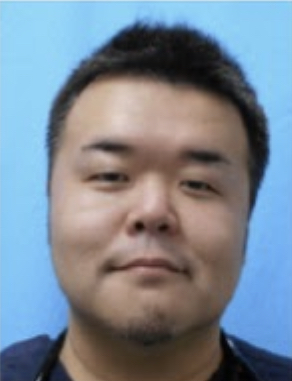
Shunichi Gamo, MD, PhD
Director, Sendai International Airport North Clinic
Born and raised locally, he attended Yuriage Elementary School and Yuriage Junior High School in Natori City. After graduating from Tohoku University School of Medicine, he worked at Sendai Open Hospital and Kesennuma City Hospital, and then at Tohoku University Hospital. In April 2021, in the middle of the COVID-19 pandemic, he opened Sendai International Airport North Clinic. Holding to a fever clinic that never turns patients away, he cared for well over 20,000 patients with fever in the two years before COVID-19 was moved to Class 5 under Japan’s infectious disease law.
Society memberships and board certifications
Certified Member and Board Certified Fellow, Japanese Society of Internal Medicine
Board Certified Pulmonologist, Japanese Respiratory Society
Board Certified Allergist, Japanese Society of Allergology
Board Certified Specialist, Japanese Society of Anti-Aging Medicine
PhD in Medicine (Tohoku University)
Conclusion: 8 points to reduce spread within the household
The precautions for the home compiled by the Japanese Society for Infection Prevention and Control, and introduced by the Ministry of Health, Labour and Welfare, are the following 8[2]. They were written for COVID-19, but the basics are the same for influenza and other infections spread by coughing and sneezing.
- [Rooms]
Separate the room of the person with a fever as much as possible - [Caregiver]
Limit it to as few people as possible (one person is ideal) - [Masks]
Have everyone wear a mask as much as possible (do not put masks on children under 2) - [Hand washing]
Gargle and wash your hands often - [Ventilation]
Ventilate as much as possible during the day - [Disinfection]
Disinfect places everyone touches, such as handles and doorknobs - [Laundry]
Wash soiled sheets and clothing - [Trash]
Seal used tissues and similar items before throwing them away
If you try to do everything perfectly, the caregiver gets worn out. It is fine to do what you can. Below, I go through practical tips one by one.
How much is passed on to family? What the research shows
The share of household members who catch the illness from the first person to get sick at home is called the “household secondary attack rate.”
About 2 in 10 household members for COVID-19, and one analysis found about 4 in 10 for Omicron
An analysis that pooled data from 54 studies around the world, covering 77,758 people in total, found a household secondary attack rate for COVID-19 of 16.6% (95% confidence interval, the range the true value probably falls within: 14.0 to 19.3%)[3].
This is called a systematic review and meta-analysis (a method that gathers the relevant studies by a set procedure without leaving any out and statistically combines their numbers into one), a highly reliable way of studying a question.
The same analysis found a high 37.8% for spouses, 18.0% from people with symptoms, and 0.7% from people without symptoms[3]. In a 2022 update by the same research group that added newer studies, the household secondary attack rate for the Omicron variant rose to 42.7% (7 studies)[1].
In other words, the closer a family member is to the sick person, especially while symptoms are present, the more easily they catch it.
Even in Japanese data on about a million people, spread from children stands out
There is a study using Japanese health insurance claims data. From November 2021 to August 2023, it examined about 1 million people first diagnosed with COVID-19 and about 210,000 with influenza[4].
When the first person to get sick was a child under 12, the share of cases in which someone living in the same home was diagnosed with the same illness within about a week was 40.17% for COVID-19 and 33.51% for influenza[4]. This is higher than for any other age.
Also, the time from the first person’s diagnosis to a family member’s diagnosis averaged 2.8 days for COVID-19 and 2.5 days for influenza[4]. That means spread to family tends to be concentrated in the first few days.
So I recommend starting precautions not “after a positive test” but from the day the fever starts.
How should you separate rooms? Take care when sleeping, too
The person with a fever should stay in a well-ventilated room with a window and, as far as possible, not leave it[2]. Ideally, meals and sleep are in a separate room as well[2].
- If you cannot separate rooms, keep at least 2 m (about 6.5 ft) apart and put up a partition or curtain[2]
- If you sleep in the same room, do not line up the pillows; place them head to foot to keep faces apart[2]
- Stagger mealtimes or eat in separate rooms, and do not eat facing each other
- Keep use of shared spaces such as the toilet and washroom to a minimum, and ventilate after use[2]
I know many families cannot separate rooms, for example because the children are small or there are few rooms. In that case, make up for it with “distance” and “air flow.”
How do you ventilate in cold weather? Open the window a little, and keep it open
The trick for ventilating in cold weather is to open the window just a little and keep ventilating continuously. Some of the tiny droplets released when we cough, sneeze, or talk stay floating in the air for a while. In a room with the windows shut, they build up easily. This is why ventilation matters so much in preventing respiratory infections.
But in the coming season, if you keep the windows wide open and it stays cold, neither the caregiver nor the person with a fever can hold up. The Ministry of Health, Labour and Welfare’s winter ventilation guidance (originally written for commercial facilities) has tips that work at home too[5].
- [Open the window a little, and keep it open]
Rather than opening it wide once in a while, opening a window on one side a little and ventilating continuously keeps the room temperature from dropping as much - [Open a window near a heater]
The cold air coming in is warmed. Mind the distance from flammable things such as curtains - [Room temperature 18°C (64°F) or higher, humidity 40% or higher]
Adjust how wide you open the window so you can stay within this range[5]. Using a humidifier as well is also effective - [Two-step ventilation]
Open the window in an unoccupied room and let slightly warmed air come in through the hallway
You can also run an air conditioner or exhaust fan, or open windows during the warm part of the day[2]. Note, though, that some air conditioners only circulate the air inside the room and do not bring in outside air[5]. Combine them with windows or an exhaust fan.
In practice, I recommend keeping the door of the sick person’s room closed as much as possible and letting that room’s air out through a window or exhaust fan. The point is not to leave the room’s door wide open and circulate that air through the whole house.
An air purifier is not a substitute for ventilation but a supplement to it[5]. It is said that you cannot get enough benefit from keeping the windows shut and relying on an air purifier alone[5]. If you use one, a guide is a model with a HEPA filter (a filter that traps very fine particles) and an air flow of about 5 m³ per minute or more[5].
Tips for masks: for the sick person and the caregiver
Masks help keep the virus from spreading when both the person with a fever and the family members wear them[2]. However, do not put a mask on a child under 2. It makes breathing harder and can cause suffocation. Take the mask off during sleep and also when there is nausea or trouble breathing. It is important to wear it correctly, fitted snugly to the face without gaps[6].
- Shape the wire at the nose to your nose, and cover fully down under the chin
- When taking it off, do not touch the front; pinch the ear loops or ties[2]
- Do not carry a used mask to other rooms; leave it at the room’s entrance or throw it away right away[2]
- Always wash your hands with soap after taking it off (alcohol hand rub is also fine)[2]
- If it gets wet or dirty from coughing or a runny nose, replace it with a new one right away[2]
The key with masks and hand washing is to start early
A study in Hong Kong examined 407 people who tested positive for influenza on a rapid test and 794 of their household contacts (259 households)[7]. It was a cluster randomized controlled trial (a method that assigns households to groups, like drawing lots, to compare the effect of precautions).
In fact, looking at everyone together, the effect of hand washing and masks did not show a clear difference[7]. However, in the 154 households where precautions began within 36 hours of the first person’s symptoms, the group using masks plus hand washing had fewer infections among family members[7].
The adjusted odds ratio here (a number that compares how likely something is after matching other factors; below 1 means less likely) was 0.33 (95% confidence interval 0.13 to 0.87)[7].
Roughly speaking, it means masks and hand washing work best started “from the day the fever starts” rather than “after a positive test”.
How should you handle towels, dishes, handles, and trash?
For towels, dishes, handles, and trash, the basics are to avoid sharing them, or to wipe or seal them after use[2]. These shared items are surprisingly easy to overlook.
- [Towels]
Do not share towels in the toilet, washroom, or kitchen. Switching to paper towels is one option - [Dishes and chopsticks]
Do not share them before washing. Washing as usual is fine; separate washing is not needed - [Handles and doorknobs]
Wipe with diluted chlorine bleach (0.05% sodium hypochlorite), then wipe again with water[2]. Wiping with alcohol is also fine - [Laundry]
Handle clothing and sheets soiled with body fluids while wearing gloves and a mask, wash them with ordinary detergent, and dry them thoroughly - [Trash]
Put used tissues straight into a plastic bag, and tie the bag shut when taking it out of the room to throw away. Then wash your hands
Note that for stomach illnesses with vomiting and diarrhea, such as norovirus, disinfection is a little different. Please also see our article on norovirus.
Who should be the caregiver? People who are older, have chronic illness, or are pregnant should avoid it
I recommend deciding on just one caregiver if possible[2]. Keep caregiving time as short as you can and reduce the time you spend close to the patient[6].
People like the following are more likely to become seriously ill if infected, so they should avoid being the caregiver and reduce contact with the person who has a fever as much as possible[2][6].
- Older people
- People with chronic heart, lung, or kidney disease
- People with diabetes
- People with weakened immunity (for example, during chemotherapy or steroid treatment)
- People who are pregnant
- Infants and young children
I know there are families where a child has a fever and the mother is pregnant. If possible, have another family member take over the caregiving; if that is difficult, be even more careful than usual with masks, ventilation, and hand washing.
 Dr. Gamo
Caring for someone while also protecting yourself is truly hard. You do not have to be perfect, so please start with what you can do.
Antiviral medicine for influenza can sometimes be used to protect family members
For influenza, antiviral medicine is sometimes used to prevent illness in family members. There is a study in Japan, in the 2018-2019 season, of 752 household members of people with influenza[8].
This study was a randomized controlled trial (a highly reliable method that splits people into two groups, like drawing lots, and compares them). Among the group that took a single dose of a medicine called baloxavir, 1.9% developed influenza, compared with 13.6% in the placebo group (a dummy medicine with no active ingredient)[8].
However, this study covered household members broadly, not only people at higher risk of becoming seriously ill. In Japan, using an antiviral medicine for prevention has set conditions, such as who is eligible and when it must be started, so it is not available to everyone. If someone in your family is older or has a chronic illness and you are worried, please ask the doctor at your visit. The influenza medicines themselves (including when to start taking them) are explained in detail in the related articles (links below).
Signs not to miss while caring for someone
While caring for a family member, please check on the person with the fever every day. In the following cases, go to an emergency department or call 119 rather than waiting for the fever clinic.
- Trouble breathing, very fast breathing, or breathing with the shoulders
- Lips or face look purplish or pale
- Slow to respond when called, confused, or limp and unable to move
- Cannot take any fluids and has passed no urine for half a day or more
- Chest pain that continues
Even without these danger signs, if the fever continues, the cough is getting worse, or a fever that had gone down rises again, please see a doctor early.
If the family member who is caring for someone gets a fever
If a family member who is caring for someone develops a fever, that is the time for that person to consider visiting a fever clinic, too. For COVID-19, counting the day symptoms began in the sick person as day 0, family members should be especially careful for 5 days, and may become ill up to day 7[6]. How to think about it when a family member tests positive and you develop a fever is covered in the related article (link below).
Also, a person who has COVID-19 is advised to stay home for 5 days after symptoms begin and until about 24 hours after symptoms have eased[6]. Until 10 days have passed, wear a mask and take care not to pass it on to those around you[6].
Our fever clinic: no appointment needed, open on Sundays and public holidays too
The fever clinic at Sendai Airport North Clinic (Mitazono, Natori City) does not use appointments for a set time; we see you after a pre-visit questionnaire and same-day check-in. Our policy is not to turn anyone away from the fever clinic (depending on the symptoms, we may direct you to a more suitable medical institution).
| Day | Hours |
|---|---|
| Mon, Tue, Wed, Fri, Sat | 9:00-12:00 / 14:00-18:00 |
| Sundays and public holidays (from October 4, 2026) | 10:00-15:00 (no lunch break, fever clinic only) |
| Thursday | Closed |
On Sundays and public holidays we are open from 10:00 to 15:00. We are closed on Sunday, October 25, and from November we are in principle open every Sunday and public holiday. On Sundays and public holidays we run the fever clinic only; general outpatient care and IV drips are not available. For details, see the announcement about the Sunday and public holiday fever clinic.
How a visit works
You check in with the QR code (a square pattern read with a smartphone camera) at the fever clinic entrance. When your turn is near, we call you by SMS (a mobile text message) or by phone.
- Before you come, fill in the pre-visit questionnaire (optional; you may also fill it in when you check in at the entrance)
- Scan the QR code at the fever clinic entrance and check in by choosing “I have arrived, so I will check in” (required)
- On weekdays, once you have checked in, please wait in your car
- On Sundays and public holidays, after check-in your insurance card (My Number insurance card, certificate of eligibility, and so on) is checked at the general outpatient entrance. We do not run general outpatient care on those days, so please come in without hesitation. When the check is done, please wait in your car or similar
- When your turn is near, we call you by SMS or by phone. Press the intercom at the fever clinic entrance and give your name
In principle we see people in the order they checked in, but the order can change depending on how severe the symptoms are. We give you the PCR test result on the same day. For details, see About the fever clinic pre-visit questionnaire and same-day check-in.
Frequently asked questions
- A family member has influenza. What should we do if we can’t separate rooms?
-
If you cannot separate rooms, keep at least 2 m (about 6.5 ft) from the person with a fever and put up a partition or curtain. When sleeping, place pillows head to foot to keep faces apart, keep a window open a little to ventilate continuously, and have everyone wear a mask as much as possible (except children under 2 and while asleep).
- How wide should I open the window to ventilate in cold weather?
-
Rather than opening it wide once in a while, opening a window on one side a little and ventilating continuously is said to keep the room temperature from dropping as much. The trick is to adjust how wide you open it so you can keep the room at 18°C (64°F) or higher and humidity at 40% or higher, and to open a window near a heater[5].
- When caring for someone, should I wear a mask all the time, even at home?
-
When you are near the person with a fever, or in the same room, I recommend that both the sick person and the caregiver wear masks. When taking one off, pinch the ear loops or ties, and then wash your hands with soap.
- Do I need to wash the sick person’s towels and dishes separately?
-
Separate washing is not needed; your usual laundry and dishwashing are fine. What matters is not sharing towels and dishes before they are washed. In particular, avoid sharing towels in the toilet, washroom, and kitchen, for example by switching to paper towels.
- I am caring for a family member and now I have a fever too. Can I go to the clinic?
-
Yes, please visit the fever clinic. If you know your family member has influenza or COVID-19, it helps to tell us in the pre-visit questionnaire or at check-in. If you have trouble breathing or are confused, go to an emergency department or call 119.
Summary: from the day the fever starts, rooms, ventilation, masks, and towels
- Spread within the household is common. One analysis found a secondary infection rate of 42.7% among household members for the COVID-19 Omicron variant[1]
- Spread to family tends to be concentrated in the first few days. Start precautions not “after a positive test” but “from the day the fever starts”
- Separate rooms, and keep your distance when sleeping, too. If you can’t separate, use a distance of 2 m or more and a partition
- In cold weather, open a window on one side a little and keep ventilating. An air purifier supplements ventilation
- Masks for both the sick person and the caregiver. Do not share towels, wipe handles, and seal the trash
- People who are older, have chronic illness, or are pregnant should avoid being the caregiver. If there are signs such as trouble breathing, go to an emergency department or call 119
Caring for a family member takes energy and spirit. Please look after your own health, too. If you develop a fever, please come early. Leave the medical care to us.
That’s all.
Disclaimer
This article is intended to provide general medical information and does not replace an examination, diagnosis, or treatment by a doctor. The content is based on medical knowledge at the time of publication, but the right response differs from person to person. If you are worried about your symptoms, please consult a medical institution.
References
- Madewell ZJ, Yang Y, Longini IM, Halloran ME, Dean NE. Household Secondary Attack Rates of SARS-CoV-2 by Variant and Vaccination Status: An Updated Systematic Review and Meta-analysis. JAMA Netw Open. 2022 Apr;5(4):e229317. doi:10.1001/jamanetworkopen.2022.9317 PMID: 35482308
- Ministry of Health, Labour and Welfare. Precautions at home when someone is suspected of having a novel coronavirus infection (compiled by the Japanese Society for Infection Prevention and Control) (in Japanese). Ministry of Health, Labour and Welfare website. Accessed October 2026. https://www.mhlw.go.jp/stf/seisakunitsuite/newpage_00009.html
- Madewell ZJ, Yang Y, Longini IM, Halloran ME, Dean NE. Household Transmission of SARS-CoV-2: A Systematic Review and Meta-analysis. JAMA Netw Open. 2020 Dec;3(12):e2031756. doi:10.1001/jamanetworkopen.2020.31756 PMID: 33315116
- Komiya K, Miyazawa S, Yoshida Y, Kojima S, Hagiwara A, Kitanishi Y. Household Transmission of COVID-19 and Influenza During the Early Omicron Era: An Insurance Claims Database Study in Japan. Viruses. 2026 Mar;18(3):324. doi:10.3390/v18030324 PMID: 41902232
- Ministry of Health, Labour and Welfare. On ventilation to improve “poorly ventilated, enclosed spaces” in winter (November 27, 2020) (in Japanese). Ministry of Health, Labour and Welfare. 2020. https://www.mhlw.go.jp/content/000698866.pdf
- Ministry of Health, Labour and Welfare. Key points when a family member is infected with the novel coronavirus (prepared May 8, 2023) (in Japanese). Ministry of Health, Labour and Welfare. 2023. https://www.mhlw.go.jp/content/001093683.pdf
- Cowling BJ, Chan KH, Fang VJ, Cheng CK, Fung RO, Wai W, et al. Facemasks and hand hygiene to prevent influenza transmission in households: a cluster randomized trial. Ann Intern Med. 2009 Oct;151(7):437-46. doi:10.7326/0003-4819-151-7-200910060-00142 PMID: 19652172
- Ikematsu H, Hayden FG, Kawaguchi K, Kinoshita M, de Jong MD, Lee N, et al. Baloxavir Marboxil for Prophylaxis against Influenza in Household Contacts. N Engl J Med. 2020 Jul;383(4):309-320. doi:10.1056/NEJMoa1915341 PMID: 32640124
More articles to read about fever
For the Sunday and public holiday fever clinic, see the announcement about the Sunday and public holiday fever clinic; for how to come in, see About the fever clinic pre-visit questionnaire and same-day check-in.