If you are in a hurry
- The Hib and pneumococcal vaccines are given as 3 doses plus 1 booster, starting at 2 months of age, and they have greatly reduced severe meningitis and other serious infections in babies and young children[1][2]
- If your child is having a seizure, does not respond when you call, or suddenly seems to be struggling to breathe, call 119 (Japan’s emergency number)
- Vaccines can be given at the same visit when the doctor considers it necessary, and there is no minimum number of days required between these and other vaccines[2][3]
Hello. I am Shunichi Gamo, MD, PhD, a board-certified pulmonologist and the director of Sendai Airport North Clinic.
As your baby nears 2 months of age and you look at the vaccination pages of your Maternal and Child Health Handbook, have you ever felt worried like this?
“What do the Hib and pneumococcal vaccines actually prevent?”
Many parents also worry, “Is it really all right for my baby to get several shots at once?”
To give you the answer first: the Hib and pneumococcal vaccines follow a “3 doses plus 1 booster” schedule starting at 2 months of age. They have greatly reduced severe meningitis and other serious infections in babies and young children[1][2].
In this article, I explain from a doctor’s point of view the routine vaccination schedule, the type of pneumococcal vaccine that changed in 2024, and how much serious infections have decreased in Japan. I also cover side effects, giving several vaccines at the same visit, and the signs that mean you should seek care urgently.
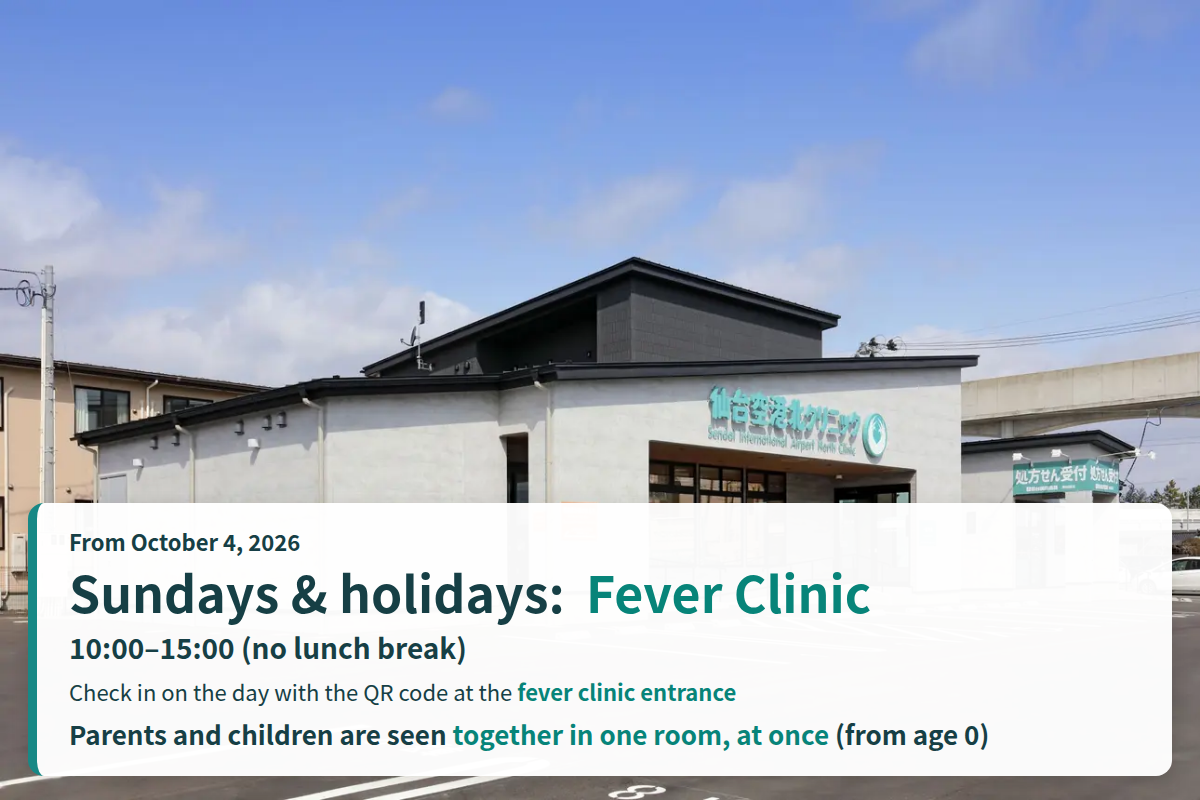
First, a note about our fever clinic on Sundays and national holidays. PCR testing for influenza and COVID (a test that copies the virus’s genetic material in order to detect it) gives results the same day.
From October 4, 2026, we also run the fever clinic on Sundays and national holidays
10:00 to 15:00 (no lunch break). You check in on the day. We give you the PCR result the same day. On Sundays and holidays we see fever patients only, and we do not offer general outpatient care or IV drips. Please check the clinic calendar for clinic dates and closed days. Notice: fever clinic on Sundays and national holidays
Shunichi Gamo, MD, PhD
Director, Sendai International Airport North Clinic
Born and raised locally, he attended Yuriage Elementary School and Yuriage Junior High School in Natori City. After graduating from Tohoku University School of Medicine, he worked at Sendai Open Hospital and Kesennuma City Hospital, and then at Tohoku University Hospital. In April 2021, in the middle of the COVID-19 pandemic, he opened Sendai International Airport North Clinic. Holding to a fever clinic that never turns patients away, he cared for well over 20,000 patients with fever in the two years before COVID-19 was moved to Class 5 under Japan’s infectious disease law.
Society memberships and board certifications
Certified Member and Board Certified Fellow, Japanese Society of Internal Medicine
Board Certified Pulmonologist, Japanese Respiratory Society
Board Certified Allergist, Japanese Society of Allergology
Board Certified Specialist, Japanese Society of Anti-Aging Medicine
PhD in Medicine (Tohoku University)
When do the Hib and pneumococcal vaccines start?
The standard schedule for the Hib and pneumococcal vaccines is “3 doses plus 1 booster,” starting at 2 months of age[1][2].
For the pneumococcal vaccine, the Ministry of Health, Labour and Welfare explains, “The first series is given from 2 months of age, and after a certain period a booster dose is given”[1].
Since fiscal year 2024, Hib has mainly been given as part of the 5-in-1 combination vaccine (DPT-IPV-Hib: a vaccine that combines whooping cough, diphtheria, tetanus, polio, and Hib)[2]. The first series is 3 doses between 2 and 7 months of age, at least 20 days apart (standard: 20 to 56 days). The booster is 1 dose given at least 6 months after the first series (standard: 6 to 18 months)[2].
For the pneumococcal vaccine, the first series is 3 doses about 1 month apart starting at 2 months of age. One booster dose is then given at 12 months of age or later, at least 60 days after the last dose[1].
| Vaccine | First series | Booster |
|---|---|---|
| 5-in-1 combination (includes Hib) | 3 doses between 2 and 7 months of age, at least 20 days apart (standard: 20 to 56 days)[2] | 1 dose at least 6 months after the first series (standard: 6 to 18 months)[2] |
| Pneumococcal (PCV) | 3 doses about 1 month apart, starting at 2 months of age[1] | 1 dose at 12 months of age or later, at least 60 days after the last dose[1] |
There are also detailed rules, such as how the number of doses changes with the age at which the first series starts. Please check them in your Maternal and Child Health Handbook, with your local municipality, or at the medical facility where your child is vaccinated[1][2].
 Dr. Gamo
When your baby turns 2 months, check the handbook and your municipality’s guide first, and start early.
Which pneumococcal vaccine is used now? It changed in 2024
Since October 2024, the 20-valent vaccine PCV20 is used in principle. The 15-valent PCV15 can also be used[1].
The Ministry of Health, Labour and Welfare states, “From October 2024, as a rule, the adsorbed 20-valent pneumococcal conjugate vaccine (PCV20) is used. The adsorbed 15-valent pneumococcal conjugate vaccine (PCV15) can also be used”[1].
PCV15 had been used for routine vaccination since April 2024[1][4]. There are more than 90 types of pneumococcus; PCV15 protects against 15 of them, and PCV20 against 20[1].
Children who started with PCV15 should, in principle, complete all doses with PCV15[1][4]. The Japan Pediatric Society also says that switching from PCV13 to PCV20 is possible, but because data on switching from PCV15 to PCV20 are not established, it asks that the series be completed with PCV15 in principle[4].
| Pneumococcal vaccine | Use in routine vaccination |
|---|---|
| PCV13 | From November 2013. Replaced by PCV20 in October 2024[1][4] |
| PCV15 | Available from April 2024[1][4] |
| PCV20 | Available from October 2024. This is the one used in principle[1] |
What matters is to keep to the standard schedule with the vaccine that is available, and there is said to be no need to wait for a newer vaccine[1].
Dr. GamoThere is no need to wait for a newer vaccine; it is fine to go ahead on schedule with the one available.
What is the current situation with the Hib vaccine? (5-in-1 combination)
Since fiscal year 2024, Hib has mainly been given as part of the 5-in-1 combination vaccine. A single (Hib-only) vaccine can also be used[2][3].
Dr. GamoA Hib-only vaccine can also be used, but today it is mainly given as part of the 5-in-1 vaccine.
The 5-in-1 combination vaccine combines whooping cough, diphtheria, tetanus, inactivated polio, and Hib, and it has been available for routine vaccination since April 2024[3].
Hib disease is caused by a bacterium called Haemophilus influenzae type b, and almost all cases occur in children under 5, so particular care is needed in babies and young children[2]. Many children also carry the bacterium without any symptoms[2].
Have vaccines reduced serious infections in Japan?
Yes. Japanese data show that meningitis caused by Hib has almost disappeared since routine vaccination began, and invasive pneumococcal disease has also decreased greatly[1][2].
According to the Ministry of Health, Labour and Welfare, the rate of Haemophilus influenzae meningitis per 100,000 children under 5 fell by 100%, from 7.7 in 2008-2010 to 0.0 in 2014, after Hib vaccination became routine[2]. Invasive Haemophilus influenzae disease other than meningitis also fell by 90%, from 5.1 to 0.5[2].
Another summary (JIHS) reported that the rate of Hib meningitis in 2008-2010 was 7.5 to 8.2 per 100,000, and that Hib disease was almost no longer seen in 2014, after routine vaccination began[5]. Because the figures differ slightly depending on the source and the year, it is important to read them by source and by period.
For pneumococcus, invasive pneumococcal disease fell by about 80%, from about 24-26 per 100,000 children under 5 in 2008-2010 to about 4.8 in 2022[1].
In a nationwide surveillance study by Suga and colleagues (10 prefectures, covering about 23% of the population), invasive Haemophilus influenzae disease in children under 5 fell by 93% in 2013-2017 compared with 2008-2012 (IRR 0.07, 95% CI 0.05-0.10, p<0.001). Since 2014, no Hib strains have been isolated from invasive infections[6].
In a nationwide survey by Shinjoh and colleagues, hospital admissions for bacterial meningitis fell from 1.19 per 1,000 admissions (2009-2010) to 0.37 (2013-2015). H. influenzae fell from 0.66 to 0.01, and S. pneumoniae from 0.30 to 0.09[7].
Takeuchi and colleagues reported that invasive pneumococcal disease in children under 5 fell by 21.3% in 2014-2019 compared with 2011-2013, before PCV13 was introduced[8].
However, some types of pneumococcus are not covered by the vaccine, and pneumococcal disease can still develop after vaccination[1]. Even now that the Hib vaccine is widely used, other Haemophilus influenzae, such as non-encapsulated strains, remain[5].
Dr. GamoThe numbers show a decrease, not zero. So even after vaccination, stay alert if a fever lasts or your child does not seem right.
What kind of illness is meningitis? Can it leave lasting effects?
Meningitis is a serious infection that occurs when bacteria get into the cerebrospinal fluid (the fluid that surrounds the brain and spinal cord), and it is treated with antibiotics[5].
In pneumococcal meningitis, it is said that 2% of children die, and 10% are left with lasting effects such as hearing loss, delayed mental development, paralysis of the arms or legs, or epilepsy[1]. The risk is considered especially high in babies under 1 year old[1].
It is said that 3 to 6% of children with Hib disease die, and that in meningitis, 20% of the children who survive are left with lasting effects such as hearing loss[2].
Meningitis causes symptoms such as headache, fever, a stiff neck, seizures, and reduced consciousness[5]. Hib meningitis may start with a fever and progress to seizures and reduced consciousness[2]. Seeing a doctor early is important.
Dr. GamoIt can start with a fever and progress to seizures or changes in consciousness. Please watch closely for changes in your child.
For more on meningitis, please also see this article.
Are there side effects?
The most common are redness, swelling, and a hard lump at the injection site, and fever. Serious side effects are rare[1][2].
In the clinical trials of the 5-in-1 combination vaccine presented by the Ministry of Health, Labour and Welfare, the BIKEN vaccine was given under the skin. Fever (37.5°C or higher) occurred in 57.9%, redness at the injection site in 78.9%, hardening in 46.6%, and swelling in 30.1%[2]. With the KM Biologics vaccine, by 6 days after vaccination, fever occurred in 65.2%, redness in 75.7%, hardening in 51.0%, and swelling in 38.1%[2].
Fever occurs more often with the 5-in-1 vaccine than with other vaccines. The Ministry of Health, Labour and Welfare notes that giving it together with other vaccines may play a part, but states that no major safety concerns have been raised[2].
For the pneumococcal vaccine, rarely reported serious side effects include shock, anaphylaxis, seizures, and thrombocytopenic purpura (a condition in which a low platelet count causes bruising and bleeding)[1].
If your child has a fever or a serious acute illness, the vaccine is given after recovery[1][2].
Dr. GamoA fever after vaccination is not always caused by the vaccine. Watch more closely for low energy or not drinking.
Is it all right to give several vaccines at the same visit?
Several vaccines can be given at the same visit when the doctor considers it necessary, and there is no minimum number of days required between these and other vaccines[2][3].
On giving these vaccines at the same visit as other vaccines, the Ministry of Health, Labour and Welfare states that this “can be done only when the doctor considers it necessary”[2][3].
However, the Hib vaccine must not be mixed with another vaccine and given in a single syringe[2][3].
The Japan Pediatric Society also sets no required interval between vaccines, and states that vaccines can be given at the same visit when the doctor considers it particularly necessary[4].
Dr. GamoDecide which vaccines to give together with the vaccinating doctor, taking your child’s condition that day into account.
Signs that you need care urgently: 119 and the emergency department
If your child is having a seizure, does not respond when you call, or suddenly seems to be struggling to breathe, call 119 without hesitation. The same applies at night and on holidays.
Call 119 right away
- Is having a seizure
- Does not answer when you call, or is drowsy and confused (not fully conscious)
- Suddenly seems to be struggling to breathe, is heaving the shoulders to breathe, or has purplish lips
- Has symptoms that suggest anaphylaxis (hives, a swollen throat, limpness, difficulty breathing)
Go to an emergency department the same day, even at night or on a holiday
In the following cases, do not wait until morning; go to an emergency department, even at night or on a holiday.
- Can hardly drink anything, or has not urinated for half a day or more
- Is limp and has no energy, or looks pale
- Has a fever that continues, with a stiff neck, repeated vomiting, or drowsiness
A nationwide survey of bacterial meningitis reported reduced consciousness and seizures as risk factors for death and lasting effects[7]. If your child has these signs, do not hesitate to call 119 or go to an emergency department.
If you are unsure, call an advice line
If you are unsure what to do at night or on a holiday, you can also use your local government’s children’s emergency advice line (#8000) or the emergency advice line (#7119). However, if there are clearly dangerous signs, skip the advice line and call 119.
Dr. GamoKeeping the #8000 and #7119 numbers where you can see them right away gives peace of mind.
Frequently asked questions
- Is it all right for my baby to get several shots at once from 2 months of age?
-
Vaccines can be given at the same visit when the doctor considers it necessary, and there is no minimum number of days required between them[2][3]. Fever is more common with the 5-in-1 vaccine than with other vaccines, and it has been pointed out that giving it with other vaccines may play a part, but no major safety concerns have been raised[2]. Decide with the doctor, taking your baby’s condition that day into account.
- I heard the pneumococcal vaccine is PCV13. Is that different now?
-
Since October 2024, PCV20 is used in principle. PCV15 can also be used[1]. If your child started with PCV15, all doses should in principle be completed with PCV15[1][4].
- If my child is vaccinated, does that mean they will not get meningitis?
-
Vaccines have greatly reduced it, but some types of pneumococcus are not covered by the vaccine, and the disease can still develop after vaccination[1]. Since the Hib vaccine became widespread, non-encapsulated strains and others remain[5]. If a fever continues or the neck is stiff, see a doctor early. If your child is having a seizure, call 119.
- Can my child be vaccinated with a fever?
-
If your child has a fever or a serious acute illness, the vaccine is given after recovery[1][2]. If it is just a cold and you are unsure, ask the medical facility that will give the vaccine.
- My baby got a fever after the vaccine. What should I do?
-
Fever after vaccination is a common reaction, but do not assume it is due to the vaccine; if your baby has no energy or cannot drink, see a doctor. If your baby is having a seizure, does not respond when you call, or suddenly seems to be struggling to breathe, call 119. The fever can sometimes be brought down with a fever reducer such as acetaminophen (for example, Calonal). Use it as your doctor tells you. If you are unsure, see a doctor.
Summary: The Hib and pneumococcal vaccines start at 2 months of age
- The Hib and pneumococcal vaccines are given as 3 doses plus 1 booster, starting at 2 months of age, and they have greatly reduced severe meningitis and other serious infections in babies and young children[1][2]
- If your child is having a seizure, does not respond when you call, or suddenly seems to be struggling to breathe, call 119
- Vaccines can be given at the same visit when the doctor considers it necessary, and there is no minimum number of days required between these and other vaccines[2][3]
- Since October 2024, PCV20 is used in principle for pneumococcus, and Hib is mainly given as the 5-in-1 combination vaccine[1][2]
- Fever after vaccination is a common reaction. If your child has no energy, see a doctor early, and call 119 for danger signs
Vaccines that protect babies from serious infections start at 2 months of age. If you are unsure about the schedule or about giving several vaccines at once, bring your Maternal and Child Health Handbook and ask early. Leave the medical care to us.
That’s all.
Disclaimer
This article is intended to provide general medical information and does not replace an examination, diagnosis, or treatment by a doctor. The content is based on medical knowledge at the time of publication, but the right course of action differs for each person. If you are worried about symptoms, please consult a medical facility.
References
- Ministry of Health, Labour and Welfare. Pneumococcal vaccine for children. MHLW website (Vaccination and vaccine information; Q&A, March 10, 2026 version) (in Japanese). Accessed October 2026. https://www.mhlw.go.jp/stf/seisakunitsuite/bunya/kenkou_iryou/kenkou/kekkaku-kansenshou/yobou-sesshu/vaccine/pneumococcus-child/index.html
- Ministry of Health, Labour and Welfare. 5-in-1 combination vaccine. MHLW website (Vaccination and vaccine information; Hib Q&A, March 10, 2026 version) (in Japanese). Accessed October 2026. https://www.mhlw.go.jp/stf/seisakunitsuite/bunya/kenkou_iryou/kenkou/kekkaku-kansenshou/yobou-sesshu/vaccine/dpt-ipv-hib/index.html
- Ministry of Health, Labour and Welfare. Haemophilus influenzae type b (Hib) vaccine Q&A (updated March 29, 2024) [PDF]. MHLW website (in Japanese). Accessed October 2026. https://www.mhlw.go.jp/content/10900000/001237337.pdf
- Japan Pediatric Society, Committee on Immunization and Infectious Disease Control. Views on routine vaccination with pneumococcal conjugate vaccines in children. Japan Pediatric Society website (in Japanese). Accessed October 2026. https://www.jpeds.or.jp/society-activities/pediatric-medical-care/vaccination/opinion/20622.html
- Japan Institute for Health Security (JIHS). Invasive Haemophilus influenzae disease. Infectious disease information website (in Japanese). Accessed October 2026. https://id-info.jihs.go.jp/infectious-diseases/invasive-haemophilus-influenzae-disease/index.html
- Suga S, Ishiwada N, Sasaki Y, Akeda H, Nishi J, Okada K, et al. A nationwide population-based surveillance of invasive Haemophilus influenzae diseases in children after the introduction of the Haemophilus influenzae type b vaccine in Japan. Vaccine. 2018 Sep;36(38):5678-5684. doi:10.1016/j.vaccine.2018.08.029 PMID: 30122645
- Shinjoh M, Yamaguchi Y, Iwata S. Pediatric bacterial meningitis in Japan, 2013-2015 – 3-5 years after the wide use of Haemophilus influenzae type b and Streptococcus pneumoniae conjugated vaccines. J Infect Chemother. 2017 Jul;23(7):427-438. doi:10.1016/j.jiac.2017.02.014 PMID: 28456490
- Takeuchi N, Chang B, Ishiwada N, Cho Y, Nishi J, Okada K, et al. Nationwide population-based surveillance of invasive pneumococcal disease in children in Japan (2014-2022): impact of 13-valent pneumococcal conjugate vaccine and COVID-19 pandemic. Vaccine. 2025 Apr;54:127138. doi:10.1016/j.vaccine.2025.127138 PMID: 40252365
Related articles