If you are in a hurry
- Choose an antigen test when you want an answer quickly. Choose a PCR test when you do not want to miss an infection, or when symptoms continue despite a negative result.
- If the person’s alertness is abnormal, they do not respond when called, a seizure does not stop, or breathing is so hard that they cannot speak, call 119 (Japan’s emergency number) without waiting for a test.
- A negative antigen test does not rule out infection. If symptoms continue, get retested after some time or have a PCR test.
Hello. I am Shunichi Gamo, MD, PhD, a board-certified pulmonologist and the director of Sendai Airport North Clinic.
You have a fever, you try an antigen test kit from the drugstore, and it is negative. But the fever and sore throat continue. At times like this, many people wonder, “Should I have an antigen test or a PCR test?”
To state the conclusion first, the basic rule is an antigen test when you want a quick and easy answer, and a PCR test (a test that copies the virus’s genetic material to detect it) when you do not want to miss an infection or when symptoms continue despite a negative result. With an antigen test, a “positive” is fairly trustworthy, but a “negative” alone cannot rule out infection.
In this article, as a pulmonologist, I explain antigen tests (qualitative and quantitative) and PCR tests: their sensitivity and specificity, the time to results, how performance changes with the number of days since onset, and when to retest after a negative result.
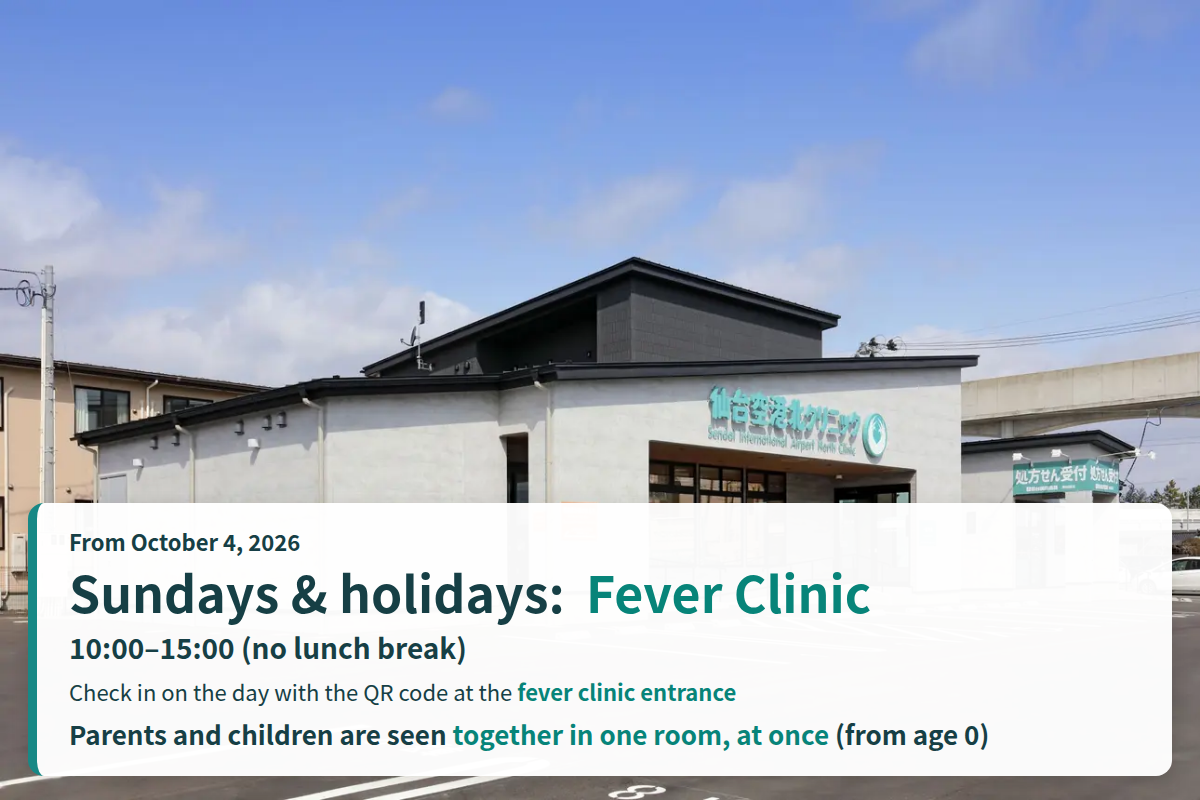
First, a note about our Sunday and holiday fever clinic. For influenza and COVID-19, PCR testing (a test that copies the virus’s genetic material to detect it) gives results the same day.
From October 4, 2026, we also run the fever clinic on Sundays and holidays
10:00 to 15:00 (no lunch break). You check in on the day. We give you the PCR result the same day. On Sundays and holidays we see fever patients only, and we do not offer regular outpatient care or IV drips. Please check the clinic calendar for clinic dates and closed days. Announcement: Sunday and holiday fever clinic

Shunichi Gamo, MD, PhD
Director, Sendai International Airport North Clinic
Born and raised locally, he attended Yuriage Elementary School and Yuriage Junior High School in Natori City. After graduating from Tohoku University School of Medicine, he worked at Sendai Open Hospital and Kesennuma City Hospital, and then at Tohoku University Hospital. In April 2021, in the middle of the COVID-19 pandemic, he opened Sendai International Airport North Clinic. Holding to a fever clinic that never turns patients away, he cared for well over 20,000 patients with fever in the two years before COVID-19 was moved to Class 5 under Japan’s infectious disease law.
Society memberships and board certifications
Certified Member and Board Certified Fellow, Japanese Society of Internal Medicine
Board Certified Pulmonologist, Japanese Respiratory Society
Board Certified Allergist, Japanese Society of Allergology
Board Certified Specialist, Japanese Society of Anti-Aging Medicine
PhD in Medicine (Tohoku University)
How do antigen tests and PCR tests differ?
The differences are “what is detected” and “how it is tested.” An antigen test looks for a protein of the virus (the antigen), while a PCR test copies and detects the virus’s genetic material (nucleic acid)[1].
| Antigen test (qualitative) | Antigen test (quantitative) | PCR and other nucleic acid detection tests | |
|---|---|---|---|
| What it detects | Viral protein | Viral protein | Viral genetic material |
| Method | Immunochromatography (a line appears on a test strip) | Chemiluminescent enzyme immunoassay (a dedicated machine turns the amount of antigen into a number) | Methods that specifically copy the genetic material (real-time RT-PCR, which also measures the amount while copying, isothermal nucleic acid amplification, and others) |
| Features | Simple, with results on the spot | Needs a dedicated measuring machine | Real-time RT-PCR is considered highly reliable |
The qualitative antigen test is simple and quick, so it suits testing people with symptoms in an outpatient setting[1]. The quantitative test, on the other hand, measures the amount of viral antigen with a dedicated machine. Its sensitivity is said to be at the same level as simple nucleic acid detection tests[1].
Isothermal nucleic acid amplification (simple methods such as LAMP and TMA that copy genetic material at a constant temperature) is less sensitive than real-time RT-PCR but is considered to be within the practical range[1]. Note that the quantitative tests, and many of the studies introduced here, concern COVID-19 testing.
 Dr. Gamo
The names of the tests are similar, so it is easy to get confused. But once you grasp “what is being looked at,” the results become much easier to read.
How much do sensitivity and specificity differ?
An antigen test is one where a positive is fairly trustworthy, but misses (false negatives) are more likely. A PCR test is so reliable that research uses it as the reference standard[1][2]. Let us check with numbers.
Sensitivity is the proportion of infected people who are correctly judged “positive.” Specificity is the proportion of uninfected people who are correctly judged “negative.” A result that comes back negative even though the person is infected is called a false negative.
Qualitative antigen tests for COVID-19 (Cochrane review)
There is a systematic review of diagnostic accuracy (a paper that gathers and analyzes earlier studies) by Cochrane (an international organization that collects and evaluates medical research from around the world)[2]. In people with symptoms, the average sensitivity of qualitative antigen tests was 73.0% (95% confidence interval 69.3 to 76.4%), and the average specificity was 99.1%[2].
However, there was a large difference between kit types, and sensitivity in people with symptoms ranged from 34.3% to 91.3%[2]. It was also estimated that, within the first week after onset and in a population where 5% are infected, 1 in 10 positive results would be a false positive (positive although not infected), and about 1 in 5 infected people would be missed[2].
Rapid tests for influenza (systematic review)
For influenza, there is a systematic review that pooled 162 studies[3]. This is not a Cochrane review but a systematic review published in a medical journal. It used reverse transcription PCR (RT-PCR) as the reference[3].
| Rapid influenza test | Sensitivity for type A | Sensitivity for type B |
|---|---|---|
| Conventional rapid antigen test | 54.4% | 53.2% |
| Digital immunoassay (an antigen test read by a machine) | 80.0% | 76.8% |
| Rapid nucleic acid amplification test | 91.6% | 95.4% |
Specificity stayed high, above 98%, for every method[3]. In other words, a conventional antigen test misses about half of infected people, even for type A[3].
Quantitative antigen tests and PCR tests
In a Japanese study of 313 samples from the back of the nose (nasopharynx), the quantitative antigen test had a sensitivity of 55.2% and a specificity of 99.6%[4]. In samples with a large amount of virus detected by PCR (more than 100 copies), agreement with PCR was 100%[4]. The less virus a sample contains, the lower the agreement[4].
In a Japanese study using saliva (2,056 people), the result of the quantitative antigen test changed with the cutoff value used for the judgment[5]. With a low cutoff, sensitivity was 85.4% and specificity 91.3%; with a high cutoff, sensitivity was 52.8% and specificity 100.0%[5]. The participants in this study were hospitalized patients, close contacts, and people without symptoms who had arrived at an airport[5].
The PCR test (real-time RT-PCR) is a quantitative method that can also compare the amount of virus, and is considered highly reliable[1].
| Test | Sensitivity | Specificity | Source |
|---|---|---|---|
| COVID-19, qualitative antigen (people with symptoms) | 73.0% | 99.1% | [2] |
| COVID-19, quantitative antigen (nasopharynx) | 55.2% | 99.6% | [4] |
| COVID-19, quantitative antigen (saliva, low cutoff) | 85.4% | 91.3% | [5] |
| COVID-19, quantitative antigen (saliva, high cutoff) | 52.8% | 100.0% | [5] |
The studies in this table differ in participants and in reference standards, so the numbers cannot simply be lined up to rank the tests. Please treat them as a rough guide. Also, many COVID-19 studies were done early in the pandemic, and the results are not necessarily the same for the strains circulating now.
Dr. GamoA positive antigen test can be trusted fairly well, while a negative one can miss cases. Knowing just this much is enough to start.
How much do the times to results differ?
Antigen tests are faster. As a guide, a qualitative test takes 5 to 30 minutes, a quantitative test 30 to 40 minutes, and real-time RT-PCR 1 to 3 hours[1].
| Test | Approximate time to perform |
|---|---|
| Antigen test (qualitative) | 5 to 30 minutes |
| Antigen test (quantitative) | 30 to 40 minutes |
| Isothermal nucleic acid amplification | 1 hour |
| Real-time RT-PCR | 1 to 3 hours |
This table is a rough guide calculated from the protocol (written procedure) of each testing method[1]. The time at which results are actually given varies by facility. At our clinic, we give PCR results the same day.
A saliva quantitative antigen test kit is said to give results within 35 minutes[5]. Speed is the strength of antigen tests. On the other hand, in exchange for speed, they tend to miss more infections when the amount of virus is low, and this needs attention.
Dr. GamoThe more a test is valued for speed, the more it helps to take a negative result with a little caution.
Are the results the same with nose, throat or saliva samples?
No. Sensitivity changes with the sample (the material taken for testing, such as a swab from the back of the nose, from inside the nose, or saliva). A nasopharyngeal swab, taken from the back of the nose, is the most standard and reliable sample[1].
A Cochrane review compared other samples with the nasopharyngeal sample as the reference[6]. For PCR tests, samples from inside the nose (nasal cavity) had a sensitivity 12 percentage points lower on average (for example, 80% became 68%) (95% confidence interval -17 to -7)[6]. Saliva collected by spitting or drooling was also 12 points lower on average (-16 to -8)[6].
On the other hand, for saliva brought up from the back of the throat, there was no evidence of a difference (average +10 points, -1 to +21)[6]. Gargle samples were similar, at an average of -1 point (-5 to +2)[6]. For antigen tests, there was no evidence of a difference in sensitivity between nasal cavity samples and nasopharyngeal samples[6].
| Sample | PCR test (difference from nasopharynx) | Antigen test (difference from nasopharynx) |
|---|---|---|
| Nasal cavity (inside the nose) | 12 points lower on average[6] | No evidence of a difference[6] |
| Saliva (spitting or drooling) | 12 points lower on average[6] | – |
| Saliva (brought up from the back of the throat) | No evidence of a difference[6] | – |
| Gargle fluid | No evidence of a difference[6] | – |
For saliva tests, avoid collecting right after eating, drinking, brushing your teeth or gargling[1]. A qualitative antigen test can be done with saliva only if the product has regulatory approval for saliva use[1].
Dr. GamoWhen testing with saliva, please avoid doing it right after drinking, eating or brushing your teeth.
On which day after onset is the right time to be tested?
Antigen tests suit the first week after onset. The more virus there is, the easier it is to find.
The amount of virus in the upper airway (nose and throat) peaks in the first week after onset[7]. The average sensitivity of qualitative antigen tests was also 80.9% (95% confidence interval 76.9 to 84.4%) in the first week after onset, and fell to 53.8% (48.0 to 59.6%) in the second week[2].
In a study at a US university during the Omicron period (a COVID-19 variant), sensitivity on days 4 to 7 after symptoms began was also relatively high, at 70.1%[8]. This study used nasal swabs that people collected themselves[8].
Guidance from the Ministry of Health, Labour and Welfare and others shows how to choose by number of days and by sample[1].
| Days since onset and sample | Nucleic acid detection (PCR and others) | Quantitative antigen | Qualitative antigen |
|---|---|---|---|
| Day 9 or earlier, nasopharynx or nasal cavity | Can be used | Can be used | Can be used (can be used for a definitive diagnosis) |
| Day 9 or earlier, saliva | Can be used | Can be used | Only approved products |
| Day 10 or later, nasopharynx or nasal cavity | Can be used | Can be used | Can be used, but if negative, consider PCR or a quantitative test |
| Day 10 or later, saliva | Not recommended | Not recommended | Not recommended |
This table is guidance for COVID-19[1]. For influenza, the amount of virus is small early after onset, and the chance of a false negative is said to be relatively high[1].
PCR tests have another point to watch. The virus’s genetic material (RNA) can be detected for a long time after symptoms settle. The average in the upper airway is 17.0 days (95% confidence interval 15.5 to 18.6 days)[7]. On the other hand, no study detected live virus after day 9 from onset[7].
In other words, a PCR test that stays positive is not the same as still being able to pass the infection on to others. The timing of going back to work is explained in COVID-19: When can I go back to work after a fever?.
 Dr. Gamo
Right after onset is a time when any test has trouble finding the virus. Sometimes it is simply “negative because it was too early,” so it helps to read the result together with when the test was done.
[When to see a doctor] Even if an antigen test is negative, when are a retest or PCR needed?
When symptoms continue or infection is still suspected, a negative result cannot rule out infection. Please consider a retest after some time, or a PCR test.
The Cochrane review also points out that the sensitivity of antigen tests varies and that a person can be infected despite a negative result[2]. It therefore concludes that antigen tests are better suited to triage (sorting people for PCR testing)[2].
Dr. GamoEven with a negative result, if symptoms continue, please trust that feeling.
Call 119 first, before any test
If even one of the following applies, do not wait for test results; call 119 without hesitation. This is the same at night and on holidays.
- Does not answer when called, or is dazed (abnormal alertness)
- Sudden difficulty breathing, so hard that the person cannot speak, or lips look purplish
- A seizure that does not stop
Situations where we recommend a retest or PCR
- Influenza is suspected, but a test right after onset was negative (experts advise retesting after about 6 to 12 hours[1])
- COVID-19 is suspected, and the antigen test is negative but symptoms continue (the sensitivity of a retest 2 or more days after the first negative was 68.5%, and 75.8% at 4 or more days[8])
- It is day 10 or later from onset and the qualitative antigen test was negative (PCR or a quantitative antigen test is recommended[1])
- Only 1 to 2 days have passed since contact with an infected person (a period in which the result is often falsely negative even if infected[1])
- High fever, strong cough or breathlessness, or being elderly, pregnant or having a chronic condition (lung, heart, diabetes and so on) (even if negative, do not just wait and see; please see a doctor)
Fever can be brought down with acetaminophen (such as Calonal). If you are suffering, please come in to be examined without waiting for the test result. When to start influenza antivirals is explained in Antiviral drugs: What should I tell the doctor when I have a fever from influenza?.
So, which one should I choose?
Choose by purpose. For “right now, and easily,” choose an antigen test. For “I do not want to miss it,” choose a PCR test (or a quantitative antigen test).
| Situation | Guide to choosing |
|---|---|
| Day 9 or earlier from onset, and you want the result right away | A qualitative antigen test can be used[1]. If it is negative and symptoms continue, retest or have a PCR test |
| Right after onset (a few hours to 1 day) | There is little virus and infection is easy to miss. Retest after some time[1] |
| Day 10 or later from onset | A PCR test or a quantitative antigen test. Saliva samples are not recommended[1] |
| No symptoms, but you want to check just in case | If a doctor judges it necessary, a nucleic acid detection test or a quantitative antigen test[1] |
| Right after contact with an infected person | False negatives are common 1 to 2 days after contact, so think about when to take the sample[1] |
| You dislike the test from the back of the nose (for example, children) | A saliva or nasal cavity sample may be possible[6]. Ask your doctor |
In general, when testing people who are unlikely to be infected, a test with high sensitivity and specificity is considered desirable[1]. If you are unsure, please make notes about the course of your symptoms and talk to us.
Dr. GamoDo you want to know quickly, or do you want not to miss anything? Deciding the purpose makes the choice easier.
Frequently asked questions
- My home antigen test kit was negative. Should I have a PCR test?
-
If symptoms continue, please see a doctor and talk to us. An antigen test can be negative even when the person is infected[2]. Please use a kit approved as an “in vitro diagnostic medical device.” A kit labeled “for research” should not be used to check whether you are infected[1].
- My PCR test keeps coming back positive. Can I still pass it on?
-
A test that stays positive is not the same as still being able to pass the infection on. The virus’s genetic material can be detected for a long time after symptoms settle[7]. The time to go back to work or school is decided by the course of your symptoms. If you are concerned, please ask us at your visit.
- My child hates the test from the back of the nose. Are there other ways?
-
A saliva or inside-the-nose (nasal cavity) sample may be possible[6]. However, what can be used depends on the type of test and the age[1]. Please talk to us at the examination, depending on how your child is doing.
- Can influenza and COVID-19 be tested at the same time?
-
Yes. During the influenza season, testing for both is recommended[1]. There are also qualitative antigen test kits that test for both at once[1]. If symptoms are strong, such as a high fever, being examined and tested at a clinic is the surer way.
- May I bring the fever down before the test result is ready?
-
Yes. You can bring the fever down with acetaminophen (such as Calonal). If you are suffering, please see a doctor without waiting for the test result. If alertness is abnormal, breathing is so hard that the person cannot speak, or a seizure does not stop, call 119.
- Can I be tested on Sundays and holidays too?
-
Yes. We run the fever clinic on Sundays and holidays from 10:00 to 15:00 (no lunch break). You check in on the day using the QR code at the fever clinic entrance. We give you the PCR result the same day. Please check the calendar for open days. On Sundays and holidays we do not offer regular outpatient care or IV drips.
Summary: Choose antigen for speed, PCR for fewer misses
- Choose an antigen test when you want an answer quickly. Choose a PCR test when you do not want to miss an infection, or when symptoms continue despite a negative result.
- If the person’s alertness is abnormal, they do not respond when called, a seizure does not stop, or breathing is so hard that they cannot speak, call 119 without waiting for a test.
- A negative antigen test does not rule out infection. If symptoms continue, get retested after some time or have a PCR test.
- A qualitative antigen test can also be used up to day 9 from onset, but a negative on day 10 or later should be confirmed with PCR or a quantitative antigen test[1].
- Influenza tests are easily negative early after onset, so retest after about 6 to 12 hours[1].
- Fever can be brought down with acetaminophen (such as Calonal). If you are suffering, see a doctor without waiting for a test.
The biggest pitfall is thinking, “It was negative, so I must be fine.” Our job is to look at both the test result and your symptoms right now. If you are unsure, please feel free to talk to us. Please leave the medical side to us.
That’s all.
Disclaimer
This article is intended to provide general medical information and does not replace an examination, diagnosis or treatment by a doctor. The content is based on medical knowledge at the time of publication, but the appropriate response differs from person to person. If you are worried about your symptoms, please consult a medical institution.
References
- National Institute of Infectious Diseases, National Center for Global Health and Medicine, Ministry of Health, Labour and Welfare, et al. Guidelines for pathogen testing for COVID-19, 6th edition (in Japanese). Ministry of Health, Labour and Welfare website. Accessed October 2026. https://www.mhlw.go.jp/content/000914399.pdf
- Dinnes J, Sharma P, Berhane S, van Wyk SS, Nyaaba N, Domen J, et al. Rapid, point-of-care antigen tests for diagnosis of SARS-CoV-2 infection. Cochrane Database Syst Rev. 2022 Jul;7(7):CD013705. doi:10.1002/14651858.CD013705.pub3 PMID: 35866452
- Merckx J, Wali R, Schiller I, Caya C, Gore GC, Chartrand C, et al. Diagnostic accuracy of novel and traditional rapid tests for influenza infection compared with reverse transcriptase polymerase chain reaction: a systematic review and meta-analysis. Ann Intern Med. 2017 Sep;167(6):394-409. doi:10.7326/M17-0848 PMID: 28869986
- Hirotsu Y, Maejima M, Shibusawa M, Nagakubo Y, Hosaka K, Amemiya K, et al. Comparison of automated SARS-CoV-2 antigen test for COVID-19 infection with quantitative RT-PCR using 313 nasopharyngeal swabs, including from 7 serially followed patients. Int J Infect Dis. 2020 Oct;99:397-402. doi:10.1016/j.ijid.2020.08.029 PMID: 32800855
- Yokota I, Shane PY, Okada K, Unoki Y, Yang Y, Iwasaki S, et al. A novel strategy for SARS-CoV-2 mass screening with quantitative antigen testing of saliva: a diagnostic accuracy study. Lancet Microbe. 2021 Aug;2(8):e397-e404. doi:10.1016/S2666-5247(21)00092-6 PMID: 34031649
- Davenport C, Arevalo-Rodriguez I, Mateos-Haro M, Berhane S, Dinnes J, Spijker R, et al. The effect of sample site and collection procedure on identification of SARS-CoV-2 infection. Cochrane Database Syst Rev. 2024 Dec;12(12):CD014780. doi:10.1002/14651858.CD014780 PMID: 39679851
- Cevik M, Tate M, Lloyd O, Maraolo AE, Schafers J, Ho A. SARS-CoV-2, SARS-CoV, and MERS-CoV viral load dynamics, duration of viral shedding, and infectiousness: a systematic review and meta-analysis. Lancet Microbe. 2021 Jan;2(1):e13-e22. doi:10.1016/S2666-5247(20)30172-5 PMID: 33521734
- Kim AE, Bennett JC, Luiten K, O’Hanlon JA, Wolf CR, Magedson A, et al. Comparative diagnostic utility of SARS-CoV-2 rapid antigen and molecular testing in a community setting. J Infect Dis. 2024 Aug;230(2):363-373. doi:10.1093/infdis/jiae150 PMID: 38531685
▶ Overview of this topic: Sunday and holiday fever clinic (from October 4, 2026, 10:00 to 15:00)
More articles to read when you have a fever
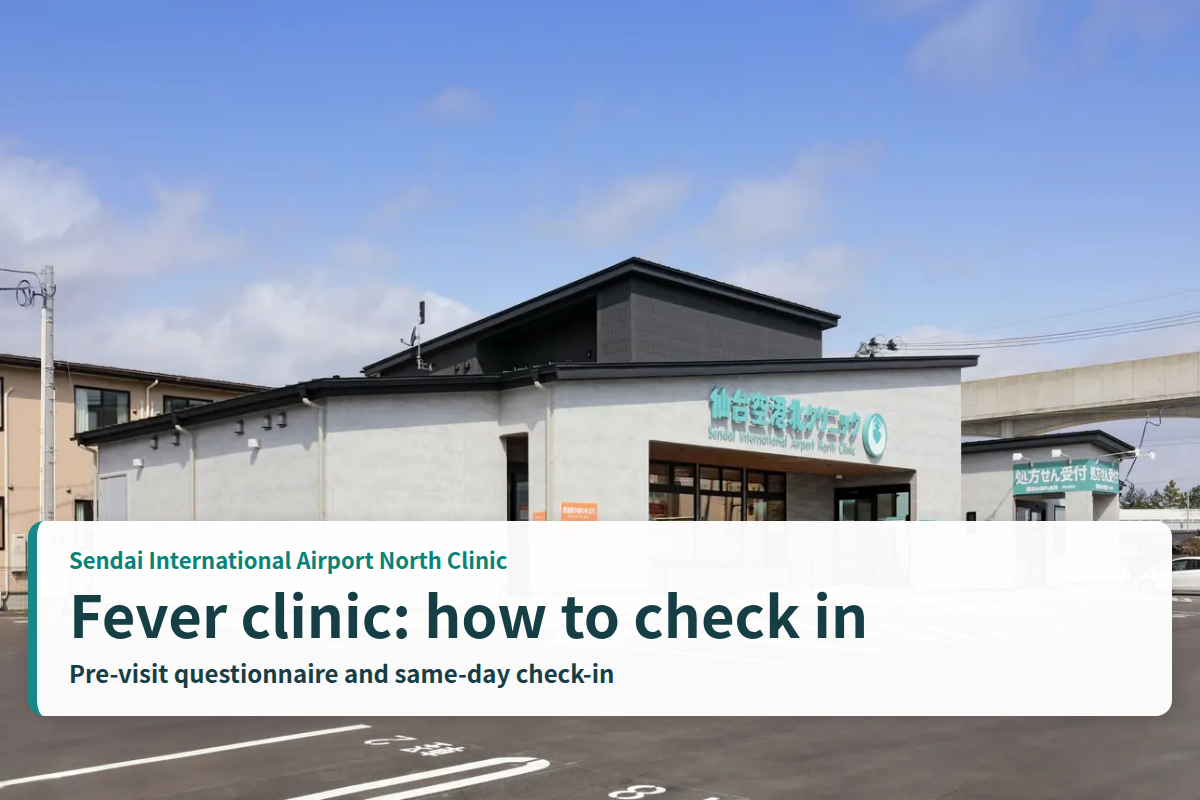
For our Sunday and holiday fever clinic, please see the announcement about the Sunday and holiday fever clinic. For how to come in, please see about the pre-visit questionnaire and same-day check-in for the fever clinic.