If you are in a hurry
- In children with asthma, a cold is the most common trigger of an attack. Even when your child has a cold, do not stop the prescribed long-term control medicine on your own; keep using it according to the action plan you agreed with the doctor
- If your child is unconscious, is having a seizure, or is struggling badly to breathe (cannot speak, has retractions, or has purple lips), call 119 (Japan’s emergency number). With other signs of a severe attack, too, see a doctor immediately
- Act early from the first signs of a cold, following the plan you agreed with the doctor, and if the cough drags on or your child is wheezing, see a medical facility early
Hello. I am Shunichi Gamo, MD, PhD, a board-certified pulmonologist and the director of Sendai Airport North Clinic.
If your child has asthma, every cold probably makes you worry, “Will this turn into an attack again?” At our fever clinic, too, we often hear this concern from families of children with asthma.
To give you the answer first: in children with asthma, a cold (especially a viral infection) is the most frequent trigger of an attack. So a cold is exactly when it matters most not to stop the prescribed long-term control medicine on your own, and to follow the plan you agreed with the doctor.
In this article, I explain as a respiratory specialist why a cold triggers attacks, how to continue medicines during a cold, and what an action plan is. I also cover the signs of an attack and when to call 119, what to do when there is a fever, and how to think about vaccines.
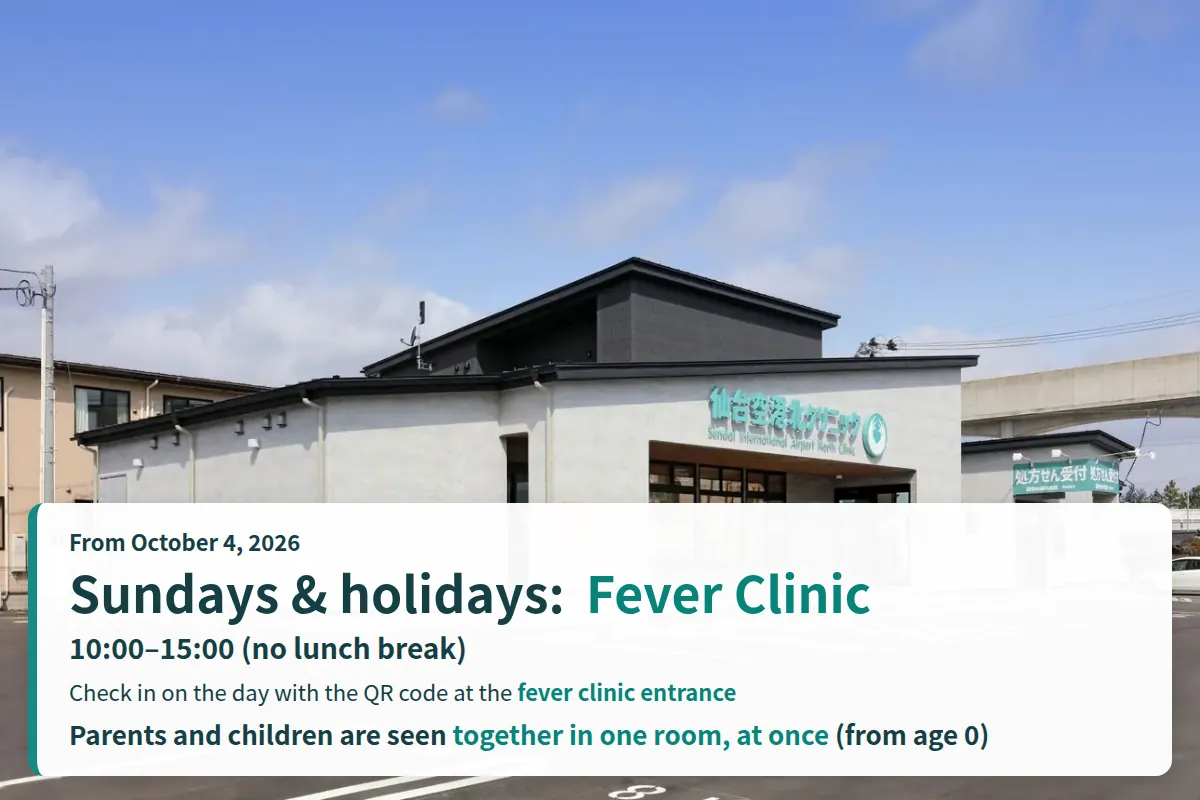
First, a note about our fever clinic on Sundays and national holidays. PCR testing for influenza and COVID (a test that copies the virus’s genetic material in order to detect it) gives results the same day.
From October 4, 2026, we also run the fever clinic on Sundays and national holidays
10:00 to 15:00 (no lunch break). You check in on the day. We give you the PCR result the same day. On Sundays and holidays we see fever patients only, and we do not offer general outpatient care or IV drips. Please check the clinic calendar for clinic dates and closed days. Notice: fever clinic on Sundays and national holidays
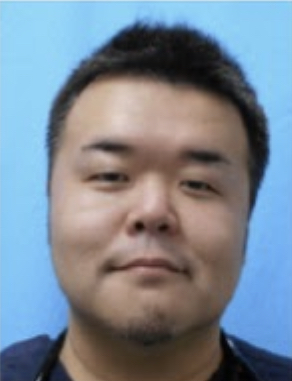
Shunichi Gamo, MD, PhD
Director, Sendai International Airport North Clinic
Born and raised locally, he attended Yuriage Elementary School and Yuriage Junior High School in Natori City. After graduating from Tohoku University School of Medicine, he worked at Sendai Open Hospital and Kesennuma City Hospital, and then at Tohoku University Hospital. In April 2021, in the middle of the COVID-19 pandemic, he opened Sendai International Airport North Clinic. Holding to a fever clinic that never turns patients away, he cared for well over 20,000 patients with fever in the two years before COVID-19 was moved to Class 5 under Japan’s infectious disease law.
Society memberships and board certifications
Certified Member and Board Certified Fellow, Japanese Society of Internal Medicine
Board Certified Pulmonologist, Japanese Respiratory Society
Board Certified Allergist, Japanese Society of Allergology
Board Certified Specialist, Japanese Society of Anti-Aging Medicine
PhD in Medicine (Tohoku University)
When a child with asthma catches a cold, what matters most?
To give you the answer first: in children with asthma, a cold (especially a viral infection) is the most frequent trigger of an attack[1]. And what matters most during a cold is to keep using the prescribed long-term control medicine and not stop it on your own[2][3].
Airways with asthma already have chronic inflammation[4], and the inflammation continues even when symptoms seem settled[3]. First, keep these three points in mind.
- Trigger
A cold is the most common trigger of asthma attacks in children[1] - Every day
Long-term control medicine (a controller) is used every day, even when there is no attack[2] - Plan
At the first signs of a cold, follow the action plan you agreed with the doctor in advance[1]
I have set out the detailed guide on when to see a doctor in the “signs of an attack” section below.
 Dr. Gamo
It is reassuring to decide in advance what to do with the usual medicines as soon as you think, “Maybe it’s a cold.” Please do not increase or reduce them yourself.
Why does a cold make a child’s asthma worse?
Because airways with asthma already have chronic allergic inflammation, and a viral infection triggers narrowing of the airways[4]. The most frequent trigger of asthma in children is a cold, and most colds are viral infections[1].
Known causative viruses include rhinovirus, RS virus, human metapneumovirus, and influenza virus[1]. So how often are viruses involved?
| Study | Participants | Main findings |
|---|---|---|
| Community study in the UK (1990s)[5] | 108 children aged 9 to 11, followed for 13 months | Viruses were detected in 80 to 85% of attacks. Rhinovirus was the most common |
| Hospital study in Japan[6] | 216 children aged 6 months to 17 years admitted to hospital for an attack | Viruses or mycoplasma were detected in 75%. Among single infections, rhinovirus accounted for 48% |
These two studies looked at different groups. One looked at schoolchildren living in the community[5], the other at children admitted to hospital[6]. The numbers cannot be compared directly, but both show that viruses, especially rhinovirus, are important.
The same Japanese study suggested that attacks caused by rhinovirus are more likely when asthma is poorly controlled, and that good control may prevent attacks[6].
Dr. GamoKeeping asthma settled day to day may help prevent attacks when a cold comes.
Should long-term control medicine (a controller) be continued during a cold?
Yes. Even during a cold, it is important to keep using the prescribed long-term control medicine and not stop it on your own[2][3].
- A controller is a medicine used regularly every day, even when there is no attack. Continuing it gradually improves the inflammation in the airways[2]
- The airway inflammation continues even when there are no symptoms, so do not stop on your own; talk to your child’s doctor[3]
- At the first signs of a cold, follow the action plan you agreed with the doctor[1]
- Do not increase or add medicines yourself. The doctor writes the names and doses of the medicines in the action plan[1]
To calm the inflammation in the airways, it is important to keep using inhaled or oral medicines every day[2].
Note that babies have narrow airways to begin with, so they may wheeze just from a cold, and it is not easy to tell asthma from a cold[1]. Do not decide on your own that “it is not asthma”; talk to your family doctor.
Dr. GamoStopping medicine on your own can make things worse again[1]. If you are unsure, ask your child’s regular doctor.
What is an action plan, and how do you use it?
An action plan is a plan you make with the doctor in advance about what to do when your child catches a cold or has an attack[1]. Talk with the doctor and decide in advance what to do when your child catches a cold or is unwell because of the weather[1].
| Zone | Guide | What to do |
|---|---|---|
| Safe zone | Symptoms are settled / first signs of a cold | Long-term control medicine every day. Avoid things that make asthma worse. At the first signs of a cold, add or change medicines as agreed with the doctor[1] |
| Caution zone | Coughing fits, slight whistling or wheezing, slightly short of breath | Add a bronchodilator to the safe-zone medicines. If there is no improvement, see a doctor; if it keeps coming back, see a doctor early; see your family doctor the next day[1] |
| Danger zone | Cannot play, speak, or walk; poor color; retractions; and so on | See a medical facility immediately. It is fine to call an ambulance[1]. If your child cannot speak, has retractions, or has purple lips, call 119 |
In caution zone 2, the child coughs so much that they wake up from sleep, eats less than usual, clearly wheezes, is short of breath, and the spaces between the ribs pull in slightly. If the symptoms do not change or are getting worse, see a doctor right away[1].
A Cochrane review of written asthma action plans in children (4 trials, 355 children) compared plans based on symptoms with plans based on peak flow (a measure of how hard you can breathe out). It reported that symptom-based plans led to fewer flare-ups needing urgent care[7]. The risk ratio was 0.73 (95% confidence interval 0.55 to 0.99), and the number of children needed to prevent one urgent care visit was 9 (95% confidence interval 5 to 138)[7].
This result compares types of plan; it does not compare children with a plan against children without one. Note also that it is a 2006 review and the number of participants is small[7]. The Environmental Restoration and Conservation Agency recommends deciding in advance with the doctor what to do when your child catches a cold[1]. Try telling your family doctor, “I would like to make an action plan.”
Dr. GamoDeciding in advance means you will not panic when the time comes.
What are the signs of an attack? When to call 119, go to the emergency department, or see a doctor the same day
If your child has even one of the following, call 119 without hesitation. Call 119 right away also if your child is unconscious, is having a seizure, or is struggling badly to breathe (cannot speak, has retractions, or has purple lips).
Call 119 right away (ambulance)
The Ministry of Health, Labour and Welfare’s guide “In these cases, call 119 without hesitation” (children aged 15 and under) says to call an ambulance immediately for seizures, stiff arms and legs, breathing that looks difficult or weak, purple lips, or a clearly poor color[8]. Call 119 in the same way if your child does not respond when you call or is unconscious.
- Does not respond when you call, or is unconscious
- Is having a seizure, or the arms and legs are stiff[8]
- Seems to be struggling to breathe because of a hard cough or wheezing, or is breathing weakly[8]
- Has purple lips or a clearly poor color[8]
Signs of a severe asthma attack (it is fine to call an ambulance)
The Environmental Restoration and Conservation Agency’s “Handbook on Asthma in Children” says that if even one of the following signs is present, your child needs to see a doctor immediately. It also says it is fine to call an ambulance[1]. In particular, if your child cannot speak, has retractions, or has purple lips, call 119 without hesitation.
- Cannot play, speak, or walk
- Can hardly eat, cannot lie down, cannot sleep
- Has a poor color (lips and nails have lost their pink color = cyanosis)
- Is dazed, or is more agitated and restless than usual
- Is wheezing so clearly that you can hear it from a distance
- The throat or the spaces between the ribs clearly pull in when breathing in (retractions), or the nostrils flare
- Has a very fast pulse
Retractions mean that the throat or the spaces between the ribs pull in when breathing in[4]. When the lips and nails lose their pink color, this is called cyanosis[1].
Dr. Gamo“Cannot play, cannot speak, purple lips” are signs any family can see. Here, call 119 without hesitation.
Go to an emergency department the same day, even at night or on a holiday
In the following cases, do not wait until morning; go to an emergency department, even at night or on a holiday. If your child is struggling and cannot be moved, call 119.
- Cannot sleep because breathing is hard
- An inhaled or oral bronchodilator is not working well enough
- You have no bronchodilator at hand
- In a baby: coughing so much that the baby cannot sleep, not taking breast milk or formula, or poor color of the lips or face[1]
If you are unsure what to do, you can also use the children’s emergency advice line in your area (#8000) or an emergency advice service (this is general guidance). However, if there are clearly dangerous signs, skip the advice line and call 119.
See your family doctor the same day (or the next morning, if it is night)
If breathing, consciousness, and fluid intake are all fine, but you see the following, do not wait too long; see a doctor[1].
- The cough drags on or your child is wheezing, even if the cold symptoms are mild[1]
- The symptoms do not improve, or they come back after improving once[1]
- See your family doctor the next day[1]
What should you do when a child with asthma has a fever?
When your child has a fever, see a medical facility early. It is especially important to see a doctor if the cough drags on or your child is wheezing[1].
- Dealing with the fever
If the fever is making your child miserable, a fever reducer (acetaminophen, for example Calonal) can bring it down. Follow the doctor’s instructions or the age-based directions for the dose and how to use it - Signs in babies and young children
Coughing so hard that they vomit, rough and fast breathing, heavy wheezing, the throat or the spaces between the ribs sucking in, and flaring nostrils are signs of a severe attack. See a doctor right away[4]. If your child cannot speak, has retractions, or has purple lips, call 119 - Watching a baby
Babies cannot tell you that they are struggling. If your baby is not taking breast milk or formula, is coughing so much they cannot sleep, or has poor color of the lips or face, see a doctor early[1] - If influenza is suspected
As a rule, treatment should start within 48 hours of the onset of symptoms. Treatment is recommended for young children and for children with underlying conditions[9]. Seeing a doctor early is important
If the cough drags on even after the fever has gone, it may be asthma. Do not decide “there is no fever, so it is fine”; if any symptom worries you, ask a doctor.
Dr. GamoEven after the fever goes down, please check whether coughing or wheezing continues.
Should my child get the influenza and COVID vaccines?
Yearly influenza vaccination is recommended for children with asthma[1][9]. The Japan Pediatric Society also recommends influenza vaccination[9].
| Vaccine | For children with asthma |
|---|---|
| Influenza | Yearly vaccination is recommended[1]. For children with severe asthma, the inactivated influenza HA vaccine is recommended[10] |
| COVID | Recommended for children with underlying conditions that carry a high risk of severe illness. For healthy children aged 6 months to 17 years, consider vaccination based on the parents’ wishes and a discussion with the family doctor[11] |
The live attenuated nasal influenza vaccine (FluMist) is to be used with caution in children with severe asthma or wheezing[10]. Please ask your child’s doctor which type of vaccine suits your child.
The inactivated influenza vaccine has been reported not to increase asthma attacks in the 2 weeks after vaccination[12]. The participants were children older than 3 and adults[12].
For the COVID vaccine, the society recommends vaccination for children with underlying conditions that carry a high risk of severe illness[11]. For asthma, this means “poorly controlled, difficult-to-treat asthma,” and not all asthma falls into this group[13].
Dr. GamoThe decision on vaccines depends on your child’s asthma. Always talk to your child’s doctor before vaccination.
Is there anything I should tell the doctor at the visit?
Please write down the following and bring it with you. It makes diagnosis and treatment smoother.
- The long-term control medicine your child usually uses and the medicine for attacks (your medication record book)
- The action plan (if you have one)
- How the fever has gone (when it started, the highest temperature, and the times you gave a fever reducer)
- When the cough or wheezing started, whether your child is sleeping at night, and how much they are eating and drinking
- Any chronic conditions or allergies, and infections going around in your child’s surroundings
Frequently asked questions
- When my child has a cold, can we pause the asthma medicine for a while?
-
No. Even during a cold, do not stop the prescribed long-term control medicine on your own; keep using it[2][3]. The airway inflammation continues even when there are no symptoms[3]. If you are really unsure, talk to your child’s doctor.
- My child’s cough is dragging on. Is this an asthma attack?
-
If the cough drags on with every cold, it may be asthma, but a cough can also drag on because of nose conditions and other causes[3]. Babies may wheeze just from a cold[1]. It is hard to judge, so please ask your family doctor.
- My child is wheezing and struggling in the middle of the night. Should I call an ambulance?
-
If there are signs such as being unable to play or speak, poor lip color, or retractions, your child needs to see a doctor immediately, and it is fine to call an ambulance[1]. In particular, if your child cannot speak, has retractions, has purple lips, is unconscious, is having a seizure, or is struggling badly to breathe, call 119 without hesitation.
- My child has a fever of 38°C. I am worried about an attack.
-
If the fever is making your child miserable, a fever reducer can bring it down. Follow the doctor’s instructions for the dose and how to use it. If your child has a fever and the cough drags on or there is wheezing, see a doctor early[1]. If your child seems to be struggling to breathe or has a poor color, call 119[8].
- Where can I get an action plan?
-
An action plan is a plan you decide in advance in discussion with the doctor[1]. Ask your family doctor or your child’s regular doctor to make one that suits your child.
- Should my child get the influenza and COVID vaccines?
-
Yearly influenza vaccination is recommended[1][9]. For children with severe asthma, the inactivated vaccine is recommended[10]. COVID vaccination is recommended for children with high-risk underlying conditions[11]. Ask your child’s doctor whether it suits your child.
Summary: During a cold, keep going, be prepared, and judge carefully
- In children with asthma, a cold is the most common trigger of an attack. Even when your child has a cold, do not stop the prescribed long-term control medicine on your own; keep using it according to the action plan you agreed with the doctor
- If your child is unconscious, is having a seizure, or is struggling badly to breathe (cannot speak, has retractions, or has purple lips), call 119. With other signs of a severe attack, too, see a doctor immediately
- Act early from the first signs of a cold, following the plan you agreed with the doctor, and if the cough drags on or your child is wheezing, see a medical facility early
- An action plan is a plan you agree with the doctor in advance about what to do when your child catches a cold. Plans based on symptoms have been reported to lead to fewer urgent care visits than plans based on peak flow[7]
- Influenza vaccine every year. For COVID, decide with your child’s doctor according to the risk of severe illness[9][11]
Feeling anxious with every cold is a sign of how much you care about your child. Let us put the three steps of “keep going, be prepared, and judge carefully” in place together with your child’s doctor. Leave the medical care to us.
That’s all.
Disclaimer
This article is intended to provide general medical information and does not replace an examination, diagnosis, or treatment by a doctor. The content is based on medical knowledge at the time of publication, but the right course of action differs for each person. If you are worried about symptoms, please consult a medical facility.
References
- Environmental Restoration and Conservation Agency. Handbook on Asthma in Children (2nd edition) [PDF]. ERCA website (in Japanese). Accessed October 2026. https://www.erca.go.jp/yobou/pamphlet/form/00/pdf/archives_28016_1.pdf
- Japanese Society of Pediatric Allergy and Clinical Immunology. Childhood asthma treatment guideline for patients (Japanese Pediatric Guideline for the Treatment and Management of Asthma 2020) [PDF]. JSPACI website (in Japanese). Accessed October 2026. https://www.jspaci.jp/assets/documents/childhood-asthma-guideline.pdf
- Japanese Society of Allergology. Asthma in children / Q&A. Japanese Society of Allergology website (in Japanese). Accessed October 2026. https://www.jsaweb.jp/modules/citizen_qa/index.php?content_id=2
- Japanese Society of Allergology. Allergy Guide 2025: for healthcare professionals who care for patients [PDF]. Japanese Society of Allergology website (in Japanese). Accessed October 2026. https://www.jsaweb.jp/huge/JSA_tebiki2025.pdf
- Johnston SL, Pattemore PK, Sanderson G, Smith S, Lampe F, Josephs L, et al. Community study of role of viral infections in exacerbations of asthma in 9-11 year old children. BMJ. 1995 May;310(6989):1225-9. doi:10.1136/bmj.310.6989.1225 PMID: 7767192
- Abe N, Yasudo H, Fukano R, Nakamura T, Okada S, Wakiguchi H, et al. Multi-season analyses of causative pathogens in children hospitalized with asthma exacerbation. Pediatr Allergy Immunol. 2019 Nov;30(7):724-731. doi:10.1111/pai.13102 PMID: 31251831
- Bhogal S, Zemek R, Ducharme FM. Written action plans for asthma in children. Cochrane Database Syst Rev. 2006 Jul;(3):CD005306. doi:10.1002/14651858.CD005306.pub2 PMID: 16856090
- Ministry of Health, Labour and Welfare. In these cases, call 119 without hesitation (symptoms in children). Jozu na Iryo no Kakarikata (How to use medical care wisely) (in Japanese). Accessed October 2026. https://kakarikata.mhlw.go.jp/kakaritsuke/urgency.html
- Japan Pediatric Society, Committee on Immunization and Infectious Disease Control. Guidelines for the treatment and prevention of influenza, 2025/26 season [PDF]. Japan Pediatric Society website (in Japanese). Accessed October 2026. https://www.jpeds.or.jp/uploads/files/20251022_2025-2026_infuru_shishin.pdf
- Japan Pediatric Society, Committee on Immunization and Infectious Disease Control. Views on the use of the live attenuated nasal influenza vaccine, 2nd edition: for medical institutions [PDF]. Japan Pediatric Society website (in Japanese). Accessed October 2026. https://www.jpeds.or.jp/uploads/2026-09/20260924_keibi_i_vaccine.pdf
- Japan Pediatric Society, Committee on Immunization and Infectious Diseases. Views on COVID-19 vaccination for children in the 2025/26 season. Japan Pediatric Society website (in Japanese). Accessed October 2026. https://www.jpeds.or.jp/society-activities/post-156956.html
- Cates CJ, Rowe BH. Vaccines for preventing influenza in people with asthma. Cochrane Database Syst Rev. 2013 Feb;2013(2):CD000364. doi:10.1002/14651858.CD000364.pub4 PMID: 23450529
- Japan Pediatric Society, Committee on Immunization and Infectious Disease Control. Underlying conditions in children to consider for COVID-19 vaccination, and how to think about them. Japan Pediatric Society website (in Japanese). Accessed October 2026. https://www.jpeds.or.jp/modules/activity/index.php?content_id=409
▶ Overview of this topic: Fever clinic on Sundays and national holidays (from October 4, 2026, 10:00 to 15:00)
More articles to read when you have a fever
For danger signs during a fever, please also see Influenza Encephalopathy: Seizures and Reduced Consciousness Are Danger Signs (Call 119).