If you are in a hurry
- Shingles happens when a virus that has been lying dormant becomes active again after chickenpox or after chickenpox vaccination. In children the pain is often not as strong as in adults, but see a doctor early for a rash around the eyes or on the head or neck
- If your child is unconscious, is having a seizure, is struggling to breathe, or has fainted with chest pain, call 119 (Japan’s emergency number)
- It can spread as chickenpox to people who have never had chickenpox, so cover the rash well, and for school or nursery attendance follow the school’s or nursery’s decision and your doctor’s instructions
Hello. I am Shunichi Gamo, MD, PhD, a board-certified pulmonologist and the director of Sendai Airport North Clinic.
Some time after chickenpox (varicella) has healed, a prickly pain or itch and a band-like rash may appear on only one side of the body. This is shingles (herpes zoster). When it happens to your child, you may worry “has my child caught chickenpox again?” or “is this serious?”.
To give you the conclusion first: shingles is an illness that occurs when the varicella-zoster virus (VZV), which has been hiding in the nerve ganglia (clusters of nerve roots) after chickenpox or after chickenpox vaccination, becomes active again[1]. It can occur even after chickenpox vaccination, although this is less common[2]. In children the pain is often not as strong as in adults, and postherpetic neuralgia is also rare, but a rash around the eyes or on the head or neck needs attention because of possible complications[3][4].
In this article, I explain in turn why shingles happens in children, whether it is contagious, guidance on returning to school or nursery, antiviral medicine and when to see a doctor, and the signs that mean you should hurry.
First, a note about our fever clinic on Sundays and national holidays. PCR testing for influenza and COVID (a test that copies the virus’s genetic material in order to detect it) gives results the same day.
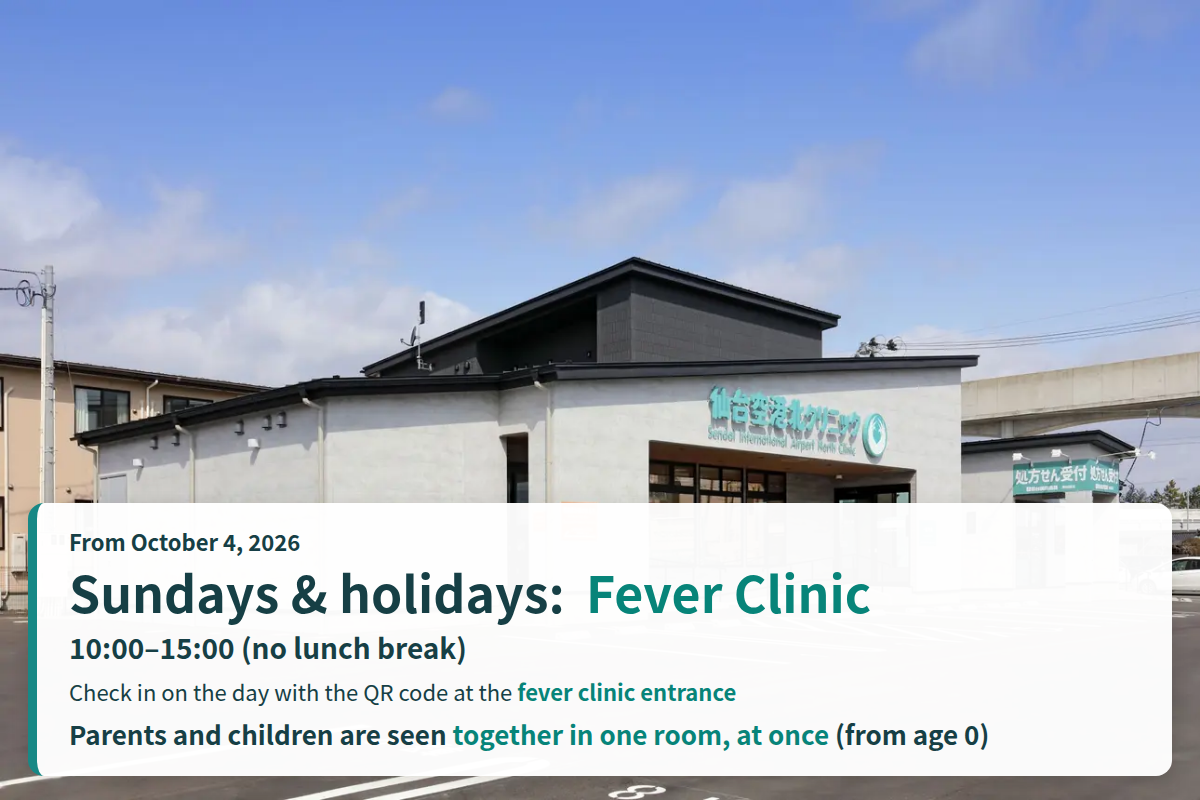
From October 4, 2026, we also run the fever clinic on Sundays and national holidays
10:00 to 15:00 (no lunch break). You check in on the day. We give you the PCR result the same day. On Sundays and holidays we see fever patients only, and we do not offer general outpatient care or IV drips. Please check the clinic calendar for clinic dates and closed days. Notice: fever clinic on Sundays and national holidays
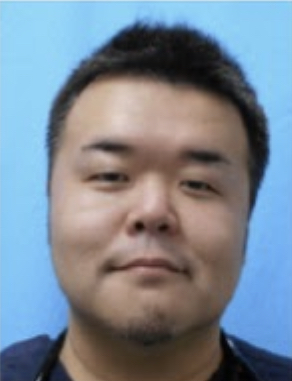
Shunichi Gamo, MD, PhD
Director, Sendai International Airport North Clinic
Born and raised locally, he attended Yuriage Elementary School and Yuriage Junior High School in Natori City. After graduating from Tohoku University School of Medicine, he worked at Sendai Open Hospital and Kesennuma City Hospital, and then at Tohoku University Hospital. In April 2021, in the middle of the COVID-19 pandemic, he opened Sendai International Airport North Clinic. Holding to a fever clinic that never turns patients away, he cared for well over 20,000 patients with fever in the two years before COVID-19 was moved to Class 5 under Japan’s infectious disease law.
Society memberships and board certifications
Certified Member and Board Certified Fellow, Japanese Society of Internal Medicine
Board Certified Pulmonologist, Japanese Respiratory Society
Board Certified Allergist, Japanese Society of Allergology
Board Certified Specialist, Japanese Society of Anti-Aging Medicine
PhD in Medicine (Tohoku University)
What is shingles in children? Why does it happen after chickenpox?
Shingles in children happens when a virus that has been hiding in the body’s nerve ganglia since chickenpox becomes active again. In people who have had chickenpox, the virus stays behind, lying dormant in the nerve ganglia[1]. Triggered by things such as weakened immunity or stress, it becomes active again, and a rash appears on one side of the body along the path of a nerve[2].
Children who had chickenpox before the age of 1, or whose mother had chickenpox during pregnancy, can get shingles even as babies or toddlers[2][3].
Because of its typical one-sided, band-like rash, shingles is often diagnosed by looking at the symptoms[3].
 Dr. Gamo
Even if you think “chickenpox is over”, the virus stays in the body. That is why it can come out years later.
Is it different in children and adults? Is shingles mild?
In children, the pain is not as strong as in adults and postherpetic neuralgia (pain that continues after the rash has healed) is rare, but complications can occur even in healthy children.
| Item | Features of shingles in children |
|---|---|
| Pain | Often not as strong as in adults[2] |
| Postherpetic neuralgia | Rare in children (it hardly ever occurs)[3]. In adults it can remain even after treatment[1] |
| Complications | Can occur even in healthy children[4] |
The nursery school guidelines of the Children and Families Agency state that in children the pain is not as strong as in adults and there is almost never a fever[2]. A review from overseas also reports that shingles in children is often mild and that postherpetic neuralgia almost never occurs[3].
In a US study of about 6.4 million children, shingles in children occurred in 74 per 100,000 per year, making it a rare illness[5].
However, in a study of 138 children with shingles at a children’s hospital in Japan, among the 18 who had complications, bacterial skin infection was the most common (33.3%), and facial nerve palsy (16.7%), meningitis (11.1%), and uveitis or keratitis (11.1%) were also seen[4]. Children with complications were more likely to have had a rash on the head or neck[4]. It is often mild, but you cannot let your guard down.
Dr. GamoWhen the rash is on the head or neck, please watch your child especially closely.
Is shingles contagious? Can it cause chickenpox?
Shingles itself is not what spreads; if the virus spreads to someone who has never had chickenpox, it can appear as chickenpox. The main route of infection is contact, where the virus in the blisters is touched directly[1].
It is not as contagious as chickenpox[1]. The fact sheet from the National Institute of Infectious Diseases gives a secondary attack rate within the family (the rate of spread to susceptible people) of 20% for shingles, lower than the 71.5% and the 61% to 100% given for chickenpox[6]. The Japanese Dermatological Association guidelines also mention another report that puts the risk of causing chickenpox in family members at 8.1%, so the figures differ between reports[7].
The blisters are contagious until they have crusted over (scabbed)[6]. Covering the affected skin properly lowers the risk of spread, but note that the risk of airborne spread is not zero[6][7]. Shingles on the face, shingles in people with weak immunity, and disseminated shingles that appears over a wide area of the body are more contagious[6].
Dr. GamoMost important: keep your child away from people who have never had chickenpox (especially pregnant women), and cover the rash with gauze or similar.
What about school and nursery? Guidance on returning
There is no legal rule requiring children with shingles to stay off school, and they can often attend if the affected skin is well covered. However, at nursery schools and kindergartens, where many children have never had chickenpox, the child stays home until all the spots have crusted over.
Under the Ordinance for Enforcement of the School Health and Safety Act, chickenpox is a Category 2 school infectious disease, and children must stay off school until all the spots have crusted over[8]. Shingles, on the other hand, is not listed by name in Categories 1 to 3, and it is regarded as falling under “other infectious diseases” in Category 3[7][8].
The Japanese Dermatological Association guidelines also state that there is no clear rule for staying off school with shingles, and that because it spreads mainly by contact, a child can attend school (or nursery) if the affected skin is properly covered[7]. The Japan Pediatric Society also states that a child can attend school if the affected skin is properly covered[1].
However, unvaccinated children who have never had chickenpox can develop chickenpox after contact with someone who has shingles, so at kindergartens and nursery schools where there are many such children, the child stays home until all the spots have become scabs[1]. The guidance for returning to nursery school is also “all spots have crusted over”[2].
Dr. GamoThe guide changes depending on whether your child goes to a nursery or a school.
- School: A child can often attend if the affected skin is well covered. Follow the school’s decision and your doctor’s instructions[7][1]
- Nursery school or kindergarten: Because many children have never had chickenpox, stay home until all the spots have crusted over[1][2]
Guidance on returning to nursery or school with chickenpox itself is explained in detail in Chickenpox: Stay Home Until All Rashes Scab Over.
How is shingles treated? Antiviral medicine and when to see a doctor
The basic treatment for shingles is antiviral medicine taken by mouth, and the sooner it starts after the rash appears, the better it is expected to work. The Japanese Dermatological Association guidelines strongly recommend systemic antiviral treatment for acute shingles, and state that starting within 72 hours (3 days) of the rash appearing is the most suitable timing[7]. The fact sheet from the National Institute of Infectious Diseases also states that it is best to start treatment within 5 days at the latest[6]. The Japan Pediatric Society also lists antiviral medicine as a treatment[1].
That is why it is important to see a doctor early once you notice the rash, and, if needed, take antiviral medicine exactly as the doctor instructs. When the pain is strong, a pain reliever such as acetaminophen (for example, Calonal) may be used. Please use any of these exactly as the doctor instructs.
Dr. GamoNoting the day you noticed the rash gives a clue when treatment is being considered.
Signs to seek care urgently: See a doctor the same day, or call 119
If there are eye symptoms, if your child has weak immunity, or if the rash appears on the head or neck or over a wide area of the body, your child needs to see a doctor the same day. If your child is unconscious, is having a seizure, is struggling to breathe, or has fainted with chest pain, call 119.
Dr. GamoA rash around the eye or on the tip of the nose can lead to eye complications, so please do not miss it.
See a doctor the same day (for eye symptoms, see an eye doctor right away)
If any of the following apply, see a doctor the same day. If there are eye symptoms, it is important to see an eye doctor right away.
- A rash on or around the eyes (eyelids, forehead, nose): When the rash reaches the tip or the root of the nose, eye complications such as conjunctivitis, keratitis, and uveitis occur at a high rate (Hutchinson’s sign)[7]. Shingles around the eye needs antiviral treatment together with an immediate examination by an eye specialist[6]
- Red eyes, eye pain, sensitivity to light, blurred vision: Starting treatment early and continuing it tends to give good recovery of vision, but rarely there are complications after which vision is hard to recover. See an eye doctor right away[9]
- Weak immunity: People with leukemia or on treatment that suppresses the immune system can become seriously ill, so care is needed[1]. Immunodeficiency increases the risk of getting shingles and of it becoming severe[6]
- A rash spreading over a wide area of the body: In disseminated shingles, with 20 or more scattered spots outside the original area, the risk of airborne spread is higher[7]
- A rash on the head or neck: These are common sites in children with complications[4]
- Being limp and listless, unlike usual, or having a high fever (general guidance on when to see a doctor)
Call 119 right away
If even one of the following applies, call 119 without hesitation. The same applies at night and on holidays.
- Your child does not answer when you call, is unconscious, or is drowsy and confused
- Your child is having a seizure
- Your child suddenly has trouble breathing, is breathing hard with heaving shoulders, or has purplish lips
- Your child has fainted with chest pain
Care at home and what to tell the doctor at the visit
At home, keep the rash clean, cover it with gauze or similar, and do not let people who have never had chickenpox touch it directly[1][6]. Showers are fine even before the rash has crusted over, and baths are fine after it has crusted[2]. It is also important to prevent spread to family members and nearby children who are not vaccinated against chickenpox and have never had it, and especially to pregnant women[1].
Dr. GamoShowers are fine even before the spots scab over. Please keep the skin clean.
At the visit, please tell the doctor the following.
- The day you noticed the rash, and which side of the body it is on (left or right)
- Whether your child has had chickenpox, and whether your child has had the chickenpox vaccine
- Whether there are people nearby who have never had chickenpox, or pregnant women
- Whether your child takes medicine that suppresses the immune system, or has a long-term condition
- Whether there are eye or ear symptoms (redness, pain, blurred vision, trouble hearing, difficulty moving the face)
Frequently asked questions
- Can it spread to a younger sibling who has never had chickenpox?
-
If it spreads to an unvaccinated child who has never had chickenpox, it can appear as chickenpox[1]. It is less contagious than chickenpox, but the risk is not zero[1][7]. Cover the rash with gauze or similar and do not let the sibling touch it directly. Preventing spread to pregnant women is also important[1].
- If my child has had the chickenpox vaccine, can my child still get shingles?
-
Shingles can occur even after vaccination, although this is less common[2]. A large US study reported that shingles was 78% lower in vaccinated children than in unvaccinated children[5]. The chickenpox vaccine is important for preventing chickenpox, and it is thought to reduce shingles as well[5].
- When can my child go back to nursery or school?
-
For school, a child can often attend if the affected skin is well covered[7][1]. At nursery schools and kindergartens, many children have never had chickenpox, so the child stays home until all the spots have crusted over[1][2]. For school or nursery attendance, follow the school’s or nursery’s decision and your doctor’s instructions.
- If there is no rash on the eye itself, do we not need to see an eye doctor?
-
When there is a rash on the eyelids, forehead, or nose, watch for eye complications; they occur at a high rate especially when the rash reaches the tip or the root of the nose (Hutchinson’s sign), so see an eye doctor right away[7][6]. Dermatologists are also said to recommend an eye examination even when there are no eye symptoms at first, because eye complications can appear later[7].
- I noticed the rash at night. Can I wait until morning?
-
Antiviral medicine is expected to work better the sooner it starts[7][6], so see a doctor as early as possible the next morning. If there are eye symptoms, weak immunity, or a rash on the head or neck or over a wide area of the body, your child needs to see a doctor the same day. If your child is unconscious, is having a seizure, is struggling to breathe, or has fainted with chest pain, call 119.
Summary: For shingles after chickenpox, see a doctor early
- Shingles happens when a virus that has been lying dormant becomes active again after chickenpox or after chickenpox vaccination. In children the pain is often not as strong as in adults, but see a doctor early for a rash around the eyes or on the head or neck
- If your child is unconscious, is having a seizure, is struggling to breathe, or has fainted with chest pain, call 119
- It can spread as chickenpox to people who have never had chickenpox, so cover the rash well, and for school or nursery attendance follow the school’s or nursery’s decision and your doctor’s instructions
- When a rash appears, see a doctor early and, if needed, take antiviral medicine exactly as the doctor instructs
- Eye symptoms, weak immunity, or a rash on the head or neck or over a wide area of the body: see a doctor the same day. For eye symptoms, see an eye doctor right away
Shingles in children is usually mild, but a rash around the eyes or on the head or neck needs attention because of possible complications. If you notice a rash, please see a doctor early. Leave the medical care to us.
That’s all.
Disclaimer
This article is intended to provide general medical information and does not replace an examination, diagnosis, or treatment by a doctor. The content is based on medical knowledge at the time of publication, but the right course of action differs for each person. If you are worried about symptoms, please consult a medical facility.
References
- Japan Pediatric Society, Committee on Immunization and Infectious Disease Control. Explanation of infectious diseases to be prevented in schools, kindergartens, certified centers for early childhood education and care, and nursery schools (revised April 2025): Herpes zoster. Japan Pediatric Society website (in Japanese). Accessed October 2026. https://www.jpeds.or.jp/general/prevention/yobo-kansensho/kansensho03-31.html
- Children and Families Agency. Guidelines for infectious disease control in nursery schools (2018 revision) (partly revised May 2023, partly corrected October 2023). PDF on the Ministry of Health, Labour and Welfare website (in Japanese). Accessed October 2026. https://www.mhlw.go.jp/content/10900000/20231010_policies_hoiku_25.pdf
- Feder HM, Hoss DM. Herpes zoster in otherwise healthy children. Pediatr Infect Dis J. 2004 May;23(5):451-7. doi:10.1097/01.inf.0000126901.88982.32 PMID: 15131470
- Kanamori K, Shoji K, Kinoshita N, Ishiguro A, Miyairi I. Complications of herpes zoster in children. Pediatr Int. 2019 Dec;61(12):1216-1220. doi:10.1111/ped.14025 PMID: 31628883
- Weinmann S, Naleway AL, Koppolu P, Baxter R, Belongia EA, Hambidge SJ, et al. Incidence of Herpes Zoster Among Children: 2003-2014. Pediatrics. 2019 Jul;144(1):e20182917. doi:10.1542/peds.2018-2917 PMID: 31182552
- National Institute of Infectious Diseases. Herpes zoster vaccine fact sheet, 2nd edition (revised June 20, 2024; partly corrected November 1, 2024). PDF on the Ministry of Health, Labour and Welfare website (in Japanese). Accessed October 2026. https://www.mhlw.go.jp/content/10900000/001328116.pdf
- Herpes Zoster Clinical Practice Guideline Committee (Asada H, et al.). Clinical Practice Guidelines for Herpes Zoster 2025. Jpn J Dermatol (in Japanese). 2025;135(3):527-556. Japanese Dermatological Association website. Accessed October 2026. https://www.dermatol.or.jp/dermatol/wp-content/uploads/xoops/files/guideline/Taijouhoushin2025.pdf
- Ordinance for Enforcement of the School Health and Safety Act (Ordinance of the Ministry of Education No. 18 of 1958), Articles 18 and 19. e-Gov Law Search (in Japanese). Accessed October 2026. https://laws.e-gov.go.jp/law/333M50000080018
- Hakim FE, Riaz K, Farooq A. Pediatric herpes zoster ophthalmicus: a systematic review. Graefes Arch Clin Exp Ophthalmol. 2023 Aug;261(8):2169-2179. doi:10.1007/s00417-023-06033-0 PMID: 36949170
▶ Overview of this topic: Fever clinic on Sundays and national holidays (from October 4, 2026, 10:00 to 15:00)
More articles to read when you have a fever
For guidance on returning to nursery or school with chickenpox, see Chickenpox: Stay Home Until All Rashes Scab Over, and for our fever clinic on Sundays and national holidays, see Notice: fever clinic on Sundays and national holidays.