
Quick answer
- Fever plus a new cough on a trip is usually a viral infection such as influenza or COVID-19, but it can be bacterial; symptoms alone cannot tell you which [1][2][3].
- Call 119 for an ambulance if there are danger signs such as trouble breathing, chest pain, or confusion [4].
- Otherwise, get a same-day assessment at a clinic that runs a fever clinic (hatsunetsu gairai: a clinic door for people with fever, kept separate from other patients).
- Before you go, write down when the fever started, the highest temperature you measured, your other symptoms, and who around you is also sick.
- Testing guides treatment: antivirals for influenza or COVID-19 work best when started early, and antibiotics help only bacterial causes [6][7][8].
What could cause fever and cough on a trip?
Many different germs cause fever and cough together. A separate guide covers cough without fever, and disease-specific guides cover influenza, COVID-19, Mycoplasma pneumonia, pertussis, and RSV.
Viral causes (germs that are not bacteria, so antibiotics do not help):
- Influenza (the flu): sudden fever, dry cough, headache, muscle pain, sore throat [1].
- COVID-19: fever, chills, and sore throat are the most common symptoms of the variants now circulating; a new persistent cough and shortness of breath also occur [2].
- RSV (respiratory syncytial virus), human metapneumovirus, adenovirus, parainfluenza, rhinovirus/enterovirus, and the seasonal coronaviruses: other common respiratory viruses that can mimic the flu.
Bacterial causes (germs that antibiotics can treat):
- Mycoplasma pneumoniae, a bacterium that causes long-lasting cough and “walking pneumonia”.
- Pertussis (whooping cough), a bacterial cough illness [5].
- Pneumonia (an infection of the air sacs of the lungs), including pneumococcal pneumonia caused by Streptococcus pneumoniae, the most common bacterial cause of pneumonia in children [3].
Symptoms overlap heavily between these causes, which is why tests matter. Also note: the CDC’s Japan page currently lists a global measles notice [5]. Tuberculosis spreads from people who are sick, so avoid close contact with someone who is coughing [5]; measles and strep throat cannot be ruled out by the usual respiratory swab tests.
When to see a doctor, and when to call 119?
Call 119 now (emergency)
119 is Japan’s emergency number for fire and ambulance. You can say “kyukyu” for an ambulance; you cannot choose the hospital they take you to [4]. As general guidance, call if there is any of these warning signs (several of them are listed as severe-symptom warning signs for COVID-19 in [2]):
- Difficulty breathing, or breathlessness while resting [2].
- Chest pain or pressure [2].
- Bluish lips.
- Confusion, or difficulty waking up [2].
- A seizure.
- Coughing up blood.
- Severe dehydration, or no urine.
- In infants and young children: fast breathing, chest indrawing (the lower chest pulls in when the child breathes in), inability to feed, or unusual drowsiness [3].
Any infant with fever should be seen urgently by a doctor; this is especially important for very young babies.
Same-day clinic visit
Go to a fever clinic the same day if you have fever with cough and are otherwise stable. This matters especially if you are in a higher-risk group: age 65 or older, pregnant, chronic lung or heart disease, diabetes, a weakened immune system, or a young child [1][2]. Also seek care if fever persists, or if you get worse.
For children’s health concerns, you can call a child medical phone consultation service in your area. The JNTO “Japan Visitor Hotline” supports foreign visitors in emergencies such as illness, in English, Chinese and Korean, 24 hours a day, at TEL 050-3816-2787 [4].
How is it diagnosed, and why does that matter?
A clinician will usually:
- Take your history and timeline.
- Check vital signs (temperature, pulse, breathing, blood pressure), including pulse oximetry (SpO2: a small clip on the finger that measures the oxygen level in the blood). Low oxygen is a key finding in pneumonia, and pulse oximetry helps decide the level of care [10][11].
- Listen to your chest with a stethoscope.
Tests may include:
- Rapid antigen tests (quick swab tests that detect pieces of the virus) or multiplex PCR (a test that looks for the genetic material of many germs at once) from one nasal swab.
- A chest X-ray or blood tests if pneumonia is suspected; the chest radiograph is an essential diagnostic tool for pneumonia [10].
Why the diagnosis changes management:
- Influenza antivirals work best early. The main trials enrolled patients within 48 hours of symptom onset [7], and single-dose baloxavir reduced viral load faster than oseltamivir [6][12][13].
- COVID-19 antivirals are time-limited and their use depends on the person’s risk; doctors decide who is eligible [16][17][18][19].
- For Mycoplasma, macrolide resistance is common in Japan and affects antibiotic choice [8][9].
- Pertussis matters for the people around you, especially infants.
- Not prescribing an antibiotic for a viral illness is also a reason for testing: antibiotics do not help viruses.
Limits of a multiplex PCR panel: a positive result shows the germ’s genetic material, which is not always the germ currently causing your illness. Rhinovirus/enterovirus can persist after an infection. Co-infections (two germs at once) occur. A negative panel does not exclude pneumococcal or other bacterial pneumonia, group A streptococcus, tuberculosis, Legionella, measles, or non-infectious causes [3][5]. No test is 100% accurate.
How is it treated in Japan?
Treatment depends on the cause. All of the medicines below need a doctor’s prescription in Japan and are dispensed at a pharmacy separate from the clinic; you pay for medicines there [4].
Influenza
- Oseltamivir (Tamiflu) — taken by mouth for several days.
- Baloxavir (Xofluza) — a single oral dose; better than placebo at relieving symptoms and faster at lowering viral load [6][7][12][13].
- Zanamivir (Relenza) — inhaled.
- Laninamivir (Inavir) — inhaled.
- Peramivir — given by intravenous infusion in hospital settings.
COVID-19
Prescription oral antivirals for COVID-19 work best when started early, and the doctor decides who is eligible based on risk and timing. Some oral COVID-19 antivirals can interact with many other medicines, so tell your doctor about all medicines you currently take; see the COVID-19 guide for details.
Mycoplasma pneumonia
- Macrolides (for example azithromycin, clarithromycin) are the first choice, but strains resistant to macrolides are common in Japan [8][9][15].
- If macrolides fail, tetracyclines (for example minocycline, doxycycline) or quinolones are alternatives. Tetracyclines generally work better than macrolides for resistant cases [14]. Their use in children calls for care, because more study is needed on their effects in growing children, so the doctor decides based on the child’s age [8][15].
Pertussis
Treated with macrolides. Resistant strains are described in international reports [15].
Viral infections
Symptomatic care only: rest, fluids, fever reducer, no antibiotics [1][2].
Drugstore medicines (over the counter)
OTC cold medicines sold at drugstores are for symptom relief only and often mix several ingredients. Check the label. Some contain:
- Dihydrocodeine (a cough suppressant).
- Loxoprofen or ibuprofen (NSAIDs: anti-inflammatory painkillers).
- Methylephedrine (a decongestant).
For children, ask the doctor or pharmacist which fever reducer to use. As a general precaution during influenza illness, supervise children and teens for unusual behaviour, whichever medicine they took. None of the medicines mentioned has a fixed dose: the doctor or pharmacist decides.
Travel-specific points: flying, companions, children and insurance documents
- Flying: airlines may deny boarding to passengers who look clearly ill, and flying with fever and cough can spread illness to others and worsen breathing problems if you have pneumonia. Ask the doctor whether you are fit to fly, and consider changing your flight; see the fever before a flight guide.
- COVID-19 in Japan: if you have symptoms or test positive, the safe action is to stay in your room and away from others until your symptoms improve. If you must be around other people, wear a properly fitted mask [2]. Follow any specific advice your doctor gives you.
- Companions: watch for new symptoms, wear masks around the sick person, and protect infants and older relatives. Ill family members can be assessed together at the clinic described below.
- Children: bring the maternal and child health booklet or vaccine record if you have it.
- Insurance documents: ask for an English medical certificate with the diagnosis (ICD-10 codes help), itemised receipts from both the clinic and the pharmacy, and the prescription or medicine list, and contact your insurer early — some clinics accept cash only and credit cards are accepted mainly at large hospitals [4]. Whether you are reimbursed depends entirely on your insurance policy; see the travel insurance documents guide.
Frequently asked questions
Can I just buy cold medicine at a drugstore?
You can, but OTC cold medicines treat symptoms only and do not treat the cause. Influenza and COVID-19 antivirals work best when started early, and they need a prescription [6][16]. If you are in a higher-risk group, or you have danger signs, see a doctor instead.
Do I need a test if I feel only moderately ill?
Testing is how the doctor chooses between antivirals and antibiotics, and it protects you from unnecessary antibiotics. If fever persists, or symptoms improve and then worsen, get checked.
Will I get antibiotics?
Only if a bacterial cause is likely. Antibiotics do not help influenza, COVID-19, or other viral infections.
Can I fly home tomorrow?
Ask the doctor whether you are fit to fly first. With fever and cough, and especially with pneumonia, flying can worsen breathing problems and expose other passengers. Consider changing your flight.
Do clinics in Japan see visitors without Japanese insurance?
Yes. Foreign visitors are treated at self-pay rates that vary by clinic; bring your passport and insurance documents, and pay the full amount unless your insurer offers cashless payment [4].
My child and I both have fever; can we be seen together?
At this clinic, family members with fever can be assessed in the same room by the same doctor in one visit.
If you are near Sendai Airport
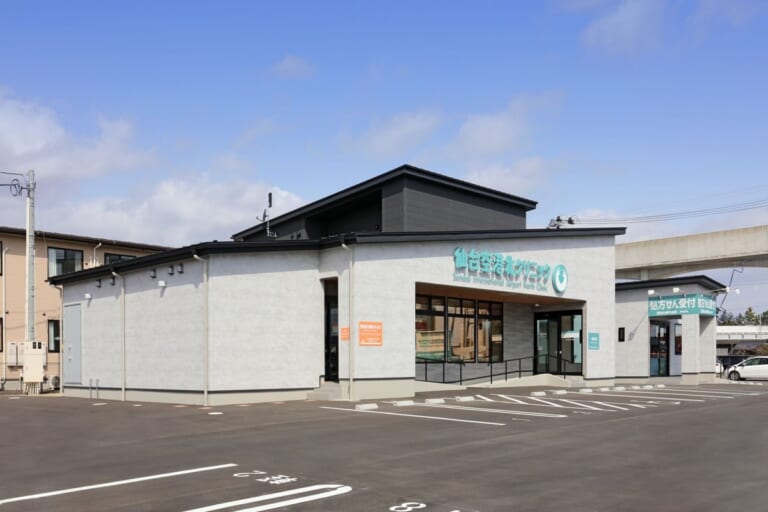
Sendai International Airport North Clinic is at 8-1-8 Mitazono, Natori, Miyagi, about 10 minutes by car from Sendai International Airport. The director is Shunichi Gamo, M.D., Ph.D., board certified in internal medicine, pulmonology and allergology. Telephone: 022-797-9523.
It runs a fever clinic with its own entrance. Check in the same day by scanning the QR code at the fever clinic entrance; no advance contact is needed. The check-in page is in English, Traditional Chinese, Simplified Chinese and Korean. After check-in, enter your name, phone number and date of birth and answer the questions. With a Japanese phone number, follow the wait and call instructions shown. With a foreign phone number only, follow the check-in confirmation. On regular clinic days, press the intercom at the fever clinic entrance and give your name. Then ask staff where to wait and how they will let you know it is your turn. On Sundays and national holidays, ask staff when they check your documents at the regular-clinic entrance. The order of examinations follows check-in order in principle, but may change with the severity of symptoms.
Hours: Monday, Tuesday, Wednesday, Friday and Saturday 10:00–12:00 and 14:30–18:00; Sundays and Japanese national holidays 10:00–15:00 (check the calendar on the clinic page). Closed Thursdays. Children from age 0 are seen, and family members with fever can be seen together in the same room by the same doctor at one visit.
For visitors without Japanese health insurance, the flat fee is USD 700, charged in yen at the day’s rate (card or cash). It covers an English consultation, the BioFire SpotFire R Panel multiplex PCR, a same-day English medical certificate with ICD-10 codes for travel insurance, and a prescription if needed. The PCR uses one nasal swab and takes about 15 minutes. Viruses on the panel: SARS-CoV-2, influenza A (including H1-2009 and H3), influenza B, RSV, human metapneumovirus, adenovirus, parainfluenza virus, rhinovirus/enterovirus, and seasonal coronavirus. Bacteria on the panel: Mycoplasma pneumoniae, Chlamydia pneumoniae, Bordetella pertussis, and Bordetella parapertussis. Medicines are paid separately at the pharmacy next door. Group A streptococcus is not on the panel. Residents of Japan with Japanese health insurance are seen under insurance; the flat fee does not apply.
For emergencies, call 119 — not the clinic.
References
- Influenza (seasonal) — World Health Organization
- Coronavirus disease (COVID-19) — World Health Organization
- Pneumonia in children — World Health Organization
- For safe travels in Japan — Guide for when you are feeling ill — Japan: the Official Guide (JNTO)
- Japan — Traveler view | Travelers’ Health — CDC
- Hayden FG, et al. Baloxavir Marboxil for Uncomplicated Influenza in Adults and Adolescents. N Engl J Med 2018
- Ison MG, et al. Early treatment with baloxavir marboxil in high-risk outpatients with uncomplicated influenza (CAPSTONE-2). Lancet Infect Dis 2020
- Wang YS, et al. Expert consensus on the diagnosis and treatment of macrolide-resistant Mycoplasma pneumoniae pneumonia in children. World J Pediatr 2024
- Kawakami N, et al. Epidemiology of macrolide-resistant Mycoplasma pneumoniae by age distribution in Japan. J Infect Chemother 2021
- Lopardo G, et al. Guidelines for management of community-acquired pneumonia in adults. Medicina 2015
- Levin KP, et al. Arterial blood gas and pulse oximetry in initial management of patients with community-acquired pneumonia. J Gen Intern Med 2001
- Shiraishi C, et al. Comparison of clinical efficacy and safety of baloxavir marboxil versus oseltamivir for influenza: a systematic review and meta-analysis. J Infect Chemother 2024
- Jittamala P, et al. Baloxavir marboxil, favipiravir, or oseltamivir in patients with non-severe symptomatic seasonal influenza (AD ASTRA). Lancet Infect Dis 2026
- Bolormaa E, et al. Treatment of Macrolide-resistant Mycoplasma pneumoniae Pneumonia in Children: A Meta-analysis of Macrolides Versus Tetracyclines. Pediatr Infect Dis J 2025
- Oishi T, Ouchi K. Recent Trends in the Epidemiology, Diagnosis, and Treatment of Macrolide-Resistant Mycoplasma pneumoniae. J Clin Med 2022
- Schilling WHK, et al. Antiviral efficacy of oral ensitrelvir versus oral ritonavir-boosted nirmatrelvir in COVID-19 (PLATCOV). Lancet Infect Dis 2026
- Seki M. Differences in Treatment Patterns and Patient Characteristics Between COVID-19 Patients Treated with Nirmatrelvir/Ritonavir and Ensitrelvir in Japan. Int J Gen Med 2024
- Şimşek-Yavuz S. COVID-19: An Update on Epidemiology, Prevention and Treatment, September-2023. Infect Dis Clin Microbiol 2023
- Shumaker AH, et al. 2025 IDSA Clinical Practice Guideline Update: Antiviral Treatment for Mild to Moderate COVID-19 in Adults. Clin Infect Dis 2026