
Quick answer
- Respiratory infections including influenza and COVID-19 are important causes to consider in a traveller with fever. But if you have danger signs (trouble breathing, chest pain, confusion, a seizure), call 119 for an ambulance now. Do not travel to a clinic on your own.
- From Sendai Station or Natori Station, a taxi is the simplest option. Show the driver the clinic name and address written in romaji (the note below).
- Check the day and time first. The fever clinic is closed on Thursdays and has shorter hours on Sundays and national holidays (10:00-15:00).
- Same-day check-in by QR code at the separate fever-clinic entrance; the check-in page is in English.
- You need a phone that can receive a voice call or SMS in Japan. A data-only eSIM may not work for this.
What could this fever be?
Respiratory infections, including influenza and COVID-19, are important causes to consider in a traveller with fever [1]. Other respiratory causes include RSV (respiratory syncytial virus, a common cold-like virus), human metapneumovirus, adenovirus, and rhinovirus and other cold viruses. Also Mycoplasma pneumoniae (a bacterium that causes long-lasting cough and fever), and strep throat (a bacterial throat infection).
Non-respiratory causes also exist: gastroenteritis (a gut infection with diarrhoea or vomiting), urinary infection, and skin infection.
Symptoms overlap heavily. You cannot tell these apart by how you feel [2]. Tropical diseases such as dengue or malaria are unlikely on a Japan-only trip [1]. But if you had a fever after recent travel elsewhere — for example Southeast Asia — tell the doctor. The likely causes differ by region [1].
Getting there from Sendai or Natori Station
- First steps: take your temperature, rest, drink fluids, and wear a mask around other people.
- Check the clinic’s hours before you leave. Mon, Tue, Wed, Fri and Sat: 10:00-12:00 and 14:30-18:00. Sundays and national holidays: 10:00-15:00 (check the calendar on the clinic page). Closed Thursdays.
- Make sure your phone can receive a voice call or SMS in Japan. A data-only eSIM may not be able to. If unsure, call 022-797-9523.
- Taxi from Sendai Station or Natori Station: use the station taxi rank. Show the driver this note, written in romaji so you can read it aloud:
“Sendai Kuuko Kita Clinic (Sendai International Airport North Clinic), 8-1-8 Mitazono, Natori, Miyagi. Please take me to the fever-clinic entrance.”
If you can, also show the clinic’s own webpage, which displays the name in Japanese script.
Keep your mask on and tell the driver you have a fever if asked. - Train: JR trains run between Sendai Station and Natori Station, and Sendai Airport Access Line trains run via Natori. Check current timetables on the JR East website before you travel.
- If you feel unwell, a taxi avoids walking and transfers.
When to see a doctor: emergency signs and next-day signs
As general advice, call 119 (free, ambulance) if you have:
- Trouble breathing, or blue lips
- Chest pain
- Confusion, or being very hard to wake
- A seizure
- A stiff neck with severe headache
- A rash that does not fade when pressed
- Inability to keep fluids down, with signs of dehydration
- A baby with fever who has trouble breathing, is difficult to wake, has a seizure, or appears severely unwell. Any baby under 3 months with fever needs urgent medical assessment, even without these danger signs.
See a doctor the same or next day if:
- Fever that is persistent or worsening, or fever returns after improving
- Your cough is getting worse
- You are in a group at higher risk of severe illness: people with chronic lung, heart or other medical conditions, pregnant women, people aged 65 or older, and young children
The JNTO Japan Visitor Hotline (050-3816-2787, 24 hours, English, Chinese and Korean) can help with illness and finding medical institutions [3]. If you are severely ill, do not drive yourself.
How is it diagnosed, and why does a diagnosis matter?
The doctor asks about your history, examines you, and may order a test. One option is multiplex PCR (a test that looks for the genetic material of many germs at once) from a single nasal swab. It can identify several respiratory viruses and some bacteria in one go.
A named result can change treatment — though not every detected organism needs treatment:
- Influenza antivirals work best when started early.
- For COVID-19, doctors consider antiviral treatment according to the severity of the disease and the risk of it getting worse.
- Mycoplasma may need a specific antibiotic, especially where macrolide resistance is common [4].
- A named diagnosis also avoids unnecessary antibiotics for viral infections, and travel insurers usually need one.
Limits: a negative panel does not rule out every infection. Group A streptococcus (strep throat), urinary, gut and blood infections are not covered by a respiratory panel. Rhinovirus/enterovirus detection, or finding two germs at once, can be incidental. The doctor interprets the result together with the examination.
How is it treated in Japan? Prescription vs drugstore
Antivirals your doctor may prescribe
- Influenza: antivirals such as baloxavir or oseltamivir may be prescribed depending on the patient. Baloxavir shortened symptom duration compared with placebo in trials [5]. A recent review found it probably reduced symptom duration and may reduce hospital admission in high-risk patients [6]. It has also been studied in children [7].
- COVID-19: prescription oral antivirals may be considered according to disease severity and the risk of worsening; the doctor decides based on age, symptoms and other medicines. See our COVID-19 guide for details.
Bacterial infections
- Mycoplasma: macrolides (a class of antibiotics) such as azithromycin or clarithromycin are a standard first choice. Macrolide-resistant strains were first reported in Japan and resistance remains a particular concern there [4]. The doctor may therefore choose an alternative such as a tetracycline or quinolone, depending on the patient; one meta-analysis found tetracyclines outperformed macrolides in children with macrolide-resistant Mycoplasma pneumonia [8].
- Pertussis: treatment is decided by the doctor based on the patient’s situation.
Symptom relief
Acetaminophen (paracetamol) is the usual fever reducer in Japan, including for children. Japanese doctors generally avoid some NSAIDs (non-steroidal anti-inflammatory drugs, a class of pain and fever medicines) and aspirin in children with influenza [9][10]. Certain NSAIDs have been associated with worse outcomes in influenza-associated encephalopathy, a rare but serious brain complication. Aspirin is avoided in children with influenza because of its association with Reye syndrome. A large Japanese study in adults found no clear short-term difference between NSAIDs and acetaminophen, but it did not cover children [11].
Drugstore medicines
Over-the-counter cold medicines are sold widely. Ask the pharmacist and show your own regular medicines, because Japanese brand names differ from those at home. Antibiotics do not help viral infections such as influenza, COVID-19 or colds.
Prescriptions are filled at a pharmacy (chouzai-yakkyoku), which is separate from the clinic.
Travel-specific points: flying, companions, children, insurance documents
- Flying: rest before flying if possible, and ask the doctor about fitness to fly, as airlines may refuse boarding to visibly unwell passengers. See our guide on fever before a flight.
- Isolation: follow current local health advice, and stay away from others while you have symptoms. Rest and mask around others while symptomatic.
- Companions: watch for symptoms, use masks, and wash hands often.
- Children: keep them hydrated and watch for the danger signs listed above.
- Insurance: keep all receipts, the medical certificate, and the prescription details, and contact your insurer’s assistance line early. See our travel insurance documents guide.
- Payment: by card or cash.
Frequently asked questions
Do I need to arrange a visit in advance?
No. This clinic uses same-day QR check-in at the fever-clinic entrance; nothing needs to be arranged in advance.
Can I take the train while feverish?
You can, wearing a mask, but a taxi is easier when you feel unwell. Check current timetables on the JR East website.
What if I have no car to wait in?
The clinic’s published flow says to wait in your car or nearby after checking in. Staff will contact you by SMS or phone when your turn is near. Bring warm clothes, keep your phone charged, make sure your number is reachable, and stay close to the clinic.
Can my whole family be seen?
Yes. Family members with fever can be seen together, in the same room, by the same doctor, at one visit. Children from age 0 are seen.
What if it is Thursday?
The fever clinic is closed on Thursdays. Seek another clinic, or call 119 if you have danger signs.
Will I get a document for my insurer?
Yes. A same-day English medical certificate with ICD-10 disease codes is provided under the visitor flat fee.
If you are near Sendai Airport
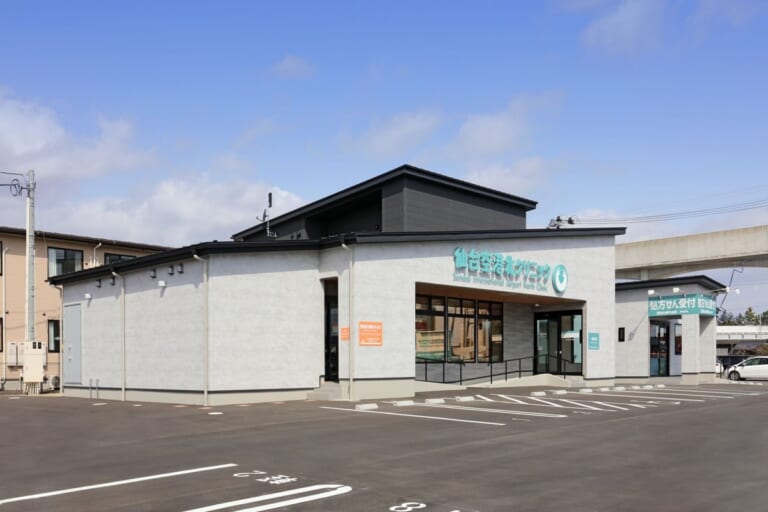
Sendai International Airport North Clinic, 8-1-8 Mitazono, Natori, Miyagi, is about 10 minutes by car from Sendai International Airport. The director is Shunichi Gamo, M.D., Ph.D., board certified in internal medicine, pulmonology (Japanese Respiratory Society) and allergology (Japanese Society of Allergology).
The clinic runs a fever clinic with its own entrance and same-day QR check-in, with an English check-in page. The arrival flow: scan the QR code at the fever-clinic entrance. Then enter your name, phone number and date of birth on the check-in page, and answer the questions. After that, wait in your car or nearby; when your turn is near, staff will call or SMS you. Finally, press the intercom at the fever-clinic entrance and give your name. The order of examinations follows check-in order in principle, but may change with the severity of symptoms. On Sundays and national holidays the regular clinic does not run; after check-in, insurance status is confirmed at the regular-clinic entrance.
Hours: Mon, Tue, Wed, Fri and Sat 10:00-12:00 and 14:30-18:00; Sundays and national holidays 10:00-15:00 (check the calendar on the clinic page); closed Thursdays. Tel 022-797-9523. Children from age 0 are seen.
For visitors without Japanese health insurance, the flat fee is USD 700, charged in yen at the day’s rate (card or cash). It covers an English consultation, the BioFire SpotFire R Panel multiplex PCR, a same-day English medical certificate with ICD-10 codes, and a prescription if needed. The PCR uses one nasal swab and takes about 15 minutes. It detects 11 viruses and 4 bacteria: SARS-CoV-2; influenza A (incl. H1-2009 and H3) and B; RSV; human metapneumovirus; adenovirus; parainfluenza virus; rhinovirus/enterovirus; seasonal coronavirus; Mycoplasma pneumoniae; Chlamydia pneumoniae; Bordetella pertussis; and B. parapertussis. Group A strep is not included. Medicines are paid separately at the pharmacy next door. Residents with Japanese insurance are seen under insurance at the regular fever clinic; the flat fee does not apply.
References
- Paquet D, et al. Fever in the Returning Traveler. Dtsch Arztebl Int 2022.
- Zohra U, et al. A review of past, present and emerging techniques for detection of Mycoplasma pneumoniae. J Microbiol Methods 2026.
- JNTO — For safe travels in Japan: Guide for when you are feeling ill
- Wang YS, et al. Expert consensus on the diagnosis and treatment of macrolide-resistant Mycoplasma pneumoniae pneumonia in children. World J Pediatr 2024.
- Hayden FG, et al. Baloxavir Marboxil for Uncomplicated Influenza in Adults and Adolescents. N Engl J Med 2018.
- Gao Y, et al. Antiviral Medications for Treatment of Nonsevere Influenza: A Systematic Review and Network Meta-Analysis. JAMA Intern Med 2025.
- Baker J, et al. Baloxavir Marboxil Single-dose Treatment in Influenza-infected Children (miniSTONE-2). Pediatr Infect Dis J 2020.
- Bolormaa E, et al. Treatment of Macrolide-resistant Mycoplasma pneumoniae Pneumonia in Children: A Meta-analysis of Macrolides Versus Tetracyclines. Pediatr Infect Dis J 2025.
- Mizuguchi M, et al. Acute encephalopathy associated with influenza and other viral infections. Acta Neurol Scand 2007.
- Nagao T, et al. Prognostic factors in influenza-associated encephalopathy. Pediatr Infect Dis J 2008.
- Kutsuna S, et al. NSAID Versus Acetaminophen Initiation at Influenza Diagnosis and 14-Day Neuropsychiatric Diagnoses in Adults. Pharmacoepidemiol Drug Saf 2026.