
Quick answer
- Most fevers in travellers in Japan are respiratory viral infections: influenza, COVID-19, RSV (a virus that affects the lungs and airways) and other common-cold viruses. Rest, fluids and acetaminophen (paracetamol) are reasonable first steps [3].
- Call 119 for emergencies such as trouble breathing, confusion, a stiff neck with rash, or a seizure.
- When to see a doctor: the same or next day if you are at higher risk, very unwell, or have had a fever for more than 2–3 days. Seeing a doctor early matters most for influenza and COVID-19, where some antiviral medicines work best when started early [3][6][8].
- Without Japanese health insurance you pay the full cost at the clinic. Keep the receipt and ask for an English medical certificate with a diagnosis for your insurer [1].
- Do not fly with a high fever or breathing problems.
What could my fever be?
Symptoms alone cannot tell you the exact cause. A doctor’s test is needed for that. But the pattern of your symptoms gives useful clues about what to think of.
If you have a cough, sore throat or runny nose
Respiratory infections are the most common cause. Influenza (the flu) is the most typical: it starts suddenly with fever, cough, sore throat, body aches and tiredness, and in temperate countries like Japan its main season is winter, though cases can occur outside it [3]. COVID-19, RSV, human metapneumovirus, adenovirus, Mycoplasma pneumoniae (a bacterium that causes long-lasting cough and sometimes pneumonia) and pertussis (whooping cough, worth considering if the cough is prolonged) are other possibilities [2][3].
If you have a sore throat without a cough
Think of group A streptococcus, a bacterium that causes strep throat. This matters because it needs antibiotics.
If you have vomiting or diarrhoea
Think of gastroenteritis — an infection of the stomach and intestines, caused by viruses or by contaminated food and drink.
If you have burning when urinating or pain in the side of the back
Think of a urinary tract infection (an infection of the bladder or kidneys).
If you have a rash
Think of measles and other rash illnesses. Measles is highly contagious and starts with high fever, cough, runny nose and red eyes, followed by a rash. Your vaccination status matters a lot: measles cases are rising worldwide, and international travellers should be fully vaccinated [2][4].
If you have a fever after hiking or time in the countryside
Tick- and mite-borne infections occur in Japan, including Japanese spotted fever, scrub typhus (tsutsugamushi disease) and SFTS (severe fever with thrombocytopenia syndrome). These are uncommon but can be serious, so mention any tick or mite exposure to the doctor [2].
If you have a high temperature after heat exposure in summer
This may be heat illness (heatstroke), which is different from an infectious fever. It happens when the body overheats. Do not rely on fever-lowering medicines for it; cool the body and seek medical care [2].
If the fever started after recent travel elsewhere in Asia
Consider dengue (a mosquito-borne viral infection common in tropical and subtropical Asia) or malaria caught before you arrived in Japan. Dengue is not endemic in Japan, but travellers arrive with it [5].
What should I do first, tonight?
- Measure your temperature. Thermometers are sold at drugstores and convenience stores.
- Rest and drink fluids. Oral rehydration drinks (drinks that replace water and salts) are helpful if you are sweating or have diarrhoea [3].
- Use a fever-lowering medicine (antipyretic) you know. Acetaminophen (paracetamol) is the generally preferred choice, especially for children [3]. In Japan, look for acetaminophen-only products and check the active ingredient on the box. Ask the pharmacist if you are unsure.
- Avoid aspirin in children and teenagers.
- Be careful with Japanese combination cold medicines. They may contain several ingredients, including acetaminophen. Do not double up on acetaminophen by taking a combination product and a separate acetaminophen product.
- Wear a mask and keep apart from your travel companions where possible. If you are sick, stay in your hotel room unless you need medical care [2].
- Tell your hotel front desk. They can often help you find a clinic.
- Use multilingual help. The JNTO Japan Visitor Hotline (050-3816-2787, 24 hours, English/Chinese/Korean) can help with emergencies and introduce medical institutions where foreign languages are spoken. JNTO also has a guide for finding medical institutions [1].
Do not take antibiotics left over from home. Antibiotics do not help most fevers, which are caused by viruses [3].
When to see a doctor, and when to call 119
Call 119 (ambulance and fire; say “kyūkyū”) if you have:
- difficulty breathing or chest pain
- confusion or unusual drowsiness
- a seizure
- a stiff neck or severe headache with a rash
- a purple rash that does not fade when pressed
- signs of dehydration (no urine, or you cannot keep fluids down)
- in an infant: any fever under 3 months of age, poor feeding, or listlessness
See a doctor the same or next day if:
- the fever lasts more than 2–3 days
- you have a high fever with severe symptoms
- you are older, pregnant, or have chronic heart, lung, kidney or immune conditions [3]
- you have a sore throat with no cough
- you have urinary symptoms
- you have had possible tick or mite exposure
- the fever returns after initially improving
Where to go
Clinics handle daytime care. Hospital emergency departments handle emergencies. Some areas have after-hours duty doctors [1]. Many Japanese clinics see fever patients at a separate fever clinic or entrance, and ask you to phone or check in first — check the clinic’s website or call ahead [1]. Large hospitals may charge an extra fee to patients who come without a referral letter from another clinic. Ambulances are reached by calling 119; you cannot choose which hospital you are taken to [1].
How is the cause diagnosed, and why does it matter?
Why the diagnosis changes treatment
- Influenza and COVID-19 have specific antiviral medicines that work best when started early [3][6][8].
- Mycoplasma, pertussis and strep throat need antibiotics.
- Viral colds do not need antibiotics. Unnecessary antibiotics cause side effects and drive antibiotic resistance — a growing global problem.
- The diagnosis also matters for isolation, for your companions, for fitness to fly, and for insurance documents.
Tests used in Japan
- Rapid antigen tests (a quick swab test that detects pieces of the germ) for influenza, COVID-19, strep A and others
- PCR, including multiplex respiratory panels (a test that looks for the genetic material of many germs at once from one swab)
- Blood tests, urine tests, and chest X-ray
A multiplex respiratory PCR detects many respiratory pathogens from one nasal swab. However, it does not cover everything — for example group A streptococcus, urinary tract infection, gastroenteritis, measles, dengue or tick-borne diseases. A positive result shows the organism’s genetic material is present but does not always prove it is the sole cause of your illness, and a negative result does not rule out other illnesses. No single test gives a complete answer.
How is fever treated in Japan?
Influenza
Prescription antivirals include oseltamivir (Tamiflu), baloxavir marboxil (Xofluza), zanamivir (Relenza), laninamivir (Inavir) and intravenous peramivir (Rapiacta). Antivirals are most useful when started early after symptom onset [3][6]. Studies comparing baloxavir with oseltamivir have found baloxavir effective and generally well tolerated, including in children [6][7].
COVID-19
COVID-19 can be treated with prescription oral antivirals, which work best when started early. Tell the doctor about all other medicines you take, and ask about pregnancy and age considerations — see the COVID-19 guide.
Mycoplasma and pertussis
These need antibiotics such as macrolides (for example azithromycin or clarithromycin). Macrolide-resistant Mycoplasma pneumoniae has been reported in Japan since 1968 and remains common, so alternatives such as tetracyclines or quinolones may be chosen depending on your age and the doctor’s judgement [9][10][11][12].
Strep throat
Penicillin-type antibiotics such as amoxicillin are used.
RSV, human metapneumovirus, adenovirus, rhinovirus
Supportive care only — rest, fluids and symptom relief.
Prescription versus drugstore
- Prescriptions are usually filled at a separate dispensing pharmacy next to or near the clinic [1].
- Drugstores sell over-the-counter antipyretics and cold remedies, but no antivirals or antibiotics.
- Pharmacists can help you identify active ingredients [1].
- Bring your own medicine list; drug names differ by country [2].
Travel-specific points: flying, companions, children, insurance
Flying
Airlines may refuse boarding to visibly unwell passengers, so consider postponing your flight if you have a high fever, breathing difficulty, or a contagious illness in its early phase, and check the airline’s policy before going to the airport. Ask the doctor about fitness to fly — the fever before a flight guide has the details.
Companions
They may become ill next. Use masks, hand hygiene and separate rooms if possible. Ask the doctor whether testing or preventive treatment of family members is appropriate.
Children
Watch for dehydration and danger signs. Use child-appropriate formulations, and never give adult combination cold products to children. Avoid aspirin in children and teenagers.
Insurance documents
Call your insurer’s assistance line first if your policy requires it, and keep all receipts, including separate clinic and pharmacy receipts, and prescription copies. Ask for an English medical certificate with the diagnosis and ICD-10 code — the travel insurance documents guide explains what to prepare.
Bringing medicines into Japan
Some home cold medicines containing stimulant ingredients such as pseudoephedrine may be restricted. Check the Pharmaceuticals and Medical Devices Agency (PMDA) and Ministry of Health, Labour and Welfare guidance before you travel [13].
COVID-19 rules
As of the latest guidance, Japan does not legally require isolation for COVID-19, but staying in your room while ill is recommended to avoid spreading the infection.
Frequently asked questions
Can tourists see a doctor in Japan without Japanese insurance?
Yes. You pay the full cost yourself, and many clinics accept visitors. Keep all receipts for your insurer [1].
Can I buy Tamiflu or antibiotics at a Japanese drugstore?
No. Antivirals and antibiotics need a doctor’s prescription in Japan. Drugstores sell only over-the-counter fever and cold remedies.
Is an English-speaking doctor available?
Sometimes. Use the JNTO medical institution search and the Japan Visitor Hotline, or a translation app [1].
Do I need to isolate in Japan if I have COVID or flu?
There is no legal isolation requirement for visitors with COVID-19. Follow current guidance and avoid spreading the illness by staying in your room and wearing a mask around others.
What should I ask the doctor to write for my travel insurance?
An English medical certificate with the diagnosis and ICD-10 code, the dates of illness, the tests and treatment given, and fitness to fly if needed.
If you are near Sendai Airport
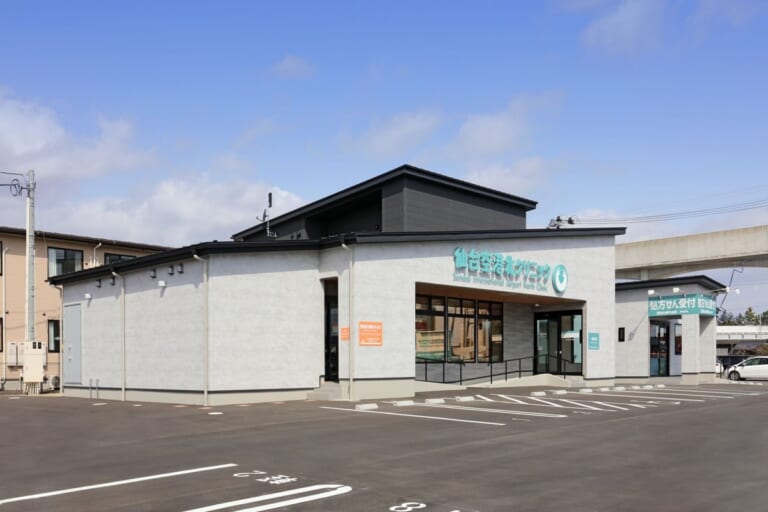
Sendai International Airport North Clinic, 8-1-8 Mitazono, Natori, Miyagi, is about 10 minutes by car from Sendai International Airport.
The fever clinic has its own entrance. Same-day check-in uses a QR code at the entrance, and the check-in page is available in English. Fever clinic hours: Monday, Tuesday, Wednesday, Friday and Saturday 10:00–12:00 and 14:30–18:00; Sundays and national holidays 10:00–15:00 (check the calendar); closed Thursdays. Children from age 0 are seen, and family members with fever can be seen together by the same doctor.
For visitors without Japanese insurance there is a flat fee of USD 700, charged in yen at the day’s rate (card or cash). It covers the English consultation, the BioFire SpotFire R Panel multiplex PCR (one nasal swab, about 15 minutes, 11 viruses and 4 bacteria), a same-day English certificate with ICD-10 codes, and a prescription if needed. Medicines are paid separately at the pharmacy next door. Group A streptococcus is not on the panel. Residents with Japanese insurance are seen under insurance, and the flat fee does not apply.
References
- For safe travels in Japan – Guide for when you are feeling ill (JNTO)
- Japan – Traveler View (CDC Travelers’ Health)
- Influenza (seasonal) – WHO fact sheet
- Measles – WHO fact sheet
- Dengue and severe dengue – WHO fact sheet
- Shiraishi C, et al. Comparison of clinical efficacy and safety of baloxavir marboxil versus oseltamivir for influenza: systematic review and meta-analysis. J Infect Chemother 2024. PMID 37866622
- Baker J, et al. Baloxavir marboxil single-dose treatment in influenza-infected children (miniSTONE-2). Pediatr Infect Dis J 2020. PMID 32516282
- Yotsuyanagi H, et al. Efficacy and safety of 5-day oral ensitrelvir for mild to moderate COVID-19 (SCORPIO-SR). JAMA Netw Open 2024. PMID 38335000
- Wang YS, et al. Expert consensus on the diagnosis and treatment of macrolide-resistant Mycoplasma pneumoniae pneumonia in children. World J Pediatr 2024. PMID 39143259
- Kawakami N, et al. Epidemiology of macrolide-resistant Mycoplasma pneumoniae by age distribution in Japan. J Infect Chemother 2021. PMID 32868199
- Oishi T, Ouchi K. Recent trends in the epidemiology, diagnosis, and treatment of macrolide-resistant Mycoplasma pneumoniae. J Clin Med 2022. PMID 35407390
- Bolormaa E, et al. Treatment of macrolide-resistant Mycoplasma pneumoniae pneumonia in children: meta-analysis of macrolides versus tetracyclines. Pediatr Infect Dis J 2025. PMID 39383346
- Pharmaceuticals and Medical Devices Agency (PMDA) – English