
If you are in a hurry
- Bronchiolitis in babies is a viral infection that is common in children under 2, and RSV (respiratory syncytial virus) is the most important cause
- If your baby seems to be struggling to breathe or cannot take milk or fluids, see a doctor early. If your baby stops breathing (apnea), has purplish lips, is having a seizure, does not respond when you call, or is breathing so hard that the shoulders heave, call 119 (Japan’s emergency number)
- Treatment mainly means care matched to the symptoms, such as fluids and oxygen given at a medical facility. Please see a doctor so that your baby’s breathing and fluid intake can be checked
Hello. I am Shunichi Gamo, MD, PhD, a board-certified pulmonologist and the director of Sendai Airport North Clinic.
In the season when mornings and evenings turn cold, coughing and wheezing in small children become a worry. Something families often ask me is:
“Is it all right to just watch this wheezing at home?”
I hear this question from families often. When your baby seems to be struggling to breathe, just watching is worrying, isn’t it?
To get straight to the point, bronchiolitis is a viral infection that is common in children under 2, and RSV is the most important cause[1][2]. And when you are deciding whether to see a doctor, the things to go by are your baby’s breathing and whether they are taking milk and fluids[1][2].
In this article, as a pulmonologist, I explain what kind of illness bronchiolitis is, how it relates to RSV, the signs that mean you should seek care quickly, and when a hospital stay may be needed. I also cover the treatments that are used and the treatments that are not recommended.
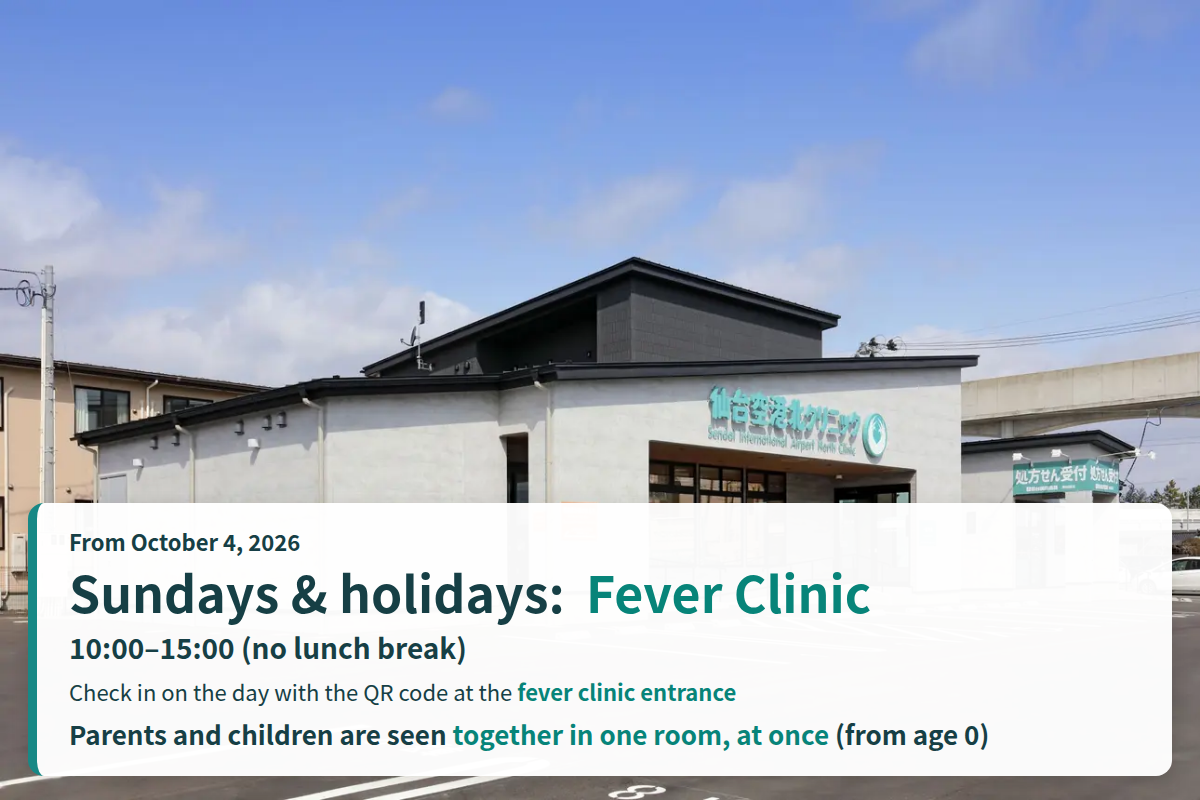
First, a note about our fever clinic on Sundays and national holidays. PCR testing for influenza and COVID (a test that copies the virus’s genetic material in order to detect it) gives results the same day.
From October 4, 2026, we also run the fever clinic on Sundays and national holidays
10:00 to 15:00 (no lunch break). You check in on the day. We give you the PCR result the same day. On Sundays and holidays we see fever patients only, and we do not offer general outpatient care or IV drips. Please check the clinic calendar for clinic dates and closed days. Notice: fever clinic on Sundays and national holidays
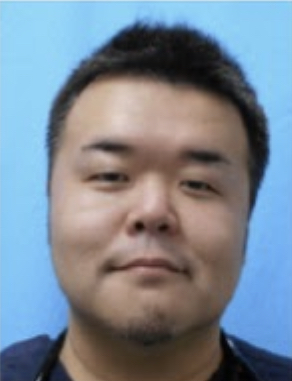
Shunichi Gamo, MD, PhD
Director, Sendai International Airport North Clinic
Born and raised locally, he attended Yuriage Elementary School and Yuriage Junior High School in Natori City. After graduating from Tohoku University School of Medicine, he worked at Sendai Open Hospital and Kesennuma City Hospital, and then at Tohoku University Hospital. In April 2021, in the middle of the COVID-19 pandemic, he opened Sendai International Airport North Clinic. Holding to a fever clinic that never turns patients away, he cared for well over 20,000 patients with fever in the two years before COVID-19 was moved to Class 5 under Japan’s infectious disease law.
Society memberships and board certifications
Certified Member and Board Certified Fellow, Japanese Society of Internal Medicine
Board Certified Pulmonologist, Japanese Respiratory Society
Board Certified Allergist, Japanese Society of Allergology
Board Certified Specialist, Japanese Society of Anti-Aging Medicine
PhD in Medicine (Tohoku University)
In short: With bronchiolitis in a baby, watch “breathing” and “drinking”
When your baby is wheezing, these are the 3 key points.
- In short
Bronchiolitis is a viral infection that is common in children under 2, and RSV is the most important cause - Signs to act quickly
If your baby seems to be struggling to breathe or cannot take milk or fluids, see a doctor early. If your baby stops breathing (apnea), has purplish lips, is having a seizure, does not respond when you call, or is breathing so hard that the shoulders heave, call 119 - How treatment works
Treatment mainly means care matched to the symptoms, such as fluids and oxygen given at a medical facility. Please see a doctor so that your baby’s breathing and fluid intake can be checked
When your baby is wheezing, watch how they are breathing and whether they are taking milk and fluids. I have set out the details in the section “Signs that you need care quickly” below.
 Dr. Gamo
When your baby is wheezing, it is hard for you to watch too.
What kind of illness is bronchiolitis? A viral infection common in children under 2
Bronchiolitis is a viral infection in children under 2 in which a runny or blocked nose is followed by a cough, expiratory wheezing (wheezing or whistling sounds when breathing out), and labored breathing[1].
The narrow parts of the airways (the bronchioles) swell with inflammation and become clogged and narrowed with mucus, which makes breathing difficult[1]. It is said that fever may or may not be present[1].
| Common cold | Bronchiolitis | |
|---|---|---|
| Typical age | A wide range of ages | Common under age 2[1] |
| Main symptoms | Runny nose, cough, sore throat | Cough, wheezing, and labored breathing following a runny nose[1] |
| Fever | Often present | May or may not be present[1] |
| Main cause | Various viruses | RSV is the most important[1] |
The diagnosis is mainly a “clinical diagnosis” (a diagnosis made from the symptoms and the doctor’s examination). Blood tests, chest X-rays, and rapid antigen tests are generally not needed in order to diagnose bronchiolitis[1]. However, tests are sometimes needed to tell it apart from other illnesses, such as pneumonia.
Dr. GamoWheezing is the sound of air passing through narrowed small airways. Don’t go by the sound alone; also watch breathing and drinking.
Is RSV the cause? How it relates to bronchiolitis
The most important cause of bronchiolitis is RSV[1]. However, RSV is not the only cause, and bronchiolitis can also be caused by human metapneumovirus, parainfluenza virus type 3, bocavirus, and others[1].
It is said that more than half of children are infected with RSV at least once by their first birthday, and almost 100% by age 2[2].
At the first infection, about 70% of children have only upper respiratory symptoms, such as a runny nose, and get better within a few days, but in about 30% the cough gets worse and wheezing and difficulty breathing appear[2]. Infection within the first 6 months of life in particular tends to become severe and can lead to bronchiolitis or pneumonia[2].
In babies under 1 month old, the diagnosis can be difficult because the symptoms are atypical, and they can have apnea attacks (pauses in breathing) that can lead to sudden death[2][3]. Babies of this age need special care.
Dr. GamoIn newborn babies, the symptoms may not be clear. Please take special care during this period.
According to the National Center for Child Health and Development, in Japan too, 120,000 to 140,000 children under 2 are diagnosed with RSV infection every year, and about 30,000 need to be hospitalized[4].
Hospital admissions are said to peak at 2 to 5 months of age[5].
Worldwide, it is estimated that in 2019 there were about 1.4 million hospital admissions for acute lower respiratory infections caused by RSV in infants aged 0 to 6 months[6].
For fever in babies under 3 months, please also see the related article “Fever in a Baby Under 3 Months: Always See a Doctor at 38°C”.
Signs that you need care quickly, and when a hospital stay may be needed: 119, the emergency department, or the same day
If your baby seems to be struggling to breathe or cannot eat or drink, see a doctor early[1][2]. Below, I list the signs in order of urgency.
Call 119 right away
If even one of the following applies, call 119 without hesitation. The same goes at night and on holidays.
- Not breathing, or breathing seems to have stopped (apnea)
- Lips or face look purplish (cyanosis)
- Having a seizure
- Not responding when you call, or limp
- Breathing so hard that the shoulders heave, and finding it hard even to talk or cry
- Sudden swelling of the face or whole body after a food or similar, with difficulty breathing (when anaphylaxis is suspected)
Apnea is a sign that the Ministry of Health, Labour and Welfare and the Japan Institute for Health Security warn “can lead to sudden death”[2][3].
Go to the emergency department or see a doctor the same day
In cases like the following, do not wait and watch for too long; see a doctor early[1][2][4].
| Sign | What to do |
|---|---|
| Seems to be struggling to breathe, cannot take milk or fluids | See a doctor the same day. At night or on holidays, consult the children’s emergency advice line (#8000)[2] |
| The chest sinks in with each breath (retractions), breathing faster than usual | See a doctor early[1][5] |
| Infected with RSV under 1 month of age | Watch for apnea and see a doctor early[2][3] |
| Stops breathing, purple lips, seizure, no response | Call 119 right away |
The Ministry of Health, Labour and Welfare’s Q&A also advises that if you are unsure whether to see a doctor at night or on a holiday, you should use “#8000 (children’s medical advice)” or other relevant advice services[2].
When a hospital stay may be needed, and what to watch at home
The public sources referred to here do not give specific figures for feeding amounts or oxygen levels that decide hospital admission. The doctor decides by looking at the whole picture: breathing, oxygen saturation, and fluid intake and feeding[1].
In the following cases, the illness tends to become severe, and a hospital stay may be needed[1][2][4].
- 6 months old or younger, especially under 1 month old
- Babies born prematurely or with a low birth weight
- Children with congenital heart disease or chronic lung disease
- Children with an immunodeficiency
- Unable to eat or drink, or breathing fast or with effort
At home, watch whether your baby is breathing fast and whether the chest is sinking in[1][5], and whether the amount of milk and how often they pee are as usual. For how to judge a drop in feeding, please also see the related article “Fever and poor feeding in babies: what should you check for with RSV infection?”.
In studies of children hospitalized with RSV, the reported rate of apnea varies widely, from 1.2% to 23.8%, and it is said to be more common in premature babies[7]. It is said to be difficult to estimate the rate accurately[7].
Dr. GamoChanges like “drinking less than usual” or “breathing a bit fast” are signs you can notice before test numbers change. Noticing them early matters most.
Treatment of bronchiolitis: what is done and what is not recommended
Bronchiolitis is an infection caused by a virus. Treatment mainly means supporting breathing and the body’s condition according to the symptoms[1][2][4][5].
Treatments that may be given at a medical facility
- Fluids
To prevent dehydration, fluids are given as needed, for example by IV drip[1][2] - Nasal suction
When there is a lot of nasal discharge, the nose may be suctioned using saline[1] - Oxygen and breathing support
Depending on how hard breathing is and the oxygen level, oxygen may be given or breathing supported[2][4][5] - Fever reducers
If the fever is making your baby uncomfortable, a fever reducer such as acetaminophen (Calonal and others) may be used. Use it exactly as your doctor instructs[4]
If your baby seems to be struggling to breathe, the fever continues, or they cannot take in fluids such as milk, they need to see a doctor[1]. Having their breathing checked by a doctor is, in itself, the most important precaution.
Dr. GamoKeeping an eye on these 3, breathing, fever and fluids, is an important way to watch over your baby at home.
Treatments not recommended in the guidelines
The Ministry of Health, Labour and Welfare’s manual recommends not giving antibiotics for bronchiolitis[1]. This is because it is an infection caused by a virus. However, a middle ear infection (otitis media) or bacterial pneumonia can develop as a complication, and middle ear infection is reported in 30 to 60%[1]. Be alert if the fever drags on, or if your baby gets better and then worse again[1].
When a bacterial infection is suspected as a complication, it is treated properly with antibiotics. The basic rule is to start them without hesitation when they are needed and to finish all of the medicine prescribed.
Systematic reviews have found bronchodilators, steroids, and physiotherapy to be ineffective, and they are not recommended in the various guidelines[1]. Inhaled adrenaline and inhaled hypertonic saline have been reported to be effective in some cases, but they are treatments given under close monitoring and are not recommended in ordinary pediatric outpatient clinics[1].
According to a 2025 review[8], the 2014 guideline of the American Academy of Pediatrics (AAP)[9] recommends against the routine outpatient use of albuterol, hypertonic saline, and epinephrine. On the other hand, research on these treatments continues, and higher-quality trials are said to be needed[8].
The Japanese Society of Pediatric Pulmonology website introduces the “Guidelines for the Management of Respiratory Infections in Children 2022”[10].
For when to see a doctor about a cough that lingers, please also see the related article “Child’s Cough: When to See a Doctor If It Won’t Stop (119 and Home Care)”.
Frequently asked questions
- How long does bronchiolitis take to get better?
-
RSV infection usually gets better gradually over a few days to about a week, but it can become severe[4]. Breathing can get worse along the way, so watch your baby’s breathing and fluid intake closely, and see a doctor early if anything worries you.
- We were told it is RSV. When should we see a doctor?
-
If your baby seems to be struggling to breathe or cannot eat or drink, see a doctor early[2]. If you are unsure at night or on a holiday, you can call #8000 for advice[2]. If your baby stops breathing, has purple lips, has a seizure, or does not respond, call 119.
- My baby is under 1 month old, and I am worried. What should I watch out for?
-
Babies under 1 month old can have apnea attacks, so they need special care[2][3]. If your baby stops breathing, has purple lips, has a seizure, or does not respond when you call, call 119.
- My child was not given antibiotics. Is that all right?
-
Bronchiolitis is an infection caused by a virus, and the manual recommends not giving antibiotics[1]. If a middle ear infection or bacterial pneumonia develops as a complication, antibiotics are used[1]. If you are worried, please ask at the visit.
- What should I watch at home?
-
Watch how fast your baby is breathing, whether the chest is sinking in, the amount of milk, how often they pee, and their mood[1][5]. If feeding drops, see a doctor. If your baby is limp, call 119.
Summary: Put breathing and fluids first, and see a doctor if in doubt
- Bronchiolitis in babies is a viral infection that is common in children under 2, and RSV is the most important cause
- If your baby seems to be struggling to breathe or cannot take milk or fluids, see a doctor early. If your baby stops breathing (apnea), has purplish lips, is having a seizure, does not respond when you call, or is breathing so hard that the shoulders heave, call 119
- Treatment mainly means care matched to the symptoms, such as fluids and oxygen given at a medical facility. Please see a doctor so that your baby’s breathing and fluid intake can be checked
- Watch for severe illness in babies 6 months old or younger, premature babies, and children with congenital heart disease, chronic lung disease, or an immunodeficiency
- The doctor decides on antibiotics, bronchodilators, and the like in line with the guidelines. If complications develop, the necessary treatment is given
The first to notice that your baby is “breathing a bit fast” or “drinking less than usual” is the family, who are always close by. Please pass on what you noticed to us just as it is. Leave the medical care to us.
That’s all.
Disclaimer
This article is intended to provide general medical information and does not replace an examination, diagnosis, or treatment by a doctor. The content is based on medical knowledge at the time of publication, but the right course of action differs for each person. If you are worried about symptoms, please consult a medical facility.
References
- Infectious Disease Control Division, Department of Infectious Disease Control, Public Health Bureau, Ministry of Health, Labour and Welfare. Manual of Antimicrobial Stewardship, 3rd edition (Infants and Young Children), 9(5) Acute bronchiolitis. Ministry of Health, Labour and Welfare website (in Japanese). Accessed October 2026. https://www.mhlw.go.jp/content/10906000/001333580.pdf
- Ministry of Health, Labour and Welfare. Q&A on RSV infection (revised April 27, 2026). Ministry of Health, Labour and Welfare website (in Japanese). Accessed October 2026. https://www.mhlw.go.jp/stf/seisakunitsuite/bunya/kenkou_iryou/kenkou/kekkaku-kansenshou/rsv_qa.htm
- Japan Institute for Health Security (JIHS). RSV infection (overview). Infectious Disease Information website (in Japanese). Accessed October 2026. https://id-info.jihs.go.jp/infectious-diseases/respiratory-syncytial-virus-infection/index.html
- National Center for Child Health and Development. RSV infection. National Center for Child Health and Development website (in Japanese). Accessed October 2026. https://www.ncchd.go.jp/hospital/sickness/children/rs.html
- Japan Institute for Health Security (JIHS). RSV infection (detailed version). Infectious Disease Information website (in Japanese). Accessed October 2026. https://id-info.jihs.go.jp/infectious-diseases/respiratory-syncytial-virus-infection/detail/index.html
- Li Y, Wang X, Blau DM, Caballero MT, Feikin DR, Gill CJ, et al. Global, regional, and national disease burden estimates of acute lower respiratory infections due to respiratory syncytial virus in children younger than 5 years in 2019: a systematic analysis. Lancet. 2022 May;399(10340):2047-64. doi:10.1016/S0140-6736(22)00478-0 PMID: 35598608
- Ralston S, Hill V. Incidence of apnea in infants hospitalized with respiratory syncytial virus bronchiolitis: a systematic review. J Pediatr. 2009 Nov;155(5):728-33. doi:10.1016/j.jpeds.2009.04.063 PMID: 19647839
- Mellick L, Walsh P, Clanton C, Kalra S, McKinney S. Outpatient medications deimplemented by the AAP bronchiolitis guidelines: an umbrella review of meta-analyses. Pediatr Pulmonol. 2025 Jan;60(1):e27391. doi:10.1002/ppul.27391 PMID: 39601617
- Ralston SL, Lieberthal AS, Meissner HC, Alverson BK, Baley JE, Gadomski AM, et al. Clinical practice guideline: the diagnosis, management, and prevention of bronchiolitis. Pediatrics. 2014 Nov;134(5):e1474-502. doi:10.1542/peds.2014-2742 PMID: 25349312 Erratum in: Pediatrics. 2015 Oct;136(4):782.
- Japanese Society of Pediatric Pulmonology. Guidelines for the Management of Respiratory Infections in Children 2022. Japanese Society of Pediatric Pulmonology website (in Japanese). Accessed October 2026. https://jspp1969.jp/journal/guidelines-for-the-treatment-of-pediatric-respiratory-infections/