If you are in a hurry
- A cough from bronchitis in children can last a long time, 17.8 days on average, but it is usually caused by a virus, and treatment focuses on easing the symptoms[1]
- If your child’s consciousness seems abnormal, they are having a seizure, or they are so short of breath they cannot speak, call 119 (Japan’s emergency number) without hesitation[2]
- A cough that lasts 10 days or more, wheezing, or a whooping cough-like cough may mean pneumonia, asthma, or whooping cough, so see a doctor[1][3]
Hello. I am Shunichi Gamo, MD, PhD, a board-certified pulmonologist and the director of Sendai Airport North Clinic.
When your child’s cough goes on and on, you worry: “Is this all right?” “Could it have turned into pneumonia?” When a chesty cough with phlegm lasts for days, it is even more unsettling.
To give you the conclusion first: acute bronchitis is inflammation of the lower airways (the air passages such as the windpipe and bronchi) with cough as the main symptom, whether or not there is fever or phlegm[1]. It is usually caused by a virus, and the cough can last a long time[1].
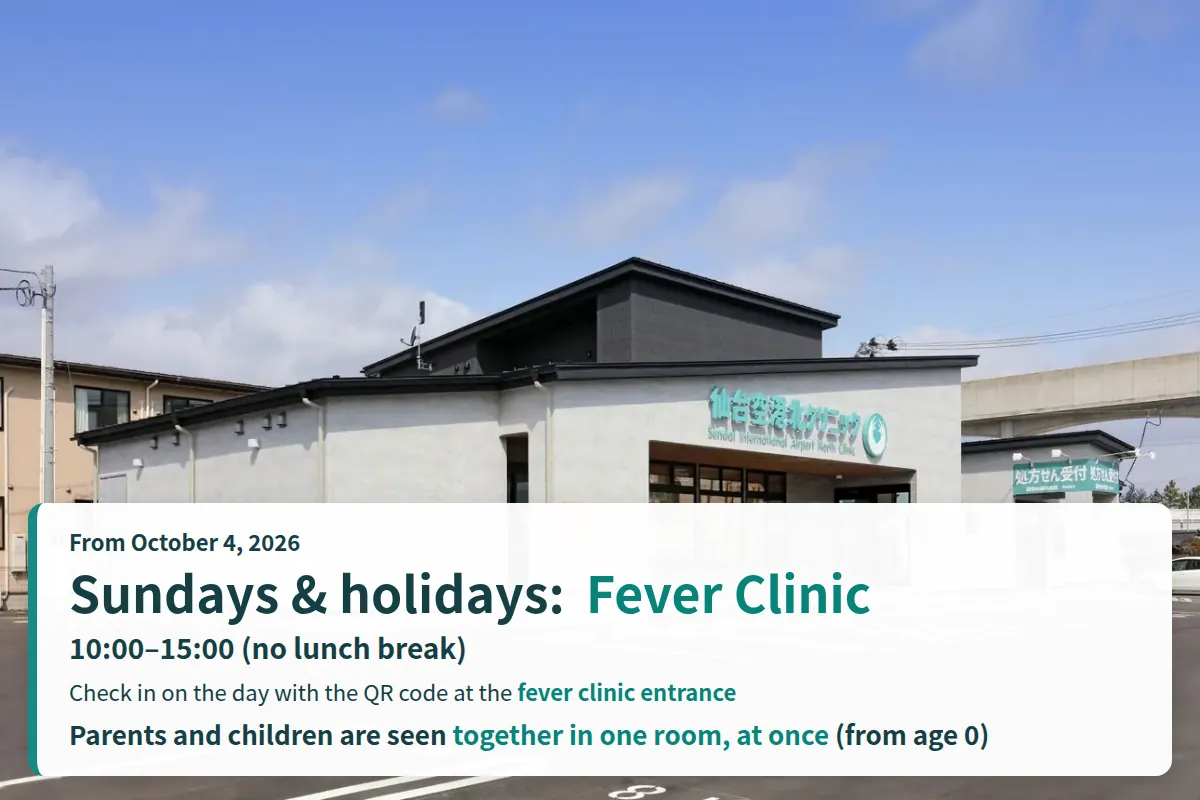
First, a note about our fever clinic on Sundays and national holidays. PCR testing for influenza and COVID (a test that copies the virus’s genetic material in order to detect it) gives results the same day.
From October 4, 2026, we also run the fever clinic on Sundays and national holidays
10:00 to 15:00 (no lunch break). You check in on the day. We give you the PCR result the same day. On Sundays and holidays we see fever patients only, and we do not offer general outpatient care or IV drips. Please check the clinic calendar for clinic dates and closed days. Notice: fever clinic on Sundays and national holidays
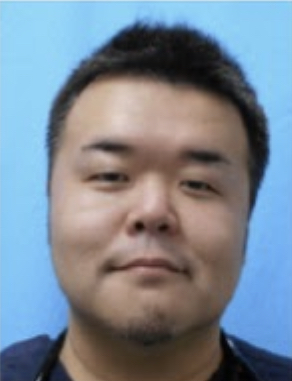
Shunichi Gamo, MD, PhD
Director, Sendai International Airport North Clinic
Born and raised locally, he attended Yuriage Elementary School and Yuriage Junior High School in Natori City. After graduating from Tohoku University School of Medicine, he worked at Sendai Open Hospital and Kesennuma City Hospital, and then at Tohoku University Hospital. In April 2021, in the middle of the COVID-19 pandemic, he opened Sendai International Airport North Clinic. Holding to a fever clinic that never turns patients away, he cared for well over 20,000 patients with fever in the two years before COVID-19 was moved to Class 5 under Japan’s infectious disease law.
Society memberships and board certifications
Certified Member and Board Certified Fellow, Japanese Society of Internal Medicine
Board Certified Pulmonologist, Japanese Respiratory Society
Board Certified Allergist, Japanese Society of Allergology
Board Certified Specialist, Japanese Society of Anti-Aging Medicine
PhD in Medicine (Tohoku University)
In short: How long does the cough from bronchitis last in children?
To give you the conclusion first: the cough from acute bronchitis can last a long time. The Ministry of Health, Labour and Welfare’s manual reports that it is not unusual for a cough from an acute respiratory infection to last 2 to 3 weeks, and that it lasts 17.8 days on average[1].
A systematic review from outside Japan (an analysis that combines several studies) reported that in 90% of children with an acute cough, the cough had gone by day 25[4]. This figure supports the point that a cough lasting 2 to 3 weeks is not unusual.
| Source | How long the cough lasts |
|---|---|
| Ministry of Health, Labour and Welfare manual[1] | 17.8 days on average (lasting 2 to 3 weeks is not unusual) |
| Systematic review[4] | Gone by day 25 in 90% of children |
However, this does not mean “it is fine to wait and see until day 25.” When a cough drags on, it is necessary to check that another illness is not hiding behind it.
 Dr. Gamo
A long cough in itself is not unusual. What matters is watching whether the cough changes over time.
How is acute bronchitis different from a common cold or pneumonia?
Acute bronchitis is inflammation of the lower airways with cough as the main symptom; there are no clear diagnostic criteria, and the term is often used once pneumonia has been ruled out[1]. The line between it and a common cold is blurry, so the key is working out whether it is pneumonia.
Almost all cases are caused by viruses, but mycoplasma, chlamydia, and the whooping cough bacterium also need attention[1]. It has been pointed out that a change in the color of phlegm alone cannot tell you whether bacteria are the cause[1].
When a fever continues or breathing looks difficult, pneumonia, empyema (pus collecting around the lung), and an airway foreign body (an object stuck in the windpipe) need to be considered[1]. These are signs we do not want to miss.
Dr. GamoNot just the cough: please also check whether the fever is continuing and whether breathing looks hard.
How can pneumonia, asthma, and whooping cough be told apart?
Even when we simply say “a cough that won’t go away,” there are several illnesses to tell apart. First, get a sense of the differences from the table below.
| Illness | Points that tell it apart |
|---|---|
| Pneumonia | A high fever that continues, a bad cough or a chesty cough with phlegm, and less energy and appetite[3]. When the fever persists or there are breathing problems, tests may be considered to rule out pneumonia or empyema[1] |
| Whooping cough | Bouts of short coughs one after another, with a whistling sound (a whoop) when breathing in. Vomiting after coughing fits and attacks at night are also typical. There is no fever, or only a slight one[5]. From age 1, a cough lasting a week or more together with these features is a condition for a clinical diagnosis of whooping cough[1] |
| Asthma | Wheezing when breathing out[2]. When a cough lasts 3 weeks or more, asthma or whooping cough becomes more likely[6] |
| Airway foreign body | If your child suddenly chokes, has a coughing fit, and seems to be struggling to breathe, they may have accidentally inhaled an object. Call an ambulance right away[7] |
The younger the child, the less clear the symptoms of whooping cough can be. In early infancy, the typical cough may be absent, and it can start with apnea attacks (pauses in breathing) that look as if the baby is holding their breath[5]. If whooping cough is going around near you, talk to a doctor early[1].
Dr. GamoIf you hear that whooping cough is going around at nursery or school, please tell the doctor that as well.
For the detailed course of whooping cough, see our article on whooping cough, and for managing an asthma-like wheezy cough, see our article on asthma in children. General guidance on when to see a doctor for a cough is in our article on coughs in children.
Signs to act quickly: When to call 119, and when to see a doctor the same day?
Call 119 right away
If even one of the following applies, call 119 without hesitation. The same applies at night and on holidays[2].
- Consciousness seems abnormal, no response when you call them, dazed
- Having a seizure
- So short of breath they cannot speak, purple lips (cyanosis)
- Suddenly chokes, has a coughing fit, and seems to be struggling to breathe (an inhaled foreign object; call an ambulance right away)[7]
See a doctor early (the same day)
In cases like the following, see your family doctor early[3].
- Coughing over and over without settling
- A cough with a strange sound that is different from usual
- Vomiting with the cough, and unable to keep down fluids or food
- Lips or nails that look pale, blue, or purple
- Nostrils flaring when breathing in, or the chest sinking in with each breath
- Finds it hard to talk, cannot walk, cannot lie down, or cannot sleep
- Babies aged 6 months or younger should be seen once, even if they have no other symptoms and seem well[3]
How to tell if breathing is difficult
When breathing is difficult, you may see the following[7]. You can check at home by counting how many times the chest or tummy rises and falls in 1 minute.
- Fast breathing, shoulders moving up and down with each breath (shoulder breathing)
- The chest or throat sucks in with each breath (retractions)
- Cannot lie down (orthopnea), nostrils flaring (nasal flaring)
- A wheezing or whistling sound with each breath (wheeze)
A rough guide to breaths per minute is 40 to 50 for newborns, 30 to 40 for babies, and 20 to 30 for toddlers and young children[7]. If your child is well above this and seems to be struggling, see a doctor early[7].
Dr. GamoBreaths are hard to count until you are used to it. Please try slowly counting the rise and fall of the chest or belly for 1 minute.
If you are unsure what to do at night or on a holiday, you can use the children’s emergency advice line (#8000) for your area (the hours differ depending on the local government that runs it)[2]. However, if there are clearly dangerous signs, call 119 directly without calling the advice line first.
What care can we give at home?
Coughing is the body’s way of keeping the airways clear. Make your child more comfortable with care like the following[2].
- Help your child calm down in a comfortable position (upper body raised)
- Avoid exercise and let your child rest
- Air out the room (avoid tobacco smoke) and keep the air humid
- Give fluids
- Clear the nose (suction the mucus)
During a coughing fit, have your child lean forward and rub or gently pat their back. Hold a baby upright and rub their back. During naps, raise the upper body, and give fluids in small amounts often[7].
Dr. GamoThe trick with fluids is to give a little at a time, many times, rather than a lot at once.
Honey is said to help with coughs, but never give it to a child under 1 year old. There is a risk of infant botulism[2]. For details, see our article on infant botulism.
Whether to use medicine is decided by the doctor after examining your child. If you have used an over-the-counter medicine, tell the doctor which one at the visit[2].
When are antibiotics needed?
Most coughs are caused by viruses, and in that case treatment focuses on easing the cough and fever[1]. On the other hand, there are cases where antibiotics (medicines that kill bacteria) are needed.
When whooping cough is suspected or diagnosed, a macrolide antibiotic is recommended[1]. Antibiotics for whooping cough are considered effective, especially in the catarrhal stage (the early stage of the illness)[5]. Mycoplasma pneumonia is also treated with antibiotics[8].
Also, when a wet cough (a chesty cough with phlegm) lasts 10 days or more and does not get better, protracted bacterial bronchitis or sinusitis is suspected, and amoxicillin is considered[1].
For ordinary acute bronchitis, there is a report that the average benefit of antibiotics is small and side effects increase slightly[9]. However, this analysis was not limited to children; it covered people without chronic lung disease[9]. That is exactly why it is important for a doctor to examine your child and work out whether bacteria are the cause. When antibiotics are judged necessary, finish the whole course as prescribed, and do not use leftover antibiotics from before on your own judgment.
Dr. GamoAntibiotics are for the children who need them, only when they need them. Please let the doctor make that call at the examination.
What should I tell the doctor at the visit?
To help reach a diagnosis sooner, tell the doctor the following. If you bring it written down as a note, the examination goes more smoothly[3].
- When the cough started, and whether it has been going on a long time
- What medicines your child is taking, and whether they have seen any other doctor
- What the cough is like (how it comes out, and at what time of day it tends to occur)
- Whether there is a fever, wheezing, or difficulty breathing
- Appetite, and how many milk feeds
- Whether your child has ever been told they have asthma
Frequently asked questions
- My child has had a cough for a week. Should we see a doctor?
-
Even with a cough that has lasted a week, it is fine to see a doctor and ask. The cough from acute bronchitis can last 17.8 days on average[1], but please see a doctor especially if it lasts 10 days or more without getting better, there is wheezing, or your child cannot sleep at night[1][7]. If your child is so short of breath they cannot speak, their consciousness seems abnormal, or they are having a seizure, call 119[2].
- If the phlegm is yellow or green, are antibiotics needed?
-
The color of the phlegm is said not to tell you whether bacteria are the cause[1]. Whether antibiotics are needed is decided at the examination. They are considered when whooping cough, mycoplasma, protracted bacterial bronchitis, or similar conditions are suspected[1].
- What should I do if I think it might be whooping cough?
-
Typical features are bouts of short coughs one after another, a whistling sound when breathing in, vomiting after coughing fits, and attacks at night. There is no fever, or only a slight one[5]. See a doctor early, and take care not to pass it on to babies around you[5].
- The cough gets worse at night. What can I do?
-
At night the airways become more sensitive, and coughing tends to occur from bedtime until early morning[3]. Try care such as raising the upper body, humidifying the air, and giving fluids[2]. If the cough goes on so much that your child cannot sleep, see a doctor[7].
- My child is under 1 year old. Can I give honey?
-
No. Never give honey to a child under 1 year old. There is a risk of infant botulism[2].
- My child had a seizure. What should I do?
-
If your child is having a seizure, call 119 without hesitation[2]. The same applies if their consciousness seems abnormal or they are so short of breath they cannot speak[2].
Summary: When a cough lingers, watch for changes and for signs to see a doctor
- A cough from bronchitis in children can drag on for a long time, 17.8 days on average, but the cause is usually a virus, and treatment focuses on easing the symptoms[1]
- If your child’s consciousness seems abnormal, they are having a seizure, or they are so short of breath they cannot speak, call 119 without hesitation[2]
- A cough going on for 10 days or more, wheezing, or a whooping cough-like cough can point to pneumonia, asthma, or whooping cough, so see a doctor[1][3]
- Also see a doctor the same day if the cough keeps your child awake at night, they cannot drink, or their breathing is fast[3][7]
- Antibiotics may be needed when whooping cough, mycoplasma, protracted bacterial bronchitis, or similar conditions are suspected[1]
A lingering cough in your child is worrying, but if you notice a change in the cough or any sign to see a doctor, please tell us just as you see it. Leave the medical care to us.
That’s all.
Disclaimer
This article is intended to provide general medical information and does not replace an examination, diagnosis, or treatment by a doctor. The content is based on medical knowledge at the time of publication, but the right course of action differs for each person. If you are worried about symptoms, please consult a medical facility.
References
- Ministry of Health, Labour and Welfare, Health and Public Health Bureau, Infectious Disease Control Department, Infectious Disease Control Division. Manual of antimicrobial stewardship, 4th edition: outpatient medical care. Ministry of Health, Labour and Welfare website (in Japanese). Accessed October 2026. https://www.mhlw.go.jp/content/10900000/001630903.pdf
- Ministry of Health, Labour and Welfare, “Smart Use of Medical Care” Project. Smart use of medical care (children’s edition). kakarikata.mhlw.go.jp (in Japanese). Accessed October 2026. https://kakarikata.mhlw.go.jp/assets/pdf/slide.pdf
- Tokyo Metropolitan Government. Coughing and wheezing: explanation. Tokyo Children’s Medical Guide (in Japanese). Accessed October 2026. https://www.guide.metro.tokyo.lg.jp/symptom/seki/index.html; Tokyo Metropolitan Government. Fever: explanation. Tokyo Children’s Medical Guide (in Japanese). Accessed October 2026. https://www.guide.metro.tokyo.lg.jp/symptom/netsu/index.html
- Thompson M, Vodicka TA, Blair PS, Buckley DI, Heneghan C, Hay AD; TARGET Programme Team. Duration of symptoms of respiratory tract infections in children: systematic review. BMJ. 2013 Dec;347:f7027. doi:10.1136/bmj.f7027 PMID: 24335668
- Japan Institute for Health Security (JIHS). Pertussis (detailed version). Infectious Diseases Information website (in Japanese). Accessed October 2026. https://id-info.jihs.go.jp/infectious-diseases/pertussis/detail/index.html
- Bergmann M, Haasenritter J, Beidatsch D, Schwarm S, Hörner K, Bösner S, et al. Coughing children in family practice and primary care: a systematic review of prevalence, aetiology and prognosis. BMC Pediatr. 2021 Jun;21(1):260. doi:10.1186/s12887-021-02739-4 PMID: 34088294
- Children and Families Agency. Guidelines for infection control in nursery schools (2018 revised edition), Appendix 3, (5) Responding to a cough. Children and Families Agency website (in Japanese). Accessed October 2026. https://www.cfa.go.jp/assets/contents/node/basic_page/field_ref_resources/e4b817c9-5282-4ccc-b0d5-ce15d7b5018c/cd6e454e/20231010_policies_hoiku_25.pdf
- Japan Institute for Health Security (JIHS). Mycoplasma pneumonia. Infectious Diseases Information website (in Japanese). Accessed October 2026. https://id-info.jihs.go.jp/infectious-diseases/mycoplasma-pneumoniae-infection/index.html
- Smith SM, Fahey T, Smucny J, Becker LA. Antibiotics for acute bronchitis. Cochrane Database Syst Rev. 2017 Jun;6(6):CD000245. doi:10.1002/14651858.CD000245.pub4 PMID: 28626858
▶ Overview of this topic: When to see a doctor for a child’s cough that won’t stop
More articles to read when a cough won’t go away
For whooping cough, see our article on whooping cough, and for managing a wheezy cough, see our article on asthma in children.