If you are in a hurry
- In older adults, even a serious infection may not raise the temperature much, so look at “how far it has risen above their usual temperature” and “how they differ from usual” rather than the number
- Not eating, being spaced out, falling, or new or more frequent incontinence can be signs of infection
- If their consciousness seems off, they suddenly have trouble breathing, or a seizure will not stop, call 119 (Japan’s emergency number)
Hello. I am Shunichi Gamo, MD, PhD, a board-certified pulmonologist and the director of Sendai Airport North Clinic.
As mornings and evenings turn cold, more people bring an older family member to our fever clinic. What I often hear from them is this:
“The fever is only a little over 37°C, but somehow they just seem different from usual.”
In fact, that feeling of “somehow different” is very important information.
Let me give you the answer first. For an older adult with a fever, we judge by “how far the temperature has risen above their usual” and “how they differ from usual,” rather than by the number on the thermometer. That is because older adults may not run a very high temperature even with a serious infection such as pneumonia.
In this article, from my standpoint as a pulmonologist, I explain why fevers stay low in older adults, the danger signs for families to watch for, where to draw the line for calling 119, and what to tell us when you come in.
First, a note about our fever clinic on Sundays and holidays. PCR tests (tests that copy the virus’s genetic material so it can be detected) for influenza and COVID-19 give results the same day.
From October 4, 2026, our fever clinic is also open on Sundays and holidays
10:00 to 15:00 (no lunch break). No appointment is needed; you register by checking in on the day. We tell you the PCR result the same day. On Sundays and holidays we run the fever clinic only, with no general outpatient care and no IV drips. We are closed on Sunday, October 25. From November, we are generally open every Sunday and on holidays. Notice about the Sunday and holiday fever clinic
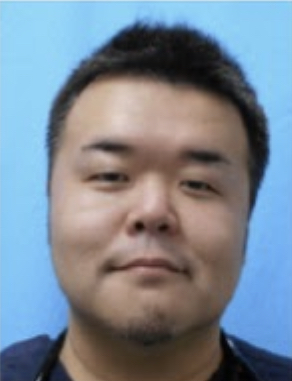
Shunichi Gamo, MD, PhD
Director, Sendai International Airport North Clinic
Born and raised locally, he attended Yuriage Elementary School and Yuriage Junior High School in Natori City. After graduating from Tohoku University School of Medicine, he worked at Sendai Open Hospital and Kesennuma City Hospital, and then at Tohoku University Hospital. In April 2021, in the middle of the COVID-19 pandemic, he opened Sendai International Airport North Clinic. Holding to a fever clinic that never turns patients away, he cared for well over 20,000 patients with fever in the two years before COVID-19 was moved to Class 5 under Japan’s infectious disease law.
Society memberships and board certifications
Certified Member and Board Certified Fellow, Japanese Society of Internal Medicine
Board Certified Pulmonologist, Japanese Respiratory Society
Board Certified Allergist, Japanese Society of Allergology
Board Certified Specialist, Japanese Society of Anti-Aging Medicine
PhD in Medicine (Tohoku University)
[Conclusion] An older family member’s fever needs attention even when it is low; look at “how they differ from usual” rather than the number
When an older family member seems feverish, it is enough to check these three things.
- [How far it has risen]
How much higher is the temperature than their usual? (Even in the 37°C range, be careful if their usual is around 36°C) - [How they differ from usual]
Is there a change such as not eating, not drinking, being spaced out, falling, or more incontinence? - [Breathing, consciousness, fluids]
Is their breathing fast? Do they answer when called as they usually do? Are they able to drink, and are they passing urine?
If anything in the third item, breathing, consciousness or fluids, is clearly wrong, act quickly no matter how high the fever is. I have summarized where to draw the line in detail in the “Signs that call for seeing a doctor quickly” section below.
Why does the temperature rise less in older adults?
With age, the body’s response when it fights pathogens (the viruses, bacteria and other things that cause disease) becomes milder, and fevers are less likely to appear. There is a review (a paper that summarizes and explains earlier research) by a US geriatrics specialist[1]. According to it, in 20 to 30% of infections in older adults there is no fever, or only a weak one[1].
The guideline for long-term care facilities from the Infectious Diseases Society of America (IDSA) (a clinical manual compiled by the society) also states that more than half of residents with serious infections do not show a fever in the usual sense[2]. The same review adds that when an older adult does have a fever, it is more likely to reflect a serious viral or bacterial infection than a fever in a young person[1].
In other words, older adults “are less likely to run a fever, and when they do, it is often serious.” Please do not be reassured just because it is in the 37°C range.
Many older adults also have a lower usual temperature
Quite a few people have a low usual temperature to begin with. In the US, one study measured oral temperatures in 150 older adults with an average age of 80.7[3]. Among the 50 who lived at home, the average daytime temperature was 97.7°F (about 36.5°C), and 45 of the 50 (90%) were below 98.6°F (37.0°C)[3].
For someone whose usual temperature is around 36°C, a reading of 37.3°C means something different from the same 37.3°C in a young person whose usual temperature runs higher.
Looking at “how far it has risen above the usual temperature” (the US standard)
In Japan, 37.5°C or higher is commonly called a “fever,” but the IDSA guideline for long-term care facilities defines fever in older residents as follows[2].
| “Fever” in the US IDSA guideline | Guideline |
|---|---|
| One oral reading | Over 37.8°C |
| Repeated oral readings | Over 37.2°C (over 37.5°C if measured rectally) |
| Compared with their usual temperature | Risen by more than 1.1°C |
This table is a standard for older residents of US care facilities, and policies differ by country and medical institution. Still, the idea that a rise of more than 1.1°C above the usual temperature counts as a fever is useful at home too.
For that reason, I recommend learning your family member’s usual temperature while they are well. Body temperature changes during the day, so it is enough to measure several times at the same times of day, such as morning and evening, with the same thermometer.
Being “different from usual” can be a sign of infection
In older adults, infection often shows up first as “being different from usual,” before fever or cough. The IDSA guideline also asks us to suspect infection when changes like the following appear[2].
- Suddenly spaced out, or saying things that do not make sense (existing forgetfulness suddenly gets much stronger)
- Eating less, or no longer drinking
- New or more frequent incontinence (leaking because they could not get to the toilet in time)
- Falling, unsteadiness, being unable to stand up, or a sudden change for the worse in how they walk
- Resisting care or help, or not cooperating as they usually do
The person themselves often says, “Nothing hurts.” A leaflet for older adults from the Fire and Disaster Management Agency also warns that “older adults may not notice symptoms themselves”[4]. The “something is different” that family members who are with them every day, or care facility staff, feel is also a valuable clue for doctors.
 Dr. Gamo
A feeling of “I can’t explain it well, but something is wrong” is reason enough to see a doctor. A family member’s hunch is right quite often.
Common causes of fever in older adults
Pneumonia: cough and fever may not stand out
The first thing to watch for with a fever in an older adult is pneumonia. A US research group asked 1,812 adults diagnosed with pneumonia at five sites, including university hospitals, about their symptoms[5]. For 17 of the 18 symptoms, including cough, phlegm, shortness of breath and chills, the older the person, the fewer said they had the symptom[5].
Pneumonia in older adults can come with little cough or a low fever, and it is sometimes found only because of changes such as a poorer appetite or being spaced out. For tests for pneumonia, please see the related article too.
Aspiration pneumonia: watch for choking at meals and coughing at night
Aspiration pneumonia is pneumonia that occurs when food or saliva goes into the windpipe and reaches the lungs together with bacteria from the mouth. A study of 214 people hospitalized with pneumonia in Japanese hospitals from October 2010 to March 2012 found that 100 of them (46.7%) had aspiration pneumonia[6].
People with aspiration pneumonia are older and have more chronic illnesses, and it is also known that they are prone to repeated pneumonia[6]. If they often choke while eating, cough after meals or at night, or have a hoarse voice, please tell us when you see a doctor.
Urinary tract infection, dehydration, influenza and COVID-19
Other common causes of fever in older adults include the following.
- [Urinary tract infection]
An infection in which bacteria get into the bladder or kidneys. In older adults it is sometimes noticed through changes such as more incontinence or being spaced out, rather than pain when passing urine - [Dehydration (not having enough water in the body)]
Sweating from a fever and eating and drinking less lead to dehydration. Older adults do not feel thirst as easily, and dehydration makes them feel worse - [Influenza and COVID-19]
Whether it is going around in the family, a care facility or a day service is a clue. Influenza antiviral drugs (medicines that stop the virus from multiplying) are generally started within 48 hours of onset
If pneumonia or a urinary tract infection is diagnosed, it is treated properly with antibiotics. When they are needed, start without hesitation and finish the whole course you are given. Please do not give leftover medicine from an earlier illness on your own judgment.
[Signs that call for seeing a doctor quickly] 119, the emergency department, or the same day
Call 119 right away
If even one of the following applies, call 119 (Japan’s emergency number) without hesitation, no matter how high the fever is[4]. This is the same at night and on holidays.
- They do not answer when called, or are dazed (consciousness seems off)
- They suddenly have trouble breathing, are breathing with their shoulders, or their lips look purplish
- A seizure will not stop
- Food or something else is stuck in the throat
- They fell or dropped and hit their head or body hard
Go to the emergency department the same day, even at night or on a holiday
In the following cases, do not wait until morning; go to an emergency department even at night or on a holiday. If they look distressed and cannot be moved, call 119.
- They can hardly take any fluids, or have not passed urine for half a day or more
- Even at rest, their breathing is clearly faster than usual or looks laboured
- If you have a pulse oximeter, a reading of 93% or lower that continues[7] (for people whose reading is usually low, a value that stays clearly below their usual value and does not come back up)
- Their hands and feet are cold, and their face is pale or ashen and they are limp
You can check the breathing rate at home by counting how many times the chest or belly rises and falls in one minute. For reference, the US IDSA guideline for long-term care facilities asks that oxygen levels be measured in residents who breathe more than 25 times per minute[2]. This is a guideline for US facilities, and policies differ by country and medical institution.
A pulse oximeter is a device that measures the oxygen level in the blood (SpO2) through the fingertip. In the COVID-19 clinical practice guide from a Ministry of Health, Labour and Welfare research group, 93% or lower is the guideline for a condition that needs oxygen (moderate illness II)[7].
However, people with chronic lung disease and similar conditions may have a lower SpO2 even when they are well.
If unsure, call #7119
If you cannot decide whether it is serious enough to call 119, you can call the Miyagi Prefecture adult emergency telephone consultation line (#7119, a phone line that advises on whether to call an ambulance). It takes calls 24 hours a day, 365 days a year, and from phones that cannot use #7119 you dial 022-706-7119[8]. However, when there is a clearly dangerous sign, call 119 without stopping to consult.
The same day (or next morning if it is night): see a fever clinic or similar
If breathing, consciousness and fluids are holding up but one of the following applies, please do not wait too long before seeing a doctor.
- 37.5°C or higher, or even in the 37°C range, more than 1.1°C above their usual temperature (a guideline based on the US standard above)
- A poorer appetite or low energy (if there is a change in consciousness unlike their usual self, such as suddenly being spaced out or saying things that do not make sense, see a doctor right away, even at night or on a holiday)
- Falling more than usual, or more incontinence
- Choking at meals or coughing at night that keeps going
- Influenza, COVID-19 or similar illness in the family or care facility
If their condition changes during the night, go back to the “119” and “emergency department” guidelines above and judge again at that point.
What we would like you to tell us when you bring an older family member
Older adults sometimes find it hard to describe their own symptoms. If the family member who comes with them tells us the following, the diagnosis is made much faster. Please bring it as a note, or enter it in the pre-visit questionnaire.
- Their usual temperature, and the highest temperature this time
- Since when they have been “different from usual” (for example, “since the evening before last they have eaten half as much”)
- The specific changes (how much they eat and drink, how often they pass urine, falls, incontinence, being spaced out, choking, and so on)
- The medicines they usually take (medication notebook), and the time they took a fever reducer if they did
- Chronic illnesses (heart, kidney or lung disease, diabetes, dementia, and so on)
- Use of a care facility or day service, and infections going around nearby
In particular, their usual temperature and “since when they have been different” are information only family members have. Please be sure to tell us.
How to use our fever clinic [no appointment needed, open Sundays and holidays too]
The fever clinic at Sendai Airport North Clinic (Mitazono, Natori City) does not use appointments for a set time. We see patients through a pre-visit questionnaire and same-day check-in. Our clinic has a policy of not refusing anyone who wants to come to the fever clinic (depending on the symptoms, we may direct you to a more suitable medical institution).
| Day | Hours |
|---|---|
| Mon, Tue, Wed, Fri, Sat | 9:00 to 12:00 / 14:00 to 18:00 |
| Sundays and holidays (from October 4, 2026) | 10:00 to 15:00 (no lunch break, fever clinic only) |
| Thursday | Closed |
On Sundays and holidays, we are closed on Sunday, October 25, and from November we are generally open every Sunday and on holidays. On Sundays and holidays we run only the fever clinic, with no general outpatient care and no IV drips. For details, please see the Notice about the Sunday and holiday fever clinic.
How a visit works
You register by checking in on the day, using the QR code at the fever clinic entrance (a square pattern that you scan with your smartphone camera). When your turn is near, we call you by SMS (a text message sent to a mobile phone number) or by phone.
- Before you arrive, fill in the pre-visit questionnaire (optional; you can also fill it in when you check in at the entrance)
- Scan the QR code at the fever clinic entrance and check in by choosing “I have arrived, check me in” (required)
- On weekdays, once you have checked in, please wait in your car
- On Sundays and holidays, after you check in, we confirm your insurance card (My Number insurance card, certificate of eligibility, and so on) at the general outpatient entrance. Because general outpatient care is not offered on Sundays and holidays, please feel free to come in. After the confirmation, please wait in your car or similar
- When your turn is near, we call you by SMS or phone. Press the intercom at the fever clinic entrance and tell us your name
What to bring
- Your My Number insurance card, or a certificate of eligibility or similar
- Your medication notebook (something that shows the medicines they usually take)
- A note of their usual temperature, how their temperature has changed, and “since when they have been different”
- If you used a test kit at home, the result (a photo is fine)
Patients are generally seen in check-in order, but the order may change depending on how severe the symptoms are. For details, please see About the pre-visit questionnaire and same-day check-in for the fever clinic.
Please note that we cannot give IV drips on Sundays and holidays. If they can hardly take any fluids and are limp, please go to a medical institution that can give an IV drip.
Frequently asked questions
- My elderly parent’s temperature is 37.3°C. Should we see a doctor?
-
If their usual temperature is 36.0°C, that is a rise of 1.3°C, which meets the US standard of “a rise of more than 1.1°C above the usual temperature,” so I recommend seeing a doctor. This is all the more true if there are changes such as a poorer appetite or being spaced out. If they respond strangely when called, or look like they are struggling to breathe, call 119 regardless of the temperature.
- There is no fever, but they suddenly stopped eating and seem spaced out. Is it okay to wait and see?
-
In older adults, pneumonia, urinary tract infection and similar illnesses can begin without a fever, with only a poorer appetite or a spaced-out look. Please see a doctor the same day. If they do not answer when called, or are dazed, call 119.
- What should I do if I don’t know their usual temperature?
-
Even if you don’t know their usual temperature, it is fine to see a doctor if they seem “different from usual.” While they are well, measure several times at the same times of day, such as morning and evening, with the same thermometer. It will help you judge the next time they have a fever.
- An older family member became unwell in the middle of the night. I can’t decide whether to call an ambulance.
-
If their consciousness seems off, they suddenly have trouble breathing, or a seizure will not stop, call 119 without hesitation. If you cannot decide, you can consult the Miyagi Prefecture adult emergency telephone consultation line (#7119) 24 hours a day. If they can hardly take any fluids or have not passed urine for half a day or more, go to an emergency department without waiting for morning.
- Can I bring an older family member to the fever clinic on a Sunday or holiday?
-
Yes. We run the fever clinic on Sundays and holidays from 10:00 to 15:00 (no lunch break). No appointment is needed; you register by checking in on the day with the QR code at the fever clinic entrance. We are closed on Sunday, October 25. We do not offer general outpatient care or IV drips on Sundays and holidays.
Summary [Even with a low fever, see a doctor if they are “different from usual”]
- In older adults, even a serious infection may not raise the temperature much, so look at “how far it has risen above their usual temperature” and “how they differ from usual” rather than the number
- Not eating, being spaced out, falling, or more incontinence can be signs of infection
- If their consciousness seems off, they suddenly have trouble breathing, or a seizure will not stop, call 119 (Japan’s emergency number)
- If they can hardly take any fluids, have not passed urine for half a day, or are breathing fast, go to an emergency department even at night
- When you see a doctor, tell us their usual temperature, since when they have been different, the medicines they take, and their chronic illnesses
The first people to notice an older family member’s “something is off” are the ones who are always at their side. Please pass that observation on to us just as it is. Please leave the medical side to us.
That’s all.
Disclaimer
This article is intended to provide general medical information and does not replace an examination, diagnosis or treatment by a doctor. The content is based on medical knowledge at the time of publication, but the right approach differs from person to person. If you are worried about your symptoms, please consult a medical institution.
References
- Norman DC. Fever in the elderly. Clin Infect Dis. 2000 Jul;31(1):148-51. doi:10.1086/313896 PMID: 10913413
- High KP, Bradley SF, Gravenstein S, Mehr DR, Quagliarello VJ, Richards C, et al. Clinical practice guideline for the evaluation of fever and infection in older adult residents of long-term care facilities: 2008 update by the Infectious Diseases Society of America. Clin Infect Dis. 2009 Jan;48(2):149-71. doi:10.1086/595683 PMID: 19072244
- Gomolin IH, Aung MM, Wolf-Klein G, Auerbach C. Older is colder: temperature range and variation in older people. J Am Geriatr Soc. 2005 Dec;53(12):2170-2. doi:10.1111/j.1532-5415.2005.00500.x PMID: 16398904
- Fire and Disaster Management Agency, Ministry of Internal Affairs and Communications. Leaflet on using an ambulance (version for older adults) (in Japanese). Fire and Disaster Management Agency website. Accessed October 2026. https://www.fdma.go.jp/publication/portal/items/portal009_kourei.pdf
- Metlay JP, Schulz R, Li YH, Singer DE, Marrie TJ, Coley CM, et al. Influence of age on symptoms at presentation in patients with community-acquired pneumonia. Arch Intern Med. 1997 Jul;157(13):1453-9. PMID: 9224224
- Hayashi M, Iwasaki T, Yamazaki Y, Takayasu H, Tateno H, Tazawa S, et al. Clinical features and outcomes of aspiration pneumonia compared with non-aspiration pneumonia: a retrospective cohort study. J Infect Chemother. 2014 Jul;20(7):436-42. doi:10.1016/j.jiac.2014.04.002 PMID: 24834866
- Clinical Practice Guide Editorial Committee (Research Group, Health and Labour Sciences Research Promotion Project). Clinical Practice Guide for COVID-19, Version 10.1 (in Japanese). Ministry of Health, Labour and Welfare website. 2024. https://www.mhlw.go.jp/content/001248424.pdf
- Miyagi Prefecture. Adult emergency telephone consultation (#7119) (in Japanese). Miyagi Prefecture website. Accessed October 2026. https://www.pref.miyagi.jp/soshiki/iryou/kyuukyuutel.html
▶ Overview of this topic: Sunday and holiday fever clinic (from October 4, 2026, 10:00 to 15:00)
Related articles to read when you have a fever
For the Sunday and holiday fever clinic, see the Notice about the Sunday and holiday fever clinic. For how to come in, see About the pre-visit questionnaire and same-day check-in for the fever clinic.