
Quick answer
- Hives (raised, itchy welts) or swelling together with breathing trouble, throat tightness or a hoarse voice, faintness or collapse, or repeated vomiting after a food, sting or medicine can be anaphylaxis (a severe, whole-body allergic reaction) [2].
- If you carry an adrenaline (epinephrine) auto-injector, use it now as you were trained, then call 119 (free from any phone in Japan). Do not wait for skin signs: anaphylaxis can occur without hives [1][2].
- Lie down with your legs raised, or sit up if breathing is hard. Do not stand or walk suddenly [1].
- Hives alone, without other symptoms, are usually not an emergency. Stop the suspected trigger, keep the packaging, and get medical advice.
- After a suspected drug reaction, record the exact product and ingredient names and the timing before you see a doctor.
What could this reaction be?
Allergic reactions range from mild to life-threatening. A sting may cause only a large, painful swelling at the site. Widespread hives (urticaria, itchy raised welts) and swelling deeper under the skin (angioedema, often of lips, eyelids or tongue) are common. At the severe end is anaphylaxis: a sudden reaction involving two or more body systems (for example skin plus breathing, or skin plus circulation), or low blood pressure or airway involvement after exposure to a likely trigger [2].
Common triggers relevant to Japan include:
- Foods: buckwheat (soba), peanut, tree nuts including walnut, shrimp, crab and other shellfish, egg, milk, wheat and fish [21]. Dashi soup stock and sauces can hide fish or shellfish.
- Insects: hornets and wasps (suzumebachi) and bees, mainly in summer and autumn when hiking or outdoors. In Japan, roughly 40 people die each year from stings by these insects [6].
- Medicines: NSAIDs (non-steroidal anti-inflammatory painkillers) such as loxoprofen or ibuprofen, including those inside combination cold remedies, and antibiotics, are among the most frequently implicated drugs.
A less obvious pattern is food-dependent exercise-induced anaphylaxis: eating a food (often wheat or buckwheat) and then exercising, or sometimes taking an NSAID, triggers a severe reaction. Fatal cases after eating soba and then swimming have been reported in Japan [9]. Buckwheat allergy is a particular concern in Asia [8]. Hives with fever may have other causes, such as viral infections; see our guide on fever while traveling in Japan. If you have known asthma and are wheezing without any allergen trigger, see our guide on asthma attacks.
You cannot tell on your own which reaction it is. Use the danger signs below to decide how fast to act.
What should I do first?
- Stop the exposure. Stop eating and stop taking the medicine. For a bee sting, scrape or flick out a visible stinger quickly with a fingernail or card; do not squeeze it, and do not delay the next steps [3].
- Check for danger signs. If any are present, use your own adrenaline auto-injector in the outer thigh (through clothing is fine) and call 119. Say “kyūkyū” (ambulance) and give the address or a landmark. Ask hotel or restaurant staff to help.
- Positioning: lie flat with legs raised; sit up if breathing is difficult; place on the side if vomiting; pregnant people on the left side. Do not let the person stand up suddenly [1].
- If symptoms do not improve, a second auto-injector, if carried, may be used after about 5–15 minutes as prescribed [2].
- Even if symptoms settle after adrenaline, go to hospital, because symptoms can return (a biphasic reaction) [2].
- For hives only: keep the food label or medicine box, take photos of the rash and how it changes over time, avoid alcohol, hot baths/onsen and strenuous exercise, and consider asking a pharmacist for advice.
For non-emergency help finding care, the JNTO Japan Visitor Hotline (050-3816-2787) answers 24 hours a day in English, Chinese and Korean [11]. Do not drive yourself, do not try to make yourself vomit, and do not take an antihistamine instead of adrenaline when danger signs are present.
When is it an emergency? Danger signs and 119
Call 119 immediately if any of the following appear after a food, sting or medicine [1][3]:
- Airway: throat tightness, hoarse voice, difficulty swallowing, swelling of the tongue or throat.
- Breathing: wheeze, persistent cough, shortness of breath or noisy breathing.
- Circulation: pale or floppy appearance (especially in children), dizziness, fainting or collapse.
- Gut: repeated vomiting or severe abdominal pain after an insect sting or a known allergen.
- Any rapid progression of symptoms.
Anyone who has used an adrenaline auto-injector needs hospital care, even if they feel better [1].
119 basics: the call is free and the ambulance itself is not charged, but hospital treatment is billed. If you need language help on a 119 call, ask hotel or restaurant staff to assist, or use the JNTO Japan Visitor Hotline for support in English, Chinese and Korean. In some areas, #7119 offers telephone advice when you are unsure whether an ambulance is needed, but availability varies by region [13].
Short phrase card:
- “Arerugī” — allergy
- “Iki ga kurushii” — breathing is difficult
- “Kyūkyūsha o onegaishimasu” — please send an ambulance
When to see a doctor
See a doctor the same day if you have hives or swelling without danger signs. Seek care the same day if the face or lips are swelling, a medicine is the suspected trigger, the rash keeps spreading despite an antihistamine, or you feel generally unwell. Anyone who has used an adrenaline auto-injector must go to hospital by ambulance, even if symptoms have settled [1]. If you are unsure whether an ambulance is needed, #7119 telephone advice may be available in your area [13]. A doctor should also be consulted after any severe reaction to arrange trigger testing and to decide whether you should carry an auto-injector [2].
How is an allergic reaction diagnosed, and why does it matter?
Doctors diagnose anaphylaxis from the history and the examination; treatment must not wait for tests [2]. A blood test called serum tryptase, drawn within a few hours, can support the diagnosis afterwards, but it is not always measured. Finding the trigger later may involve specific IgE blood tests (blood tests for allergy antibodies), skin tests, or a supervised challenge (eating the food under medical watch). These are usually done by an allergy specialist after the trip, and skin testing is often done weeks later.
Why it matters: knowing the trigger determines which foods or medicines to avoid, whether you should carry an adrenaline auto-injector, and which alternative drugs are safe for you [2]. Delayed adrenaline is a known risk factor for fatal outcomes, so being prepared matters [14].
To describe a suspected drug trigger, write down the following. The product name exactly as printed, all ingredients (combination cold remedies contain several), the dose, the time you took it, the time symptoms started, the symptoms, other medicines taken, and whether you drank alcohol or exercised. Note any previous reactions. Keep the box, the pharmacy bag and the page of your “okusuri techō” (medicine notebook) if a Japanese pharmacy issued one.
How is it treated in Japan? Prescription versus drugstore
Anaphylaxis: intramuscular adrenaline (an injection into a muscle) is the first-line treatment, both internationally and in the Japanese Society of Allergology guideline. Antihistamines and corticosteroids (anti-inflammatory steroid medicines) are add-ons only; they do not replace adrenaline, and evidence that steroids prevent returning symptoms is weak [16]. In hospital you may receive oxygen, intravenous fluids, inhaled bronchodilators (medicines that open the airways) and observation [2].
Auto-injector in Japan: EpiPen is prescription-only and cannot be bought at a drugstore. It is prescribed by physicians registered for it, so a replacement needs a Japanese doctor’s prescription. For general rules on using overseas prescriptions in Japan, see our guide on replacement prescriptions and lost medicines.
Hives without danger signs: non-sedating antihistamines (ones that do not cause drowsiness) are standard. Prescription antihistamines are available in Japan, and some non-sedating antihistamines are also sold over the counter in drugstores; ask a pharmacist which product suits you and check the label. Avoid sedating antihistamines such as diphenhydramine before driving. For reading Japanese OTC labels and combination cold medicines, see our guide on cold medicine in Japan.
Suspected drug allergy: stop the drug, and a doctor will choose an alternative from a different class.
Travel-specific points: food, flying, companions, children, insurance
Food: Japan’s allergen labelling (Consumer Affairs Agency) requires declaration of specified ingredients on prepackaged foods — egg, milk, wheat, buckwheat, peanut, shrimp, crab, walnut and, from April 2026, cashew nut — and recommends declaring more [21]. It does not cover restaurant, stall or freshly made foods, so ask staff and carry a written allergy card in Japanese. Shared fryers, soba water and dashi are common hidden sources.
Insects: cover skin, avoid perfume and dark clothing in hornet season, and do not swat at insects.
Carry auto-injectors: bring two if prescribed, plus a doctor’s letter. Check airline and security rules for carrying them in the cabin. For importing medicines into Japan, see the Ministry of Health, Labour and Welfare page on pharmaceuticals.
Flying soon after a reaction: ask the airline what documents they need; see our guide on flying and fitness-to-fly documents.
Companions: they should know where the auto-injector is and how to use it [1].
Children: tell the doctor the child’s weight. A child who becomes pale or floppy needs 119 [1]. For a febrile child, see our guide on child fever.
Insurance: keep receipts and ask for an English record. See our guide on medical certificates and travel insurance.
Frequently asked questions
I only have hives and no breathing trouble. Do I need a hospital?
Monitor for 1–2 hours for spread or danger signs. Seek same-day care if it worsens, if the face or lips swell, or if a medicine is suspected.
My symptoms went away after the EpiPen. Do I still need to go?
Yes. Call 119 and go to hospital, because symptoms can return after adrenaline [2].
Can I buy an EpiPen at a Japanese pharmacy?
No. It is prescription-only in Japan and needs a Japanese doctor’s prescription.
How do I tell a Japanese doctor which medicine I reacted to?
Give the packaging, the ingredient names and the timeline (when taken, when symptoms started), and use the okusuri techō (medicine notebook) page if you have one.
Is soba really a risk?
Yes. Buckwheat is a mandatory-labelled allergen in Japan, and cross-contact in noodle shops is common.
If you are near Sendai Airport
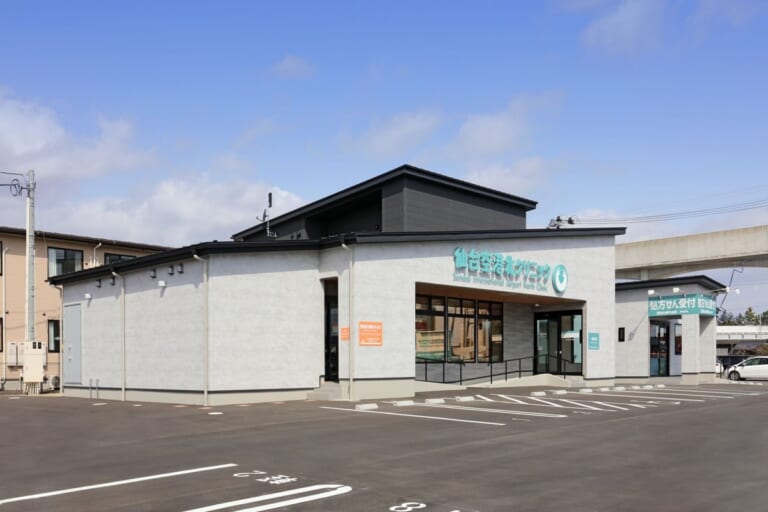
A suspected anaphylaxis is a 119 call, not a clinic walk-in. Sendai International Airport North Clinic, 8-1-8 Mitazono, Natori, Miyagi, is about 10 minutes by car from Sendai International Airport. The director, Shunichi Gamo, M.D., Ph.D., is board certified in internal medicine, pulmonology and allergology (Japanese Society of Allergology). The clinic runs a fever clinic with its own entrance and same-day QR check-in on arrival; no advance arrangement is needed. The check-in page is available in English, Traditional Chinese, Simplified Chinese and Korean. Fever clinic hours: Mon, Tue, Wed, Fri, Sat 10:00–12:00 and 14:30–18:00; Sundays and national holidays 10:00–15:00 (check the calendar); closed Thursdays. Telephone: 022-797-9523. The published USD 700 flat fee for visitors without Japanese insurance covers a fever-consultation package (English consultation, respiratory multiplex PCR, English certificate, and prescription if needed). Medicines are paid separately at the pharmacy next door. This package is not described as covering allergy evaluation. Someone with a suspected reaction but no fever should phone first to ask whether and how they can be seen. For directions, see the fever clinic near Sendai Airport and access from Sendai Station.
References
- Anaphylaxis – NHS
- Cardona V, et al. World Allergy Organization anaphylaxis guidance 2020. World Allergy Organ J 2020.
- Anaphylaxis – MedlinePlus Medical Encyclopedia
- Iglesia EGA, et al. Management of Food Allergies and Food-Related Anaphylaxis. JAMA 2024.
- Feás X, et al. Asian Hornet, Vespa velutina. Molecules 2021.
- Hirata H, et al. Efficacy and safety of rush immunotherapy in patients with Hymenoptera allergy in Japan. Asian Pac J Allergy Immunol 2003.
- Berges-Gimeno MP, et al. Drug hypersensitivity reactions in children in clinical practice: A WAO Statement. World Allergy Organ J 2025.
- Kajita N, Yoshida K. Buckwheat Allergy in Asia. Curr Allergy Asthma Rep 2024.
- Noma T, et al. Fatal buckwheat dependent exercise-induced anaphylaxis. Asian Pac J Allergy Immunol 2001.
- Leung AS, et al. Global trend of food-induced anaphylaxis. Pediatr Allergy Immunol 2025.
- Japan Visitor Hotline – JNTO
- For safe travels in Japan – Guide for when you are feeling ill – JNTO
- Emergency Safety Center Project (#7119) – Fire and Disaster Management Agency
- Turner PJ, et al. Fatal Anaphylaxis: Mortality Rate and Risk Factors. J Allergy Clin Immunol Pract 2017.
- Navalpakam A, et al. Management of Anaphylaxis. Immunol Allergy Clin North Am 2022.
- Shaker MS, et al. Anaphylaxis—a 2020 practice parameter update. J Allergy Clin Immunol 2020.
- Liyanage CK, et al. Corticosteroids in management of anaphylaxis; a systematic review. Eur Ann Allergy Clin Immunol 2017.
- Sheikh A. Glucocorticosteroids for the treatment and prevention of anaphylaxis. Curr Opin Allergy Clin Immunol 2013.
- Japanese Society of Allergology
- Pharmaceuticals and Medical Devices Agency (PMDA)
- Information on food allergy labelling – Consumer Affairs Agency
- Japan – Traveler View – CDC