
Quick answer
- Before you leave any clinic or pharmacy in Japan, ask for paper copies of everything you received: the test result if one is printed, the medical certificate, the prescription or medicine information sheet, and receipts. Photograph them.
- If you have already left, phone the clinic that saw you. Have your full name, date of birth, visit date and the phone number you used at check-in ready. Ask what the clinic needs to release a copy and how it can be sent.
- If symptoms worsen while you are still in Japan, call 119 for an emergency. For non-urgent help, use the JNTO Japan Visitor Hotline (050-3816-2787, 24 hours, multilingual) [1] or return to a clinic for reassessment.
- If symptoms worsen after you are home, see your own doctor or emergency service. Bring all Japanese documents and say you were treated in Japan.
- A test result describes one moment. Worsening symptoms need a new assessment, not just the old report. No guide can promise that any clinic will email, fax or post results; ask the clinic directly.
What situation are you in?
- You left the clinic without a copy of a result or document.
- You are home and someone else needs the result — another doctor, or your employer.
- Symptoms are getting worse, or new symptoms appeared, after a visit in Japan or after flying home.
Worsening after a negative or positive test can mean several things: the illness running its normal course, a second infection such as bacterial pneumonia or sinusitis, dehydration, or a cause the first test did not cover. This is not a diagnosis. For an unexplained fever pattern, see our fever guide. For a cough lasting weeks, see our lingering-cough guide.
What should I do first to get a copy of my result?
- Find what you already have: the medical certificate, receipt, pharmacy medicine sheet, and any photos you took.
- Contact the clinic by phone during its opening hours. Allow for the time difference between Japan and where you are. Give your full name, date of birth, visit date and the phone number used at check-in.
- Ask what the clinic can provide, in what language, by which method, whether a fee applies, and whether identity confirmation or a written request is needed.
- If another doctor or a family member will make the request for you, ask what written consent the clinic needs.
- Ask the clinic to send results to you, then share them with your doctor yourself. In Japan, patients may request disclosure of their own medical records under the Act on the Protection of Personal Information [2]. The clinic sets its own procedure and identity checks.
Fees, processing times, and whether email, fax or a portal is available differ from clinic to clinic. The only document established for visitors at the clinic below is the same-day English medical certificate with ICD-10 codes (standard diagnostic codes used worldwide).
How do I share a Japanese test result with another doctor?
- Bring originals plus a copy, and keep a clear photo or PDF on your phone.
- Note the test date and time, the specimen type (for example a nasal swab), and the test name.
- A multiplex PCR (a test that looks for the genetic material of many germs at once) panel result lists each target as detected or not detected. Ask a doctor to interpret it rather than self-interpreting.
- Japanese brand names of medicines may differ from the names at home, so write down the active ingredient names from the pharmacy sheet.
- If a document is only in Japanese, use a professional or certified translation where an insurer or employer requires it; a machine translation is fine only for your own understanding.
- Hospitals abroad are not required to accept Japanese reports; they will make their own assessment.
When to see a doctor again, and when to call 119?
Call 119 in Japan (ambulance and fire, free) when someone is seriously sick or injured. Warning signs that need urgent assessment include:
- severe breathing difficulty
- blue or grey lips
- chest pain
- confusion or difficulty waking
- seizure
- a stiff neck with fever
- fainting
- signs of severe dehydration (no urine for many hours, unable to keep fluids down)
- coughing up blood
- a rapidly spreading rash
At home, use your local emergency number.
Seek prompt reassessment if any of these apply. The warning signs are: fever returns after improving; fever persists longer than expected for the illness; breathing becomes faster; symptoms are worse rather than better as the days pass; or new ear, sinus or chest pain appears.
Also seek prompt reassessment for a high-risk person: pregnant, aged 65 or older, a child under 5, or someone with chronic heart, lung, kidney or immune conditions [4]. For children, see our child-fever guide. For asthma, see our asthma guide. The JNTO Japan Visitor Hotline can help you find care in English [1].
Which records should I bring to the reassessment?
- The medical certificate and diagnosis or ICD-10 code
- Any test result, with date and time
- The prescription or medicine information sheet, including the okusuri techo (medicine notebook) if given
- A note of doses taken and when
- Symptom-onset date and temperature log
- Your travel itinerary with flights and places visited
- Known exposures such as sick contacts, crowds or hiking
- Vaccination records
- Your usual medicines and allergies
Tell the new doctor you were in Japan and when you returned. After travel, be ready to share with your healthcare professional where you traveled, your travel activities, and what health care or medications you received during your trip [5].
How is it diagnosed, and why does an earlier result matter?
An earlier result helps the next doctor: it can avoid repeat testing and guides decisions. But it has limits. A result reflects one swab at one time. An early negative can miss an infection. A PCR may detect viral genetic material, such as rhinovirus, for some time after infection, or alongside another illness. In one study of healthy children, prolonged detection occurred in about one in four viral infections (23.4%), occurring most often for bocavirus and rhinovirus/enterovirus [6]. A respiratory panel does not test for everything; for example, group A streptococcus is not on the BioFire SpotFire R Panel. Worsening may lead the doctor to examine you, check oxygen levels, or order a chest X-ray, blood tests or a different test; the clinician decides which. Bacterial co-infection after a viral respiratory infection is common in hospitalised patients and is linked to worse outcomes [7], and secondary bacterial pneumonia after influenza is a well-recognised pattern [8]. For strep testing, see our sore-throat guide. For antigen versus PCR for COVID-19, see our COVID-19 guide. No panel is definitive.
How is it treated in Japan (and after you get home)?
Treatment depends on the reassessed diagnosis. In Japan, prescription medicines such as antivirals and antibiotics are given after a doctor’s examination and prescription, and are dispensed at a pharmacy; drugstores sell over-the-counter medicines [3]. Do not stop or restart a prescribed course without advice. Bring remaining medicines and the medicine sheet to the next doctor. For flu antivirals, see our influenza guide. For COVID-19 medicines, see our COVID-19 guide. For over-the-counter medicines and paracetamol labels, see our cold-medicine guide. For mycoplasma antibiotics, see our mycoplasma guide.
Travel-specific points: flying, companions, children, insurance
Flying while ill or worsening has its own considerations; see our fever-before-flight guide. Each travelling companion needs their own documents, and family members with fever can be seen together at the Natori clinic. For children, see our child-fever guide. For insurance claims, keep the original receipts and certificate; see our travel-insurance documents guide. If you need care again abroad, call your insurer’s assistance line.
Frequently asked questions
Can a family member collect or request my result for me?
Ask the clinic what consent it needs. Each clinic sets its own procedure, so no promise can be made in advance.
My result is in Japanese; what now?
Use a professional or certified translation if an insurer or employer requires it. A machine translation is fine for your own understanding. The ingredient names on the pharmacy sheet help your home doctor match the medicines.
The panel was negative but I’m worse; was the test wrong?
Not necessarily. An early negative can miss an infection, the panel does not cover every germ, and worsening can mean a second infection or another cause. Reassessment is needed.
Can my home doctor phone the Japanese clinic directly?
Possibly; ask the clinic. A patient-held copy that you share yourself is usually the simplest route.
Do I need to repeat the test at home?
Your home doctor decides. Bring the Japanese result so they can judge whether repeat testing is useful.
I’m still in Japan and getting worse at night. What do I do?
Call 119 for an emergency. For non-urgent help finding care, call the JNTO Japan Visitor Hotline (050-3816-2787, 24 hours a day, 365 days a year) [1].
If you are near Sendai Airport
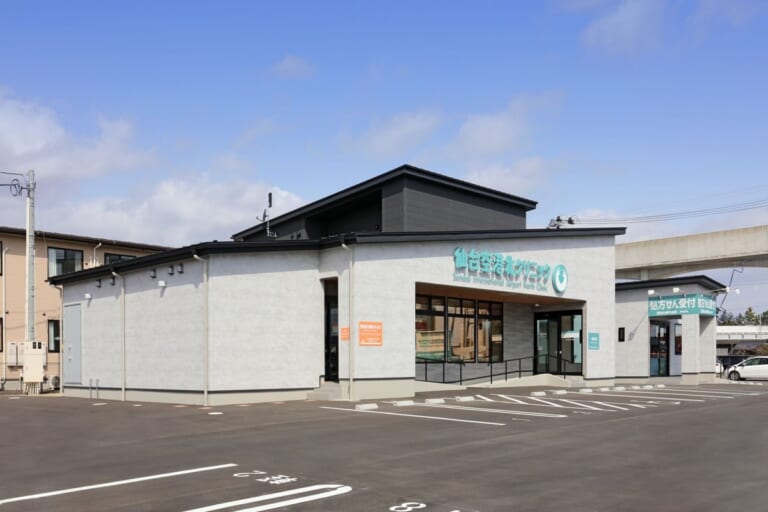
Sendai International Airport North Clinic (仙台空港北クリニック), 8-1-8 Mitazono, Natori, Miyagi, is about 10 minutes by car from Sendai International Airport. It runs a fever clinic with its own entrance. Same-day check-in is done with a QR code at the fever clinic entrance; no advance arrangement is needed, and the check-in page is available in English, Traditional Chinese, Simplified Chinese and Korean. Phone: 022-797-9523 — useful for asking about copies of documents from a past visit.
Fever clinic hours: Monday, Tuesday, Wednesday, Friday and Saturday 10:00–12:00 and 14:30–18:00; Sundays and national holidays 10:00–15:00 (check the calendar on the clinic page); closed Thursdays. With a foreign phone number, follow the check-in confirmation. On regular clinic days, press the intercom at the fever clinic entrance and give your name. Then ask staff where to wait. On Sundays and national holidays, ask staff when they check your documents at the regular-clinic entrance.
Visitors without Japanese insurance pay a flat fee of USD 700 in yen (card or cash). This covers an English consultation, the BioFire SpotFire R Panel multiplex PCR, a same-day English medical certificate with ICD-10 codes, and a prescription if needed. The PCR uses one nasal swab and takes about 15 minutes. The panel tests for 11 viruses and 4 bacteria; group A strep not included. Medicines are paid separately at the pharmacy next door. People living in Japan with Japanese health insurance are seen under insurance.for details. For directions, see our guide to the fever clinic near Sendai Airport and our access guide from Sendai Station.
Market notes for your home region
Taiwan: bring paper or PDF copies of your Japanese documents to the doctor you see, and tell them about your Japan travel history. In Chinese, the test report is 檢驗報告 and the medical certificate is 英文診斷書 — they may be separate documents. For overseas medical cost reimbursement, see our travel-insurance documents guide.
Mainland China: domestic hospitals usually make their own assessment and may repeat tests, so bring the original documents and note the ingredient names of the medicines. Phone the clinic and ask about document copies; do not assume other contact methods.
Korea: on re-entry, tell the doctor about your Japan travel history. 검사결과지 is the test result sheet and 진단서 is the medical certificate; they are different documents. For NHIS reimbursement, see our travel-insurance documents guide.
References
- Japan Visitor Hotline | Travel Japan | JNTO
- Laws and Policies | Personal Information Protection Commission, Japan
- For safe travels in Japan – Guide for when you are feeling ill | JNTO
- Influenza (seasonal) | WHO
- Japan – Traveler view | CDC Travelers’ Health
- Teoh Z, et al. Factors Associated With Prolonged Respiratory Virus Detection From Polymerase Chain Reaction of Nasal Specimens. J Pediatric Infectious Diseases Society 2024.
- Liu Y, et al. Outcomes of respiratory viral-bacterial co-infection in adult hospitalized patients. EClinicalMedicine 2021.
- Nagatake T. Comparative features of pneumonia associated with influenza. Nihon Rinsho 1997.