If you are in a hurry
- Bring a note of when the fever started and when you last took a fever reducer, and the examination will be faster and more accurate.
- If alertness is abnormal, breathing is hard, or a seizure does not stop, call 119 (Japan’s emergency number), even at night.
- Also tell us what you can about outbreaks around you, overseas travel, vaccines, chronic conditions and medicines, and pregnancy or breastfeeding.
Hello. I am Shunichi Gamo, MD, PhD, a board-certified pulmonologist and the director of Sendai Airport North Clinic.
When going to a fever clinic, many people feel anxious, wondering “What will they ask me?” and “Will I be able to answer well?”
When you have a fever, it is hard to remember dates and the names of medicines. In fact, the answers to these questions greatly influence how we choose tests and medicines.
To state the conclusion first, we mainly ask about 7 things, and the most important are “when the fever started” and “when you last took a fever reducer”. You do not need to have everything; tell us what you can.
In this article, as a pulmonologist, I explain why we ask each of the 7 questions, based on official national information and research.
First, a note about our Sunday and holiday fever clinic. For influenza and COVID-19, PCR testing (a test that copies the virus’s genetic material to detect it) gives results the same day.
From October 4, 2026, we also run the fever clinic on Sundays and holidays
10:00 to 15:00 (no lunch break). No reservation is needed; you check in on the day. We give you the PCR result the same day. On Sundays and holidays we see fever patients only, and we do not offer regular outpatient care or IV drips. We are closed on Sunday, October 25, and from November we are open, in principle, every Sunday and holiday. Announcement: Sunday and holiday fever clinic
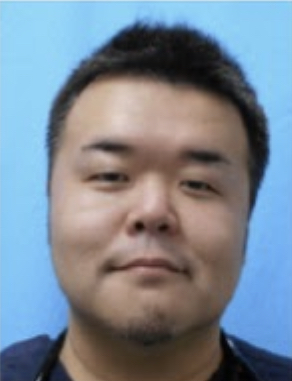
Shunichi Gamo, MD, PhD
Director, Sendai International Airport North Clinic
Born and raised locally, he attended Yuriage Elementary School and Yuriage Junior High School in Natori City. After graduating from Tohoku University School of Medicine, he worked at Sendai Open Hospital and Kesennuma City Hospital, and then at Tohoku University Hospital. In April 2021, in the middle of the COVID-19 pandemic, he opened Sendai International Airport North Clinic. Holding to a fever clinic that never turns patients away, he cared for well over 20,000 patients with fever in the two years before COVID-19 was moved to Class 5 under Japan’s infectious disease law.
Society memberships and board certifications
Certified Member and Board Certified Fellow, Japanese Society of Internal Medicine
Board Certified Pulmonologist, Japanese Respiratory Society
Board Certified Allergist, Japanese Society of Allergology
Board Certified Specialist, Japanese Society of Anti-Aging Medicine
PhD in Medicine (Tohoku University)
[The short answer] These are the 7 things asked in a fever clinic questionnaire
The fever clinic questionnaire centers on 7 items: the date and time of onset, the time of the fever reducer, outbreaks around you, overseas travel, vaccines, chronic conditions and medicines, and pregnancy or breastfeeding.
| What we ask | Example of what to tell us | Why we ask |
|---|---|---|
| 1. Date and time of onset | “Chills from about 10 p.m. the night before last” | Used to decide when to test and how long a medicine can still be started |
| 2. When you last took a fever reducer | The name of the medicine and the time you took it | To work out when you can take the next dose, and how your temperature at the visit looks |
| 3. Outbreaks and contact around you | Symptoms in family, at work or at school | A clue to whether a going-around illness is involved |
| 4. Overseas travel | The countries or regions visited and when | So that we do not miss illnesses that are rare in Japan |
| 5. Vaccines | The type and when you received it | Changes which illnesses we suspect and how likely severe illness is |
| 6. Chronic conditions and medicines | Names of conditions, your medication notebook, over-the-counter medicines | Relates to how likely severe illness is and which medicines can be used |
| 7. Pregnancy and breastfeeding | Weeks of pregnancy, whether you are breastfeeding | Changes which medicines can be used and how quickly you should be seen |
In the following sections, I explain items 1 to 7 in order, together with the reasons.
 Dr. Gamo
It is all right if the answer is “I do not know.” Even “I do not know” is a clue for the examination. Even without notes, please do not hesitate to come in.
Why are we asked about the date and time of onset first?
Because the time since onset changes how test results should be read and which medicines are options.
With influenza antiviral drugs (medicines that slow the virus’s growth), starting within 48 hours of onset usually shortens the fever by 1 to 2 days[1]. On the other hand, taking them after 48 hours is said to be unlikely to give enough benefit[1].
That is exactly why it is important to tell us clearly “since when,” and why we recommend seeing a doctor early.
Right after onset, rapid tests are easily negative
A rapid antigen test (a test for viral protein in the nose or throat) gives results quickly. However, right after onset there is little virus, and the test can miss infection.
In a study at Sapporo Medical University Hospital, 177 samples from suspected influenza were compared with a genetic test (PCR)[2]. The sensitivity of the rapid antigen test (the proportion of infected people correctly judged positive) was as follows.
| Time since onset | Sensitivity (conventional kit / silver amplification kit) |
|---|---|
| Under 6 hours[2] | 41.7% / 50.0% |
| 24 to 48 hours[2] | 100% / 100% |
This study had few samples, so the numbers are only a rough guide. Still, the authors also state that false negatives (a negative result although the person is actually infected) are more likely early after onset[2].
When we know the date and time of onset, it is easier for the doctor to judge how to read today’s negative result and when to retest.
For COVID-19 too, the number of days since onset matters
According to the COVID-19 clinical guide, an oral antiviral drug is considered for people within 5 days of onset who have risk factors for severe illness (conditions that make severe illness more likely)[3]. Here too, the day of onset is the basis for the decision.
How to tell us the date and time of onset
- “What day, about what time”: down to the time of day, such as “yesterday evening, I suddenly felt chills at work”
- The first symptom: which came first, chills, sore throat, cough or fatigue
- The highest temperature and its time: note the numbers you measure on your phone
- The course: whether the fever went down once and then rose again
If you are not sure of the date and time of onset, “the day I first felt something was wrong” is fine.
When the patient is a child, the date and time also help with watching over them after the diagnosis. For influenza, care is needed so that a child or teenager is not left alone for at least 2 days after the diagnosis and the start of treatment[1].
Dr. Gamo“Suddenly felt chills around 11 p.m.” is far more useful than “a sudden fever in the middle of the night.” If you have the presence of mind to look at the clock, please remember the time.
Why are we asked when we last took a fever reducer?
For two reasons: to decide when you can take the next dose, and to read your temperature at the examination correctly.
According to the package insert for acetaminophen (such as Calonal), for pain, adults take 300 to 1,000 mg per dose, at least 4 to 6 hours apart, up to 4,000 mg a day[4]. For fever reduction and pain relief in acute upper respiratory infection (a cold), adults take 300 to 500 mg per dose, in principle no more than twice a day, up to 1,500 mg a day[4]. For children, the dose per time is set by body weight[4]. So if we know the name of the medicine and the time you took it, we can work backward to the times when it is safe to use.
A fever reducer is an important medicine for bringing down fever. When the fever is hard to bear, you may use it without holding back. At the examination, please tell us the time and the amount you took.
It also changes how your temperature “looks”
While a fever reducer is working, the temperature measured in the examination room can read lower than it really is. A history of “normal now, but a high fever until a little while ago” is an important clue for identifying the illness.
- The name of the medicine you took (Calonal, an over-the-counter cold medicine and so on) and the time you took it
- Your temperature before taking it and after taking it
- Whether you have taken medicines with the same ingredient twice (for example a cold medicine and a fever and pain reliever)
- How the fever changed after you took the medicine
It is all right to see a doctor even after taking a fever reducer. If you are unsure how to take the medicine, we will check it together at the examination.
Why are we asked about outbreaks, contact and overseas travel?
Because whether people in your family, workplace or school have the same symptoms is a major clue for narrowing down the illness.
Each illness has a different period from infection to symptoms (the incubation period). We work backward through this period and think about “when, and with whom, you met.”
| Illness | Approximate incubation period |
|---|---|
| Influenza | A few days[1] |
| COVID-19 | 1 to 7 days (median 2 to 3 days)[3] |
| Measles | 10 to 12 days[5] |
Measles spreads by breathing in virus floating in the air. A surgical mask does not protect enough[5]. We may also ask about a child’s group life, and about outings to places where people gather.
- Symptoms in family members who live with you, and the day those symptoms began
- Outbreaks at work, school, nursery, care facilities and so on
- People you met recently who were diagnosed with influenza, COVID-19, measles or similar
- Outings to crowded places, or attending events
If a family member tests positive for COVID-19, please see When a family member has COVID-19 and you also have a fever. If vomiting is spreading in the family, please also see How to tell us about norovirus contact.
How far back should I go when telling you about overseas travel?
If you develop a fever after returning home, please go back at least about 4 weeks and tell us the countries you visited and when. This is because the incubation period of malaria is about 1 to 4 weeks[6].
Malaria is an illness you catch from mosquito bites. Falciparum malaria is said to become severe, and often fatal, unless treated within 24 hours of onset[6].
If symptoms suggesting malaria appear on or after day 7 after entering an area where it occurs, prompt medical attention is needed[6]. Infection can occur even if you took preventive medicine[6].
- The countries and regions visited and the length of stay (departure and return dates)
- Whether you remember being bitten by mosquitoes
- Whether you took preventive medicine (and its name)
- Any treatment you received there, or medicines you took
- Whether anyone there had the same symptoms
Dr. GamoMany people think, “That probably has nothing to do with my trip,” but please tell us anyway. Whether it is related is for the doctor to judge.
Why are we asked for vaccine records?
Because whether you have been vaccinated changes which illnesses we suspect and how we judge severity.
The influenza vaccine has a certain degree of effect in preventing illness. The Ministry of Health, Labour and Welfare explains that its greatest effect is preventing severe illness[1].
Even in people who have received the measles vaccine, when antibodies in the body decline, they can get “modified measles,” a mild and atypical form[5]. In this case the features are weaker, for example with no high fever[5].
For COVID-19, the clinical guide asks us to consider vaccination history when assessing severity[3].
- The type (influenza, COVID-19, measles and rubella, pneumococcal and so on)
- The timing of vaccination (to the month is enough)
- The Maternal and Child Health Handbook, a vaccination certificate, or a photo of the vaccination record
- If you were vaccinated recently, the date (for how to tell a fever after vaccination, see Fever after vaccination)
Why are we asked in detail about chronic conditions and medicines?
Because chronic conditions and medicines change how likely severe illness is and how we choose which medicines to use.
In older people, an infection is said to cause no fever, or only a weak one, in 20 to 30% of cases[7]. In people with chronic conditions too, the height of the fever alone does not show how serious the illness is.
The COVID-19 clinical guide lists age, the presence of underlying conditions (chronic conditions), and how well those conditions are controlled as factors for judging the risk of severe illness[3].
The guide also states that the medication notebook should always be checked, and that medicines must be chosen with attention to contraindicated combinations (medicines that cannot be used together) and kidney function[3].
- Your medication notebook (if you do not have one, the names of the medicines and the pharmacy)
- Over-the-counter medicines, supplements and herbal (Kampo) medicines
- Chronic conditions (heart, kidney, lung, diabetes, liver, treatment that suppresses immunity and so on)
- Allergies to medicines or foods, and any past reaction to a medicine
Please do not stop your regular medicines on your own judgment. People with diabetes or kidney disease can see sick days, and older people can see fever in an elderly family member.
Why are we always asked whether you are pregnant or breastfeeding?
Because it changes which medicines can be used and how quickly you should be seen.
According to the COVID-19 clinical guide, infection in the second half of pregnancy increases preterm birth, and the mother herself is more likely to become severely ill[3].
On the other hand, the Ministry of Health, Labour and Welfare explains that worrying too much about the risk of medicines and holding back necessary treatment, or stopping medicines on one’s own judgment, can worsen the mother’s condition and may in turn harm the fetus[8].
The National Center for Child Health and Development explains that acetaminophen is used as the first choice for pain or fever during pregnancy[9]. Loxoprofen, ibuprofen and similar medicines may affect the baby if used in the second half of pregnancy[9].
For Tamiflu, an influenza treatment, several reports found no increase in the rate of congenital anomalies even when it was used in early pregnancy[9].
When breastfeeding
The same center says that very little Tamiflu passes into breast milk, and that its use during breastfeeding is unlikely to be a problem[10]. However, care is needed so that the baby does not catch influenza through contact during breastfeeding[10].
- That you are pregnant or may be pregnant (including a late period)
- The weeks of pregnancy, and your regular obstetrician
- Whether you are breastfeeding, and the baby’s age in months
- The names of any painkillers or cold medicines you took
For details, please also see our article on fever during pregnancy.
[Signs to see a doctor quickly] Call 119, night-time emergency care, or be seen the same day
Before you make notes for the questionnaire, first check whether any of the following signs are present.
Call 119 right away
If even one of the following applies, call 119 without hesitation, regardless of how high the fever is[11]. This is the same at night and on holidays.
- Does not answer when called, or is dazed (abnormal alertness)
- Sudden difficulty breathing, or strong shortness of breath
- A seizure that does not stop
- Food or something else is stuck in the throat
If you are unsure, call #7119 for advice
When you “cannot tell whether it is serious enough to call 119,” the Miyagi Prefecture adult emergency telephone advice line (#7119) takes calls 24 hours a day, 365 days a year[12]. From a phone that cannot dial #7119, call 022-706-7119[12].
However, this line is for advice and guidance. If you think the situation is urgent or severe, call 119 without hesitation[12].
See a doctor the same day
Even if breathing and alertness are maintained, please see a doctor without waiting too long in the following cases. At night, you can also choose an emergency department instead of waiting for the next morning.
- Can hardly drink, or passes almost no urine
- A fever after returning from overseas (malaria and similar illnesses are a concern)
- A fever during pregnancy
- An older person with a low fever but who is “not like usual”
- Limp and unable to move even after using a fever reducer
You do not need to have all your notes ready before you come. If you feel unwell, please see a doctor first.
Frequently asked questions
- I am not sure of the date and time of onset. How should I tell you?
-
“The day I first felt something was wrong” and the approximate time of day are fine. Phrases such as “yesterday evening” or “my throat has felt odd since the morning before last” are quite useful.
- May I see a doctor even after taking a fever reducer?
-
Yes, please do. If you tell us the name of the medicine and the time you took it, it helps the examination. Fever can be brought down with Calonal and similar medicines, so if you are suffering, please talk to us.
- I forgot my medication notebook.
-
A medicine bag or leaflet that shows the names, or a photo of the medicines, is fine. If you do not know, you can also phone your regular pharmacy to check. If that is difficult, please at least tell us the names of your chronic conditions.
- I am not sure yet whether I am pregnant. Should I tell you?
-
Yes, please tell us “my period is late” or “I may be pregnant.” It can change how we choose which medicines can be used.
- What should I make notes of before the visit?
-
The 7 items: when the fever started, the highest temperature, the name and time of the fever reducer, outbreaks around you, travel, vaccines, chronic conditions and medicines, and pregnancy or breastfeeding. Even if all of it is hard at once, just the first two are useful.
Summary: Note the date and time and the fever reducer time, then come in
- Bring a note of when the fever started and when you last took a fever reducer, and the examination will be faster and more accurate.
- If alertness is abnormal, breathing is hard, or a seizure does not stop, call 119, even at night.
- Also tell us what you can about outbreaks around you, overseas travel, vaccines, chronic conditions and medicines, and pregnancy or breastfeeding.
- Within 48 hours of onset is the important window for starting an influenza antiviral drug. See a doctor early[1].
- You may use a fever reducer without holding back. Tell us the name of the medicine and the time you took it.
- For a fever after returning home, tell us where you traveled, going back at least about 4 weeks[6].
- Even during pregnancy or breastfeeding, some medicines can be used. Do not stop them on your own; tell us first.
Everything we ask in the questionnaire is information for choosing the tests and medicines that suit you. Please do not worry if you cannot answer well. Tell us what you can, and please leave the medical side to us.
That’s all.
Disclaimer
This article is intended to provide general medical information and does not replace an examination, diagnosis or treatment by a doctor. The content is based on medical knowledge at the time of publication, but the appropriate response differs from person to person. If you are worried about your symptoms, please consult a medical institution.
References
- Ministry of Health, Labour and Welfare. Influenza Q&A, fiscal year 2024 (version of November 7, 2024) (in Japanese). Ministry of Health, Labour and Welfare website. Accessed October 2026. https://www.mhlw.go.jp/stf/seisakunitsuite/bunya/kenkou_iryou/kenkou/kekkaku-kansenshou/infulenza/QA2024.html
- Sato Y, Nirasawa S, Saeki M, Yakuwa Y, Ono M, Kobayashi R, et al. Comparative study of rapid antigen testing and two nucleic acid amplification tests for influenza virus detection. J Infect Chemother. 2022 Jul;28(7):1033-6. doi:10.1016/j.jiac.2022.04.009 PMID: 35428574
- Editorial Committee for the Clinical Guide (MHLW Health and Labour Sciences Research Group). Clinical management of patients with COVID-19, version 10.1 (in Japanese). Ministry of Health, Labour and Welfare website. 2024. Accessed October 2026. https://www.mhlw.go.jp/content/001248424.pdf
- Japan Pharmaceutical Information Center (JAPIC). Prescription drugs: Calonal (Calonal tablets 200 and others) package insert information (in Japanese). KEGG MEDICUS. Accessed October 2026. https://www.kegg.jp/medicus-bin/japic_med?japic_code=00063312
- Japan Institute for Health Security. Measles Q&A: about measles (in Japanese). Infectious Diseases Information site. Updated April 30, 2026. Accessed October 2026. https://id-info.jihs.go.jp/relevant-information/measles/faq/overview/index.html
- Quarantine Stations, Ministry of Health, Labour and Welfare, FORTH. About malaria (in Japanese). FORTH. Updated April 2019. Accessed October 2026. https://www.forth.go.jp/useful/malaria.html
- Norman DC. Fever in the elderly. Clin Infect Dis. 2000 Jul;31(1):148-51. doi:10.1086/313896 PMID: 10913413
- Ministry of Health, Labour and Welfare. On the project to promote appropriate use of medicines for pregnant and breastfeeding women (in Japanese). Ministry of Health, Labour and Welfare website. Accessed October 2026. https://www.mhlw.go.jp/stf/seisakunitsuite/bunya/kenkou_iryou/iyakuhin/ninshin_00002.html
- National Center for Child Health and Development. Medicines during pregnancy Q&A (in Japanese). Japan Drug Information Institute in Pregnancy. Accessed October 2026. https://www.ncchd.go.jp/kusuri/process/qa_ninshin.html
- National Center for Child Health and Development. Medicines during breastfeeding Q&A (in Japanese). Japan Drug Information Institute in Pregnancy. Accessed October 2026. https://www.ncchd.go.jp/kusuri/lactation/qa_junyu.html
- Fire and Disaster Management Agency, Ministry of Internal Affairs and Communications. Leaflet on using an ambulance (elderly edition) (in Japanese). Fire and Disaster Management Agency website. Accessed October 2026. https://www.fdma.go.jp/publication/portal/items/portal009_kourei.pdf
- Miyagi Prefecture. Adult emergency telephone advice line (#7119) (in Japanese). Miyagi Prefecture website. Accessed October 2026. https://www.pref.miyagi.jp/soshiki/iryou/kyuukyuutel.html
▶ Overview of this topic: Sunday and holiday fever clinic (from October 4, 2026, 10:00 to 15:00)
More articles to read when you have a fever
For our Sunday and holiday fever clinic, please see the announcement about the Sunday and holiday fever clinic. For how to come in, please see about the pre-visit questionnaire and same-day check-in for the fever clinic.