
Quick answer
- Danger signs first. If you have trouble breathing, chest pain, confusion, fainting, a seizure, a stiff neck with fever, or bluish lips, ask the front desk to call 119 (the ambulance number in Japan) now. Do not wait for a clinic.
- Otherwise, show the front desk a short Japanese request card and ask them to call a taxi and, if useful, phone the clinic for you.
- Before leaving, check today’s fever-clinic hours. Thursdays are closed. On Sundays and Japanese national holidays, the fever clinic is open 10:00–15:00 on the dates shown in the clinic calendar.
- No advance call is needed. Check-in is by QR code at the fever-clinic entrance, and it also works with a foreign phone number.
- Bring your passport, insurance details, a list of your medicines, and a charged phone.
What could be making me sick, and does it change where I go?
Fever and cough can have several causes, including respiratory infections, and the cause cannot be known from your hotel room. International travellers sometimes need unplanned medical care during a trip [1]. For what a doctor may check, see our guides on fever while traveling in Japan and fever and a new cough.
What should I do first from my hotel room?
What the front desk can realistically do
Hotel front desk staff are not medical staff, but they can often help if you ask. Things to ask for (services that hotels may or may not offer) include:
- calling a taxi for you
- phoning a clinic, or 119, on your behalf
- writing down or reading a Japanese address
- printing a map
- lending a thermometer, if they have one
Language barriers are a known problem when foreign patients seek care in Japan, and they can slow things down [2]. A short written Japanese card, like the ones below, helps a lot.
Prepare before you go down to the lobby
- Take your temperature if you can.
- Note when your symptoms started.
- Write a list of your medicines and any allergies.
- As a general infection-prevention measure, consider wearing a mask in the lobby and in the taxi.
If you have no Japanese phone number
Ask the staff to call the clinic on 022-797-9523, or to call a taxi from the hotel line. You can still check in at the clinic with a foreign phone number.
Card 1: show this to the front desk
Japanese (romaji): “Netsu ga arimasu. Sendai Kuko Kita Kurinikku no hatsunetsu gairai o jushin shitai desu. Takushi o yonde itadakemasu ka. Jusho: Miyagi-ken Natori-shi Mitazono 8-1-8. Denwa: 022-797-9523.”
English: “I have a fever. I would like to visit the fever clinic at Sendai International Airport North Clinic. Could you please call a taxi? Address: 8-1-8 Mitazono, Natori, Miyagi. Tel: 022-797-9523.”
Card 2: show this to the taxi driver
Japanese (romaji): “Kono jusho no hatsunetsu gairai no iriguchi made onegaishimasu: Miyagi-ken Natori-shi Mitazono 8-1-8, Sendai Kuko Kita Kurinikku.”
Show the Japanese address card to your taxi driver
General help in English
The Japan National Tourism Organization (JNTO) runs the Japan Visitor Hotline, a 24-hour multilingual call centre for foreign visitors, including support when you are ill and introductions to medical institutions: 050-3816-2787 [3].
Getting there
For train and walking routes to the clinic, see how to reach the fever clinic from Sendai Station or Natori.
On the Sendai Airport Access Line, Mitazono (美田園) is one stop after Morisekinoshita (杜せきのした). Take an airport-bound train that stops at Mitazono. Morisekinoshita timetable and station order.
When to see a doctor, and when the front desk should call 119
As general safety advice, ask the front desk to call 119 (for ambulance and fire) if you have any of these danger signs:
- difficulty breathing
- chest pain
- confusion or unusual drowsiness
- fainting
- a seizure (a fit)
- bluish lips
- a stiff neck with fever
- severe dehydration, or being unable to keep fluids down
- a condition that is getting worse quickly
Staff can make the call for you and explain the hotel name and address. You cannot choose which hospital an ambulance takes you to [3]. Do not assume that 119 dispatchers speak English. For a young infant or child with fever, see fever in children while traveling in Japan.
If you have fever or respiratory symptoms without any danger sign, a same-day clinic visit is reasonable. A clinic is not an emergency service; emergencies go through 119.
How is the illness diagnosed, and why does it matter?
A doctor’s examination and, where appropriate, testing guide whether prescription treatment is needed and support your insurance paperwork. See fever and cough while traveling in Japan. Note that Group A streptococcus (a bacterium that causes strep throat) is not on the clinic’s test panel; see sore throat while traveling in Japan.
How is it treated in Japan: drugstore or prescription?
Drugstore medicines can ease symptoms. A doctor can assess whether you need prescription treatment; take any prescription to a pharmacy to have it filled. See cold medicine in Japan: pharmacy or doctor.
Travel points: flights, companions, children and insurance papers
Flying soon? See fever before a flight from Japan.
Children: the clinic sees children from age 0, and febrile family members can be seen together; see child fever while traveling in Japan.
Insurance: if it is medically safe, consider calling your insurer’s assistance line before leaving the hotel; see medical certificates for travel insurance in Japan. Travellers are usually responsible for paying medical costs abroad, so insurance matters [4], and unpaid medical bills by foreign patients are a recognised issue in Japan [5].
Companions: as a general infection-prevention measure, healthy companions may consider wearing a mask in shared taxis.
Frequently asked questions
Can the hotel call a doctor to my room?
Ask the front desk, but do not assume this is available. The reliable route is to ask the front desk to call a taxi or 119 and use the request cards.
I have no Japanese phone number. Can I still check in?
Yes. Use the foreign-number flow: check in by QR code, then press the intercom at the fever-clinic entrance on regular days.
What exactly should I show the front desk and the taxi driver?
Show Card 1 (with the clinic name, address and phone number) to the front desk, and Card 2 (the address card) to the taxi driver.
Do I need to call ahead?
No advance call is needed. Check in on the same day by scanning the QR code at the fever-clinic entrance during fever-clinic hours.
It is Thursday or late evening. What now?
The clinic is closed on Thursdays and outside its posted hours. For danger signs, ask the front desk to call 119. Otherwise, use the JNTO Japan Visitor Hotline (050-3816-2787, 24 hours) [3] or ask the hotel about open medical facilities.
If you are near Sendai Airport
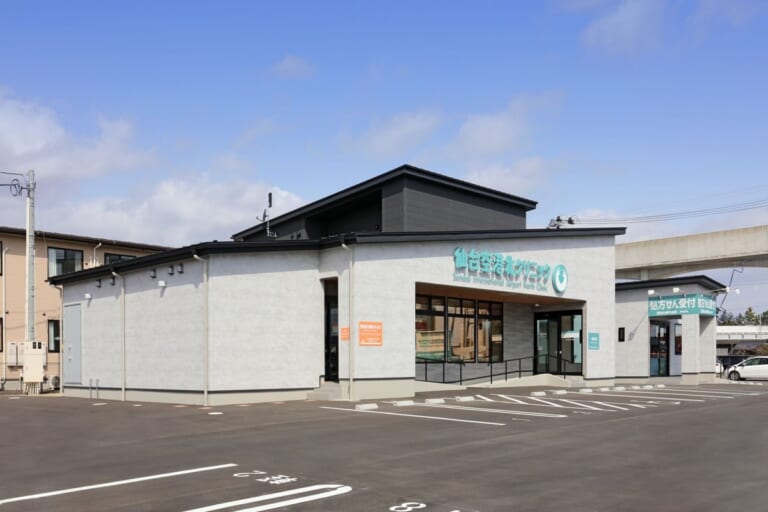
Sendai International Airport North Clinic is at 8-1-8 Mitazono, Natori, Miyagi, about 10 minutes by car from Sendai International Airport. Telephone: 022-797-9523. Director: Shunichi Gamo, M.D., Ph.D. (internal medicine, pulmonology, allergology). The fever clinic has its own separate entrance.
Hours: Monday, Tuesday, Wednesday, Friday and Saturday 10:00-12:00 and 14:30-18:00. On Sundays and Japanese national holidays, the fever clinic is open 10:00–15:00 on the dates shown in the clinic calendar (check the clinic calendar). Closed Thursdays.
Check-in: scan the QR code at the fever-clinic entrance and enter your name, phone number and date of birth on the English, Traditional Chinese, Simplified Chinese or Korean page. No advance call is needed. With a Japanese phone number, follow the on-screen wait and call instructions. With a foreign phone number only, on regular clinic days press the intercom at the fever-clinic entrance and give your name. Then ask staff where to wait and how you will be called. On Sundays and national holidays, ask staff when they check your documents at the regular-clinic entrance. The order of examinations follows the check-in order in principle, but may change with the severity of symptoms.
Cost for visitors without Japanese insurance: a flat USD 700, charged in yen at the day’s rate (card or cash). This covers an English consultation and a multiplex PCR panel. The panel is a test that looks for the genetic material of many germs at once, using one nasal swab. It also covers a same-day English medical certificate with ICD-10 codes (standard diagnostic codes used by insurers), and a prescription if needed. Medicines are paid separately at the pharmacy next door. People living in Japan with Japanese health insurance are seen under insurance; the flat fee does not apply.
The clinic does not accept UnionPay. The doctor sees patients in English or Japanese, and clinic staff speak both languages. The clinic uses real-time AI voice translation to help communicate in other languages. For regular outpatient care, come directly to the general outpatient entrance during clinic hours. The fever clinic has a separate same-day check-in procedure.
For directions from the airport terminal, see the fever clinic near Sendai Airport.
References
- Piyaphanee W, et al. Healthcare seeking during travel: an analysis by the GeoSentinel surveillance network. J Travel Med 2023.
- Aoki Y, et al. Factors associated with emergency department length of stay of foreign patients visiting a regional core hospital in Japan. Acute Med Surg 2022.
- For safe travels in Japan – Guide for when you are feeling ill | JNTO
- Getting Health Care During Travel | CDC
- Saeki S, et al. Unpaid Medical Expenses by Foreign Patients in Japan: A Scoping Review. JMA J 2026.